
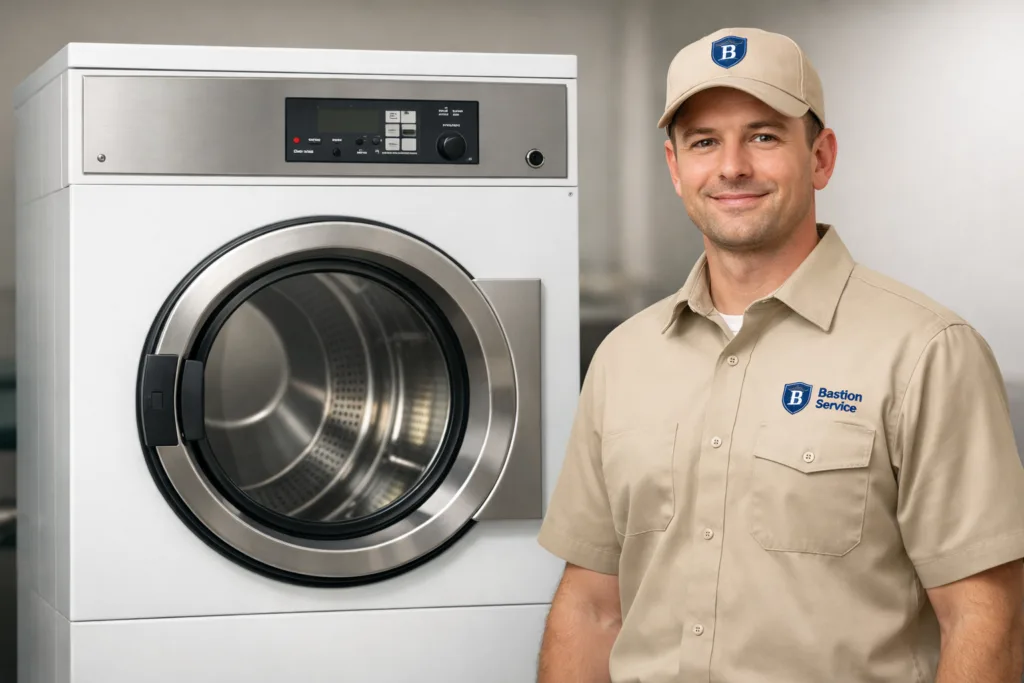




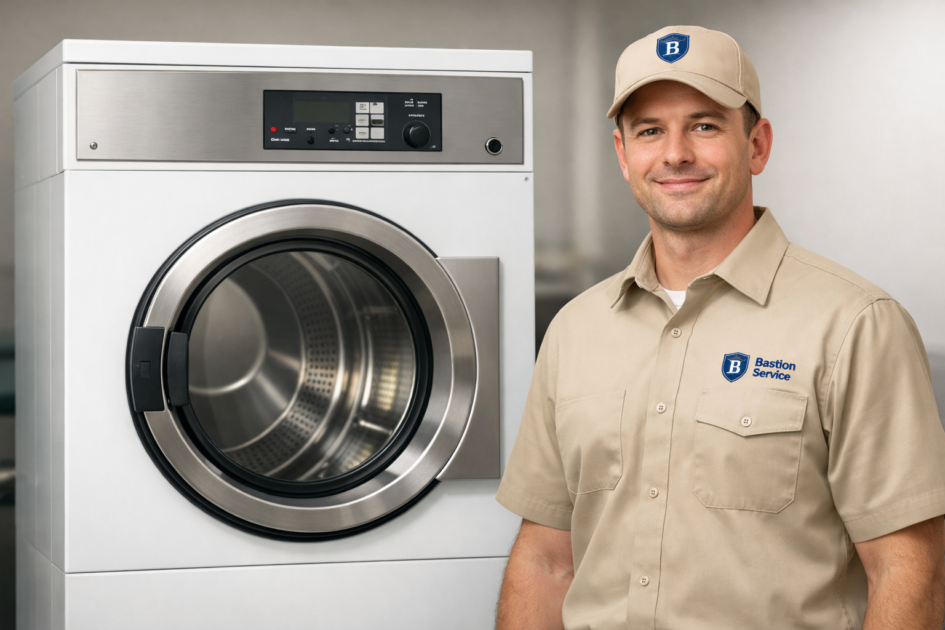
Dryer trouble can disrupt linen turnover, staff routines, and daily scheduling faster than many teams expect. When a Speed Queen unit starts running cold, taking too long, stopping mid-cycle, or making new noises, the most useful next step is service based on the actual symptom pattern rather than a guess about which part failed. Bastion Service helps Redondo Beach businesses evaluate dryer problems, identify the source of the issue, and schedule repair work that supports uptime and safer operation.
Related commercial service paths in Redondo Beach include Speed Queen Commercial Repair in Redondo Beach, Commercial Dryer Repair in Redondo Beach, and Speed Queen Washer Repair in Redondo Beach.
How Speed Queen dryer problems affect daily operations
In laundry rooms, hospitality settings, care environments, and other business-use facilities, a dryer problem often creates more than damp loads. Delays can affect room readiness, towel and linen availability, staff workload, and equipment rotation. Even when the dryer still runs, weak heat, poor airflow, or intermittent shutdowns can reduce output enough to create a backlog.
That is why service should focus on how the dryer behaves during normal use. A unit that tumbles but does not dry points in a different direction than one that will not start at all. A dryer that overheats or shuts off after several minutes may involve a different repair path than one with a steady grinding or squealing sound. Matching the symptom to the likely failure area helps avoid unnecessary parts replacement and repeat downtime.
Common Speed Queen dryer symptoms and what they may indicate
No heat or very low heat
If the drum turns but laundry stays wet, the problem may involve the heating system, temperature controls, airflow restrictions, safety cutoffs, or a power-related issue. On some calls, the dryer itself is not the only concern. Restricted venting or lint buildup can reduce heat performance, cause overheating, and lead to repeated part failures if the underlying condition is not corrected.
Long dry times
When loads eventually dry but take much longer than normal, airflow should be considered early in the diagnosis. Long cycles can also be linked to weak heat output, moisture-sensing issues, cycling problems, or heavy wear inside the machine. Businesses often notice this symptom first as slower turnover rather than a full breakdown, but it still deserves prompt service because the unit may be running inefficiently or under excess strain.
Dryer will not start
A no-start complaint may be related to the door switch, latch assembly, controls, timer or board issues, electrical supply problems, or drive system faults. Because several failures can produce the same symptom, the repair decision should come after testing instead of assumptions. This is especially important when the machine occasionally starts and then stops responding.
Stops mid-cycle or shuts down intermittently
Intermittent shutdowns are often linked to overheating, restricted airflow, motor trouble, loose electrical connections, or control faults. If the dryer starts again after sitting unused for a while, that can suggest a heat-related or motor protection issue, but it does not confirm the root cause by itself. Repeated resets usually mean the unit needs service before the failure becomes more severe.
Noise, vibration, or drum movement problems
Thumping, scraping, squealing, rattling, or vibration can point to worn rollers, belt problems, idler issues, drum support wear, motor trouble, or internal interference. A dryer that still heats and runs can seem usable, but continued operation with mechanical wear can damage adjacent parts and increase the scope of repair.
Burning smell or overheating
A hot odor, scorched smell, or signs that the cabinet is running too hot should be treated seriously. Lint accumulation, poor exhaust flow, failing components, and electrical issues can all contribute. If overheating is occurring, it is best to stop using the dryer until it has been inspected.
Why your Speed Queen dryer may not be heating or finishing the cycle
Two of the most common complaints are no heat and cycles that do not complete properly. Although those symptoms sound straightforward, they can come from different failure points. A heating element or gas heat component may be at fault, but so can limit devices, sensors, controls, motor-related issues, or airflow conditions that force the dryer out of normal operation.
In business settings, the difference matters. Replacing one failed part without addressing restricted venting or another contributing condition can lead to another breakdown soon after the repair. That is why a service visit should look at heat production, exhaust movement, cycling behavior, and whether the unit is shutting down to protect itself from an unsafe operating condition.
Why diagnosis matters before approving repair
Dryer symptoms overlap more than they first appear. A machine that seems to have a heating issue may actually be suffering from poor airflow. A complaint about long cycle times may trace back to sensor or control problems. A noisy dryer may need basic support components, or it may show signs of broader internal wear that changes whether repair still makes sense.
A useful diagnosis should answer practical questions: what failed, what may have contributed to the failure, whether continued use could cause more damage, and whether the machine is still a good candidate for repair based on condition and workload. That information helps businesses in Redondo Beach decide how to schedule service, manage downtime, and plan equipment use with fewer surprises.
When to schedule service instead of continuing to run the unit
It is wise to schedule repair when any of the following starts happening consistently:
- Loads are still damp at the end of normal cycles
- Dry times keep getting longer
- The dryer starts only occasionally or not at all
- The unit stops before the cycle is complete
- New squealing, scraping, thumping, or grinding sounds appear
- The cabinet seems unusually hot or a burning smell develops
- Airflow at the exhaust seems weak
These problems rarely correct themselves. In many cases, continued use turns a contained repair into a larger interruption, especially when overheating, lint buildup, or failing moving parts are involved.
Repair versus replacement considerations
Not every dryer problem leads to the same recommendation. Repair is often the sensible choice when the issue is isolated and the machine remains structurally sound. Replacement becomes more likely when there are multiple failing systems, repeated breakdowns, severe wear, or repair needs that do not align with the unit’s remaining service life.
For businesses in Redondo Beach, the better decision is usually the one that restores predictable performance without creating a cycle of repeat service calls. Looking at age, usage level, repair history, and current condition helps determine whether the unit should be restored or retired.
How to prepare for a Speed Queen dryer service visit
A few details can make the appointment more productive. It helps to note whether the dryer has no heat, weak heat, long dry times, intermittent shutdowns, or unusual sounds. If the problem happens only during certain loads or after the machine has been running for a while, that is useful information too. Teams should also mention any recent tripped breakers, burning odors, or signs of poor airflow.
If possible, be ready to describe:
- Whether the drum turns normally
- Whether the dryer heats at all
- How long the problem has been happening
- Whether the failure is constant or intermittent
- What type of noise is present, if any
- Whether multiple units are affected or just one
Good symptom details help narrow the likely fault range and support faster repair planning.
Service-focused next steps for businesses in Redondo Beach
When a Speed Queen dryer begins affecting output, scheduling, or safe operation, the goal is to move quickly from symptom to repair decision. A service visit should confirm the complaint, inspect the machine’s operating condition, test the most likely failure points, and explain whether the issue involves heat, airflow, controls, electrical supply, or mechanical wear. For Redondo Beach businesses, timely diagnosis and repair scheduling can reduce downtime, protect surrounding components, and help return the dryer to reliable daily use.


