
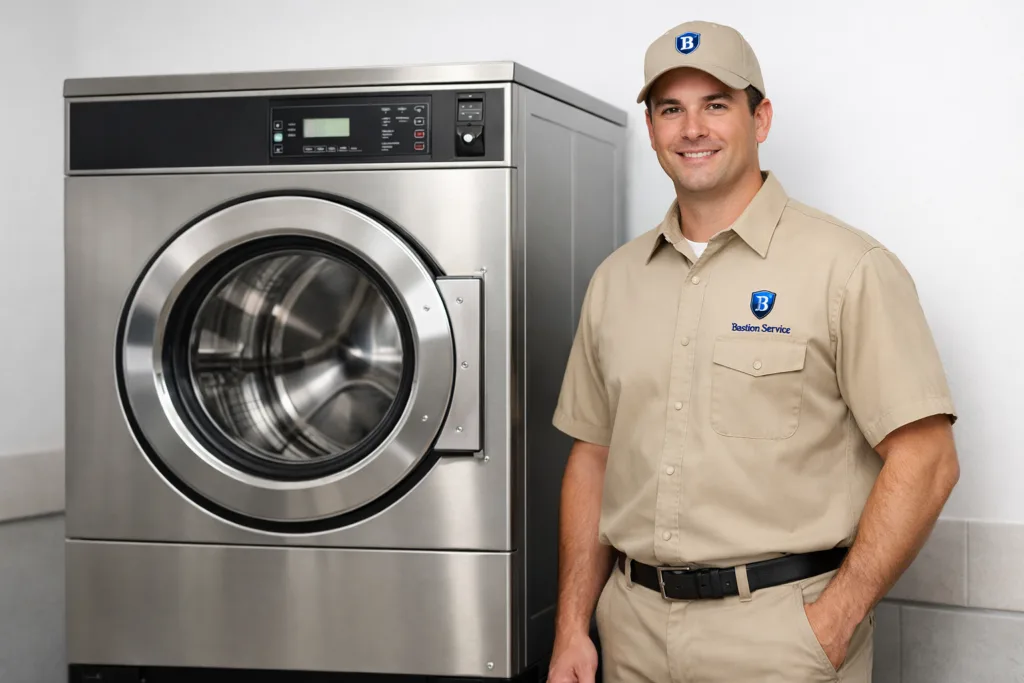




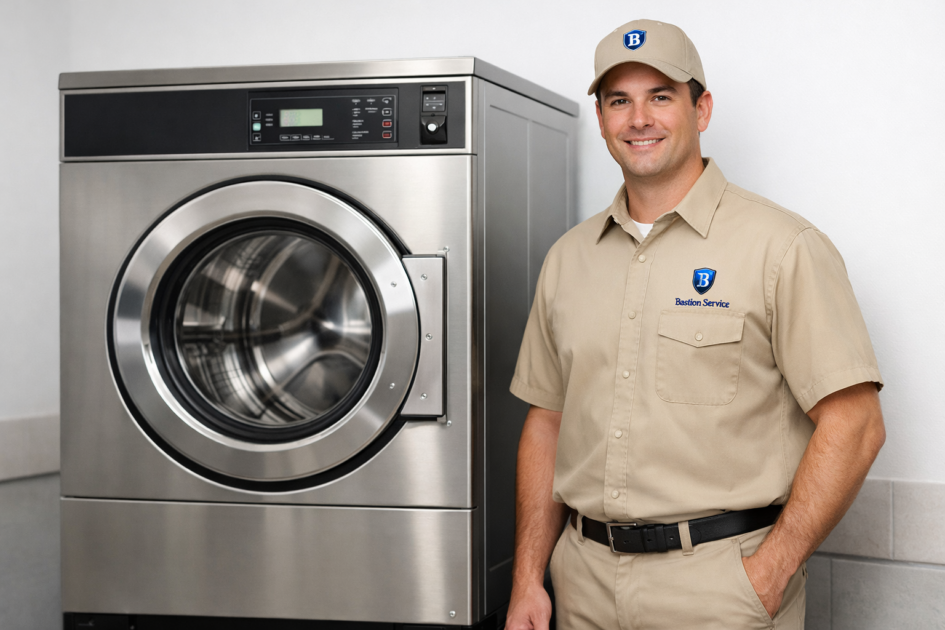
When a Speed Queen washer or dryer begins slowing throughput, stopping mid-cycle, leaking, or leaving loads unfinished, the next step should be service-based: identify the failed system, assess whether the machine can continue operating safely, and schedule repair in a way that limits disruption for businesses in Redondo Beach. For laundromats, shared laundry rooms, hotels, and other facilities that rely on steady laundry output, early repair action often prevents a manageable issue from becoming a larger outage.
For specific equipment paths in Redondo Beach, review Speed Queen Washer Repair in Redondo Beach, Speed Queen Dryer Repair in Redondo Beach, and Commercial Appliance Repair in Redondo Beach.
Bastion Service works with Redondo Beach businesses to troubleshoot Speed Queen laundry equipment problems based on the actual symptom pattern. That includes determining whether the issue is isolated to one component, whether related wear is contributing to the failure, and whether the equipment should stay in use until repair is completed.
Washer and dryer symptoms that usually need professional repair
Laundry equipment often shows warning signs before it fully stops. A machine may still run while producing poor results, unusual sounds, longer cycle times, or intermittent errors. In business settings, those symptoms matter because even partial failure can affect staffing, turnaround time, customer use, and equipment availability.
Common washer problems
Speed Queen washer issues often show up as failure to fill, slow or incomplete draining, excessive vibration, water leaks, door-lock problems, cycle interruption, or loads coming out too wet. In some cases, the washer may not start at all, or it may stop after agitation or before final extraction.
These symptoms can point to drain pump problems, inlet valve faults, latch issues, out-of-balance conditions, worn drive components, control failures, or wiring-related interruptions. Because different failures can create similar results, inspection is important before parts are replaced or the unit is put back into regular use.
Common dryer problems
Speed Queen dryer problems commonly include no heat, weak heat, overheating, long dry times, drum noise, failure to start, early shutoff, or repeated cycle resets. Some dryers continue running but do not dry loads effectively, while others stop before the cycle is complete.
Possible causes may involve airflow restrictions, heating system faults, sensor issues, worn belts or rollers, motor problems, or control-related failures. In a busy laundry environment, a dryer that still tumbles but does not dry properly can create just as much disruption as a unit that will not run at all.
How symptom patterns help determine urgency
Not every issue carries the same level of urgency. The most useful repair decisions come from looking at what the machine is doing, how often the problem occurs, and whether continued use is likely to create more damage or downtime.
Leaks, standing water, and drainage failures
If a washer is leaking onto the floor, leaving water in the tub, or draining very slowly, service should usually be scheduled quickly. Those symptoms can lead to cleanup issues, interrupted machine availability, and secondary damage around the laundry area. A drain-related problem may be caused by a blockage, a failing pump, hose damage, or internal wear that gets worse under continued use.
Noise, vibration, and movement during cycles
Banging, squealing, scraping, or severe vibration often indicates mechanical wear rather than a minor nuisance. Washers may show these symptoms when support parts, suspension components, or drive-related parts are failing. Dryers may produce similar warning signs when rollers, belts, bearings, or drum supports begin wearing out. If the sound is getting worse, repair should not be delayed.
No heat, poor drying, or slow cycle completion
When dryers take too long, leave loads damp, or produce inconsistent results from one cycle to the next, the problem may involve more than a single heating part. Restricted airflow, sensor problems, heating failures, or control issues can all affect drying performance. The same is true on the washer side when incomplete extraction leaves loads heavier and wetter than expected. These conditions reduce throughput and usually justify inspection before they begin affecting multiple loads each day.
Intermittent starts, stops, and control issues
Machines that fail only sometimes can be especially disruptive because staff cannot trust whether the next cycle will complete. A washer or dryer that randomly shuts down, displays faults, needs repeated restarts, or responds inconsistently to controls often requires electrical or control-system diagnosis. Intermittent problems rarely improve on their own and can become harder to manage as use continues.
When it makes sense to stop using the machine
Some symptom patterns suggest the safest and most cost-effective choice is to take the equipment offline until it is inspected. Heavy leaking, repeated failure to drain, strong burning odor, overheating, severe drum noise, or signs of electrical interruption should not be treated as normal wear. Continued operation in those conditions can add damage to connected parts and turn a targeted repair into a broader service event.
If staff members are repeatedly reporting the same problem, resetting the same machine, or working around the same unfinished loads, that is usually a sign the issue is progressing. Scheduling repair before the next busy period helps reduce the chance of unplanned downtime.
Repair planning for business laundry equipment
Repair planning is not just about identifying one bad part. It also involves checking whether the failure affected surrounding components, whether the machine is stable to return to daily use after repair, and whether parts timing changes the service schedule. For a business, the real question is how to restore dependable operation with the least disruption to workflow.
That is why symptom reporting matters. It helps to note whether the problem is constant or intermittent, whether the unit still runs, whether it leaks only during certain stages, whether the dryer heats at all, and whether the issue started suddenly or worsened over time. Those details help shape the service call and reduce wasted time during diagnosis.
Repair or replace: how businesses usually evaluate the choice
Many Speed Queen laundry equipment problems are worth repairing, especially when the issue is addressed before repeated use causes extra wear. The better choice may shift toward replacement when a machine has multiple active failures, a long pattern of repeat problems, or repair costs that no longer make sense for its role in daily operations.
In practice, the decision should be based on the machine’s overall condition, the failed system, expected downtime, and whether repair restores the unit to stable service. A proper inspection helps businesses compare those factors instead of making a decision based only on the latest visible symptom.
Scheduling Speed Queen laundry equipment repair in Redondo Beach
For businesses in Redondo Beach, scheduling service is most effective when the problem description is specific and tied to actual operation. If a washer is not draining, is leaking, or is ending cycles with soaked loads, that should be reported clearly. If a dryer has no heat, runs too hot, makes loud noise, or takes too long to dry, that also helps set service priority and prepare for the visit.
If your Speed Queen laundry equipment is slowing production, creating repeat interruptions, or showing signs that continued use may lead to more damage, the practical next step is to schedule a diagnosis and review the repair path. A service visit can confirm the cause, help determine whether the machine should remain in operation, and provide a direct plan for restoring washer and dryer performance in Redondo Beach.


