
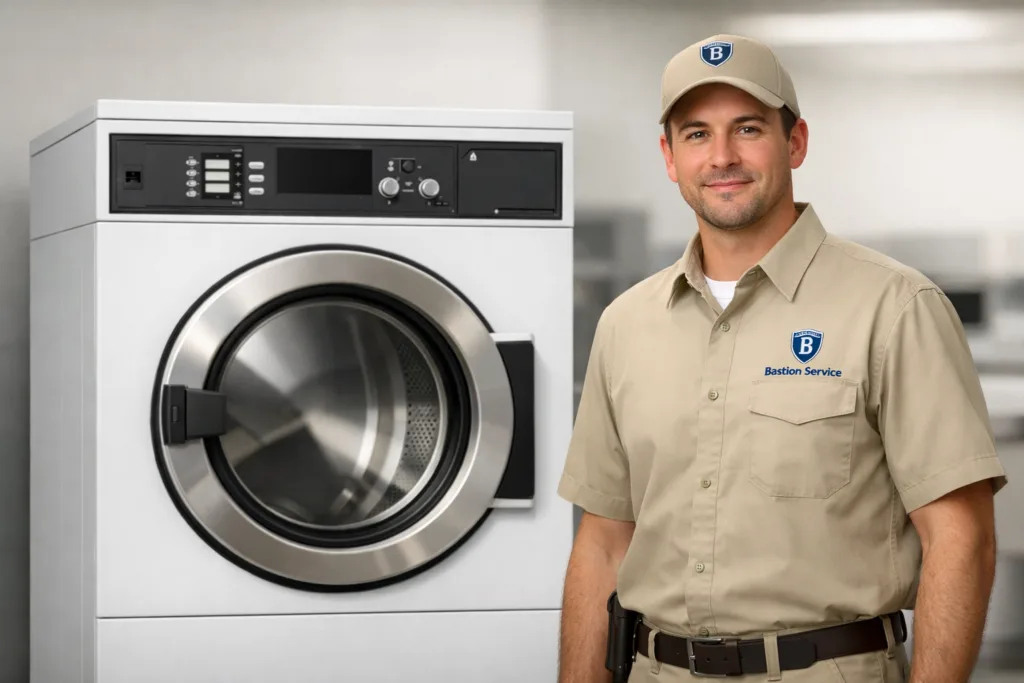




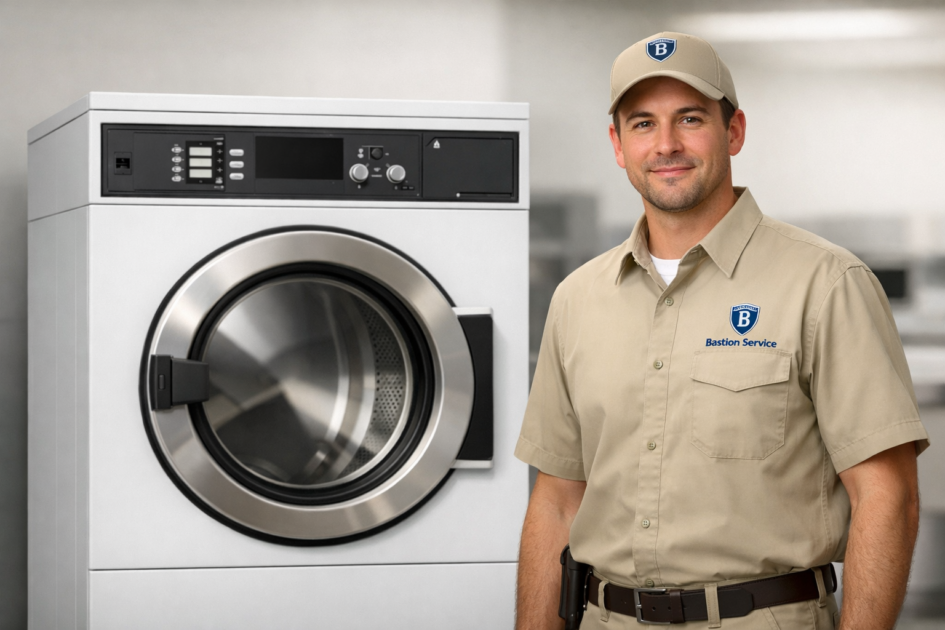
Dryer problems can disrupt workflow quickly when loads start backing up, staff must rerun cycles, or one unreliable unit affects the pace of the entire laundry area. For businesses in Mid-Wilshire, service is most useful when it connects the exact symptom to a repair decision, expected downtime, and the safest next step for the machine. Bastion Service evaluates Speed Queen dryer issues based on how the unit is actually failing in daily use, whether the problem is isolated or developing across multiple systems, and what repair path makes sense before more downtime follows.
Related commercial service paths in Mid-Wilshire include Speed Queen Commercial Repair in Mid-Wilshire, Commercial Dryer Repair in Mid-Wilshire, and Speed Queen Washer Repair in Mid-Wilshire.
How Speed Queen dryer issues usually show up in daily operations
Many dryer failures begin as smaller performance changes rather than a full shutdown. Loads may come out warm but still damp, cycles may begin taking longer than normal, or the dryer may stop once it has been running for a while. Those symptoms matter because they often point to airflow problems, heating circuit failures, worn drum support parts, motor-related faults, control issues, or power problems that can worsen under continued use.
In a business setting, symptom timing is important. A dryer that fails only on heavy loads, only after warming up, or only during certain cycle selections may be showing a different problem than a dryer that will not start at all. That is why service should focus on pattern, consistency, and the effect on actual production.
Common symptoms and what they can indicate
No heat or poor heat output
If the drum is turning but fabrics are still wet at the end of the cycle, the problem may involve the heating element, igniter components, thermostats, thermal fuse, gas valve parts on gas models, wiring, or the control system. Restricted exhaust flow can also mimic a no-heat complaint because the dryer cannot move moisture out efficiently even when some heat is present.
Long dry times
When loads begin taking much longer to finish, airflow should be considered early. A blocked or restricted vent path, a weak blower, reduced heat output, sensor issues, or internal lint buildup can all cause the dryer to work harder without drying properly. Long run times not only reduce throughput but also increase strain on heating and motor components.
Dryer shuts off before the cycle is complete
An intermittent stop can point to overheating protection, a failing motor, a door switch problem, a belt switch issue, unstable electrical supply, or a control fault. If the machine restarts after cooling down, that often suggests the dryer is protecting itself from an unsafe operating condition rather than experiencing a random interruption.
Will not start
A no-start condition can come from incoming power issues, a faulty start switch, door switch failure, blown safety devices, control board problems, or motor failure. If other functions seem normal but the dryer will not begin the cycle, diagnosis should determine whether the issue is with user input, safety interlocks, or the drive system itself.
Noise, vibration, or scraping
Unusual sounds often come from worn rollers, idler assemblies, bearings, blower wheel problems, belt wear, or drum support damage. A dryer may continue running for some time while making noise, but that does not mean the condition is minor. Mechanical wear that is ignored can lead to drum damage, seized parts, or a sudden stop during operation.
Overheating or burning odor
A hot cabinet, scorched smell, or signs that loads are overheating should be treated seriously. Common causes include airflow blockage, lint accumulation in critical areas, faulty cycling components, electrical damage, or a mechanical problem causing friction. These conditions can escalate quickly and should not be handled as a routine nuisance symptom.
Why a symptom-based diagnosis matters
Speed Queen dryers can present similar symptoms for very different reasons. A no-heat complaint may actually begin with airflow restriction. A shutdown issue may be tied to overheating rather than the timer or controls. Noise may be limited to support parts, or it may indicate more extensive wear affecting the drum and drive system.
That is why the most useful service visit is not based on guesswork or replacing parts by assumption. A proper evaluation helps determine whether the problem is confined to one failed component, whether multiple conditions are interacting, and whether the unit is likely to return to stable operation after repair. For Mid-Wilshire businesses, that information matters when planning staffing, scheduling loads, and deciding whether to keep the unit in rotation.
When service should be scheduled
Service should be scheduled when a dryer repeatedly needs extra cycles, stops mid-run, produces inconsistent heat, develops new sounds, struggles to start, or shows signs of overheating. Even if the unit is still operating, recurring symptoms usually mean the machine is already affecting productivity and may be stressing other components each time it runs.
- Loads are still damp after a normal cycle
- Cycle times are getting longer week by week
- The dryer starts, then shuts off unexpectedly
- Staff notices squealing, scraping, or thumping
- The cabinet feels excessively hot during operation
- One unit is being avoided because results are inconsistent
These are the kinds of signs that usually justify repair evaluation before the problem becomes a larger interruption.
When continued use can lead to more damage
Some dryer problems get more expensive the longer the machine stays in service. Poor airflow can overheat heating parts and safety devices. Worn rollers or supports can damage the drum. Repeated shutdowns can place additional strain on motors, wiring, and controls if staff continues trying to force the machine through cycles.
If the dryer is producing a burning smell, shutting down repeatedly, making metal-on-metal noise, or showing unstable heating behavior, it is usually better to stop routine use until the cause is identified. That reduces the risk of adding secondary damage to a repair that may have started as a smaller issue.
Repair or replace: what businesses usually need to weigh
Many Speed Queen dryer problems are repairable when the issue is tied to heating components, switches, thermostats, sensors, belts, support parts, blower problems, or a defined electrical fault. Replacement becomes a more serious discussion when the dryer has multiple major failures at once, severe drum or cabinet damage, a long history of repeat breakdowns, or unstable performance that suggests broader wear.
For businesses in Mid-Wilshire, the decision often comes down to four practical questions:
- Is the failure limited to a specific repairable system?
- Has the dryer been failing repeatedly over a short period?
- Will the repair likely restore dependable day-to-day use?
- How much operational disruption will another failure create?
Once the cause is confirmed, that decision becomes easier to make with less uncertainty.
What to have ready before a repair visit
A few basic details can make diagnosis more efficient. It helps to note whether the dryer is not heating, overheating, taking too long, not starting, or stopping before the cycle finishes. It is also useful to know whether the issue affects every cycle or only certain loads, whether any unusual noise is present, and whether the problem began suddenly or has been getting worse over time.
If available, businesses should also be ready with the model information and any recent history such as repeated resets, tripped breakers, previous part replacements, or changes in venting performance. That context helps connect the symptom to the most likely repair path.
Service focused on restoring reliable operation
The goal of Speed Queen dryer repair in Mid-Wilshire is not simply to make the machine run once. Useful service should identify the fault, explain the operating risk, determine whether continued use is likely to cause more damage, and outline the repair options that best support normal workflow. When a dryer begins affecting output, staff time, and load completion, scheduling service promptly is usually the most practical next step.


