
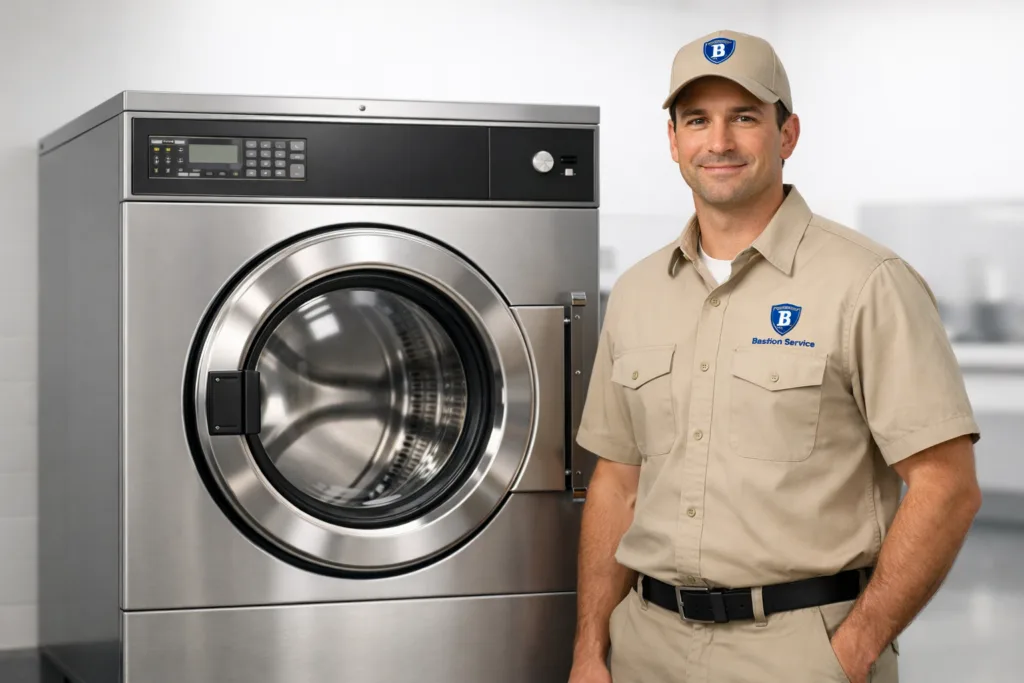




Equipment problems rarely stay isolated for long in a busy laundry setting. When a Speed Queen washer or dryer starts missing cycles, leaking, running hot, or taking too long to finish loads, the right next step is to have the symptom traced to the actual failing part or system so repair timing can be planned around daily operations. Bastion Service helps businesses in Mid-Wilshire evaluate laundry equipment issues with attention to downtime, machine condition, and whether a unit should remain in use before repair is completed.
For specific equipment paths in Mid-Wilshire, review Speed Queen Washer Repair in Mid-Wilshire, Speed Queen Dryer Repair in Mid-Wilshire, and Commercial Appliance Repair in Mid-Wilshire.
For laundromats, shared laundry rooms, hotels, and other businesses that depend on steady washer and dryer performance, service is often requested after a noticeable change in output rather than a total shutdown. Slower drying, repeated resets, standing water, hard vibration, and inconsistent starts are all signs that the machine should be checked before wear spreads to additional components or interrupts more of the workday.
Speed Queen laundry equipment problems that commonly need repair
Speed Queen laundry equipment can show different symptoms depending on whether the problem involves water flow, drainage, heat production, drum movement, controls, sensors, or electrical components. In day-to-day use, the most common issues that lead to repair include:
- Washers that do not fill, drain, spin, or complete cycles
- Dryers with no heat, low heat, or unusually long dry times
- Water leaks, standing water, or repeated overflow concerns
- Unusual banging, grinding, scraping, or thumping sounds
- Excessive vibration or movement during operation
- Machines that stop mid-cycle or fail to start consistently
- Overheating, shutdowns, burning smells, or tripped electrical protection
- Error displays or intermittent control response
These symptoms do not always point to the same repair on every machine. Similar performance issues can come from very different causes, which is why symptom-based diagnosis matters before parts are ordered or a unit is put back into full use.
Washer symptoms that affect daily workflow
Washer will not drain or leaves water behind
If water remains in the drum at the end of the cycle, the machine may have a drain restriction, pump problem, pressure-sensing issue, or control fault. In a business setting, this kind of failure creates more than one problem at once: loads back up, machine availability drops, and wet items may need to be reprocessed. Continued use when drainage is already failing can also put extra stress on connected components.
Leaks around the machine or during the cycle
Leaks can come from hoses, seals, door or lid-related components, pump connections, internal water-routing parts, or overfill-related issues. Even a small recurring leak deserves attention because it can interrupt operations, create cleanup demands, and cause staff to avoid using that machine altogether. If leaking appears with cycle interruption or drainage trouble, the repair scope may involve more than one system.
Washer stops mid-cycle or does not start reliably
When the machine starts inconsistently, locks out, or quits before the cycle is complete, possible causes include door or lid interlock issues, control board faults, power supply problems, or internal wiring concerns. For managers and staff, intermittent failure is especially disruptive because it makes scheduling harder and leads to repeated restarts that do not solve the underlying problem.
Noise, shaking, or hard movement during spin
Loud mechanical noise or strong vibration can point to bearing wear, suspension problems, imbalance-related stress, drive issues, or mounting concerns. This is one of the clearest examples of a symptom that can worsen quickly with continued operation. A machine that is already moving aggressively or sounding rough may damage neighboring parts if the problem is ignored.
Dryer symptoms that reduce throughput
No heat, weak heat, or extended dry times
If a Speed Queen dryer is tumbling but loads still come out damp, the cause may involve heating components, temperature controls, sensors, airflow restrictions, ignition-related parts on gas units, or internal electrical faults. Businesses usually feel this problem immediately because one dryer taking too long affects the whole laundry flow. Long dry times also create misleading symptoms, making it seem like the issue is only heat-related when venting or cycling controls may also be involved.
Dryer overheats or shuts down before the load is done
Overheating should not be treated as a minor inconvenience. It can indicate restricted airflow, failing thermostatic controls, sensor problems, lint accumulation in critical areas, or stressed internal components. If the machine is shutting down early, producing excessive cabinet heat, or giving off an unusual odor, service should be scheduled before normal use continues.
Drum will not turn or turns with heavy noise
A dryer that hums without tumbling, struggles to rotate, or makes scraping and thumping sounds may have belt, roller, idler, motor, or drum-support wear. These are often progressive faults. Businesses sometimes keep restarting the machine to squeeze out a little more use, but that can lead to a larger repair if the moving parts continue to operate under strain.
When a symptom is more urgent than it looks
Not every issue begins with a full breakdown. Many service calls start with one machine taking longer than usual, finishing unevenly, or needing staff attention more often than the rest of the lineup. In Mid-Wilshire, that kind of slow decline is often the point where repair makes the most sense, because the unit is still accessible for diagnosis before the problem turns into a complete stop.
Urgent scheduling is typically the better choice when you notice:
- Repeated cycle cancellations or failed starts
- Water on the floor or water left in the basket
- Dryers needing multiple runs for normal loads
- Heat that seems too weak or too aggressive
- New vibration, metal-on-metal sounds, or strong thumping
- Odors associated with overheating or electrical stress
- One weak machine forcing heavier use on the remaining units
Repair planning for single-unit and multi-unit laundry setups
Businesses often need more than a simple yes-or-no answer on repair. They need to know whether the machine can stay in limited operation, whether the symptom points to a contained repair or broader wear, and how the service window will affect staffing and load volume. That is especially important when several washers or dryers share the same daily demand and one failing unit starts pushing extra work onto the others.
A service-oriented visit helps sort out whether the problem is tied to a single failed part, a maintenance-related condition, or a larger mechanical or electrical issue. That distinction matters when deciding how quickly to schedule the repair and whether temporary adjustments to operations are enough to get through the short term.
Repair or replacement considerations
Many Speed Queen service calls result in repairable findings rather than immediate replacement. The decision becomes less straightforward when the machine has multiple active faults, repeated downtime history, advanced wear, or a repair cost that no longer fits its role in the equipment lineup. A symptom like noise or long dry times does not automatically mean a machine is at end of life, but it also should not be dismissed without checking the condition of the related systems.
For operators weighing the next step, the practical questions are usually:
- Is the failure isolated or part of a larger wear pattern?
- Can the unit be used safely while repair is being scheduled?
- Will continued operation raise the risk of additional part damage?
- Does the repair restore dependable use, or only buy limited time?
Scheduling service in Mid-Wilshire
When Speed Queen laundry equipment is slowing production, creating inconsistent results, or showing signs of mechanical or heating trouble, early service usually protects both uptime and repair cost. Businesses in Mid-Wilshire are best served by scheduling diagnosis when symptoms first begin interfering with turnover, load completion, or machine reliability, rather than waiting for a complete shutdown. If a washer or dryer is leaking, failing to finish cycles, overheating, vibrating heavily, or taking too long to do normal work, the next move is to book repair and get a clear recommendation on scope, urgency, and safe operation.


