
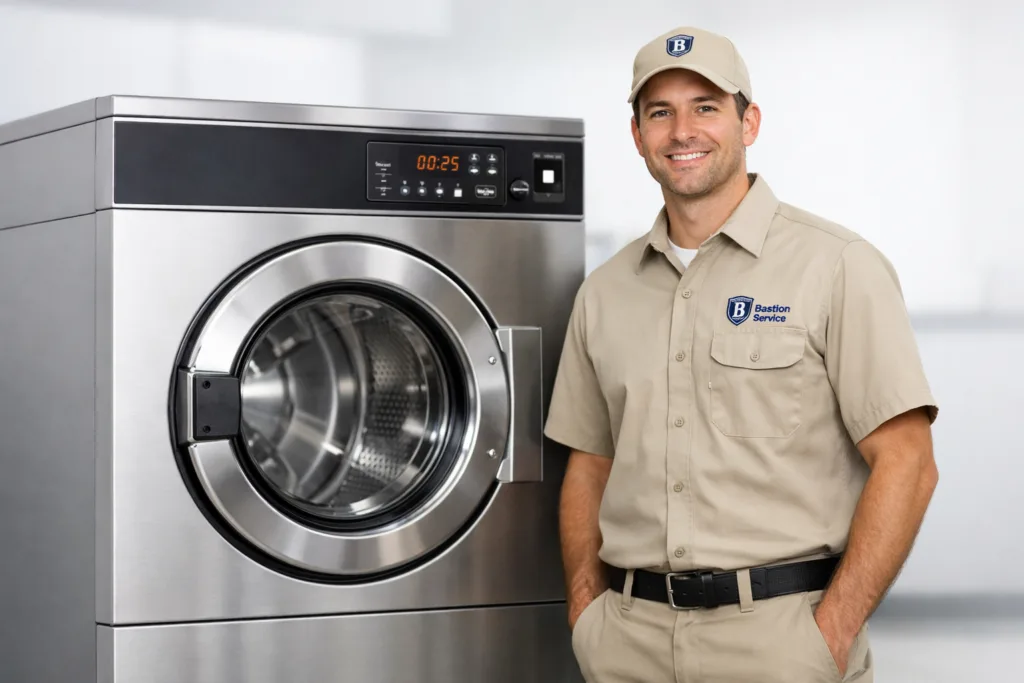




Speed Queen laundry equipment problems can interrupt room turnover, customer availability, staff routines, and overall workflow faster than many operators expect. When a washer will not drain, a dryer loses heat, or a machine starts failing unpredictably, the most useful next step is to identify the fault, assess whether the unit should stay in service, and schedule repair based on the impact on daily operations. Bastion Service works with businesses in West Los Angeles that need symptom-based repair support for Speed Queen washers and dryers used in active laundry environments.
For specific equipment paths in West Los Angeles, review Speed Queen Washer Repair in West Los Angeles, Speed Queen Dryer Repair in West Los Angeles, and Commercial Appliance Repair in West Los Angeles.
Speed Queen laundry equipment issues that often lead to service calls
Many machine failures start as performance changes rather than complete shutdowns. A washer may begin leaving water behind, stopping mid-cycle, or shaking harder than normal. A dryer may still run but take too long to dry, shut off early, or produce inconsistent heat. These problems affect throughput long before the equipment stops entirely.
Common symptoms that usually justify a service visit include:
- Washers that do not fill, agitate, spin, or drain correctly
- Dryers that run without heat or need repeated cycles to dry loads
- Cycle interruptions, error displays, or machines that will not start
- Water leaks, standing water, or drainage backups
- Unusual vibration, banging, scraping, or squealing noises
- Burning odors, overheating, or breaker trips
- Inconsistent performance from one load to the next
In business settings, these issues are rarely isolated annoyances. They create rework, slow down staff, reduce equipment availability, and can shift too much demand onto the remaining machines.
Washer symptoms and what they may mean
Washer will not start or keeps stopping
If a Speed Queen washer does not start at all, starts inconsistently, or stops before the cycle finishes, the problem may involve power supply issues, door or lid sensing, controls, or drive-related components. A machine that pauses randomly can be difficult for staff to work around because it creates uncertainty from load to load. When unfinished cycles are becoming routine, repair is usually more cost-effective than repeatedly resetting the machine and hoping it completes.
Standing water, slow drain, or failed spin cycle
Water left in the tub after a cycle often points to pump trouble, drain restrictions, control issues, or spin-related mechanical wear. In practice, the symptom matters because it turns one failed load into multiple operational problems: wet textiles, delayed next loads, extra handling time, and a machine that may not be ready for immediate reuse. If slow drainage is paired with poor spinning, both the drain system and the drive system may need inspection.
Leaks around the machine
A leaking washer may have hose issues, connection problems, worn seals, drainage overflow, or internal component failure. Even small leaks deserve prompt attention in shared laundry rooms, hotels, and other business environments because water migration can affect flooring, nearby equipment, and safe footing. A repair visit helps determine whether the leak is tied to fill, drain, or spin activity so the right corrective work can be planned.
Excessive vibration or impact noise
Strong movement, banging during spin, or repeated out-of-balance behavior can come from suspension wear, mounting issues, load distribution problems, or drivetrain concerns. If the machine appears to be walking, striking internally, or creating heavy impact noise, continued use can worsen wear and increase the chance of collateral damage. This is especially important when the unit is part of a bank of machines that needs to stay available on a daily schedule.
Dryer symptoms that reduce output and reliability
Dryer runs but does not heat
When a Speed Queen dryer tumbles normally but produces little or no heat, likely causes can include failed heating components, control faults, airflow restrictions, or sensor issues. From an operations standpoint, no-heat drying creates immediate backlog because loads occupy machine time without producing usable results. Re-running damp loads also adds unnecessary wear to the dryer and slows the rest of the laundry process.
Long dry times or damp loads after a full cycle
A dryer that heats but still takes too long to finish may have reduced airflow, cycling problems, partial heating failure, or moisture-sensing issues. Long dry times often get dismissed at first because the machine still appears functional, but they can be one of the most expensive performance problems in a busy laundry setup. If staff are adjusting around one slow dryer or extending turnaround expectations, the machine is already affecting productivity.
Overheating, shutdowns, or hot smells
Dryers that run too hot, shut down during operation, or produce scorched odors should be evaluated quickly. These symptoms can point to airflow blockage, thermostat issues, motor stress, or electrical component problems. The key repair question is not just what failed, but whether the dryer should remain offline until service is completed. Heat-related symptoms deserve faster action than routine wear concerns because they can become larger equipment and safety issues if ignored.
Noise, drum trouble, or intermittent tumbling
Squealing, scraping, thumping, or a drum that struggles to turn often indicates wear in support parts, belt systems, motor components, or related moving assemblies. These failures tend to become more pronounced with continued use. If the noise is getting worse, the repair window is usually better now than after a full stoppage during a heavier operating period.
How businesses in West Los Angeles can judge repair urgency
Not every symptom carries the same level of urgency. Some issues mainly reduce efficiency, while others suggest that the machine should be removed from use until inspected. A useful way to evaluate urgency is to look at the operational effect, not just whether the equipment still powers on.
Service should move higher on the schedule when you notice:
- Loads needing to be rerun to reach acceptable results
- Staff monitoring one machine more than others
- Water left in washers or damp loads left by dryers
- Repeated interruptions during the same part of the cycle
- Heat, odor, leak, or breaker-related symptoms
- Noise or vibration that is getting progressively worse
For businesses in West Los Angeles, these patterns usually signal that downtime is already developing, even if the unit has not failed completely.
Repair versus replacement: what the symptom pattern can tell you
Many Speed Queen washer and dryer problems are repairable when the failure is limited to a specific part or system. Pumps, belts, heating components, controls, switches, sensors, and other serviceable parts can often restore reliable operation when diagnosed early. The decision becomes less straightforward when one machine has multiple active symptoms, recurring breakdown history, or broad wear across several systems.
Signs that a repair discussion may need to include replacement planning include:
- Multiple unrelated failures appearing at the same time
- Repeat service history for the same machine
- Performance problems that return soon after prior repairs
- Heavy wear affecting both operation and reliability
- Downtime costs that outweigh the value of another repair cycle
A proper inspection helps separate a single correctable issue from a machine that is becoming unreliable overall. That distinction matters when uptime is tied directly to customer service and labor efficiency.
What a service visit helps clarify
A repair appointment is not only about naming a bad part. It also helps determine whether the machine can continue operating in the short term, whether related components show wear, and whether the symptom points to a narrow fix or a wider reliability problem. That is especially important for laundromats, hotels, shared laundry rooms, and other businesses that depend on consistent washer and dryer availability.
During troubleshooting, the goal is typically to confirm:
- The system causing the current failure
- Whether the symptom is isolated or part of broader wear
- Whether continued use is likely to worsen damage
- What repair path best supports uptime and scheduling
Scheduling repair before downtime spreads
If your Speed Queen laundry equipment is leaking, failing to heat, draining poorly, stopping mid-cycle, vibrating excessively, or producing inconsistent results, it makes sense to schedule diagnosis before the problem disrupts more of your operation. For West Los Angeles businesses, timely repair planning helps protect machine availability, reduce repeat load handling, and keep a single equipment problem from turning into a wider workflow issue.


