
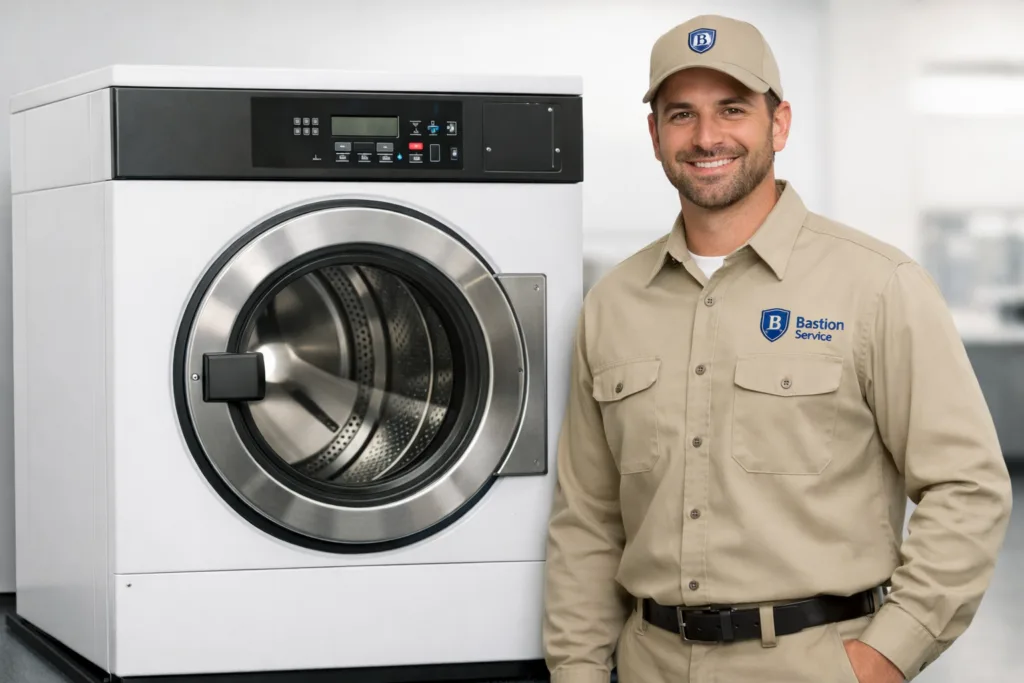





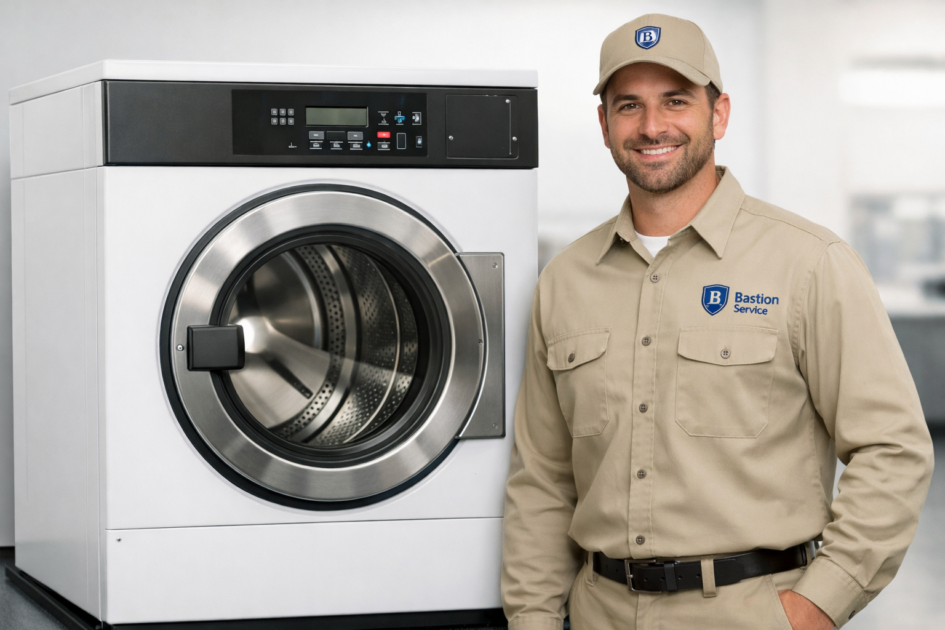
When Speed Queen laundry equipment begins disrupting daily operations, the priority is not just identifying a bad part but deciding how to protect throughput, staff time, and customer service while the issue is addressed. For businesses in Rancho Palos Verdes, repair service should help determine what symptom matters most, whether the equipment can remain in use safely, and how quickly the problem is likely to spread into a larger outage.
For specific equipment paths in Rancho Palos Verdes, review Speed Queen Washer Repair in Rancho Palos Verdes, Speed Queen Dryer Repair in Rancho Palos Verdes, and Commercial Appliance Repair in Rancho Palos Verdes.
Bastion Service works with Speed Queen washer and dryer problems in business settings where delayed cycles, leaks, vibration, heating failures, and recurring shutdowns can affect the entire laundry workflow. A service-oriented visit should connect the symptom to the likely failure area, explain operational risk, and help managers schedule repair in a way that limits unnecessary downtime.
Washer Symptoms That Usually Need Prompt Repair
Speed Queen washer problems often start as performance complaints before they become complete breakdowns. A machine may still run, but if it is not filling correctly, not draining fully, struggling to spin, or leaving loads too wet, it is already reducing capacity and creating extra handling for staff. In many cases, the same symptom can point to different causes, including drain system restrictions, pump failure, drive problems, lid or door sensing issues, control faults, or internal wear.
Leaks are another common reason businesses schedule washer repair. Water around the base of the machine may come from hoses, tub-related components, door or seal wear, or connections that have loosened over time. Even a small recurring leak can create flooring concerns, interrupt adjacent equipment use, and lead to a larger repair if the source is ignored.
Noise and movement also matter. Banging during spin, grinding sounds, hard vibration, or repeated off-balance interruptions can indicate more than a simple load issue. These symptoms may reflect suspension wear, mounting problems, drive-system strain, or internal mechanical damage that gets worse with continued operation.
Washer issues that should not be delayed
- Unit will not drain or leaves standing water in the basket
- Spin cycle fails or stops repeatedly
- Overflowing or overfilling during wash
- Visible leaking during or after cycles
- Burning smell, tripped power, or harsh mechanical noise
- Repeated error conditions or cycle cancellations
When these symptoms appear, continuing to run the washer can increase water damage risk, worsen component failure, and make scheduling more difficult if the machine goes fully down during active business hours.
Dryer Problems That Slow Turnaround
Dryer issues often show up as reduced output before the machine stops working entirely. No heat, weak heat, long dry times, drum problems, or shutdowns during operation all affect how quickly loads move through the laundry room. In a business environment, that can cause backup across the rest of the equipment and force staff to spend more time re-running loads or redistributing work.
A Speed Queen dryer that takes too long to dry may be dealing with airflow restrictions, heater-related failures, thermostat or sensor issues, motor problems, belt wear, roller wear, or electrical faults. If the drum is not turning smoothly, the machine is overheating, or it stops before a cycle finishes, the problem may already be beyond routine wear and into a repair issue that should be addressed before more parts are affected.
Unusual sounds are also important. Thumping, scraping, squealing, or rattling often point to moving parts that are wearing out or no longer aligned correctly. These symptoms are easy to postpone when the dryer still runs, but they are often early signs of a more disruptive failure.
Dryer warning signs that need attention
- No heat or poor heat output
- Loads taking too long to dry
- Dryer shuts off mid-cycle
- Drum does not turn or turns inconsistently
- Burning odor or signs of overheating
- Control or cycle-response problems
If a dryer is overheating, producing a hot electrical smell, or failing unpredictably, it is wise to limit use until the cause is confirmed. Those conditions can turn a manageable repair into a more disruptive service interruption.
How Symptom Patterns Help Guide Repair Decisions
One isolated failure is different from a machine that has been showing several signs of decline at once. A washer that leaks slightly but otherwise completes cycles may call for a narrower repair path than one that leaks, struggles to drain, and produces heavy spin vibration. The same applies to dryers: a simple no-heat complaint is not the same as a dryer with no heat, abnormal noise, and repeated shutdowns.
Looking at the full symptom pattern helps determine:
- Whether the problem appears isolated or system-wide
- Whether continued short-term use is reasonable
- How urgent the repair schedule should be
- Whether related wear should be checked during service
- Whether repair still makes sense compared with replacement
This matters for operators trying to avoid unnecessary interruptions. A unit that still powers on is not always a unit that should stay in active use, especially if it is causing incomplete cycles, repeat resets, or safety-related warning signs.
Repair vs. Replacement for Speed Queen Laundry Equipment
Many Speed Queen units are worth repairing when the issue is clearly identified and the rest of the machine remains in stable condition. Businesses often choose repair when the fault is limited, the unit has been otherwise reliable, and restoring normal operation is more practical than replacing the machine.
Replacement may deserve stronger consideration when equipment has a pattern of repeat service needs, multiple failing systems, or steadily declining performance across several functions. If a washer or dryer is generating recurring downtime, affecting surrounding workflow, and requiring repeated intervention, the larger operating cost can become more important than the immediate repair itself.
A repair assessment is most useful when it helps separate a serviceable problem from an equipment decision that may no longer support day-to-day operations efficiently.
What Businesses in Rancho Palos Verdes Should Expect During Service
A productive repair visit should do more than confirm that a machine is malfunctioning. It should review the reported symptoms, test the affected functions, identify the likely fault area, and check whether related wear or secondary damage is present. For businesses in Rancho Palos Verdes, that information supports scheduling decisions, load planning, and staffing adjustments while the equipment is being repaired.
Intermittent problems are especially important to document. A washer that only sometimes fails to lock or a dryer that heats inconsistently may still be costing time every day even if it has not fully stopped operating. Addressing those issues before total failure can help avoid emergency scheduling and wider disruption to the laundry room.
When to Schedule Service
If your Speed Queen washer or dryer is leaking, failing to complete cycles, overheating, vibrating excessively, producing unusual noise, or taking too long to process loads, the next step is to schedule diagnosis before the problem affects more of your operation. For businesses in Rancho Palos Verdes, timely repair helps protect uptime, reduce avoidable strain on other machines, and give managers a clearer path for keeping laundry service moving with less disruption.


