
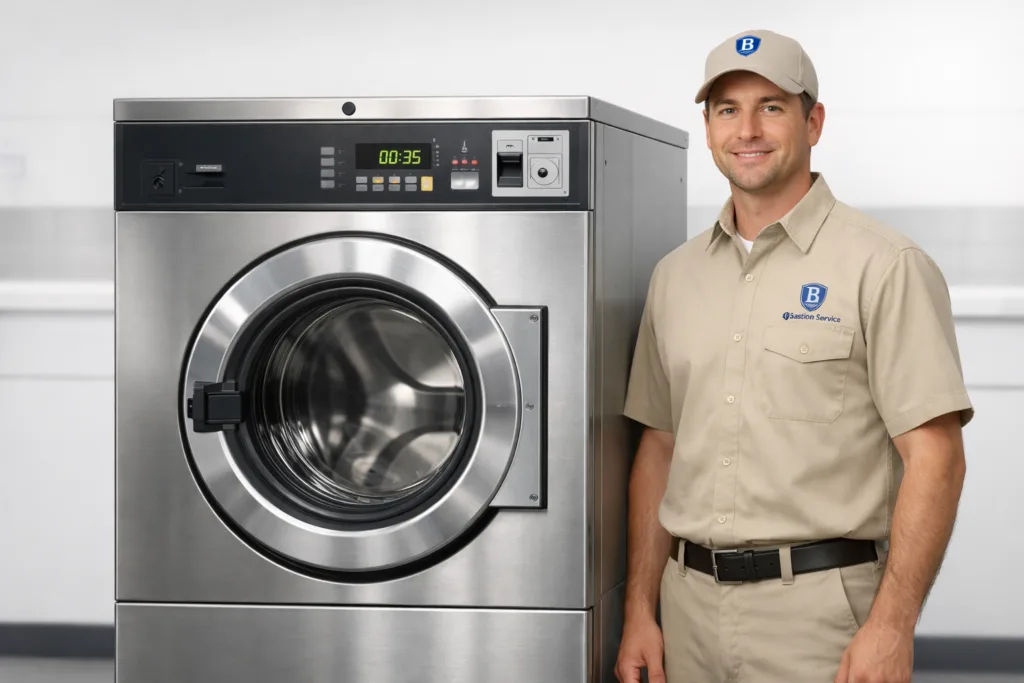




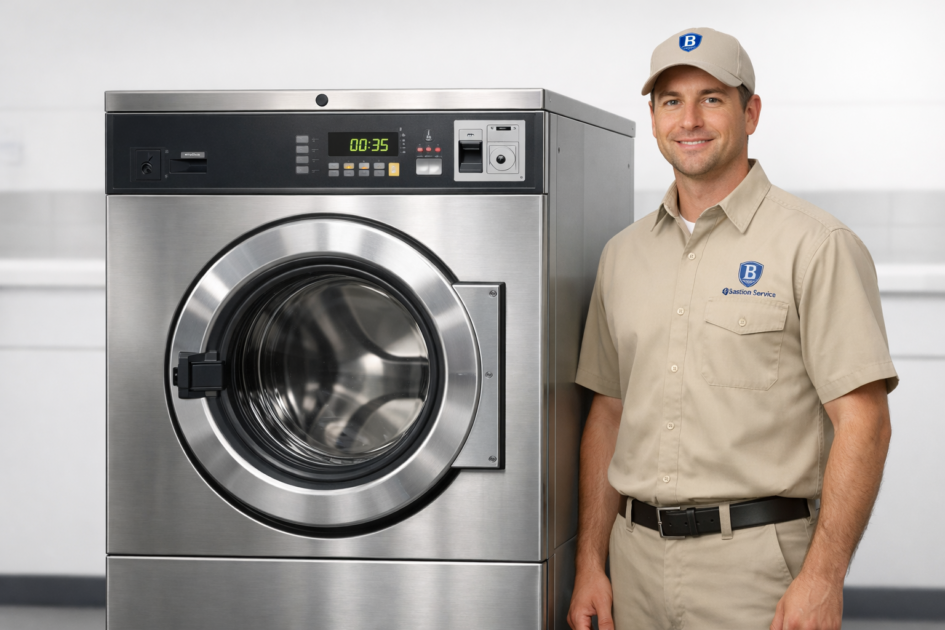
When Speed Queen laundry equipment starts disrupting daily operations, the priority is to identify the fault quickly, decide whether the machine should stay in use, and schedule repair in a way that limits downtime. For businesses in Mar Vista, washer and dryer problems can affect customer turnaround, staffing flow, and the ability to keep laundry moving without workarounds. Bastion Service provides repair support focused on symptom-based diagnosis, repair planning, and next steps that fit active business schedules.
For specific equipment paths in Mar Vista, review Speed Queen Washer Repair in Mar Vista, Speed Queen Dryer Repair in Mar Vista, and Commercial Appliance Repair in Mar Vista.
Why symptom-based repair matters for laundry equipment
Washers and dryers often show similar outward problems even when the underlying cause is different. A machine that stops mid-cycle might have a drain issue, a control problem, a door lock fault, or a motor-related failure. A dryer with long dry times might have a heat problem, restricted airflow, or a sensor issue rather than one obvious failed part. That is why repair decisions are best made after the equipment has been evaluated based on the full symptom pattern, not just the most visible complaint.
For Mar Vista businesses, early service scheduling can help prevent one unreliable machine from creating wider delays across the entire laundry process. It can also reduce the risk of using equipment that is overheating, leaking, shaking excessively, or straining other components.
What Speed Queen laundry equipment problems usually need service
Business-use laundry equipment should be checked when performance changes start affecting output, consistency, or safety. Common warning signs include:
- Machine not starting or failing to complete cycles
- Standing water, slow draining, or weak spin performance
- Leaks around the machine or water where it should not be
- Excess vibration, banging, scraping, or grinding sounds
- Dryer running without enough heat
- Dryer taking much longer than normal to finish loads
- Overheating, burning smells, or repeated shutdowns
- Inconsistent controls, cycle errors, or unpredictable operation
When these symptoms appear regularly, the issue is usually beyond routine use conditions and should be diagnosed before the machine is relied on for normal workload.
Speed Queen washer symptoms and what they can mean
Washer will not start or stops before the cycle ends
If a washer does nothing when started, pauses unexpectedly, or shuts down before completing the cycle, possible causes include door lock problems, electrical supply issues, control faults, fill problems, or failures in drain and spin functions. In a busy laundry environment, repeated restart attempts can waste time without resolving the underlying issue. A repair visit helps determine whether the problem is isolated to one component or reflects a larger operating fault.
Standing water, slow drain, or loads coming out too wet
When water remains in the drum or fabric comes out heavier than expected, the problem may involve a blocked drain path, pump trouble, drive issues, balance-related shutdowns, or controls that are not advancing the cycle correctly. These symptoms matter because they affect everything downstream, including dry times and machine availability. If the unit is no longer clearing water consistently, service should be scheduled before the condition worsens.
Leaks, vibration, and unusual washer noise
Leaks can come from hoses, seals, pumps, or water connections. Strong vibration, knocking, or grinding can point to suspension wear, bearing problems, drum issues, or mounting concerns. These are not just comfort issues. They can affect surrounding surfaces, create safety concerns for staff, and increase wear on nearby components. A proper inspection helps determine whether the machine can be stabilized with repair or whether the damage has spread further than the original symptom suggests.
Speed Queen dryer symptoms and what they can mean
No heat or long dry times
A dryer that tumbles but does not dry properly may have heating component problems, thermostat issues, airflow restrictions, sensor faults, or control failures. Long dry times can also result from conditions that reduce heat transfer rather than eliminate heat completely. In business settings, that means lower throughput and a growing backlog of unfinished loads. The useful question is not just whether the dryer gets hot, but whether it is heating and moving air the way it should.
Dryer not starting, shutting off, or overheating
If the dryer fails to start, stops before loads are finished, or seems hotter than normal, the cause may involve switches, motor components, thermal protection, wiring, or electronic controls. Overheating should not be treated as a minor inconvenience. It is a sign that the machine may be operating outside normal conditions, and continued use can lead to wider part damage or sudden shutdown.
Squealing, thumping, scraping, or burning smells
Noises related to drum movement often suggest wear in belts, rollers, pulleys, supports, or other moving parts. A burning smell can indicate friction, heat buildup, or airflow-related stress. These are strong indicators that the equipment should be taken seriously and inspected promptly. In many cases, what begins as a wear issue becomes a larger repair if the dryer keeps running under strain.
When to schedule repair sooner rather than later
Some laundry equipment problems can wait for the next planned service window, but others should be addressed as soon as possible. Faster scheduling makes sense when:
- The machine is leaking onto the floor
- The dryer is overheating or giving off a hot or burning odor
- The washer will not drain or leaves repeated standing water
- The unit is tripping power, failing to start, or stopping mid-cycle
- Noise or vibration has become noticeably worse
- Staff are changing workflow to compensate for one unreliable machine
Multiple symptoms at the same time usually mean the issue is no longer minor. A washer that is both leaking and noisy, or a dryer that is both slow and overheating, should be evaluated before the machine returns to regular use.
Repair planning for active business operations
For many businesses in Mar Vista, the repair decision is not only about fixing one machine. It is also about keeping the rest of the laundry process moving. That may involve deciding whether a unit can stay in limited operation, whether parts should be ordered before a broader failure occurs, or whether downtime should be coordinated around lower-demand periods. A service assessment helps management weigh repair urgency against workload, staffing, and available backup equipment.
This is especially important when a location depends on consistent washer and dryer turnover. Small performance losses can become major scheduling problems long before a machine fully stops working.
Repair versus replacement considerations
Not every fault points to replacement, and not every older machine should be ruled out for repair. The best choice depends on the failed components, the condition of the rest of the equipment, repeat breakdown history, and the impact of downtime on daily operations. A targeted diagnosis helps clarify whether the machine is a good repair candidate or whether replacement timing should be part of the discussion.
For sites with multiple machines, the real question is often whether the equipment can return to stable service without creating more disruptions in the near future. That is why accurate troubleshooting matters before major decisions are made.
Speed Queen washer and dryer repair support in Mar Vista
If Speed Queen laundry equipment is reducing output, extending cycle times, or creating reliability concerns, the next step is to schedule service based on the symptoms the machine is showing now. Repair is most useful when it helps a business decide what failed, whether the equipment should remain in operation, and what action will restore dependable performance with the least disruption to daily work in Mar Vista.


