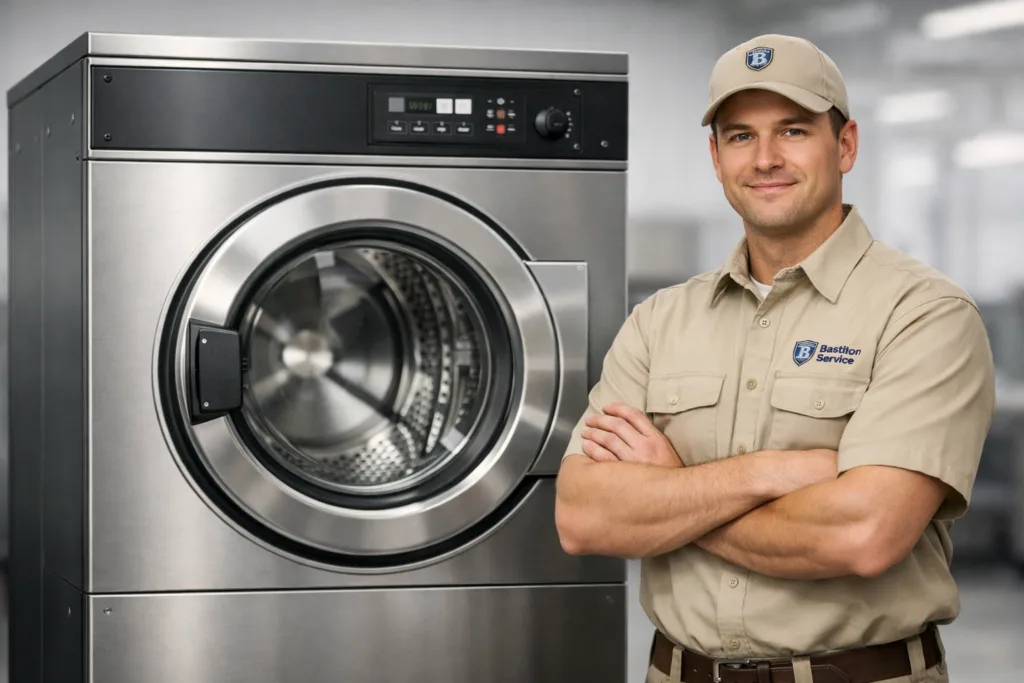




Washer and dryer issues rarely stay isolated for long in a busy laundry operation. When a Speed Queen unit starts missing cycles, leaving loads unfinished, leaking, overheating, or producing unusual noise, the real concern is lost capacity, staff disruption, and avoidable strain on the rest of the equipment lineup. Bastion Service works with El Segundo businesses to inspect the symptom pattern, identify the failing system, and schedule repair based on urgency, safety, and expected downtime.
For specific equipment paths in El Segundo, review Speed Queen Washer Repair in El Segundo, Speed Queen Dryer Repair in El Segundo, and Commercial Appliance Repair in El Segundo.
Speed Queen Laundry Equipment Problems That Commonly Require Service
Speed Queen laundry equipment is built for repeated daily use, but heavy demand still leads to wear in pumps, valves, belts, motors, heating components, controls, sensors, support parts, and airflow-related systems. In many cases, the first warning sign is not a complete shutdown. It may show up as longer cycle times, intermittent stopping, wet loads after spin, extended drying, temperature inconsistency, drain problems, or vibration that gets worse from one day to the next.
These symptoms matter because they affect throughput in different ways. A washer problem can bottleneck the entire wash process by leaving water in the basket or stopping before spin. A dryer problem can create a backup at the finishing stage by increasing dry times or forcing staff to rerun loads. Service is most effective when the actual operating behavior is checked early rather than after the machine is pushed into a full failure.
Washer Symptoms That Affect Uptime
Not Filling, Slow Filling, or No Water Flow
If a washer is not filling correctly, the issue may involve inlet valves, water supply problems, screens, control signals, or a lock-related condition that prevents the cycle from advancing. Slow fill times can also create extended cycles that reduce load capacity across the day. When the machine appears to start but never reaches a normal wash sequence, the problem usually needs more than a surface reset.
Not Draining or Leaving Standing Water
A Speed Queen washer that will not drain properly can leave loads unfinished and force staff to handle wet laundry manually. Common causes include drain pump failure, blockage in the drain path, switch issues, or control faults that prevent the unit from moving into the drain portion of the cycle. If standing water is becoming common, continued use can increase wear on pump and motor components and create a larger interruption.
No Spin, Weak Spin, or Wet Loads at the End
When the washer completes the cycle but laundry comes out too wet, the root problem may be tied to drive components, motor performance, suspension wear, imbalance sensing, or control issues. Weak spin often looks like a dryer problem at first because dry times increase, but the cause begins upstream in the wash process. If multiple loads are finishing with excess moisture, the washer should be checked before dryer capacity is blamed.
Leaks, Door Problems, or Mid-Cycle Stoppage
Leaks may come from hoses, seals, valves, drain connections, or internal components that only release water during specific parts of the cycle. A washer that stops mid-cycle may also point to door or lid lock problems, drainage faults, or an electronic issue that prevents normal progression. In a shared laundry room, hotel laundry area, or laundromat environment, even a small leak can quickly become a workflow and floor-safety problem.
Excessive Vibration, Banging, or Walking
Heavy vibration is more than a nuisance. It may signal suspension wear, out-of-balance detection problems, mounting issues, or worn mechanical parts that are no longer supporting the basket correctly. If the machine is striking the cabinet, shifting position, or repeatedly aborting spin, it is best to stop treating the symptom as a normal load-balance issue and have the machine evaluated before surrounding parts are damaged.
Dryer Symptoms That Slow Production
No Heat or Inadequate Heat
A dryer that tumbles without producing enough heat can be linked to heating elements, igniters, gas valve issues, thermostats, thermal safety components, controls, or power-supply faults depending on the model. The result is usually the same from an operations standpoint: loads take longer, reruns increase, and available machine time drops. A proper inspection helps separate a failed heating component from an airflow issue that is causing poor drying performance.
Long Dry Times and Repeated Cycles
Long dry times often point to restricted airflow, lint buildup in the exhaust path, weak heat output, sensor problems, or washer spin issues that are sending overly wet loads into the dryer. Because several causes can create the same complaint, replacing parts based on guesswork often wastes time. If the machine is running but productivity keeps dropping, the underlying cause should be confirmed before the problem spreads into broader scheduling delays.
Overheating, Shutoffs, or Burning Smells
A dryer that overheats or shuts down during operation needs prompt attention. These symptoms can indicate airflow restriction, failing support parts, motor strain, heat regulation problems, or electrical faults. Burning odors should be treated seriously because they may reflect friction from worn moving parts or excessive heat buildup inside the cabinet or vent system. In most cases, it is wiser to remove the unit from use until it can be inspected.
Noise, Drum Problems, or Intermittent Running
Squealing, thumping, scraping, or rumbling usually points to rollers, belts, idlers, bearings, or motor-related wear. Intermittent drum movement can also indicate that the unit is close to a no-run condition. These problems often begin gradually and then accelerate, turning a machine that still operates into one that suddenly stops during a busy period.
What Speed Queen Service Visits Typically Need to Confirm
The most useful repair visit is one that identifies the failed system and clarifies the repair path in terms that help an operator make decisions. A washer that stops before spin may have a drain fault, lock issue, motor problem, or control failure. A dryer with poor performance may have heat loss, airflow restriction, or sensor-related cycling problems. Similar symptoms can come from different causes, which is why symptom-based diagnosis matters before scheduling parts and labor.
For business operators, the practical questions are usually straightforward:
- Is the equipment safe to keep using until repair?
- Is the problem likely to worsen quickly?
- Will one repair restore normal operation, or are multiple worn systems involved?
- Should the unit be scheduled during a maintenance window or taken offline now?
Those answers help with staffing, load planning, and decisions about whether to rotate work to other machines while service is pending.
Signs the Equipment Should Be Taken Out of Service
Some symptoms allow short-term scheduling, but others suggest the unit should not continue operating. Active leaking, repeated breaker trips, overheating, persistent burning odors, severe vibration, metal-on-metal noise, failure to drain, and visible electrical irregularities all raise the risk of added damage or unsafe operation. A machine that still runs is not necessarily a machine that should stay in rotation.
In those cases, early service can protect nearby components, reduce cleanup issues, and limit the chance of a broader outage affecting the rest of the laundry process.
Repair Planning for El Segundo Businesses
Businesses in El Segundo often need repair decisions that account for more than the individual machine. A laundromat may need to protect available turns during peak traffic. A hotel may need to maintain linen flow without delays. A shared laundry room may need to minimize disruption for multiple users in the same property. That makes symptom timing important. Intermittent failures, recurring shutdowns, and slow performance usually deserve attention before they become complete stoppages.
Repair planning should also consider whether the equipment has one isolated failure or a pattern of wear across several systems. If the issue is limited to a pump, valve, belt, roller set, thermostat, igniter, or similar repairable component, service may be the most efficient next step. If the machine has recurring history, extensive wear, or multiple unresolved operating problems, the visit should also help clarify whether replacement planning makes more sense.
Washer and Dryer Problems Often Affect Each Other
One reason laundry equipment issues are sometimes misdiagnosed is that a problem in one machine shows up as a complaint in another. A washer with weak spin can make dryers seem slow. A dryer with poor airflow can make it appear that the washer is leaving loads too wet. Looking at the equipment in sequence rather than in isolation is often the best way to find the real cause of reduced throughput.
This is especially helpful when operators notice a general slowdown rather than one obvious failure. If production is slipping across the laundry room, the cause may be a combination of incomplete extraction, inconsistent heat, or a machine that only fails under load.
Scheduling the Next Step
If your Speed Queen laundry equipment is leaking, vibrating, stopping mid-cycle, failing to drain, not heating, or taking too long to finish loads, the next step is to schedule service based on the severity of the symptom and the effect on daily operations. A repair appointment in El Segundo should help confirm what failed, whether the unit can stay in use, and what work is needed to restore reliable washer and dryer performance with the least possible disruption.