





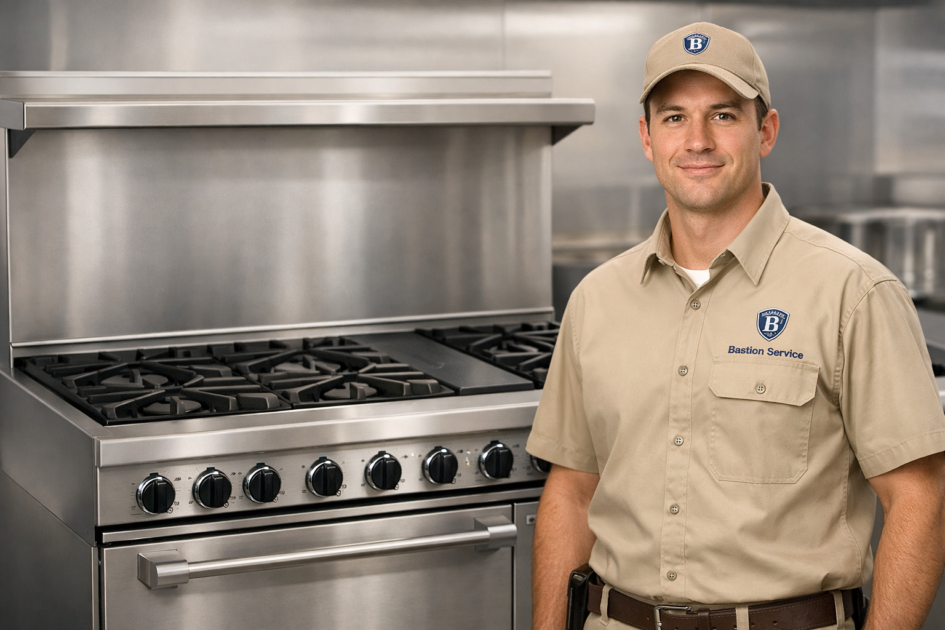
When a Southbend range starts missing ignitions, heating unevenly, or struggling to recover during active use, the immediate concern is how quickly the issue will affect tickets, prep, and staff workflow. For businesses in Palos Verdes Estates, service is most effective when the symptom pattern is tied to actual operating conditions, so the repair decision reflects what the unit is doing on the line rather than a guess based on one visible problem.
Related commercial service paths in Palos Verdes Estates include Southbend Repair in Palos Verdes Estates, Southbend Oven Repair in Palos Verdes Estates, and Vulcan Range Repair in Palos Verdes Estates.
Service that targets the fault before downtime spreads
Range issues rarely stay isolated for long in a busy kitchen. A weak burner can slow a station, an oven section with temperature swings can create inconsistent results, and intermittent controls can force staff to work around equipment instead of relying on it. Bastion Service helps identify whether the problem is tied to ignition components, gas flow, thermostatic regulation, electrical supply, worn controls, or broader wear inside the range.
That matters because similar symptoms can come from very different failures. A burner that will not light may have an ignition problem, but it can also point to clogged components, switch issues, valve-related faults, or inconsistent fuel delivery. Proper diagnosis helps avoid replacing parts that are not causing the failure and gives the kitchen a more realistic repair plan.
Common Southbend range symptoms and what they often mean
Burners not lighting or clicking repeatedly
If a burner fails to ignite, lights only after several attempts, or keeps clicking, the problem may involve the igniter, burner head condition, gas delivery, switch failure, or a control-related issue. In daily operation, this usually shows up as delayed starts, uneven flame, or stations that are no longer dependable during service. Repeated ignition trouble should be checked promptly, especially when staff have started avoiding a burner because it has become unreliable.
Weak flame or slow heat recovery
A Southbend range that takes longer to heat pans, struggles to recover after heavy use, or no longer produces strong, stable flame may be dealing with restricted flow, burner wear, pressure issues, or a failing heat control component. Kitchens often notice this first during busier periods, when the range cannot keep pace with normal output. What seems like a minor performance drop can quickly become a production problem once demand increases.
Oven section not holding temperature
On models with an oven base, poor temperature stability can lead to undercooked product, overbrowning, long cook times, and uneven results from one batch to the next. Common causes include thermostat problems, sensor faults, calibration drift, ignition issues, or heat distribution problems within the oven section. If staff are adjusting settings constantly to compensate, the equipment usually needs repair rather than another temporary workaround.
Controls acting inconsistently
Knobs, thermostats, switches, and related controls can wear down over time, especially on equipment used heavily throughout the day. If the range cuts out, responds differently from one use to the next, or no longer matches the selected setting, the fault may involve worn control components, wiring issues, relays, or electrical interruptions. These symptoms often worsen gradually before becoming a full shutdown.
Hot spots, overheating, or signs of excessive wear
Visible heat damage, burners that no longer seat correctly, recurring ignition complaints, or sections that seem to run too hot can all point to larger operating strain. In some cases, the issue is not one failed part but a combination of wear across multiple components. A service visit can help determine whether a targeted repair will restore stable operation or whether the range is showing signs of broader decline.
Why ranges fail in ways that seem inconsistent
One reason Southbend range problems can be frustrating is that they do not always fail the same way every time. A unit may work during one shift and act up during the next. Burners may ignite in the morning but struggle later under heavy demand. Oven temperature may look acceptable on one cycle and drift badly on another.
That kind of inconsistency usually means the failure is developing rather than complete. Heat exposure, vibration, grease buildup, worn switches, weak ignition parts, unstable controls, and aging gas components can all create symptoms that come and go before they become obvious. For businesses in Palos Verdes Estates, that is often the point where scheduling repair makes the most sense, before staff are forced into ongoing workarounds.
When to schedule repair instead of waiting
It is best to schedule service when the range is still operating but no longer operating predictably. Waiting for total failure often turns a manageable issue into a larger interruption. Early service is especially important when the equipment supports a key station or oven output that the kitchen cannot easily replace during a shift.
Priority scheduling is worth considering when:
- burners fail to light reliably,
- clicking continues longer than normal,
- flame is weak, uneven, or unstable,
- the oven section runs hot, cold, or inconsistent,
- controls stop matching the selected setting,
- the same complaint keeps returning after staff adjustments,
- workflow has changed because part of the range is no longer trusted.
When continued use can make the problem worse
Some symptoms should not be pushed through another service period. Repeated failed ignition, unstable flame, overheating, or erratic electrical behavior can increase wear on nearby parts and create added repair costs. An issue that begins with ignition or temperature control may eventually affect valves, wiring, sensors, switches, or connected assemblies if the unit keeps operating in a stressed condition.
There is also the business cost of using a range that is no longer performing correctly. Slower recovery, inconsistent cooking, and station delays can create waste, remake orders, and extra strain on staff. In many cases, pausing use and arranging repair is less disruptive than trying to squeeze more production out of equipment that is clearly trending in the wrong direction.
Repair or replacement: how to make the call
Not every Southbend range with recurring issues needs to be replaced, but not every aging unit makes sense to keep repairing indefinitely. The right decision depends on the specific fault, overall equipment condition, age, frequency of service history, and how much downtime the kitchen can absorb.
Repair is usually the better choice when the problem can be isolated, the unit is otherwise structurally sound, and the expected fix restores reliable heat, ignition, and control performance. Replacement deserves stronger consideration when breakdowns are spreading across multiple systems, major wear is visible, or the range has become too inconsistent to support normal production even after recent repairs.
A focused diagnosis helps separate a single repairable failure from a pattern of decline. That gives operators a better basis for deciding whether to invest in the current unit or begin planning for equipment changeout.
What to have ready before a service visit
Staff observations are often useful because they show how the problem appears in real use. Before service, it helps to note:
- which burners or oven sections are affected,
- whether the issue is constant or intermittent,
- when the problem is most noticeable,
- whether ignition is delayed, weak, or absent,
- how temperature performance has changed,
- whether any recent repairs or recurring complaints are involved.
This kind of symptom history can speed up diagnosis and help narrow down whether the issue is tied to one assembly or reflects a wider equipment condition problem.
Support for kitchens in Palos Verdes Estates
For businesses in Palos Verdes Estates, Southbend range repair is ultimately about restoring steady operation with the least disruption to daily output. If burners are not lighting, oven temperatures are drifting, or control response has become unreliable, the next step is to schedule service based on the exact symptoms the range is showing so the repair path is clear, timely, and aligned with how the kitchen actually runs.


