
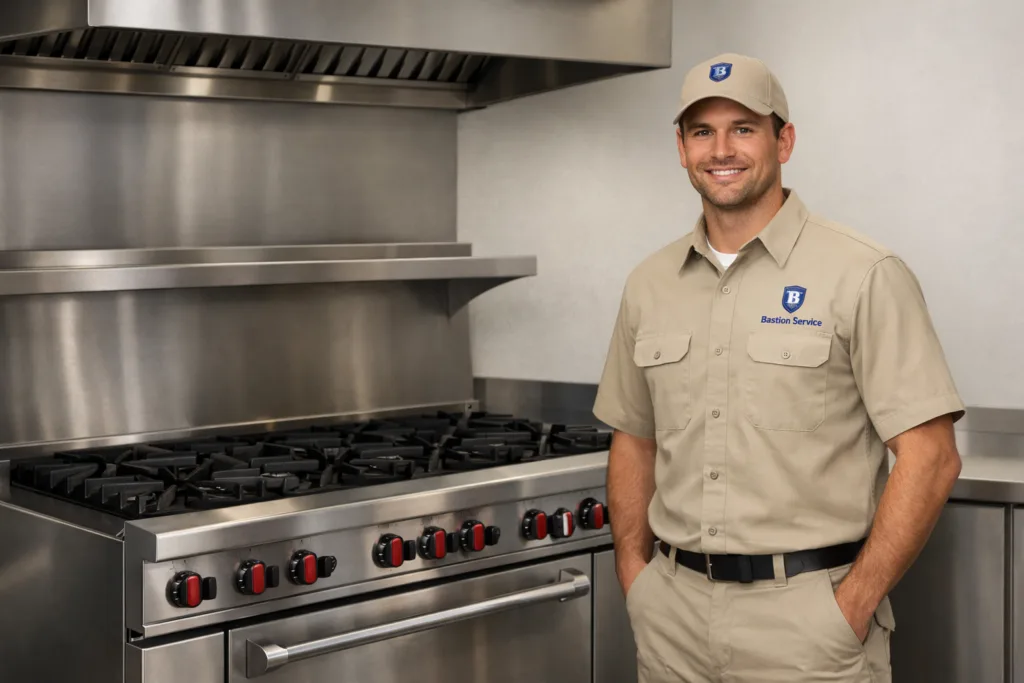




Equipment trouble in a working kitchen usually starts as a performance complaint before it becomes a full outage. A Southbend oven that drifts off temperature or a range that hesitates on ignition can slow prep, disrupt line timing, and force staff to work around equipment that no longer behaves predictably. Bastion Service provides Southbend repair support in Palos Verdes Estates by tracing the actual fault, helping businesses understand downtime risk, and scheduling service based on how the problem is affecting daily operations.
For specific equipment paths in Palos Verdes Estates, review Southbend Oven Repair in Palos Verdes Estates, Southbend Range Repair in Palos Verdes Estates, and Commercial Appliance Repair in Palos Verdes Estates.
Southbend cooking equipment problems that disrupt kitchen flow
Southbend cooking equipment is built for heavy use, but repeated heating cycles, grease exposure, wear in ignition parts, and control-related failures can lead to symptoms that interrupt production. In many kitchens, the first warning sign is not a total breakdown. It is slower preheat, uneven burner performance, inconsistent oven results, or a unit that works at one point in the day and struggles later under volume.
Common service calls in Palos Verdes Estates involve issues such as:
- Ovens not reaching or holding the selected temperature
- Ranges with burners that will not light or stay lit
- Slow heat recovery during busy service periods
- Uneven heating that affects product consistency
- Intermittent shutdowns during operation
- Faults tied to controls, sensors, burner assemblies, or ignition components
These symptoms may look similar from the outside, but they do not point to the same repair. That is why scheduling service early often prevents a manageable fault from turning into a wider equipment problem.
Oven temperature problems and uneven cooking results
Not heating to setpoint
When a Southbend oven takes too long to preheat or never gets fully up to temperature, kitchens often see delayed tickets, repeated cook-time adjustments, and inconsistent results from batch to batch. This can be caused by failing sensors, thermostat drift, heating circuit issues, burner problems, or controls that are no longer regulating heat correctly.
Even if the oven still runs, poor temperature accuracy can create steady operational losses. Product may need to be remade, staff may keep opening the door to check doneness, and prep schedules can slip. A service inspection helps determine whether the issue is isolated to a control component or part of a broader wear pattern inside the unit.
Running too hot, too cold, or unevenly
Some ovens cycle past the target temperature, while others drop below it and recover slowly. In both cases, the problem affects consistency. If one side of the cavity cooks faster than the other, or if results change throughout the day, the unit may have calibration, sensor, burner, airflow, or control-related trouble that needs repair rather than continued adjustment by staff.
Symptom-based service matters here because the solution is not always obvious from food quality complaints alone. What appears to be an isolated hot spot may actually reflect a larger control or heating fault.
Range ignition and burner issues
Burners that do not light reliably
A Southbend range that clicks without ignition, lights intermittently, or needs repeated attempts to start can slow every station that depends on it. Possible causes include igniter wear, switch problems, burner assembly faults, gas delivery issues, or failures in related controls.
Repeated relighting attempts also add risk and wasted labor. If ignition has become inconsistent, it is usually better to stop treating it as a minor annoyance and have the unit checked before the problem escalates into a no-heat condition during service.
Weak flame, uneven heat, or burner dropout
Burners that produce weak output or uneven flame can affect everything from pan response to holding times. Staff may compensate by moving product to another section of the range, which creates bottlenecks and uneven workflow across the line. In repair terms, these symptoms may involve clogged burner components, pressure-related problems, ignition faults, or failing burner controls.
If a burner starts normally and then cuts out under use, that points to a different service path than a burner that never lights at all. That distinction helps determine whether the unit can stay in limited use or whether it should be taken offline pending repair.
Slow recovery and output loss during peak demand
Heat recovery problems often show up only when the kitchen is busy. At lower volume, the oven or range may seem acceptable. Once orders stack up, the unit falls behind, temperatures sag, and the entire cook line starts waiting on equipment. For businesses in Palos Verdes Estates, this is one of the clearest signs that a repair issue is directly affecting throughput rather than convenience alone.
Slow recovery can be tied to burner inefficiency, control faults, gas-flow problems, heating wear, or other performance limitations that become obvious only under sustained demand. If production slows most during rush periods, the problem should be evaluated as an equipment capacity fault, not just a staff timing issue.
Intermittent shutdowns and hard-to-predict faults
Unexpected shutdowns are especially disruptive because they create uncertainty. A unit that works for an hour and then cuts out cannot be trusted for prep planning or active service. Intermittent failures may involve overheating protection, failing controls, loose electrical connections, power-supply issues, or safety-circuit interruptions that appear only after the equipment has been running for a while.
These faults are rarely resolved by waiting to see if the problem repeats. In fact, intermittent shutdowns often become more frequent over time. Scheduling repair before a full outage can reduce the chances of a disruptive failure in the middle of production.
When to stop using the equipment
Some problems allow for short-term limited use while service is being scheduled, but others should not be pushed. If the unit has unstable temperature control, repeated ignition failure, burner dropout, overheating signs, or unexplained shutdowns, continued use may increase damage or create unsafe operating conditions.
There is also a business cost to running equipment that no longer performs normally. Product quality becomes less predictable, labor gets redirected into workarounds, and a smaller repair can grow into a larger one if worn parts continue operating under stress.
If there is a persistent gas odor, the issue should not be treated as routine scheduling first. The equipment should be taken out of use and appropriate gas-safety procedures should be followed before repair service is arranged.
Repair decisions for ovens and ranges
Not every service call leads to the same recommendation. Some Southbend units are strong repair candidates because the main fault is limited to ignition parts, controls, sensors, or burner-related components. In other cases, repeated failures, heavy wear, or compounding issues make the repair decision more complex.
A useful service assessment looks at:
- The exact symptom pattern and when it occurs
- Whether the fault affects one section or the entire unit
- The age and operating condition of the equipment
- The likely parts exposure and labor scope
- How central the unit is to daily kitchen output
For businesses in Palos Verdes Estates, that evaluation helps separate urgent repair needs from situations where a planned equipment decision may make more sense.
Scheduling Southbend repair in Palos Verdes Estates
When a Southbend oven or range starts showing heating loss, ignition trouble, slow recovery, burner problems, or intermittent shutdowns, the most useful next step is to schedule service before downtime expands. A symptom-focused diagnosis helps identify what is failing, whether the equipment can remain in limited operation, and what repair path makes the most sense for the kitchen. For businesses in Palos Verdes Estates, timely repair scheduling can protect output, reduce disruption, and restore more predictable day-to-day performance.


