
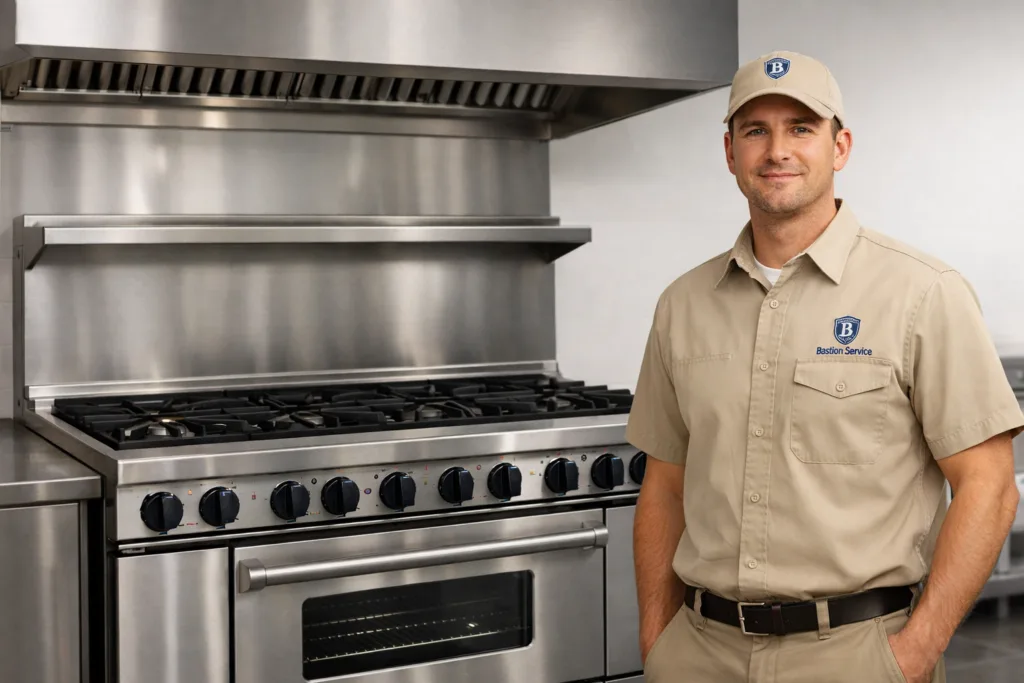




When a Southbend range starts missing ignition, producing uneven heat, or losing temperature during service, the issue usually affects more than one station. Delayed starts, weak burner output, and inconsistent oven performance can disrupt prep timing, slow ticket flow, and force staff to work around equipment that should be reliable. Bastion Service handles Southbend range repair for businesses in Palms with service centered on the actual symptom pattern, the condition of the unit, and the urgency of restoring stable operation.
Related commercial service paths in Palms include Southbend Commercial Repair in Palms, Southbend Oven Repair in Palms, and Vulcan Range Repair in Palms.
Why Southbend range problems should be evaluated early
A range can seem usable even while performance is slipping. A burner that lights on the second or third try, an oven cavity that recovers heat too slowly, or a control that no longer responds smoothly may not stop service immediately, but those problems often spread into larger operational issues. What begins as a nuisance can turn into production delays, uneven cooking results, and a higher chance of a full outage during a busy shift.
Early service is especially important when staff have already started changing normal routines to compensate. If certain burners are being avoided, if settings have to be adjusted constantly to reach expected heat, or if relighting has become part of daily operation, the range is already affecting workflow.
Common Southbend range symptoms that point to repair needs
Burners not lighting correctly
If a top burner will not light, lights intermittently, or clicks repeatedly without establishing flame, the problem may involve the ignition system, blocked burner ports, wiring issues, moisture or debris around the burner area, or a gas delivery problem inside the unit. In some cases, the burner lights but the flame is unstable or weaker than normal, which can make it difficult to hold steady cooking temperatures.
Oven not heating or heating too slowly
Slow preheat, low oven heat, or failure to reach the selected setting can point to igniter wear, burner issues, temperature sensing problems, thermostat or control faults, or gas-related performance loss. In a working kitchen, this often shows up as longer cook times, inconsistent product quality, and difficulty keeping pace when orders increase.
Temperature swings during use
When the oven heats, then drops off, or runs hotter or cooler than expected, the cause is not always obvious from the symptom alone. A range with temperature instability may have a sensor problem, a control issue, burner inconsistency, or a component that works intermittently under load. These problems can be difficult to judge by feel because the unit may appear normal for part of the cycle and fail later.
Weak, uneven, or abnormal burner flame
A Southbend range that shows uneven flame patterns, weak output, flare-ups, or burners that perform differently from one side to the other needs attention before daily use puts more strain on the system. Flame irregularities can affect pan performance, recovery times, and consistency across the cook line.
Knobs, valves, and controls not responding normally
Loose knobs, stiff controls, settings that do not match actual heat, or valves that feel rough during adjustment can indicate wear inside the control assembly. These issues are easy to dismiss at first, but they often worsen with repeated use. If the operator has to “find the spot” to make a burner behave normally, service is warranted.
Why is my Southbend range not lighting, heating, or holding temperature?
Those three symptoms often overlap. A range that does not light consistently may have an ignition fault, but similar behavior can also come from gas flow issues, burner contamination, control problems, or failing components that only act up after the unit has been running. Poor heating may relate to the burner itself, but it can also trace back to the thermostat, sensor, regulator, valve, or electronic control. Temperature loss during operation may mean the appliance is cycling incorrectly, struggling to maintain flame, or responding inaccurately to heat conditions inside the oven.
That is why part replacement based on the symptom alone can miss the real cause. Proper troubleshooting helps determine whether the fault is isolated, whether multiple parts are involved, and whether the range can be restored with a targeted repair or needs a broader service plan.
Signs the range is affecting kitchen performance
Some equipment problems are obvious, but many show up first in day-to-day operations. Businesses in Palms often schedule service after patterns like these begin to interfere with output:
- Burners require repeated attempts to light
- Oven heat no longer matches the selected setting
- Cook times are increasing without a menu change
- Staff avoid using one burner or one side of the range
- Flame strength varies during the shift
- The unit struggles more once it has been running for a while
- Controls feel inconsistent or difficult to adjust
These symptoms matter because they indicate the problem is no longer minor from an operations standpoint. Even if the range still turns on, unreliable performance can create delays, waste product, and increase labor pressure.
What technicians look at during Southbend range diagnosis
Range diagnosis is about connecting the visible symptom to the system responsible for it. Depending on the complaint, service may involve evaluating burner operation, ignition response, gas flow through the unit, control behavior, temperature regulation, wiring condition, and how the range performs once it reaches operating temperature. It may also involve checking whether one fault has caused stress on related components.
This step is important because a top burner ignition complaint and an oven heating complaint can sometimes share a common cause, while in other cases they are separate issues that happened to appear around the same time. Understanding that difference helps shape the repair decision and prevents unnecessary downtime from trial-and-error part changes.
When continued use may make the problem worse
Using a range that is already showing ignition or control trouble can lead to added wear and less predictable performance. Repeated ignition failures can stress related components. Inconsistent heat can lead staff to overcompensate with longer cooking times or higher settings. Sticky or failing controls may deteriorate further when they are forced through normal daily use.
If there is a strong gas odor, visible flame irregularity that appears unsafe, or the appliance is behaving unpredictably, the safest step is to stop using the unit until it can be assessed. For businesses in Palms, that decision is often less costly than trying to push through service with equipment that may fail completely.
Repair versus replacement considerations
Many Southbend range problems are repairable when the issue is limited to a specific burner system, ignition component, valve, control, or temperature-related part and the rest of the equipment remains in solid condition. In those cases, targeted repair can restore dependable use without the disruption of replacing the unit.
Replacement becomes a more serious consideration when the range has multiple recurring faults, a long pattern of declining performance, or broad wear affecting several major systems at once. The practical question is not just whether the range can be repaired, but whether the repair is likely to return it to stable daily operation. That decision is best made after the condition of the unit, the labor involved, and the effect on future uptime are all considered together.
Preparing for a service visit
Before scheduling repair, it helps to note exactly how the problem shows up. Useful details include whether the issue affects top burners, the oven, or both; whether it happens all the time or only during heavy use; whether ignition trouble is accompanied by clicking or delayed flame; and whether temperature loss appears during preheat, during cooking, or after the range has been running for an extended period. Staff observations about which controls are acting differently can also help narrow the issue faster.
That kind of symptom history is valuable because equipment problems do not always present the same way once the kitchen slows down. A good description of what happens during normal production can make diagnosis more efficient.
Service-focused support for businesses in Palms
Southbend range repair in Palms is most useful when it helps a business move quickly from symptoms to a repair decision that fits daily operations. Whether the immediate concern is a burner that will not light, an oven that is not holding temperature, or controls that no longer respond properly, timely diagnosis helps reduce avoidable downtime and clarifies the next step. For businesses in Palms, scheduling service once performance problems begin affecting output is the best way to protect workflow, restore reliable heat, and avoid a larger interruption later.


