
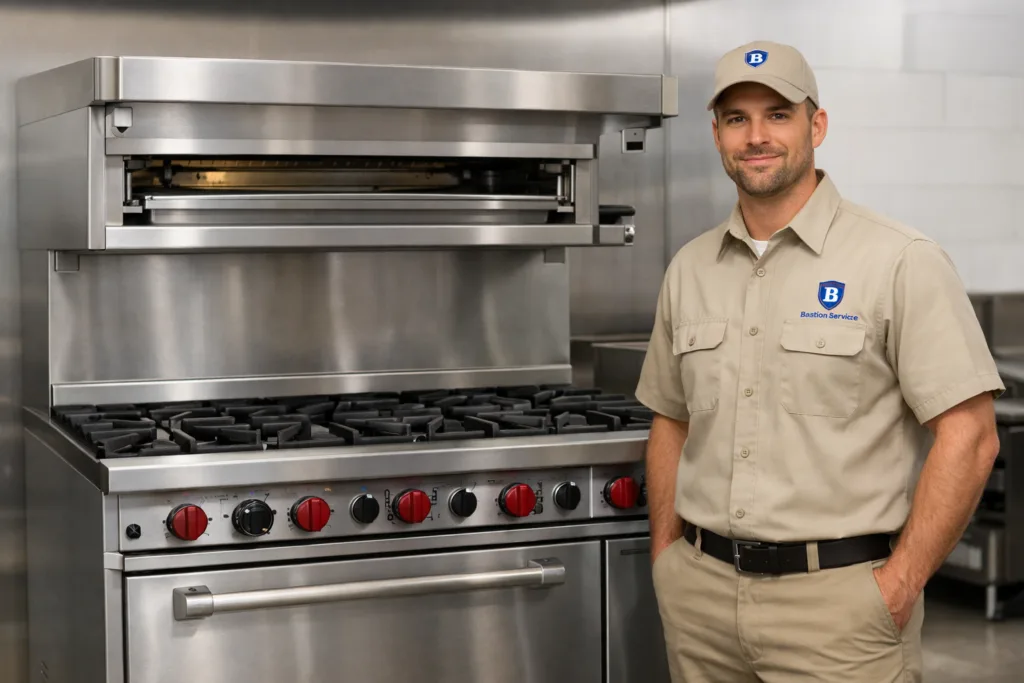




When Southbend cooking equipment starts missing temperatures, dropping burners, or shutting down mid-shift, the repair decision should be based on how the symptom is affecting production right now. For businesses in Venice, the priority is usually restoring stable operation without guessing at the cause. Bastion Service provides repair support for Southbend ovens and ranges by identifying the fault pattern, checking whether the problem is isolated or progressive, and helping schedule the next step around downtime concerns.
For specific equipment paths in Venice, review Southbend Oven Repair in Venice, Southbend Range Repair in Venice, and Commercial Appliance Repair in Venice.
Southbend cooking equipment problems that often need service
Most equipment failures do not begin with a total outage. In many kitchens, the first warning is inconsistent performance: longer preheat times, uneven cooking, weak burner output, ignition delays, temperature drift, or controls that stop responding normally. These issues can slow the line long before the unit stops working altogether.
Southbend ovens and ranges are often evaluated for problems such as:
- Ovens not reaching or holding the selected temperature
- Uneven cooking from front to back or rack to rack
- Slow heat recovery during active production
- Burners with weak flame, delayed ignition, or unstable output
- Units that shut off unexpectedly during use
- Controls, thermostats, or sensors that appear inaccurate
- Startup failures after cycling on and off
- Intermittent operation that becomes more frequent over time
Because several different faults can create similar symptoms, service is most useful when the inspection ties the visible problem to the actual cause instead of replacing parts by trial and error.
Oven performance issues that affect food quality
Temperature drift and uneven results
If a Southbend oven runs too hot, too cool, or swings above and below the set temperature, the impact usually shows up first in food consistency. Staff may notice longer ticket times, uneven browning, undercooked centers, scorched edges, or the need to rotate product more often than usual. These symptoms can point to thermostat problems, sensor issues, control faults, door seal wear, airflow disruption, or heating components that are no longer performing correctly.
What matters from a repair standpoint is whether the problem is occasional, repeatable, or getting worse. A unit that misses temperature once may need monitoring, but a unit that repeatedly drifts during normal use usually needs inspection before waste and production delays increase.
Slow preheat and poor recovery between loads
Slow recovery is easy to overlook during a busy shift, yet it can become one of the most disruptive oven problems. If the cavity takes too long to come back to temperature after the door opens or after a heavy load is introduced, the kitchen may start compensating by extending cook times, staging smaller batches, or holding product longer than intended. That workaround can reduce throughput and make timing less predictable.
This symptom may be related to heating system wear, calibration issues, sensor errors, or broader component weakness. Service helps confirm whether the repair is likely to be limited and targeted or whether the oven is showing signs of a larger reliability problem.
Range problems that disrupt line timing
Weak flames and burners that do not stay consistent
On a Southbend range, burner instability can affect everything from heat transfer to pan response time. A weak flame, delayed ignition, or burner that will not stay lit can force staff to shift pots around the line and change cooking habits to compensate. In a fast-paced kitchen, that creates avoidable delays and inconsistent output.
These symptoms may involve ignition components, burner wear, control problems, flame-sensing issues, or internal gas-related faults within the equipment. A proper diagnosis helps determine whether the problem is isolated to one burner assembly or connected to a broader operating issue within the unit.
Burner output that no longer matches the setting
Another common complaint is a burner that technically works but no longer responds correctly to adjustment. The flame may stay too low, surge unpredictably, or fail to deliver the heat expected at a normal setting. Even without a complete shutdown, this kind of performance loss can slow prep and service enough to justify repair.
If cooks are relying on guesswork to get consistent results, the equipment is no longer supporting normal operations. That is usually the point where service becomes more cost-effective than continued workaround use.
Ignition failures, startup trouble, and intermittent shutdowns
Intermittent problems are often the most disruptive because they create uncertainty. A Southbend oven or range may ignite on one cycle, fail on the next, or shut down after appearing to operate normally for part of the shift. That kind of inconsistency makes it hard for staff to plan around the unit and increases the chance of a complete failure at the worst time.
Typical warning signs include:
- Repeated clicking or failed ignition attempts
- Burners or oven functions that light inconsistently
- Equipment that shuts off after reaching temperature
- Units that restart only after waiting or repeated attempts
- Controls that reset, freeze, or behave unpredictably
These symptoms can involve igniters, safety circuits, flame sensing, switches, wiring, or control-related faults. The key service question is whether the problem is isolated enough for a direct repair or whether intermittent operation is masking multiple issues that need to be addressed together.
When continued use is likely to increase downtime
Some symptom patterns suggest the equipment should be evaluated sooner rather than later. If an oven overheats, fails to regulate temperature, or a range burner behaves unpredictably, continued use can lead to additional wear, more difficult troubleshooting, and broader disruption if another component fails under strain.
For Venice businesses, warning signs that should not be ignored include:
- Repeated shutdowns during active use
- Noticeable temperature inaccuracy affecting product quality
- Ignition failures that are becoming more frequent
- Burners that operate inconsistently from one shift to the next
- Staff changing normal cooking procedures just to keep the unit usable
If the equipment is still turning on but no longer operating predictably, that does not necessarily mean it should stay in service until total failure. In many cases, earlier repair scheduling helps avoid a longer outage later.
How repair decisions are usually made
Not every Southbend issue calls for the same response. Some repairs are straightforward once the failed component is confirmed. Others involve repeated service history, age-related wear, control-system concerns, or multiple symptoms that developed at the same time. The value of inspection is that it gives the business a clearer basis for deciding whether to proceed with repair immediately, manage a short-term workaround, or consider replacement planning.
That decision usually comes down to a few practical questions:
- Is the problem isolated or part of a wider reliability decline?
- Is the equipment still safe and predictable enough to operate before service?
- Will repair restore stable performance, or only provide a short-term improvement?
- How much production is being lost while the problem continues?
For ovens and ranges that are central to daily output, even a repairable issue can become expensive if scheduling is delayed too long and the unit fails completely during service hours.
Scheduling service for Southbend equipment in Venice
Repair scheduling is most effective when it happens while the symptom pattern is still clear and before the equipment drops out entirely. If a Southbend oven is heating unevenly, a range burner is unreliable, or the unit is shutting down during use, the next step is to arrange service based on current operating risk rather than waiting for a more disruptive failure. For businesses in Venice, that means looking at downtime impact, confirming whether the equipment should remain in use, and moving forward with a repair plan that fits the urgency of the problem.
If your Southbend cooking equipment is causing production delays, inconsistent results, ignition trouble, or repeated shutdowns, scheduling an inspection now is the most practical way to confirm the fault, protect kitchen workflow, and decide on the right repair path before the problem grows into a longer outage.


