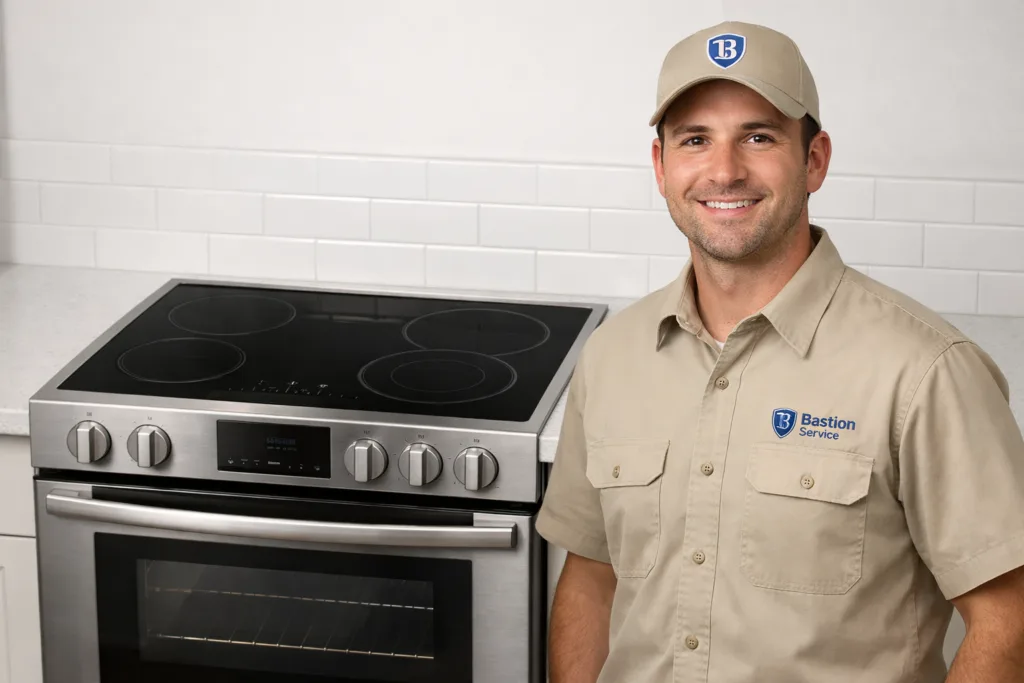
Cooktop problems are easiest to solve when the symptom is described precisely. On Samsung units, one burner failing is a different repair path from a whole section losing power, and a gas ignition problem is diagnosed differently from an electric heating issue. Paying attention to what happens, when it happens, and whether the problem is isolated or widespread can make the repair decision much more straightforward.
Start with the exact symptom pattern
Before service is scheduled, it helps to note whether the issue affects one burner or multiple burners, whether it is constant or intermittent, and whether the controls seem normal. Those details often narrow the likely cause quickly.
- One burner not working: commonly tied to a burner assembly, igniter, surface element, switch, or localized wiring issue.
- Several burners acting up: may point to power supply trouble, control failure, or a broader internal electrical problem.
- Intermittent performance: often suggests a part that is failing under heat, a loose connection, or a control issue that is becoming less reliable over time.
- Only high heat or poor regulation: usually indicates a switch or control problem rather than a cookware issue.
This symptom-based approach matters because two cooktops can appear to have the same problem from the outside while needing entirely different parts and repairs.
Common Samsung cooktop problems in Fairfax homes
Burners that will not heat
On an electric Samsung cooktop, a burner that stays cold may be caused by a failed radiant element, a bad burner receptacle, a worn infinite switch, damaged wiring, or a power issue. If the indicator light comes on but the burner does not heat, the fault is often in the heating circuit rather than the user interface.
If the burner heats inconsistently, the problem may still be electrical even if it occasionally works. Parts that are beginning to fail can behave normally for a short time and then stop once they warm up.
Gas burners that click but do not ignite
For gas Samsung cooktops, repeated clicking without ignition usually means the spark is present but lighting is not happening correctly. Common causes include a dirty burner head, moisture around the igniter, a misaligned burner cap, or a fault in the ignition system.
If one burner clicks and fails while others work, the issue is often isolated to that burner’s components. If several burners have ignition trouble, diagnosis may shift toward the spark module, switch harness, or related electrical parts.
Burners heating too high or not adjusting properly
A burner that runs hotter than the selected setting can make everyday cooking frustrating and can damage pans over time. On Samsung electric cooktops, this symptom often points to a failed switch or control component that is no longer regulating the heat output properly.
Homeowners sometimes notice this first when simmering becomes impossible or food starts scorching at low settings. That pattern is a useful clue because it suggests control failure rather than a complete heating-element failure.
Controls not responding or acting erratically
If the cooktop does not respond when a control is pressed, powers on unpredictably, or shows unusual indicator behavior, the issue may be with the touch interface, control board, or incoming electrical supply. These faults usually need direct testing because symptoms can mimic one another.
Erratic controls are especially important to address promptly if the unit turns a burner on inconsistently or fails to shut heat off correctly.
Cracked glass or a damaged cooking surface
On Samsung glass cooktops, a cracked surface is not just cosmetic. Damage can affect how heat transfers, create cleaning and spill concerns, and make continued use less safe. In some cases, the crack appears after impact; in others, it becomes noticeable after heat stress or existing weakness in the surface.
Whether repair is practical depends on the model, the extent of the damage, and the availability of the correct replacement top.
What different symptoms often mean
While every cooktop needs model-specific diagnosis, some symptom patterns are especially useful:
- No power to the unit: possible breaker, wiring, terminal, or internal power distribution problem.
- One gas burner slow to light: often buildup, cap alignment, or igniter wear.
- One electric burner cycles poorly: likely switch or element issue.
- Clicking continues after ignition: moisture, contamination, switch problem, or spark system fault.
- Heat level does not match the setting: control regulation issue.
- Visible sparking, burning smell, or tripping breaker: stop use and have the unit checked before operating it again.
When continued use is not a good idea
Some cooktop issues are inconvenient but manageable for a short time. Others should be treated as stop-use conditions. It is best not to keep using the cooktop if:
- the glass surface is cracked
- a burner overheats or will not regulate
- controls fail to respond normally
- there is visible arcing, smoke, or signs of heat damage
- gas ignition is unreliable and there is any concern about gas odor
Even when the appliance still seems partly usable, repeated operation with a failing switch, damaged burner, or unstable control can lead to additional part damage and a more expensive repair later.
Repair or replace: how the decision is usually made
Many Samsung cooktop problems are worth repairing when the failure is limited to a burner component, igniter, switch, element, or other serviceable part. That is especially true when the appliance is otherwise in good condition and the repair restores normal performance without involving multiple major components.
Replacement becomes more likely when there is major glass damage, several independent failures, recurring electronic control problems, or repair costs that approach the value of the unit. Age matters, but condition matters just as much. A newer cooktop with a single failed part is a very different situation from an older unit with repeated performance issues.
What a useful service visit should confirm
A thorough inspection should do more than identify the first failed part. It should also check whether that failure caused damage elsewhere, whether the symptom is isolated or part of a broader control issue, and whether the repair is likely to hold up under regular household use.
For homeowners in Fairfax, that means getting a repair recommendation based on the actual fault rather than trial-and-error parts replacement. The most helpful outcome is knowing what failed, why the symptom showed up the way it did, and whether fixing the cooktop is the sensible next step for the home.
Simple observations that help before scheduling service
You do not need to disassemble anything, but a few basic observations can make diagnosis faster:
- Does the problem affect one burner or more than one?
- Is the issue present every time or only sometimes?
- For gas models, does the burner click, spark, or smell of gas without lighting?
- For electric models, does the surface indicator light come on even when the burner stays cold?
- Did the problem begin suddenly, or has performance been getting worse?
Those details can help distinguish between a worn burner component, a control fault, a wiring issue, or a larger power problem.
Focused help for Samsung cooktop issues
Samsung cooktops can fail in ways that look similar from the surface, but the repair path depends on the exact configuration and symptom. Burners that do not heat, ignition systems that keep clicking, cracked glass, and inconsistent controls all need a diagnosis that matches the model and the failure pattern. For Fairfax households, the goal is simple: restore safe, predictable cooking without guessing at parts or overlooking a larger issue.