
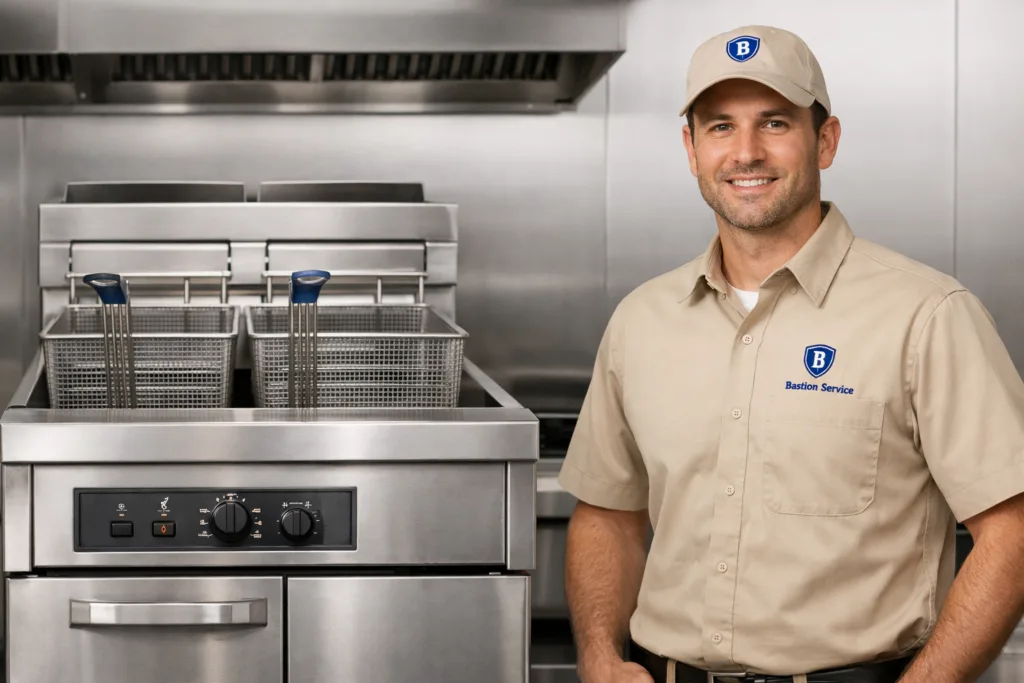





When a Pitco fryer starts drifting off temperature, locking out, or recovering too slowly during service, the problem quickly affects output, food consistency, and kitchen flow in Rancho Park. Similar symptoms can come from very different failures, so the best next step is service that identifies the actual cause before parts are ordered or the unit is pushed through another busy shift. Bastion Service handles Pitco fryer repair for businesses in Rancho Park with troubleshooting centered on the symptom pattern, the urgency of the failure, and the most sensible repair path.
Related commercial service paths in Rancho Park include Pitco Commercial Repair in Rancho Park, Commercial Fryer Repair in Rancho Park, and Frymaster Fryer Repair in Rancho Park.
Targeted diagnosis for Pitco fryer problems
Pitco fryer issues often show up as no heat, weak burner performance, ignition faults, slow recovery, unstable oil temperature, intermittent shutdowns, or leaks around lower components. In an active kitchen, those symptoms can slow ticket times, create uneven product, and force staff to work around equipment that is no longer operating normally. A service visit should narrow the problem to the correct system, whether that means ignition, gas flow, temperature sensing, controls, safety circuits, burners, wiring, or wear-related failure.
That step matters because one visible complaint can hide several possible causes. A fryer that will not maintain temperature may be dealing with a sensor issue, a control problem, poor burner combustion, a hi-limit concern, or restricted performance caused by buildup and operating conditions inside the unit. A fryer that stops mid-cycle may be reacting to overheating, an intermittent electrical fault, or a safety component that is no longer working consistently. Finding the source first helps reduce repeat downtime and avoids replacing parts that were never the real issue.
Common symptoms and what they can suggest
No heat or failure to reach set temperature
If the fryer powers on but the oil does not heat properly, the issue may involve the ignition sequence, burners, gas valve operation, temperature controls, sensors, safety cutoffs, or wiring faults. In daily operation, this often appears as undercooked product, long wait times between batches, or staff changing cooking routines to compensate. A fryer that cannot hit or hold target temperature should be checked before poor recovery starts affecting the full line.
Why is my Pitco fryer not heating or recovering temperature properly?
Slow recovery usually points to a heat-production or heat-control problem rather than a simple cooking adjustment. Burners may not be firing correctly, gas delivery may be inconsistent, sensors may be reading inaccurately, or the control may be ending the heat cycle too early. In some cases, the fryer still heats, but not with the speed needed to keep up with normal volume. That creates a gradual drop in throughput that may be more noticeable during peak periods than during startup.
Temperature swings and inconsistent cooking results
When one batch finishes correctly and the next cooks too lightly or too dark, the fryer may be cycling unevenly. Sensor drift, control faults, burner irregularity, or overheating followed by shutdown can all create inconsistent oil temperature. This kind of problem is often blamed on prep or oil condition alone, but when the inconsistency continues across shifts, the fryer itself should be evaluated.
Ignition or pilot-related trouble
If the fryer fails to ignite, struggles to stay lit, or locks out during startup, the fault may involve ignition components, flame sensing, gas flow, control timing, or safety-related hardware. These issues often begin as intermittent failed starts before becoming a full no-heat condition. If staff are relighting, resetting, or retrying startup more often than usual, that is a strong sign the unit needs repair attention.
Unexpected shutdowns or hi-limit trips
A fryer that shuts off during operation should not be treated as a random nuisance. Repeated shutdowns can indicate overheating, control failure, sensor problems, burner issues, or trouble in the safety chain. Resetting the unit without finding out why it tripped can lead to more lost time and may allow the underlying problem to get worse.
Leaks, drain-valve issues, and lower-cabinet concerns
Oil leaks around fittings, valves, or the lower section of the fryer should be addressed promptly because they affect both safety and routine operation. Drain valve wear, seal failure, and related issues can interrupt filtering and cleanup, while buildup around those areas can make the fryer harder to service and inspect. These are often repairable conditions, but they should be looked at before regular use continues.
When to schedule service
Schedule Pitco fryer service when the unit shows repeatable temperature errors, weak recovery, ignition failure, lockouts, leaks, abnormal burner behavior, or signs that staff are adjusting production around the fryer. Waiting for complete failure can turn a manageable repair into a longer outage. A fryer that still turns on but no longer performs correctly can quietly drive waste, slow output, and create avoidable inconsistency during service.
It also makes sense to call for repair when one fryer in a battery starts behaving differently from the others under the same load. That kind of comparison often helps confirm that the problem is in the machine rather than in the cooking routine. For businesses in Rancho Park, catching that shift early can make scheduling and repair planning easier before the unit drops out completely.
When continued use may make the problem worse
Running a malfunctioning fryer through repeated service periods can increase the scope of the repair. Unstable temperatures can put added stress on controls and sensing components. Repeated ignition attempts can wear on ignition-related parts. Operating with shutdown faults, overheating symptoms, or leaks can affect nearby components and make the unit less reliable overall. If the fryer is not heating correctly, keeps tripping out, or is leaking, it should be evaluated before another full production cycle.
Repair versus replacement
Not every Pitco fryer problem means the unit should be replaced. Many calls involve specific components such as sensors, controls, ignition parts, valves, switches, or other wear items that can be repaired or replaced without taking the fryer out of service permanently. Replacement becomes a stronger consideration when the fryer has severe overall wear, repeated major failures, poor prior repairs, or a repair need that no longer makes sense for the kitchen’s workload.
The right decision depends on the unit condition, the exact failure, parts cost, and how important that fryer is to daily production in Rancho Park. A diagnosis based on current symptoms gives management a better basis for deciding whether to restore the existing unit or plan for replacement instead of making that choice under pressure during an outage.
How to prepare for a fryer repair visit
Before service is scheduled, it helps to note what the fryer is doing now rather than what it did weeks ago. Useful details include whether the fryer will ignite, whether it reaches set temperature, how long recovery takes, whether shutdowns happen during startup or during active cooking, and whether any error messages or reset patterns are occurring. If the issue changes throughout the day, that timing can also help narrow the cause.
It is also helpful to identify whether the problem affects one fryer or multiple units, whether gas smell, unusual noise, visible soot, or leaking oil has been noticed, and whether staff have already had to relight, reset, or reduce use. Those details make the repair process more efficient and help move from symptom to solution faster.
Service-focused next steps for Rancho Park businesses
For Rancho Park businesses, fryer repair should be approached as an uptime decision, not just a parts decision. The goal is to identify why the fryer is underperforming, determine whether it can stay in rotation safely, and restore stable heating and recovery without repeat interruptions from an incomplete fix. If a Pitco fryer is showing no-heat symptoms, temperature swings, shutdowns, ignition trouble, or leak-related issues, the most useful next step is to schedule service based on the exact symptoms the unit is showing now.


