
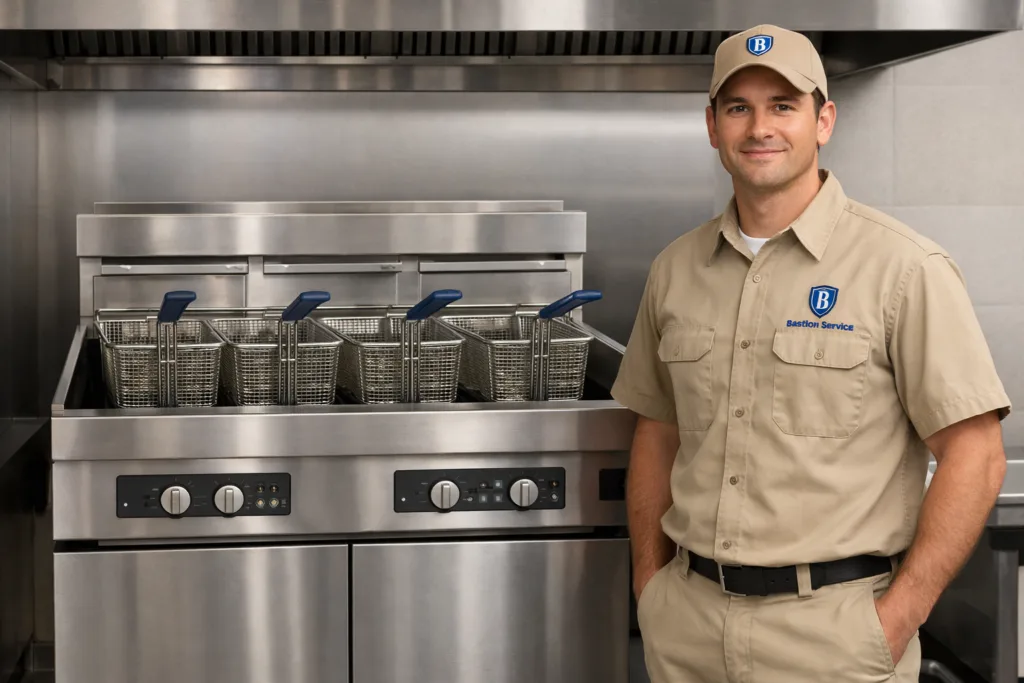




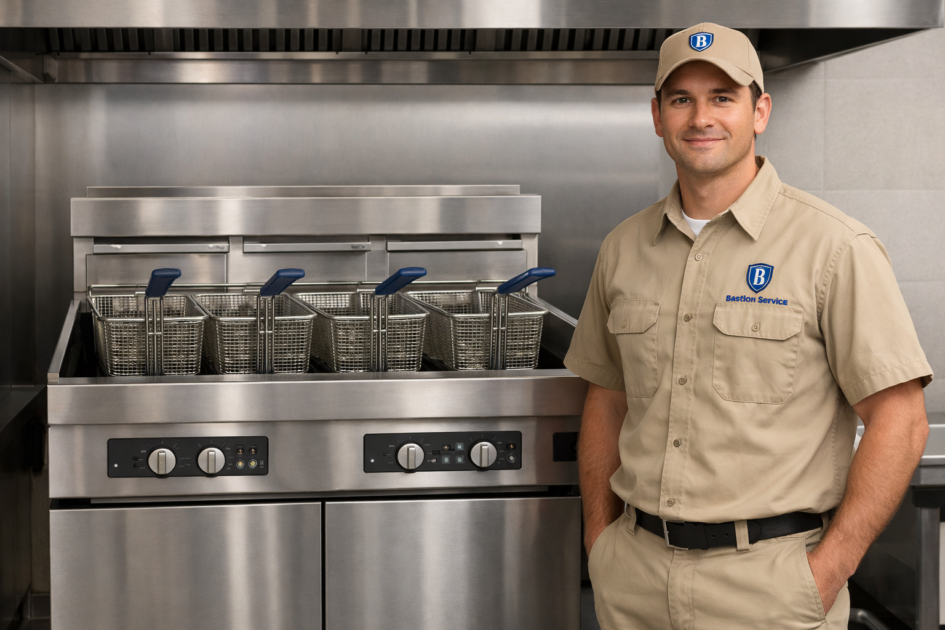
Service interruptions with Pitco cooking equipment usually start as small performance changes: slower heat-up, inconsistent recovery, burner irregularities, or a fryer that suddenly needs more attention from staff than it used to. For businesses in Rancho Park, those symptoms matter because they affect ticket times, food consistency, labor flow, and whether one problem turns into a larger outage. Bastion Service helps identify the failed system, explain what the symptom pattern suggests, and schedule repair work around the realities of kitchen production.
For specific equipment paths in Rancho Park, review Pitco Fryer Repair in Rancho Park and Commercial Appliance Repair in Rancho Park.
How Pitco cooking equipment problems typically show up in daily operation
Most equipment failures do not begin with a complete stop. More often, operators notice that the unit is still running but no longer running normally. With Pitco cooking equipment, that can mean heat that drifts, delayed ignition, poor recovery between batches, error conditions, nuisance shutdowns, or controls that do not respond the way they should.
These issues are worth addressing early because partial operation can be more disruptive than a full breakdown. Staff may keep using the unit while adjusting cook times, rotating product differently, or restarting the equipment repeatedly. That kind of workaround often hides the seriousness of the problem until peak demand exposes it.
Temperature and heat recovery issues
If a Pitco unit is taking too long to reach temperature, failing to hold a consistent range, or recovering slowly after use, output often becomes less predictable before the equipment stops altogether. In fryer operation, poor recovery can affect batch timing, oil performance, and finished product quality. Kitchens may notice that volume drops even though the equipment still appears to be heating.
Possible causes can include control faults, sensor problems, high-limit issues, burner performance trouble, power supply concerns, or gas-related faults. The important point for an operator is not guessing which part failed, but determining whether the equipment can continue in limited use or whether continued use is likely to worsen the fault.
Ignition and burner performance problems
Ignition trouble often appears as delayed startup, repeated clicking, inconsistent flame establishment, burner drop-out, or a unit that starts and then stops heating. In a busy kitchen, this creates uncertainty that slows production because staff can no longer trust the equipment to start cleanly and stay running.
Burner-related symptoms may point to ignition components, flame-sensing problems, gas flow restrictions, contamination, or control communication issues. Repeated restart attempts rarely solve the underlying problem and can waste valuable service time during meal periods. A repair visit should determine whether the fault is isolated to the ignition sequence or tied to a broader heating or safety issue.
Shutdowns, resets, and intermittent operation
Unexpected shutdowns are especially disruptive because they interrupt production without much warning. A Pitco unit that locks out, trips during operation, or requires repeated resetting may have overheating protection issues, intermittent electrical faults, control board problems, or unstable burner operation.
Intermittent symptoms are often the hardest for kitchen staff to manage because the equipment may work normally for part of the day and fail under load later. That pattern is a strong reason to schedule service before the next heavy-use period rather than waiting for a full loss of operation.
What operators should watch for before a full breakdown
There are several signs that a service call makes sense even if the equipment has not failed completely:
- Longer preheat times than normal
- Recovery that feels too slow during steady production
- Temperature swings that affect consistency
- Burners that sound uneven or cycle abnormally
- Ignition that works only after multiple attempts
- Random shutdowns during active use
- Controls that do not respond reliably
- Staff changing workflow to compensate for one problem unit
These symptoms matter because they affect more than the equipment itself. They can create product waste, slow service, increase staff frustration, and make scheduling harder when one station no longer performs the way the kitchen expects.
Why continued use can increase repair risk
When cooking equipment is unstable but still technically operating, it is tempting to push through another shift. In practice, that can make diagnosis harder and increase wear on related components. A fryer running with poor temperature control, repeated ignition failure, or intermittent shutdowns may place extra strain on controls, heating systems, and safety devices.
For Rancho Park businesses, the better question is often not whether the unit can turn on, but whether it can be trusted during active production. If staff are monitoring it constantly, adjusting around it, or losing time to resets and uneven results, service becomes a business decision rather than just a maintenance issue.
What a repair visit should clarify
A useful service appointment should narrow the problem to the actual failed system and help management decide what to do next. That includes the immediate condition of the equipment, the likely cause of the symptoms, and whether repair timing needs to be accelerated to avoid a larger disruption.
During diagnosis, operators typically want clear answers to questions like these:
- Is the issue tied to temperature sensing, burner operation, ignition, controls, or a safety-related shutdown?
- Can the equipment stay in use temporarily, or should it be taken offline?
- Is the current symptom likely to lead to additional failures if ignored?
- Does repair make sense based on condition, history, and production needs?
- How should scheduling be handled to reduce kitchen disruption?
Repair decisions for Pitco fryer performance problems
On this page, fryer repair is the main equipment concern, and many service calls center on issues that directly affect output rather than total equipment failure. A fryer that heats unevenly, recovers slowly, trips out under load, or shows burner instability may still appear usable, but those are often the exact conditions that undermine consistency and throughput.
Repair can make sense when the fault is isolated and the unit is otherwise in solid operating condition. Replacement enters the conversation when breakdowns are frequent, multiple systems are showing wear, or the equipment no longer supports reliable daily production. The value of diagnosis is that it gives management a real basis for that decision instead of relying on guesswork or temporary workarounds.
Scheduling service around kitchen downtime
Businesses in Rancho Park often need repair timing that accounts for prep windows, service periods, staffing, and active production demands. That is why scheduling should focus not only on the symptom itself, but on when the equipment is failing, how severely it affects output, and whether temporary continued operation is realistic.
If your Pitco cooking equipment is showing temperature drift, slow recovery, ignition trouble, burner inconsistency, or shutdown behavior, the next step is to arrange service before the issue causes wider production delays. Early action usually gives kitchens more flexibility, better repair planning, and a better chance of restoring stable operation without a more disruptive failure later.


