
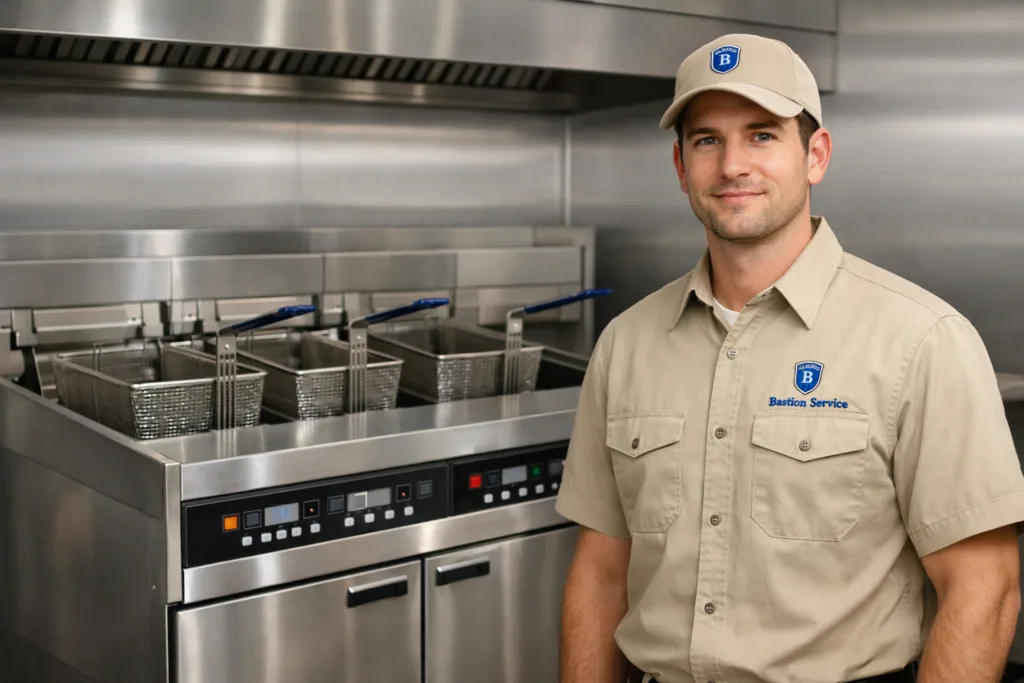




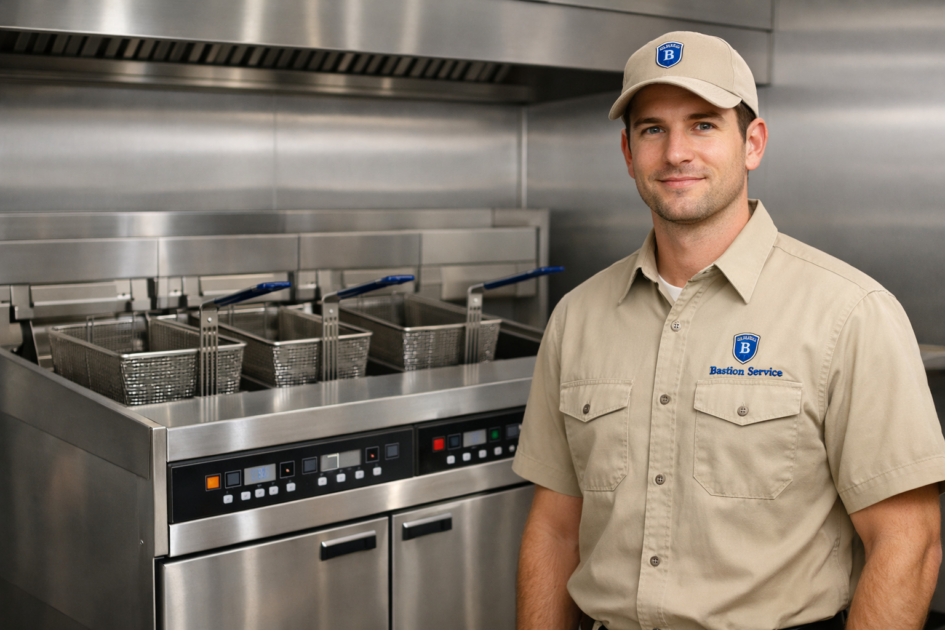
When Pitco cooking equipment starts disrupting service, the main concern is not just the fault itself but how quickly it affects output, food quality, and staff workflow. In Fairfax kitchens, even one unstable unit can slow ticket times, force menu adjustments, and put extra strain on the rest of the line. Bastion Service provides repair support built around the actual symptom pattern, equipment condition, and urgency of getting production back on track.
For specific equipment paths in Fairfax, review Pitco Fryer Repair in Fairfax and Commercial Appliance Repair in Fairfax.
For business operators, the most useful service call begins with what the equipment is doing right now: not heating, heating unevenly, recovering too slowly, shutting down during use, or showing control problems that make operation unreliable. Those details help determine whether the issue points to ignition components, burner performance, temperature sensing, safety circuits, control failure, or a broader wear problem that needs closer evaluation.
Common Pitco cooking equipment problems that lead to repair
Most service requests do not begin with a completely dead unit. More often, the equipment still runs but no longer performs the way a busy kitchen needs it to. That is when small inconsistencies start turning into production delays, wasted oil, uneven food results, and repeated staff workarounds.
- Equipment not heating or not holding the selected temperature
- Slow heat recovery during high-volume periods
- Ignition failure or intermittent burner operation
- Unexpected shutdowns during active use
- Temperature swings that affect product consistency
- Controls that stop responding or behave erratically
- High-limit trips, lockouts, or repeated reset conditions
- Performance decline that worsens during peak service
These symptoms often overlap, which is why repair decisions should be based on testing rather than assumptions. A temperature problem may begin with a sensor fault, but it can also be tied to controls, burners, gas flow, or safety components that interrupt normal operation.
Fryer performance issues that affect kitchen output
Because Pitco equipment is often central to batch cooking and fast order flow, fryer trouble tends to show up immediately in day-to-day operations. If the fryer cannot keep pace, the kitchen may still function, but only with slower recovery, longer cook times, and less predictable results.
Not heating, underheating, or overheating
When a fryer does not reach temperature, falls short during use, or runs hotter than expected, several possible causes need to be considered. The issue may involve the temperature probe, thermostat response, high-limit safety, ignition sequence, burner assembly, or control system. Underheating can reduce throughput and lead to poor product finish, while overheating can create oil breakdown and safety concerns.
In practice, the right repair path depends on whether the unit fails consistently or only under load. A fryer that seems fine during startup but struggles later in the day may indicate a different issue than one that never heats properly at all.
Slow recovery between batches
Slow recovery is one of the most costly hidden problems in cooking equipment because the unit appears usable while gradually reducing kitchen capacity. Teams may compensate by spacing out orders, lowering batch volume, or shifting work to other stations. That kind of workaround keeps service moving for a while, but it usually means the equipment is no longer performing at the level the business needs.
Possible causes include burner weakness, inaccurate sensing, control faults, restricted heat transfer, or other internal performance issues. If recovery time is getting worse, it is usually better to schedule repair before the equipment reaches a full shutdown during a busy period.
Ignition and burner problems
Ignition faults are especially disruptive because they can appear intermittent. Equipment may start normally one cycle, then fail the next, or run briefly before dropping out. That kind of inconsistency makes planning difficult and can leave staff uncertain about whether the unit is dependable enough to keep using.
Failure to ignite
If the burner does not light, lights inconsistently, or requires repeated resets, the problem may involve the ignitor, flame sensing, wiring, gas valve response, or control sequencing. Intermittent ignition should not be dismissed as a minor nuisance. In many cases, those failures become more frequent over time and create longer downtime if left unaddressed.
Weak flame or unstable burner operation
Burner performance affects more than startup. Weak or unstable burner operation can lead to uneven heating, poor recovery, temperature drift, and random shutdowns that seem disconnected from the actual source of the problem. From a repair standpoint, it is important to determine whether the symptom is isolated to the heating system or tied to a larger control or safety interruption.
Temperature control and sensor-related faults
When cooking equipment cannot regulate heat accurately, the result is usually inconsistency before complete failure. Staff may notice that settings no longer match actual performance, or that the same menu item begins finishing differently from one cycle to the next.
Temperature-related service calls commonly involve:
- Readings that do not match actual heat conditions
- Overshooting the selected temperature
- Dropping below target during production
- Excessive cycling on and off
- Safety trips related to overheating conditions
These issues matter because businesses often respond by adjusting cook times manually, changing workflow, or relying more heavily on other equipment. Those are signs that the problem is no longer minor and should be evaluated before product quality or service speed is affected further.
Control faults and intermittent shutdowns
Control-related failures can be difficult to interpret without a service visit because they may look different from shift to shift. A unit may start and stop normally during one period, then become nonresponsive or shut down without warning later under normal use. That inconsistency can point to electronic control issues, communication problems between components, wiring faults, or safety conditions that interrupt operation.
In a Fairfax kitchen, intermittent shutdowns are more than an inconvenience. They create uncertainty about whether the equipment can be trusted for peak demand. If staff are losing time to resets, waiting for the unit to come back online, or avoiding that station because it cannot be relied on, repair should move higher on the priority list.
Signs the equipment should not be pushed further
Some performance issues allow short-term use while service is arranged, but others suggest the equipment should be taken more seriously right away. Continued operation may worsen the problem when the unit is overheating, dropping flame, tripping safety limits, shutting down repeatedly, or producing severe temperature inconsistency.
Warning signs that usually justify prompt repair scheduling include:
- Repeated restarts during normal operation
- Noticeable decline in output during peak periods
- Manual workarounds to maintain acceptable results
- Oil or heat performance changes that affect food quality
- Shutdowns that interrupt active production
When staff are changing procedures just to keep the equipment usable, the issue has already moved beyond routine inconvenience.
How repair decisions are usually made
Effective repair planning is not only about identifying a failed component. It also involves understanding how critical the equipment is to service, whether the failure appears isolated or part of broader wear, and whether temporary operation creates more risk than value. For many businesses, the immediate question is whether the unit can remain in use safely until repair is completed or whether downtime now is the better choice.
A service assessment can help clarify:
- Whether the symptom points to one failed part or several related issues
- How the current problem is affecting production capacity
- Whether the equipment condition supports repair
- How urgently the work should be scheduled
- Whether repeated failures suggest a larger replacement discussion
This is especially important for equipment that has a history of burner trouble, unstable controls, or recurring temperature complaints. Repeated faults in multiple systems often require a different decision than a single recent failure on an otherwise dependable unit.
Scheduling Pitco cooking equipment repair in Fairfax
When scheduling service, the most helpful information is what the equipment is doing during actual kitchen use: whether it is fully down, heating inconsistently, recovering slowly, shutting off under load, or showing signs of ignition or control trouble. That operating history helps prioritize the visit and frame the likely repair path.
If your Pitco cooking equipment in Fairfax is slowing production, creating uneven results, or becoming unreliable during service, the next step is to arrange diagnosis, review whether the unit should remain in operation, and move forward with repairs based on the severity of the symptoms and the impact on daily business.


