
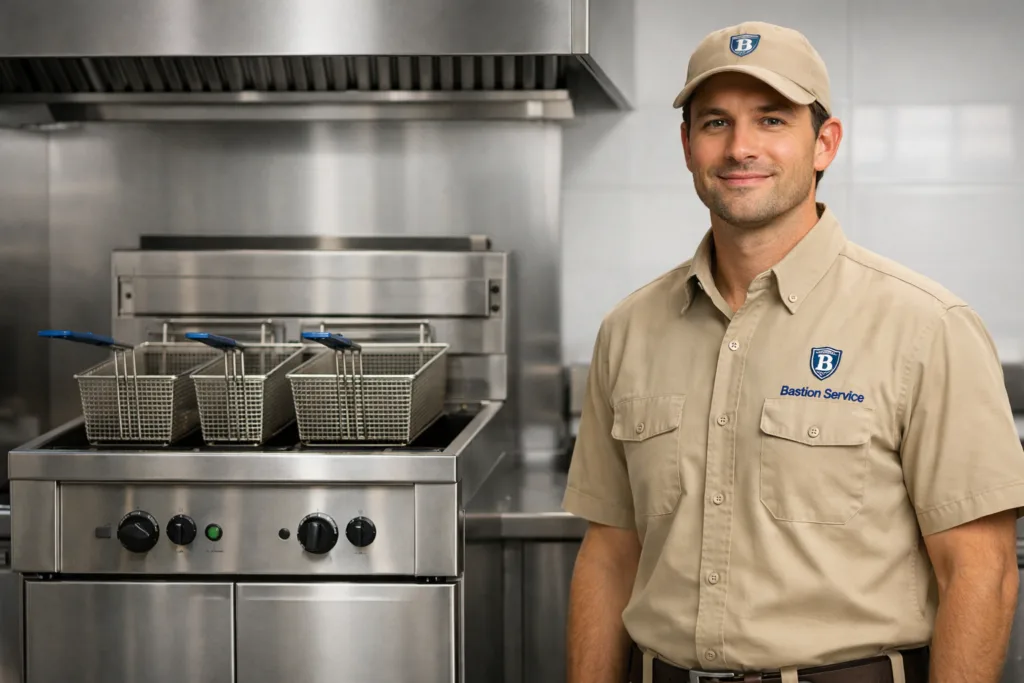




When a Pitco fryer starts recovering slowly, drifting off set temperature, or shutting down during service, the impact reaches far beyond the appliance itself. Output slows down, food quality becomes harder to control, oil can break down faster, and staff may start adjusting procedures just to get through a shift. For businesses in El Segundo, the most useful response is to schedule service based on the exact symptom pattern so the real fault is identified before unnecessary parts are replaced.
Related commercial service paths in El Segundo include Pitco Commercial Repair in El Segundo, Commercial Fryer Repair in El Segundo, and Frymaster Fryer Repair in El Segundo.
Bastion Service works on Pitco fryer issues that affect heating, ignition, temperature control, recovery time, and day-to-day reliability. A proper repair visit should look at how the fryer starts, how it heats, how it cycles under load, and whether the complaint points to one failed component or a broader operating problem.
Common Pitco fryer symptoms and what they may mean
Slow heat-up or poor recovery
If the fryer takes too long to reach set temperature or cannot recover between batches, the problem may involve burner performance, gas flow, sensing accuracy, control response, airflow, or heat-related wear. In a busy kitchen, poor recovery often shows up as longer ticket times, inconsistent frying results, and difficulty keeping pace during rush periods.
This symptom should be evaluated in real operating terms, not just during a brief startup. A fryer can appear to heat normally at first but still fall behind once production demand increases.
No heat or intermittent heating
A Pitco fryer that does not heat at all, heats only sometimes, or drops out during operation may have an ignition problem, flame-sensing issue, wiring fault, control failure, or gas delivery problem. Intermittent no-heat complaints are especially disruptive because they create unpredictable downtime and make it harder for staff to plan production.
When a fryer starts and stops inconsistently, the repair decision should focus on what happens during the full ignition and heating sequence rather than assuming the same part fails every time.
Oil temperature running too high or too low
When oil temperature does not match the setting, product quality usually suffers first. Oil that runs too cool can leave food greasy or under-fried. Oil that runs too hot can darken product too quickly, shorten oil life, and increase stress on safety components. Possible causes include probe issues, thermostat or control faults, calibration problems, or irregular cycling behavior.
Temperature swings are worth addressing early because continued use can create both quality problems and additional wear.
Ignition failure or burner problems
If the fryer struggles to ignite, fails to hold flame, or shows burner-related heating problems, the issue may involve the ignition assembly, flame sensing, gas pressure, burner condition, or control sequence. These problems may begin as occasional startup trouble and become more frequent over time.
In many kitchens, this symptom first appears as delayed opening prep, repeated restart attempts, or the need for staff to monitor the fryer more closely than usual.
High-limit trips and unexpected shutdowns
A fryer that repeatedly shuts down or trips a safety device should not be treated as a minor nuisance. High-limit behavior can be tied to overheating, sensor problems, restricted airflow, control issues, or another underlying fault that needs correction. Repeated resets may keep the fryer running temporarily, but they do not solve the reason the shutdown is happening.
When shutdowns become part of normal operation, the risk of longer downtime usually increases.
Oil leaks, drain valve issues, or filtration problems
Leaks and drainage problems can come from worn seals, valve wear, damaged fittings, or buildup around high-use components. Even when the fryer still heats, oil-related issues can slow cleaning, create safety concerns, and make the station harder to manage during a busy shift.
If oil is visibly leaking or the fryer is not draining correctly, service should be scheduled before the problem causes larger cleanup, waste, or operating issues.
Why accurate diagnosis matters before approving repair
Fryer symptoms often overlap. A temperature complaint may come from a sensor issue rather than the main control. Weak heating can trace back to burner performance rather than a thermostat-related part. A shutdown may be a safety response to overheating, not the cause of the problem itself. That is why symptom-based testing matters before deciding on a repair path.
For businesses in El Segundo, the goal is to determine whether the issue is isolated and repairable, whether related components should be checked at the same time, and whether continued operation is likely to create more downtime. That approach helps avoid guesswork and keeps repair decisions tied to actual equipment behavior.
Signs it is time to schedule service
It is usually worth scheduling service when a Pitco fryer shows any of the following:
- Long preheat times
- Slow recovery between batches
- Oil temperature that will not stay consistent
- Failure to ignite or repeated ignition attempts
- Burner operation that seems weak or erratic
- Unexpected shutdowns or safety trips
- Error indicators or control problems
- Oil leaks or drainage issues
Another strong sign is when staff begin working around the fryer instead of trusting it. Longer warm-up routines, smaller batch sizes, manual resets, and shifting production to other equipment usually mean the problem is already affecting workflow.
When continued use can make the problem worse
Some fryer issues should not be pushed through another full shift. If the unit is overheating, shutting down repeatedly, leaking oil, or cycling unpredictably, continued use can increase parts damage and create more expensive downtime later. It can also lead to wasted oil, uneven product, and added stress on controls and heat-management components.
Stopping use and arranging service is often the better decision when there are obvious signs of unsafe operation, repeated safety trips, or visible leakage around the fryer.
Repair or replacement: how to make the call
Repair is often the better option when the fault is limited to a specific system and the fryer still supports the kitchen’s production needs. Replacement becomes more likely when failures are recurring across multiple systems, the equipment has an extensive history of interruptions, or the overall condition of the fryer no longer supports reliable use.
The most practical choice usually comes from comparing the current problem, the age and condition of the unit, the pattern of repeat service, and the cost of future downtime. A good diagnosis helps separate a focused repair from a situation where investing further may not make sense.
What to have ready before a service visit
To speed up diagnosis, it helps to note when the problem occurs and how the fryer behaves. Useful details include whether the issue happens at startup or during a rush, whether the fryer loses temperature during heavy use, whether a shutdown follows a specific pattern, and whether any staff workaround has become routine.
If available, service history and a short description of recent symptoms can also help narrow the likely cause. Even simple observations such as “heats slowly every morning” or “drops out after several batches” can make troubleshooting more efficient.
Service decisions should match the way the fryer is actually used
Fryer repair is not only about restoring power or replacing a failed part. It is about getting the unit back to stable, usable performance for daily kitchen demands in El Segundo. When a Pitco fryer is not heating correctly, recovering slowly, showing burner trouble, or shutting down unexpectedly, the next step should be a service visit that ties the symptom to a repair decision and helps reduce avoidable downtime.


