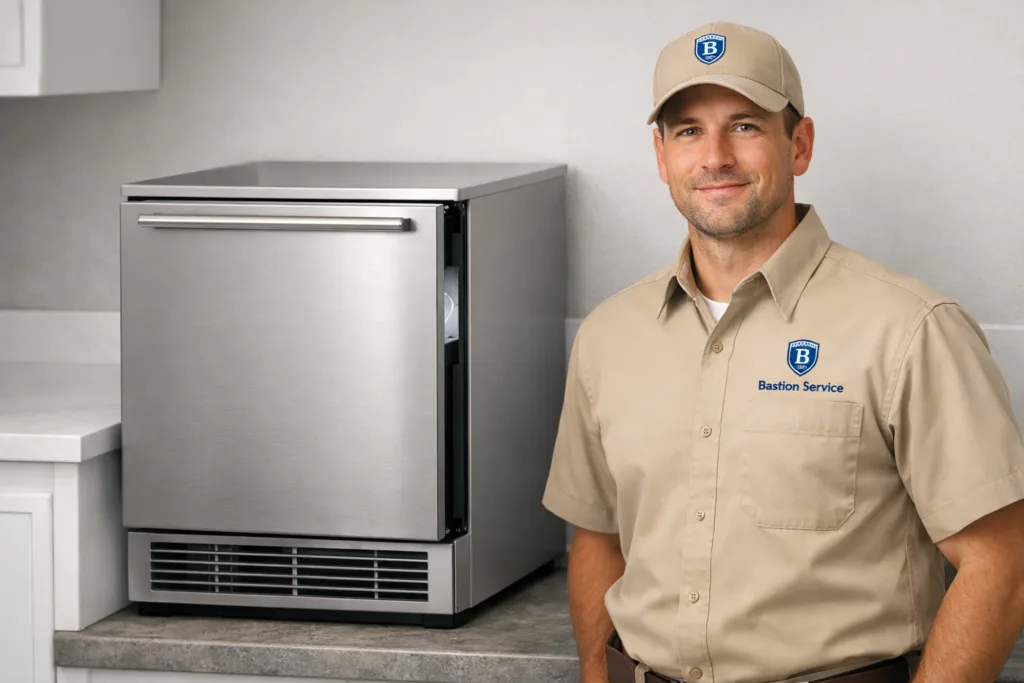
Ice maker problems are easiest to solve when the symptom is tied to the part of the cycle that is failing. A Perlick unit has to fill correctly, freeze at the right temperature, release the ice cleanly, and drain any excess water without obstruction. When one step slips out of range, homeowners usually notice it as missing ice, poor cube quality, water on the floor, or a machine that seems to run without finishing a batch.
Common Perlick Ice Maker Problems in Venice Homes
Most service calls start with one of a few familiar complaints. The visible symptom is important because it helps narrow down whether the issue is with water supply, drainage, freezing performance, controls, or a worn component inside the unit.
No ice production
If the ice maker has power but the bin stays empty, the problem may involve the water inlet valve, a restricted supply line, a sensor issue, or a control fault that prevents the cycle from advancing. In some cases, the machine begins a cycle but never reaches the temperature or timing needed to harvest and drop the ice.
Slow ice production
When output falls off gradually, the cause is often more subtle than a complete shutdown. Reduced water flow, mineral buildup, poor airflow, or weak cooling performance can all slow recovery time. Homeowners may first notice this during gatherings, when the machine cannot keep up even though it still makes some ice.
Small, hollow, cloudy, or misshapen cubes
Changes in cube appearance usually mean the fill or freeze portion of the cycle is no longer consistent. Low water pressure can lead to undersized cubes, while scale or temperature instability may cause uneven freezing. Cloudy ice can also point to water quality or circulation issues inside the system.
Leaking water
Water around the base of the unit can come from a blocked drain, overfilling, a loose connection, or ice melting in the wrong area during harvest. Even a small leak is worth addressing quickly because repeated moisture can damage surrounding cabinetry, trim, or flooring.
Clumped ice in the bin
Ice that freezes together often means cubes are partially melting and refreezing. That can happen when harvest timing is off, when the bin area is warming unexpectedly, or when water is entering the bin in an abnormal way. Clumping is easy to dismiss at first, but it often signals a larger performance issue.
Unusual noises
Buzzing, clicking, rattling, or repeated cycling sounds may be related to the inlet valve, pump, fan, or movement during harvest. The sound alone does not confirm the failed part, but it can help identify which phase of operation is struggling.
What Different Symptoms Often Mean
Symptom patterns matter because several different failures can look similar from the outside. A machine that makes no ice is not always suffering from the same problem as another machine with the same complaint. Looking at timing, cube shape, water behavior, and temperature response helps sort out the real cause.
- No ice with normal sound: often points to water fill, sensor, or control interruption.
- No ice with repeated attempts to cycle: may suggest freezing or harvest failure.
- Slow batches: commonly tied to restricted flow, scale, poor ventilation, or weak cooling.
- Wet or clumped ice: can indicate incomplete freezing, meltback, or drain issues.
- Leaking during operation: often involves fill control, drainage, or thawing in the wrong area.
Why Diagnosis Matters on a Perlick Ice Maker
On a Perlick ice maker, one symptom can have more than one plausible cause. Low production might be blamed on water supply when the actual problem is unstable temperature. A leak might appear to be a hose issue when the real trigger is an incomplete freeze cycle that sends water where it should not go. Testing the unit through its operating sequence is the best way to avoid replacing parts based on guesswork.
This is especially important with undercounter installations in Venice homes, where placement in kitchens, bar areas, or entertaining spaces can affect ventilation, drainage, and accessibility. The appliance may be in good overall condition, but the installation environment can still influence performance and lead to recurring complaints if it is not considered during service.
When to Schedule Service
It is smart to arrange repair when the machine stops producing ice, starts leaking, makes noticeably smaller batches, develops new noises, or produces cubes that look different from normal. Intermittent operation also deserves attention, especially if the unit works one day and stalls the next.
Early service can prevent a smaller issue from turning into a larger repair. Continued operation with poor drainage, unstable freezing, or low water flow can add wear to pumps, valves, and control components. If leaking is involved, waiting also increases the chance of damage outside the appliance itself.
Repair or Replace?
Many Perlick ice maker problems are repairable when the issue is limited to a valve, pump, sensor, drain component, control-related part, or another serviceable wear item. Repair becomes less attractive when the machine has multiple overlapping failures, persistent cooling trouble, advanced corrosion, or a history of repeat breakdowns.
The best decision usually comes from comparing three things: the exact fault, the overall condition of the unit, and whether the current problem seems isolated or part of a larger pattern. That gives homeowners a practical repair plan instead of a rushed decision based only on inconvenience.
What to Check Before the Appointment
A few observations before service can make the visit more efficient. If possible, note:
- whether the unit makes any ice at all
- how long the problem has been happening
- whether cube size or appearance changed before production dropped
- whether leaking is constant or only happens during part of the cycle
- what kind of noise you hear and when it starts
It also helps to clear the area around the appliance so the unit can be accessed safely. If water is leaking or the machine is repeatedly trying and failing to cycle, limiting use until service can help prevent additional wear or mess.
Focused Help for a Household Ice Maker
For homeowners in Venice, the most useful next step is service that follows the symptom pattern instead of assuming a single common failure. Whether the issue is no ice, slow production, leaking, clumped cubes, or erratic filling, a careful inspection can show whether the repair is straightforward and whether the machine is still a good candidate for continued use.