
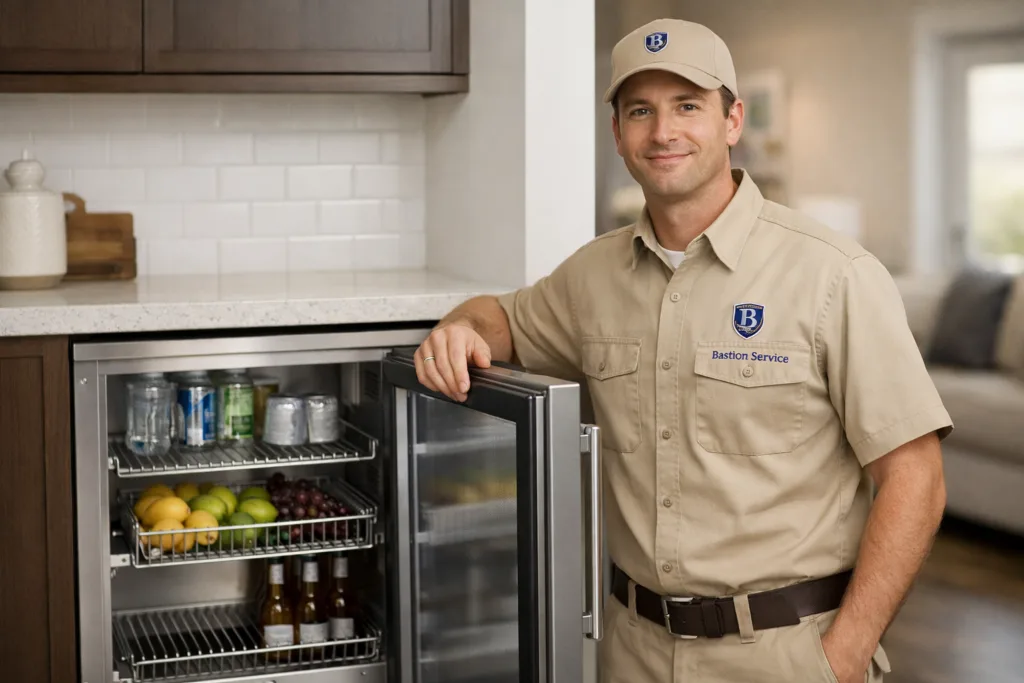





Perlick appliances can show the same outward problem for very different reasons. A refrigerator that feels warm, a freezer with recurring frost, an ice maker that stops harvesting, or a wine cooler that drifts off temperature may point to airflow trouble, a failed fan, a door-seal issue, a sensor problem, or an electrical control fault. The most useful first step is to look at the symptom pattern rather than assume one failed part.
How to read the symptoms before a repair visit
Small changes usually matter. If cooling performance dropped after unusual noise started, that can suggest a fan or compressor-related issue. If moisture appeared first, drainage, excess condensation, or an air leak may be involved. If the display behaves oddly along with temperature swings, the problem may be in the controls rather than the cooling system itself.
For homeowners in Playa Vista, a few observations can make troubleshooting much faster:
- Whether the problem is constant or comes and goes
- If the appliance is running longer than normal
- Whether doors are sealing fully
- If frost, water, or noise appeared before cooling changed
- Whether the issue began after a power interruption or cleaning
Perlick refrigerator problems that deserve attention
A Perlick refrigerator often gives warning signs before it stops cooling properly. Food spoiling early, warmer shelves, water under drawers, or a compressor that seems to run constantly can all point to developing trouble. In many cases, the cause is not the same from one unit to another.
Common refrigerator symptom patterns
- Warm interior with long run times: restricted airflow, dirty condenser areas, fan trouble, or a control issue
- Water inside the cabinet or near the base: clogged drain, excess condensation, or thawing caused by uneven cooling
- New buzzing or clicking: fan obstruction, relay trouble, or compressor stress
- Door not sealing well: gasket wear, hinge alignment issues, or items blocking closure
If temperatures are clearly no longer stable, it is usually best not to keep loading the unit with groceries and hope it recovers. Continued operation under poor cooling conditions can create food loss and added strain on components.
Perlick freezer issues often start small
Freezer failures do not always begin with a total shutdown. Many start as soft food, frost around the door opening, ice on interior panels, or a cabinet that seems to cycle unevenly. Those signs often relate to airflow restriction, a weak gasket, a defrost problem, or a fan that is no longer moving air properly.
Heavy frost is especially important to address early. Once ice buildup starts interfering with airflow, temperatures can rise even while the freezer continues running. That can make the unit seem active while performance keeps slipping.
Signs a freezer problem is getting worse
- Packages feel softer than normal
- Frost returns quickly after being cleared
- The door needs extra force to close or pops open slightly
- The freezer gets noisy during parts of the cycle
- Ice forms in unusual places inside the cabinet
Perlick ice maker problems are often tied to water flow or sensing
When a Perlick ice maker slows down or stops, the issue may come from more than one direction. Water supply restrictions, a frozen fill path, a faulty inlet valve, sensor trouble, scale buildup, or harvest-cycle problems can all change how the machine behaves.
Homeowners often notice the problem first through the ice itself rather than the machine. Smaller cubes, hollow cubes, wet clumps in the bin, or long gaps between batches are all useful clues.
What the ice may be telling you
- No ice production: water supply interruption, sensor fault, or cycle failure
- Slow production: partial restriction, temperature issue, or scale buildup
- Misshapen cubes: low water flow or freezing problems during fill
- Leaking water: drain issue, loose connection, or overflow during operation
If leaking is involved, service should not wait too long. Water around the unit can damage nearby surfaces and may indicate a problem that is spreading beyond simple low production.
Perlick wine cooler temperature drift should not be ignored
Wine coolers are built around consistency, so even a modest change in performance matters. If bottles no longer stay at a steady temperature, the cause could be poor airflow, a sensor problem, thermostat trouble, door-seal wear, or an electronic control issue.
Other warning signs include excess interior moisture, more vibration than usual, lights or controls acting irregularly, or a unit that seems to run longer while still missing the set temperature. Because wine storage depends on stability, early correction is usually preferable to waiting for a complete failure.
What warm temperatures, leaks, frost, and noise usually indicate
Single symptoms can be misleading, but grouped symptoms are often more revealing.
- Warm temperature plus nonstop running: airflow restriction, fan failure, dirty heat-exchange surfaces, or cooling-system trouble
- Water pooling plus temperature changes: blocked drain, thawing ice, or condensation from a sealing problem
- Frost buildup plus weak cooling: gasket leak, defrost issue, or poor air circulation
- Noise plus intermittent operation: fan motor wear, loose components, vibration, or electrical starting problems
- Display issues plus unstable performance: sensor or control-board related faults
When waiting is risky
Some appliance issues can be scheduled around your week. Others become more expensive or disruptive when ignored. If a refrigerator or freezer is no longer holding temperature, if an ice maker is leaking, or if a wine cooler is drifting well outside its setting, delaying service can lead to spoilage, moisture damage, or broader component failure.
It usually makes sense to schedule help when:
- The appliance is running but no longer performing normally
- Frost keeps returning after you clear it
- Water appears inside or around the unit
- New noises start suddenly
- The controls become erratic or unresponsive
- The appliance starts and stops unpredictably
Repair or replacement depends on the actual failure
Not every Perlick problem points to replacement. A repair is often reasonable when the appliance is otherwise in good condition and the issue is limited to a fan motor, gasket, drain system, sensor, or control component. On the other hand, replacement becomes a more serious consideration when the unit has repeated cooling failures, multiple worn systems at once, or a major sealed-system problem in an older appliance.
The better question is usually not whether the appliance can be fixed, but whether fixing it makes sense given its age, condition, and current symptoms.
What homeowners can do before service
You do not need to disassemble anything to be helpful before an appointment. Basic observations are usually enough. Note when the problem started, whether it is constant or intermittent, and whether there was any recent power outage, cleaning, or overloading of the shelves or bins.
It also helps to:
- Make sure the door is closing completely
- Check that interior vents are not blocked by food or containers
- Look for visible frost, standing water, or loose trim
- Listen for repeated clicking, buzzing, or fan noise
- Avoid forcing the unit to work harder by overpacking it
Perlick appliance repair in Playa Vista for everyday household use
In Playa Vista homes, these issues are rarely just minor inconveniences. Cooling problems can affect groceries, frozen food, stored ice, and temperature-sensitive collections in a wine cooler. The best repair decisions come from matching the symptom pattern to the likely cause, then deciding how urgent the problem is and whether continued operation could cause more damage.
For refrigerator, freezer, ice maker, and wine cooler issues, a focused diagnosis gives homeowners a sensible basis for choosing the next step with confidence.


