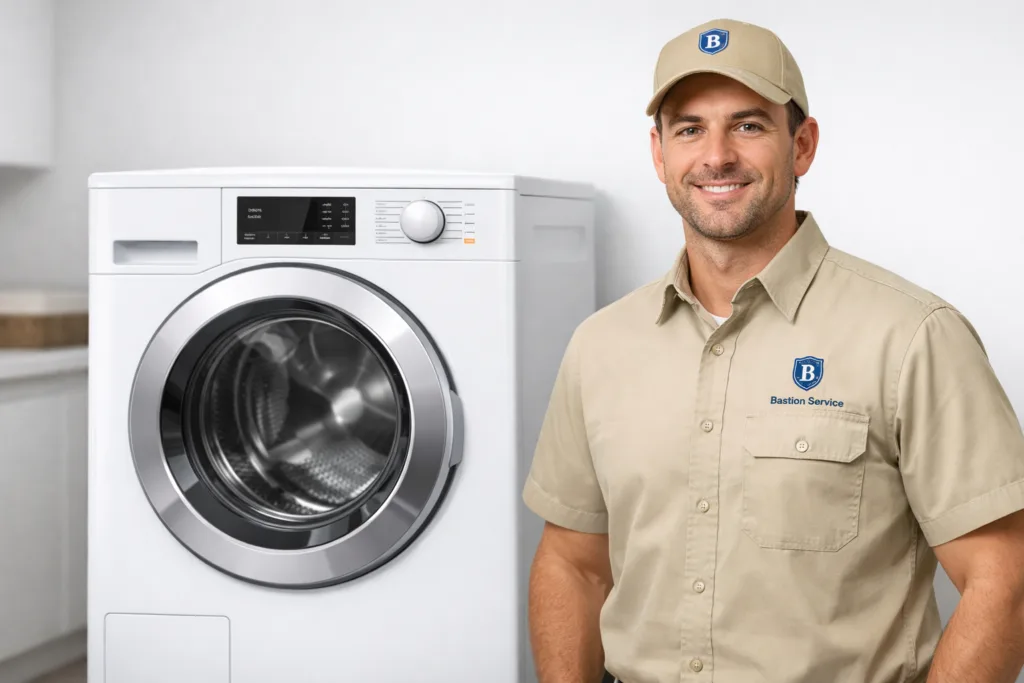
Laundry problems tend to build quickly when a dryer starts missing heat, ending cycles early, or making new noises. With Miele units, the symptom on the surface does not always point to a single cause, so it helps to look at how the dryer behaves through the entire cycle rather than assuming one failed part.
How Miele dryer problems are usually narrowed down
A useful service visit starts with the pattern of the complaint. Does the drum turn normally? Is there any heat at all? Does the machine stop at the same point every time? Are towels staying damp while lighter items dry? Those details help separate airflow trouble from sensor issues, heating faults, door-switch problems, or control-related failures.
That step matters because several different issues can create nearly identical results. A dryer with poor airflow may seem like it has a bad heater. A sensor problem may look like weak drying performance. A worn mechanical part may begin as a light squeak and later become a scraping sound. Good diagnosis avoids replacing parts based on guesswork.
Common symptoms in Hermosa Beach homes and what they may mean
Runs normally but takes too long to dry
If clothing is still damp after a normal cycle, the most common possibilities include restricted airflow, reduced heat output, moisture-sensing problems, or settings that are not matching the load type. Heavier items such as towels and bedding often reveal the problem first because they need steady heat and proper air movement to dry completely.
When dry times get longer, the machine also runs more often and for more minutes per load. That can increase wear on internal parts and raise energy use without solving the underlying problem.
No heat or very weak heat
A Miele dryer that tumbles without heating may have a failed heating component, thermostat-related issue, safety cutoff problem, wiring fault, or an airflow condition that affects normal temperature control. In some cases, the dryer may produce a little warmth but not enough to finish a load, which can make the problem seem inconsistent.
If there is little or no heat across multiple cycles, it is usually better to have the unit checked than to keep rerunning the same load.
Dryer will not start
A no-start condition can come from several places: power supply issues, a door latch or switch fault, a control problem, or a safety-related interruption that prevents the cycle from beginning. If the display powers on but the drum never starts, that points in a different direction than a completely unresponsive machine.
Homeowners can usually check the basics first, such as whether the door is fully closing and whether the controls respond. If those checks do not explain the problem, further use usually does not help narrow it down.
Cycle starts but stops before clothes are dry
When the dryer begins normally and then shuts down too soon, the issue may involve moisture sensing, temperature feedback, control interpretation, or airflow conditions causing the machine to protect itself. This symptom can be frustrating because the dryer appears to work, but laundry still comes out unfinished.
Early shutoff is worth addressing promptly, especially if it happens repeatedly with similar loads and settings.
Grinding, squealing, thumping, or rattling
Unusual noise usually points to mechanical wear or something interfering with moving parts. Depending on the sound, the source may be drum supports, rollers, blower components, loose hardware, or an object caught where it should not be. A light squeal can become a more expensive repair if continued use damages nearby parts.
Noise that changes as the drum rotates is especially important to check before regular use continues.
Burning smell or overheating
A dryer should not produce a strong hot smell, scorched odor, or unusually high cabinet heat. Lint buildup, restricted venting, overheating components, and electrical failures are all possible causes. If clothing feels excessively hot or the dryer gives off an abnormal smell, it is best to stop using it until the cause is identified.
Why airflow matters so much
Airflow problems are one of the biggest reasons a dryer seems to be underperforming even when some of its major components still work. When hot, moist air cannot move out properly, drying slows down, temperatures may become uneven, and the appliance can begin showing symptoms that resemble heater or sensor failure.
Signs that airflow may be part of the problem include:
- Repeated long dry times with similar loads
- Clothes that feel warm but remain damp
- The dryer cabinet becoming hotter than usual
- Cycles that stop unexpectedly during heavier loads
- A musty or overheated smell near the end of a cycle
Because airflow issues can overlap with other faults, they are best considered as part of the full diagnosis rather than treated as a guess.
When to stop using the dryer and schedule service
Some problems are mostly inconvenient, while others can lead to added damage if ignored. It makes sense to stop routine use and schedule service when you notice:
- No heat or sharply reduced heat
- Cycles that repeatedly stop mid-program
- Burning odor or signs of overheating
- Scraping, grinding, or loud squealing
- Error codes that return after restarting the machine
- Clothes staying damp even after extended run time
- A drum that does not turn smoothly or does not turn at all
Waiting too long can turn an isolated issue into a larger repair, especially when heat, airflow, or mechanical wear is involved.
Repair or replacement: what usually makes the difference
For many homeowners in Hermosa Beach, the question is not just what failed, but whether fixing it is the sensible move. That decision usually depends on the dryer’s age, overall condition, repair scope, and whether the current problem appears isolated or part of broader wear.
Repair is often the better option when the machine is otherwise in good shape and the fault is tied to a specific component, airflow problem, or manageable mechanical wear. Replacement becomes more likely when the dryer has multiple developing issues, repeated control problems, or repair needs that are hard to justify against remaining service life.
What helps most is knowing the actual cause rather than deciding based on symptoms alone. Once the fault is identified, the next step becomes much easier to judge.
What homeowners should expect from a useful diagnosis
A worthwhile dryer service call should answer a few practical questions clearly: what failed, whether continued use risks more damage, and what repair path makes sense for the unit you have. In some cases, the solution is a straightforward part replacement. In others, the better answer may involve correcting airflow conditions or deciding that further repair is not the most economical choice.
For households in Hermosa Beach dealing with backed-up laundry, the real value is understanding why the dryer is not performing the way it should and what needs to happen next to restore normal use.