




Appliance problems rarely stay small for long. A refrigerator that runs warmer than usual can turn into spoiled food, a washer that starts shaking can damage surrounding parts, and a dryer that suddenly smells hot may point to a condition that should not be ignored. The most useful next step is to match the symptom to the likely system involved instead of assuming every failure has a simple cause.
Start with the symptom pattern
Maytag appliances often give early warning signs before they stop working completely. Intermittent cooling, longer cycle times, unexplained noises, leaks, weak heat, or controls that respond inconsistently all suggest different repair paths. Two machines can appear to have the same problem while failing for completely different reasons.
That is why it helps to notice when the issue happens. Does the washer fail only at spin? Does the dishwasher leave water behind only at the end of the cycle? Does the oven overshoot temperature after preheating, or never reach it at all? Those details help separate airflow problems from drain issues, worn moving parts from electrical faults, and isolated part failure from broader control trouble.
Common Maytag refrigerator and freezer issues
Cooling appliances usually show trouble through temperature changes, frost, leaks, unusual fan noise, or nonstop running. In Santa Monica homes, these symptoms often become urgent quickly because food safety is affected long before the unit stops completely.
Refrigerator symptoms to watch
- Fresh food section feels warm while the freezer still seems cold
- Ice maker slows down or stops producing ice
- Water appears under drawers or on the floor
- Buzzing, clicking, or fan noise becomes louder than normal
- Heavy frost develops where it was not present before
When the freezer remains cold but the refrigerator compartment warms up, the problem is often related to airflow, defrost function, fan operation, or sensor response rather than total cooling loss. If both sections are warming, the issue may involve a broader cooling or control failure. A leak does not always mean a broken line; it can also come from a blocked drain path or excess frost melt.
Freezer performance problems
A freezer that no longer keeps food solid, builds up thick frost, or runs constantly should be evaluated sooner rather than later. Soft food, poor door sealing, and temperature swings can all point to conditions that worsen with continued use. In some cases the cause is simple, such as an obstructed vent or poor door closure. In others, the machine is no longer defrosting or circulating cold air correctly.
Washer problems that usually need attention
Washers tend to interrupt the household quickly because even one failed cycle leaves water, clothing, and timing problems behind. The main clue is often not that the machine stopped, but where in the cycle it stopped.
What specific washer symptoms can mean
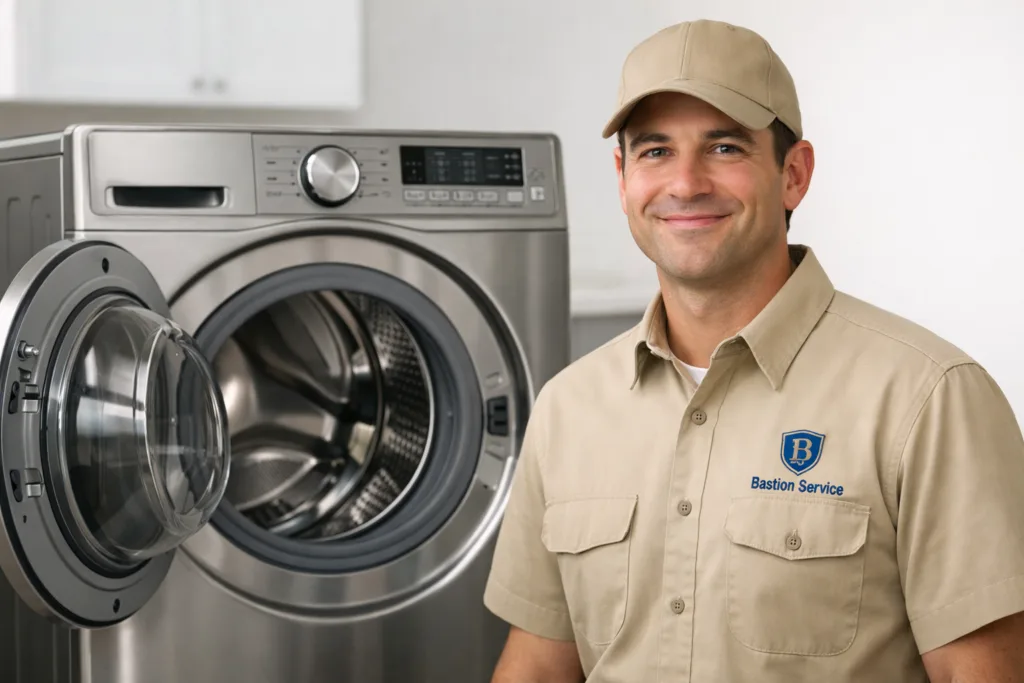
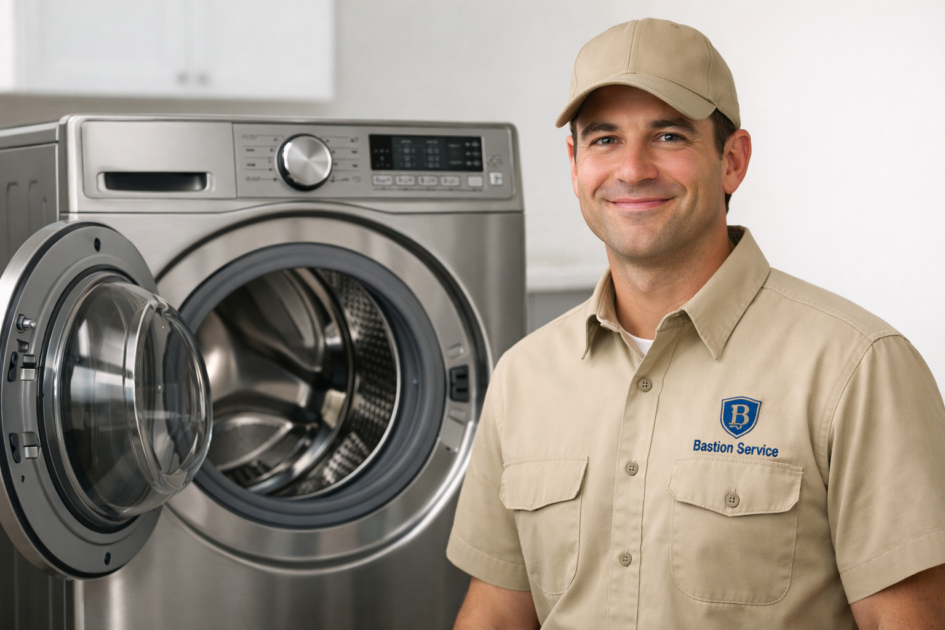
If a Maytag washer fills but does not move into wash action, the issue may involve drive components, lid or door locking, or control problems. If it washes but will not drain, the drain path, pump, or related electrical function becomes more likely. If it drains but will not spin properly, imbalance detection, suspension wear, or drive trouble may be part of the diagnosis.
Leaking also needs closer attention. Water appearing at the front can suggest door or seal problems on some models, while water under or behind the unit can point toward hoses, internal connections, or overfill conditions. Repeated banging is often more than a nuisance. It can mean the machine is no longer controlling load movement correctly, and that can lead to further wear.
Signs to stop using the washer
- Water remains in the tub after the cycle ends
- The machine repeatedly goes severely off balance
- Burning smells or electrical interruption occur
- Large leaks appear during fill, wash, or drain
- Loud knocking or grinding is new and persistent
Dryer symptoms that should not be dismissed
Dryers often seem simple because the complaint is usually obvious: no heat, slow drying, noise, or a drum that will not turn. But these symptoms can come from very different sources. Long dry times may involve restricted airflow, weak heat, moisture sensing issues, or drum movement problems rather than one failed part.
No heat on an electric dryer may be tied to heating components or power supply conditions. A drum that does not turn can involve a belt, support parts, motor strain, or another mechanical fault. Thumping and squealing often point toward wear in moving supports rather than the heating system itself.
If the dryer smells scorched, overheats, or shuts off unexpectedly, it is best not to keep testing it through repeated cycles. A heat-related problem can damage additional components if ignored.
Dishwasher issues that affect cleaning and drainage
When a Maytag dishwasher stops cleaning well, the cause is not always the same system that causes standing water. Poor cleaning can come from spray arm blockage, weak water circulation, low fill, or detergent and temperature performance. Standing water at the end of the cycle usually shifts attention toward drainage, filters, the pump, or drain routing.
Common dishwasher complaints
- Dishes come out cloudy or still dirty
- Water remains in the bottom after the cycle
- The unit hums but does not begin washing
- Leaks appear under the door or beneath the machine
- The dishwasher will not start or stops mid-cycle
Leaks should be taken seriously because even a small amount of repeated moisture can affect flooring or nearby cabinetry. A machine that hums without washing may be trying to operate but failing to circulate or drain correctly. If the dishwasher stops mid-cycle repeatedly, control, latch, and fill-related causes may all be considered.
Cooktop, oven, and range symptoms
Cooking appliances usually show failure through weak burner performance, uneven baking, ignition trouble, repeated clicking, or controls that do not respond the way they should. These issues affect both convenience and safety, so symptom details matter.
Surface cooking issues
On electric cooktops and ranges, a burner that does not heat properly may have an element, switch, connection, or control issue. On gas models, igniters, burner ports, and flame regulation become more relevant. Repeated clicking without normal ignition often points to an ignition-related problem that should be checked before regular use continues.
Oven and range performance issues
An oven that heats unevenly, takes too long to preheat, or does not hold temperature can affect every meal even when it still appears to be working. Temperature sensor faults, element failure, ignition weakness, and control issues can all create similar cooking results. If one part of the oven browns much faster than another, or recipes suddenly require much longer cook times, those patterns are worth noting before service is scheduled.
If there is a strong or persistent gas smell, stop using the appliance and address safety first before arranging repair.
Why noises, leaks, and shutdowns need context
Three of the most misunderstood appliance symptoms are noise, leaking, and failure to start. They sound straightforward, but each one can come from several systems.
A scraping sound may be caused by worn support parts, a loose component, or something obstructing movement. A leak may come from a damaged seal, drain backup, overfill condition, or condensation issue. An appliance that appears dead may have a power supply problem, a failed latch, or an internal control fault. Looking only at the visible symptom often leads to wrong assumptions and unnecessary parts replacement.
When waiting usually makes the repair worse
Some performance issues can be observed briefly, but others should be handled quickly. Delaying service makes less sense when the appliance is no longer doing its basic job reliably or when the symptom points to risk beyond inconvenience.
- Cooling is no longer consistent enough for food storage
- Water is leaking onto the floor or into the cabinet area
- The unit trips power, overheats, or gives off abnormal odors
- Noises have changed from occasional to constant
- The problem is spreading from one cycle stage to several
A struggling fan can create additional cooling strain. A washer that keeps running off balance can wear out more than suspension parts. A dryer with poor airflow can overheat multiple components. Early attention often prevents a narrower repair from turning into a broader one.
When repair makes sense and when replacement becomes part of the conversation
Repair is often the sensible choice when the problem is limited to one main system and the rest of the appliance is in good condition. That is especially true when the machine has been reliable overall, fits the household well, and has not shown a pattern of repeated breakdowns.
Replacement becomes more worth considering when there are multiple failing systems, significant structural wear, repeated repair history, or an issue severe enough to make the overall condition questionable. The visible symptom alone does not answer that question. A machine that looks completely nonfunctional may need one targeted repair, while another that still runs may have broader wear that changes the decision.
What to note before scheduling service
Before arranging an appointment, it helps to write down the model number if it is easy to access, the main complaint, and whether the symptom happens every time or only under certain conditions. Error codes, new sounds, signs of leaking, temperature changes, and the exact point where a cycle fails can all help narrow the likely cause.
It is also useful to note whether the issue started after a power interruption, after moving the appliance, or after a gradual decline in performance. Those details can save time and make the repair plan more accurate.
Maytag support across kitchen and laundry appliances in Santa Monica
Many households in Santa Monica rely on Maytag appliances across both kitchen and laundry spaces, so the most helpful service approach is one that looks closely at the actual fault rather than treating every problem as routine wear. Refrigerators, freezers, washers, dryers, dishwashers, ovens, ranges, and cooktops all fail in different ways, but the same principle applies to each: symptoms tell a story when they are observed carefully.
For homeowners, the goal is straightforward. Find out what failed, whether continued use is safe, whether the problem is isolated or part of broader wear, and whether repair is the right next step. That kind of practical repair guidance makes it easier to move forward with confidence instead of guesswork.


