





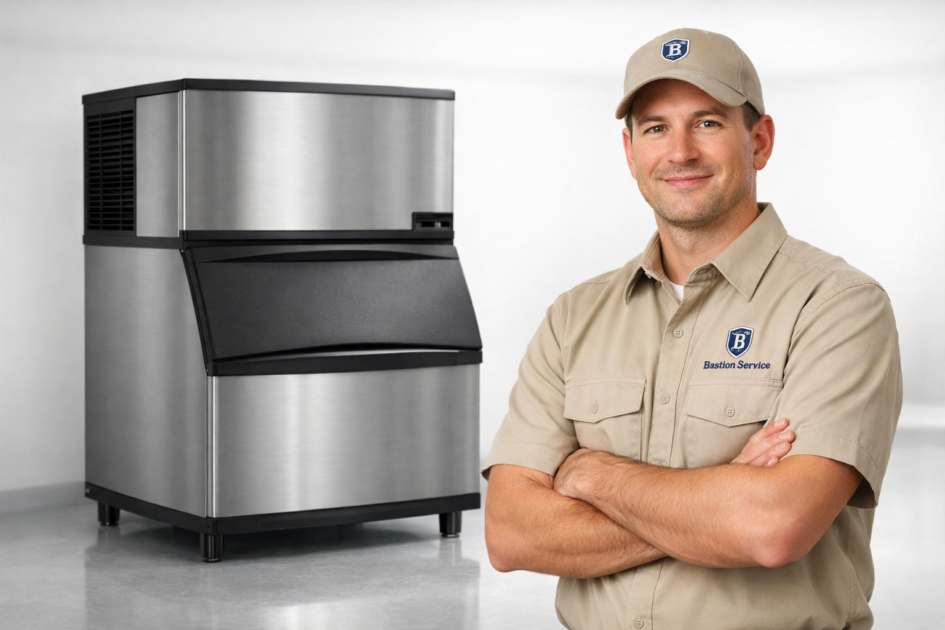
Ice machine problems can disrupt beverage service, prep routines, guest experience, and staff workflow faster than many businesses expect. When a Manitowoc unit starts producing less ice, leaking, shutting down, or making poor-quality cubes, the most important step is to identify the actual failure rather than guessing at parts. Bastion Service handles Manitowoc ice machine repair for businesses in Torrance with attention to symptom patterns, operating impact, and repair scheduling that fits the urgency of the problem.
Related commercial service paths in Torrance include Manitowoc Commercial Repair in Torrance, Commercial Ice Machine Repair in Torrance, and Hoshizaki Ice Machine Repair in Torrance.
How Manitowoc Ice Machine Problems Usually Show Up
Many service calls begin with a simple complaint such as “not enough ice” or “machine stopped working,” but the underlying cause may be more specific. Water supply restrictions, scale buildup, drainage issues, sensor faults, condenser airflow problems, freeze-cycle problems, and refrigeration performance loss can all create similar visible symptoms. A machine that still runs may already be operating outside normal conditions, which is why early service often helps prevent a longer outage.
For businesses in Torrance, that matters because partial output can be just as disruptive as a complete shutdown. A unit that makes ice too slowly may leave staff compensating throughout the day, while a machine that leaks or cycles incorrectly can create safety, sanitation, and workflow problems at the same time.
Common Symptoms and What They May Indicate
Low ice production or slow recovery
If your Manitowoc machine is making less ice than usual, several issues may be involved. Restricted water flow, clogged filtration, mineral buildup, a dirty condenser, poor ventilation, or declining refrigeration performance can all reduce output. In many cases, the machine does not stop completely at first. It just falls behind, which can make the issue easy to overlook until demand increases.
When output drops, it is usually a sign to schedule repair before the machine reaches a no-ice condition. Reduced production is often one of the earliest warnings that the unit is under strain.
Small, hollow, uneven, or clumped ice
Changes in cube shape or consistency often point to fill or freeze-cycle problems. Small or incomplete cubes may suggest low water volume, scaling on internal components, temperature-related performance issues, or controls that are not timing the cycle correctly. Clumped ice can also indicate harvest or storage-related concerns that should be checked before they affect daily use further.
Staff sometimes try to work around these symptoms by changing settings or restarting the machine repeatedly, but that can delay proper diagnosis and allow the root issue to continue.
Machine fills with water but does not freeze properly
When the machine has water but does not form ice normally, the issue may involve the refrigeration side, freeze-cycle controls, sensors, or a condition that prevents the unit from reaching proper operating temperatures. This is a key symptom because it separates water supply concerns from cooling-related problems and helps guide the repair path more quickly.
Ice forms but does not harvest correctly
If ice freezes but does not release as it should, the unit may have trouble moving through the harvest sequence. Scale buildup, sensor issues, control faults, or component wear can interfere with that transition. A machine stuck in an interrupted cycle may produce inconsistent batches, melt ice unexpectedly, or shut down between attempts.
Water leaks or overflow around the machine
Water on the floor should be addressed quickly. Leaks may come from a blocked drain, loose or damaged water components, overflow conditions, or cycle problems that cause water to go where it should not. Beyond the machine itself, floor moisture creates avoidable risk for staff and can interfere with surrounding equipment or storage areas.
Leak diagnosis should determine whether the problem is limited to a drain or line issue or whether it reflects a larger operating fault inside the ice machine.
Unusual noises, frequent restarting, or sudden shutdowns
Buzzing, grinding, hard starting, repeated cycling, or intermittent shutdowns often suggest electrical or mechanical stress. Depending on the machine, this can involve motors, fans, controls, or compressor-related problems. If the machine keeps attempting to run but cannot complete normal operation, continued use may increase wear and lead to a more involved repair.
Why Is My Manitowoc Ice Machine Not Making Enough Ice?
This is one of the most common service concerns, and it is rarely caused by just one possibility. Low production may be linked to restricted incoming water, scale inside the system, poor condenser airflow, elevated operating temperatures, sensor problems, or declining refrigeration efficiency. In some cases, the machine is technically still working but cannot complete each cycle at the normal rate, which creates a gradual production shortfall.
The best next step is usually service based on actual output behavior, cube quality, and cycle timing. If the machine is taking longer to recover, producing smaller batches, or falling behind during normal demand, it is usually time to have it checked before the issue turns into a full shutdown.
When Waiting Can Make the Repair Worse
Ice machines often give warning signs before they stop completely. Slower production, odd cube formation, longer harvest times, standing water, or occasional fault behavior can all point to conditions that get worse with continued use. What starts as a restricted flow issue can increase stress on other components. Ongoing scale buildup can interfere with normal sensing and cycle performance. A drainage issue can become an overflow problem during busy hours.
Scheduling repair promptly is especially important when the machine is leaking, making harsh noise, shutting off unexpectedly, or producing ice that is clearly inconsistent. Those symptoms usually mean the unit is not operating normally enough to leave unaddressed.
Preparing for a Service Visit
Businesses can help speed diagnosis by noting a few details before the appointment. Useful observations include whether the machine produces any ice at all, how long the issue has been happening, whether the cubes changed shape before output dropped, whether leaks appear constantly or only during certain cycles, and whether the machine has been shutting down with any repeatable pattern.
It also helps to know if the problem started after cleaning, filter changes, plumbing work, or a period of heavier-than-usual use. Small details like these can help narrow the problem faster once the unit is inspected.
Repair or Replace?
Not every failing ice machine needs to be replaced, and not every repair is the best long-term choice. In many situations, repair makes sense when the problem is isolated and the machine remains in otherwise solid condition. Replacement becomes more likely when the unit has a pattern of breakdowns, major wear, poor overall condition, or multiple costly issues affecting reliability at the same time.
The decision should be based on more than whether the machine can be made to run again. Businesses usually need to consider uptime expectations, current condition, and whether the equipment can return to dependable daily performance after the repair.
Service That Supports Day-to-Day Operations
Manitowoc ice machine issues are rarely just equipment issues. They affect ordering, staffing, prep timing, beverage availability, sanitation routines, and customer-facing operations. That is why service should focus on identifying the fault clearly, explaining the likely repair path, and helping management understand whether the machine can remain in use safely until repairs are completed.
If your Manitowoc ice machine in Torrance is making less ice, leaking, stopping mid-cycle, or showing signs of unstable operation, scheduling repair early is usually the best way to limit downtime and avoid a more disruptive failure. A symptom-based inspection gives businesses a better basis for repair decisions, parts approval, and practical next steps.


