
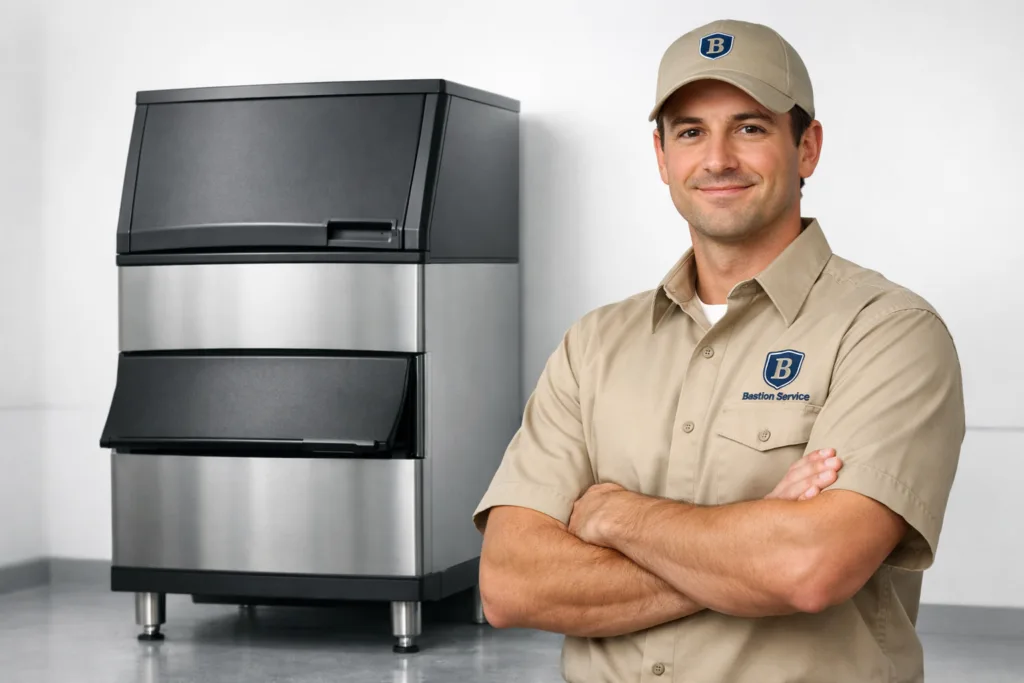




Ice machine trouble rarely stays isolated for long in a busy operation. When a Manitowoc unit starts falling behind, leaking, or stopping mid-cycle, the best next step is service that identifies the fault quickly and matches the repair to the way the machine is actually failing. In Redondo Beach, that can mean the difference between a contained equipment issue and a disruption that affects beverage stations, prep flow, sanitation routines, and staff time.
Related commercial service paths in Redondo Beach include Manitowoc Commercial Repair in Redondo Beach, Commercial Ice Machine Repair in Redondo Beach, and Hoshizaki Ice Machine Repair in Redondo Beach.
Bastion Service works with businesses in Redondo Beach that need Manitowoc ice machine repair based on symptom patterns, operating behavior, and equipment condition. Whether the unit is making too little ice, producing poor-quality cubes, or shutting down unexpectedly, the goal is to determine what is causing the problem and what it will take to restore steady production.
Common Manitowoc Ice Machine Problems
Most ice machine failures show up as a combination of symptoms rather than a single obvious defect. Looking at output, ice shape, water movement, cycle timing, and shutdown behavior usually gives a better picture of what is going wrong.
Low ice production or slow recovery
If the bin is not filling as expected, the issue may involve restricted water flow, scale buildup, weak refrigeration performance, airflow problems, a failing water inlet valve, or controls that are no longer timing the freeze and harvest cycles correctly. A machine can still appear to be running while producing far less usable ice than it should. For kitchens, bars, hotels, and other high-demand settings, slow recovery often becomes noticeable before a full shutdown occurs.
No ice production
When the machine stops making ice altogether, the cause can range from a water supply interruption to a failed pump, sensor issue, control fault, safety shutdown, or a refrigeration-related problem. This is one of the clearest situations where diagnosis matters. Two units with the same symptom may need very different repairs, and replacing parts without confirming the cause can waste time while the machine remains out of service.
Small, soft, hollow, or irregular cubes
Changes in cube quality often point to fill problems, mineral buildup, temperature issues, water distribution problems, or sensors that are not reading conditions accurately. Misshapen ice is more than a cosmetic issue. It can signal that the machine is not completing normal freeze conditions, which may lead to reduced production, clumping, or repeated harvest trouble.
Leaks, overflow, or poor draining
Water around the base of the machine may come from blocked drains, drain pump trouble, cracked tubing, improper leveling, excessive internal scale, or ice forming where it should not. In a business setting, leaks can create slip hazards and can also point to conditions that will keep interrupting operation until the source is corrected.
Harvest problems and stuck ice
If a Manitowoc machine freezes properly but struggles to release the slab or complete harvest, likely causes can include scale, temperature-related problems, sensor issues, or component wear affecting normal cycle transition. Harvest issues often show up as long cycle times, partial release, sheets breaking unevenly, or repeated attempts before the machine resets or stops.
Unusual noise, hard starts, or repeated cycling
Buzzing, rattling, grinding, or frequent starts and stops can suggest fan motor wear, pump issues, loose parts, compressor strain, or controls interrupting operation. A noise change is often an early warning sign that a smaller repair may turn into a larger one if the machine continues to run under stress.
Why Diagnosis Matters Before Repair
Similar symptoms can come from very different failures. Low production might be caused by water restriction in one machine, heavy scale in another, and cooling inefficiency in a third. A unit that leaks may have a simple drain problem, or it may have a more involved issue affecting cycle control and ice formation.
That is why service should start with how the machine is behaving in real operation. Cycle length, water fill, freeze pattern, harvest response, drainage, and recent cleaning history all help separate maintenance-related issues from failing components. This also helps clarify whether the machine is a good repair candidate or whether multiple conditions are stacking up.
Signs It Is Time to Schedule Service
It usually makes sense to book repair when staff are noticing any of the following:
- Ice production that no longer keeps up with normal demand
- Cubes that are smaller, softer, cloudy, or inconsistent
- Water leaking from the machine or pooling nearby
- Shutdowns, alarm conditions, or repeated resets
- Long harvest cycles or ice hanging up during release
- Buzzing, grinding, rattling, or other new sounds
- Staff workarounds such as restarting the unit to keep it going
These are usually not one-time inconveniences. They often indicate a developing problem that will either reduce production further or take the machine offline at a less convenient time.
Why Ice Machines Often Decline Gradually
Many Manitowoc issues build slowly. Mineral accumulation can restrict water movement and affect freeze consistency. Dirty heat transfer surfaces can raise operating stress. Drain issues can trigger overflow or erratic behavior. Wear in pumps, valves, motors, or sensors may begin as intermittent symptoms before becoming a full loss of function.
Because of that, a machine does not have to be completely down to justify service. If output is dropping, cycles are becoming inconsistent, or the unit needs regular staff intervention, those are strong indicators that the machine is no longer operating normally.
What Businesses Can Note Before a Service Visit
A few details can make diagnosis faster and more accurate. If possible, it helps to note:
- Whether the machine is making no ice or just less ice than usual
- If the issue is constant or comes and goes
- What the ice looks like when production does happen
- Whether there is leaking, overflow, or slow drainage
- If the machine stops during freeze or during harvest
- Any recent cleaning, filter changes, or plumbing interruptions
- Whether the unit has been making new noises or needing resets
This kind of symptom history helps connect the visible problem to the most likely causes and can shorten the path to a repair decision.
Repair or Replacement Considerations
Not every failing ice machine should be handled the same way. Repair often makes sense when the problem is isolated, the machine is otherwise in solid condition, and the expected fix can return it to reliable daily use. Replacement becomes more likely when failures are recurring, internal wear is advanced, corrosion is significant, or major system issues are combining with poor production performance.
For many businesses in Redondo Beach, the real question is not just whether the machine can run again. It is whether it can return to stable output without repeated downtime, emergency restarts, or ongoing disruption to staff workflow.
Service Support for Redondo Beach Businesses
When an ice machine supports daily beverage service, prep routines, guest service, or back-of-house production, delays can affect more than just one piece of equipment. Service should help determine the cause, explain the likely repair path, and get scheduling moving before the problem spreads into larger operational downtime. If your Manitowoc unit is producing less ice, leaking, showing harvest trouble, or shutting down unexpectedly, the most practical next step is to have the machine evaluated and the repair plan based on the exact way it is failing.


