
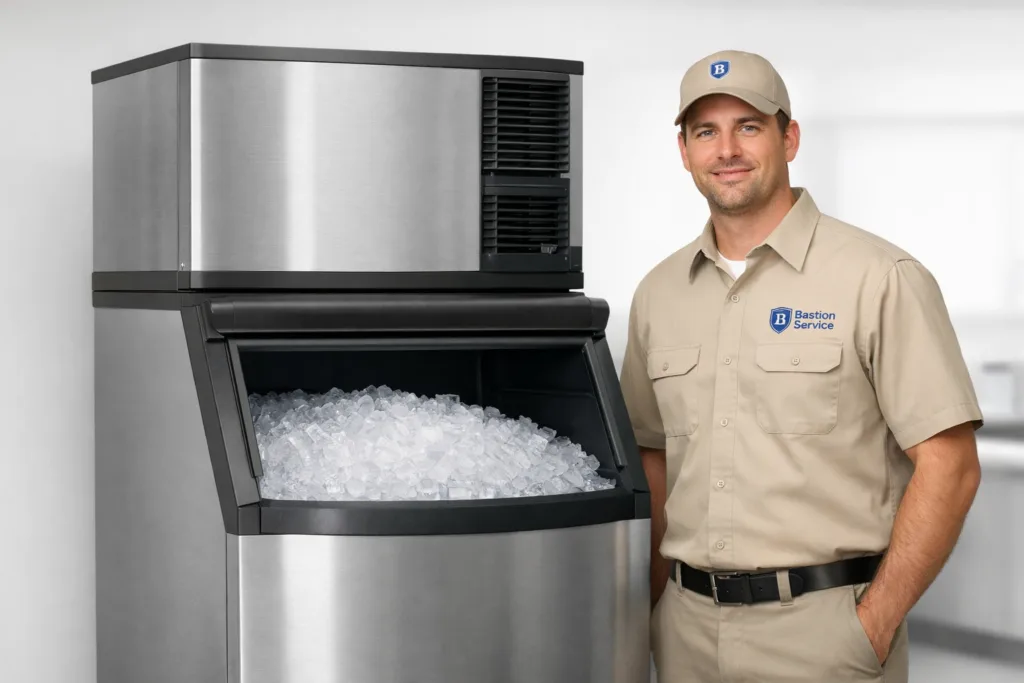




When a Manitowoc ice machine starts slowing down, leaking, shutting down, or struggling to harvest, the most useful next step is service that identifies the fault and helps you decide how quickly the machine needs repair. For businesses in Redondo Beach, ice equipment problems can disrupt beverage service, kitchen workflow, sanitation routines, and daily operations, so it helps to schedule diagnosis before a partial problem becomes a full outage.
For specific equipment paths in Redondo Beach, review Manitowoc Ice Machine Repair in Redondo Beach and Commercial Appliance Repair in Redondo Beach.
Bastion Service works with Manitowoc ice machine issues that affect production, consistency, and reliability. The goal of a service visit is not just to name the symptom, but to determine what is causing it, whether continued operation risks additional damage, and what repair path makes the most sense for the equipment on site.
Manitowoc ice machine symptoms that often require repair
Many units show warning signs before they stop entirely. If the machine is still running but output is falling or cycles are becoming inconsistent, it is usually worth scheduling service before the issue spreads to other components.
Low ice production or no ice
If the bin is not filling, batches are smaller than normal, or production has slowed enough to affect service, the cause may involve restricted water flow, scale accumulation, sensor problems, refrigeration issues, or a harvest problem that interrupts normal cycling. Reduced output is one of the most common reasons businesses in Redondo Beach schedule repair, especially when the machine still runs but cannot keep up with demand.
Harvest problems
A Manitowoc machine may freeze properly but fail when it is time to release ice. That can show up as ice hanging on the evaporator, incomplete sheet release, repeated attempts to harvest, or a machine that stalls between cycles. Harvest problems are important to address early because they often lead to shutdowns, long cycle times, and heavier strain on the system.
Water flow issues
Uneven water distribution, poor fill, slow refill, or erratic freezing patterns can point to supply restrictions, valve trouble, clogged components, pump issues, or mineral buildup affecting circulation. Water-related faults do more than reduce output. They can also affect cube formation, cycle timing, and overall machine stability.
Leaks, overflow, or pooling water
Water around the base of the machine or signs of overflow should be scheduled promptly. Possible causes include drain problems, line damage, inlet valve trouble, internal blockages, or freezing in areas where water should be moving freely. In a business setting, leaks can create slip hazards, sanitation concerns, and damage to nearby equipment or surfaces.
Shutdowns or intermittent operation
If the machine powers off unexpectedly, stops mid-cycle, or requires repeated resets, the problem may involve controls, sensors, electrical components, water system faults, or operating conditions that the machine cannot recover from on its own. A shutdown that appears occasional at first can quickly become a pattern that affects daily uptime.
Ice quality concerns
Cloudy cubes, soft ice, irregular size, thin sheets, or inconsistent texture often point to more than a simple appearance issue. Poor ice quality can be tied to water flow problems, scale buildup, freezing inconsistencies, or component wear that changes how the machine cycles. When ice quality changes at the same time as output drops or leaks appear, repair is usually the better next step than waiting to see if the condition improves.
Why these problems should be checked early
Ice machines often continue operating after a fault starts, but partial operation can be misleading. A unit may still make some ice while cycle times lengthen, harvest becomes unreliable, or water flow begins affecting multiple stages of production. Early service helps determine whether the problem is isolated or whether it is already putting added stress on the machine.
That matters for businesses trying to avoid a sudden outage during operating hours. Addressing the issue while the machine is still partially functional may allow for better repair planning, less disruption to staff workflow, and a clearer decision about whether the unit can stay in use until service is completed.
Common causes behind Manitowoc performance decline
While the exact fault has to be diagnosed at the machine, several underlying issues show up repeatedly when Manitowoc equipment starts underperforming:
- Mineral scale interfering with water movement or sensing
- Water supply restrictions reducing fill or circulation
- Drain problems contributing to overflow or erratic operation
- Sensor or control issues affecting cycle timing
- Refrigeration-related problems that change freeze performance
- Component wear that leads to inconsistent harvest
- Repeated resets masking a deeper operating fault
Because several of these issues can produce similar symptoms, accurate diagnosis is important. A machine with low production, for example, may be dealing with water, control, or refrigeration trouble, and the repair decision depends on which system is actually failing.
Signs the machine should not be left unchecked
Some symptoms deserve faster scheduling because they tend to worsen with continued use or create broader operating risk:
- Production has dropped enough to affect normal service
- The machine is leaking or leaving water on the floor
- Harvest cycles are delayed, incomplete, or failing
- The unit stops and restarts unpredictably
- Ice shape, clarity, or hardness has changed noticeably
- Visible scale is present along with declining performance
- The machine needs repeated resets to continue running
When these conditions are present, running the equipment without evaluation can turn a manageable repair into a longer interruption. The earlier the problem is identified, the easier it is to plan around downtime instead of reacting to a full stoppage.
How repair decisions are usually made
For businesses in Redondo Beach, the question is often not only what failed, but how to move forward with the least disruption. That usually depends on the severity of the current symptom, whether the issue is isolated to one system, the overall condition of the machine, and whether the equipment has a history of recurring faults.
If the problem is tied to a specific repairable failure and the rest of the machine remains in solid working condition, repair is often the practical choice. If the unit has ongoing reliability problems, repeated shutdowns, or multiple systems showing wear at the same time, a broader discussion about long-term equipment planning may be warranted. A useful service visit should help clarify that distinction instead of treating every symptom the same way.
What a business-focused service visit should help you answer
When an ice machine issue affects daily operations, owners and managers usually need more than a description of the symptom. They need repair guidance that supports immediate decisions. That typically includes:
- What system is causing the interruption
- How urgent the repair is based on current operation
- Whether the machine can remain in limited use
- Whether continued use is likely to cause additional damage
- What the next repair step looks like for the equipment in place
That kind of information is especially important when the machine is central to beverage service, food handling routines, or customer-facing operations. A unit that still powers on may still need prompt attention if output, water management, or harvest reliability has already started slipping.
Scheduling service for Manitowoc ice machine problems in Redondo Beach
If your Manitowoc ice machine is showing low production, water flow issues, leaks, scale-related performance loss, harvest trouble, shutdowns, or declining ice quality, scheduling repair sooner is usually the best way to protect uptime. A service appointment can identify the source of the problem, explain whether the machine should remain in use, and help you plan the next step with less disruption to daily operations in Redondo Beach.


