
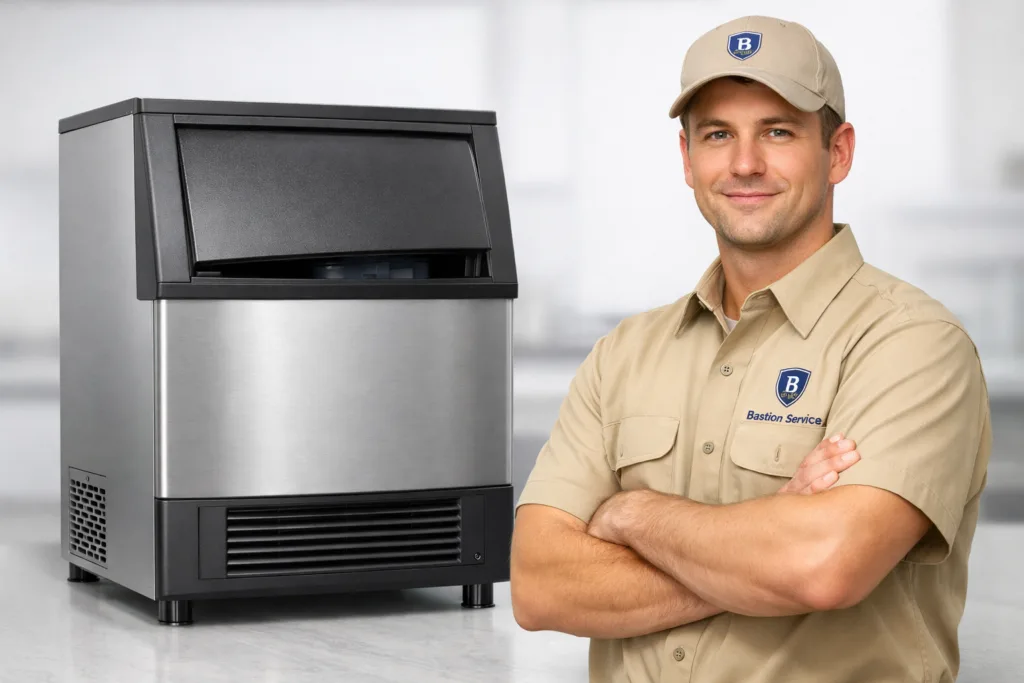





When a Manitowoc ice machine starts producing less ice, dropping thin cubes, leaking, or shutting itself down, the visible symptom is not always the failed part. In Mid-Wilshire, service is most effective when the machine is checked by symptom pattern, cycle behavior, and operating condition before any repair decision is made. That helps reduce unnecessary parts replacement, shortens avoidable downtime, and gives businesses a better sense of whether the issue is isolated or part of a larger equipment decline.
Related commercial service paths in Mid-Wilshire include Manitowoc Commercial Repair in Mid-Wilshire, Commercial Ice Machine Repair in Mid-Wilshire, and Hoshizaki Ice Machine Repair in Mid-Wilshire.
Bastion Service works with Mid-Wilshire businesses that need Manitowoc ice machine repair based on what the unit is actually doing in daily use. Whether the machine supports a kitchen, beverage station, hotel, office, healthcare setting, or other business operation, the goal is to restore stable output and identify what should be repaired now versus what should be monitored next.
Common Manitowoc Ice Machine Problems
Low ice production or slow recovery
If the bin is not refilling on schedule, the cause may involve restricted water supply, scale buildup, dirty condenser surfaces, refrigeration performance loss, or a harvest problem. A machine that still makes some ice can appear usable, but if output no longer matches daily demand, the issue is already affecting operations. Slow production often gets worse before it gets better, especially when the unit is forced to run longer to keep up.
Small, hollow, or uneven cubes
Cube shape is one of the most useful clues in Manitowoc diagnosis. Thin, incomplete, or inconsistent cubes can point to water delivery problems, freeze-cycle faults, temperature issues, or internal buildup that interferes with normal formation. When the cube pattern changes, it usually means the machine is no longer operating through its normal production sequence.
Water leaks or overflow around the unit
Leaks may come from blocked drains, cracked lines, poor leveling, internal ice formation, or overflow during fill and harvest. Water around the machine should not be treated as a minor nuisance. It can create floor hazards, sanitation concerns, and added damage around the equipment while also signaling a problem that may interrupt ice production.
Unit stops cycling or shuts down unexpectedly
Repeated shutdowns, lockouts, or erratic restarts may involve sensors, controls, pressure-related faults, or protection responses triggered by another system problem. Resetting the machine may restore operation briefly, but repeated resets usually delay the real repair decision rather than solve the cause.
Clumped ice, slab release issues, or harvest problems
When ice does not release cleanly or batches begin sticking, the machine may be dealing with scale, sensor issues, temperature imbalance, or harvest-related component failure. Harvest problems often show up as irregular cycle times, partial drops, or ice that forms but does not transition properly into the bin.
Unusual noise, vibration, or excess heat
A Manitowoc machine that suddenly sounds different during freeze or harvest may be showing signs of fan trouble, compressor strain, loose hardware, airflow restriction, or internal stress from scaling. Noise changes matter because they often appear before a full no-ice condition.
Why Symptom-Based Diagnosis Matters
Ice machines often show one obvious complaint while the root cause sits elsewhere in the system. Poor cube quality may trace back to water flow. A leak may begin with drain blockage but also involve internal icing. A machine that appears to have an electrical issue may actually be protecting itself from overheating or pressure imbalance. Looking only at the visible symptom can lead to the wrong repair.
For businesses in Mid-Wilshire, that distinction matters because ice production problems affect more than convenience. They can disrupt beverage service, prep flow, guest experience, sanitation planning, and staff routines. A proper diagnosis helps determine whether the repair should focus on cleaning, adjustment, a specific component, or a broader recommendation based on current equipment condition.
Signs You Should Schedule Service Soon
- The machine is making less ice than it did under the same workload.
- Cubes are smaller, softer, hollow, cloudy, or misshapen.
- Water is collecting near the machine or drain area.
- The unit starts and stops unpredictably.
- Ice is clumping in the bin or not dropping correctly.
- Staff are resetting the machine to keep it running.
- The machine runs longer than normal but still falls behind demand.
These symptoms rarely correct themselves. Scheduling service while the unit still has partial output is often easier on operations than waiting for a complete outage during a busy period.
What Different Symptoms Can Mean
If the machine is not making enough ice
Low production can come from restricted incoming water, clogged or scaled components, poor airflow, refrigerant-side performance loss, or a cycle control issue. If the machine once kept up with demand and now consistently lags behind, it usually needs more than routine observation.
If the machine fills but does not finish normal batches
This can point to freeze-cycle interruption, sensor readings outside expected range, water distribution problems, or a condition that prevents the machine from completing the batch consistently. Intermittent production often creates the impression that the machine is still usable even when it is no longer reliable.
If the machine leaks only at certain times
Leaks that appear during harvest, refill, or heavy use can help narrow the issue. Timing matters. Overflow during fill suggests something different from water that appears after internal ice buildup redirects drainage or meltwater.
If ice quality has changed but production has not fully stopped
That usually means the machine is still operating, but not within normal range. Changes in cube shape or clarity are often early warning signs that service should happen before output drops further.
When Continued Use Can Make Repairs More Involved
Some businesses try to keep a struggling machine running until it fully stops. That can increase repair scope when the problem involves scaling, poor airflow, drainage restrictions, or unstable cycling. Continued use under those conditions may add stress to refrigeration components, worsen internal ice buildup, and create more cleanup or sanitation issues around the unit.
Not every problem requires urgent same-day action, but a machine showing clear decline should not be treated as normal if it supports daily operations. Acting earlier can help prevent a moderate repair from becoming a larger interruption.
Repair or Replacement: How Businesses Usually Decide
Many Manitowoc problems are repairable when the machine is otherwise in good condition and the fault is specific. That is often the right path when the equipment still matches production needs and has not been showing repeated breakdowns.
Replacement becomes more likely when the machine has stacked issues, recurring shutdowns, declining capacity, or a history of unreliable performance that keeps disrupting operations. The best decision usually depends on overall condition, service history, and whether the current repair is likely to restore stable operation instead of buying only a short amount of time.
How to Prepare for a Service Visit
Before service is scheduled, it helps to note what staff have observed. Useful details include when production dropped, whether leaks happen during certain parts of the cycle, whether resetting restores operation, and what the ice looks like when the machine does run. That information can make diagnosis faster and more accurate.
- When the problem first started
- Whether the issue is constant or intermittent
- Any change in cube size, shape, or clarity
- Whether water is visible under or around the machine
- Any recent cleaning, shutdown, or operating change
- Whether the machine makes noise, overheats, or stops mid-cycle
Service-Focused Next Steps for Mid-Wilshire Businesses
If a Manitowoc ice machine in Mid-Wilshire is producing less ice, leaking, clumping, showing harvest issues, or shutting down unpredictably, the best next step is to schedule repair before the problem expands into a full loss of output. A symptom-based service visit helps identify the real cause, clarify whether repair is the right move, and give operators a workable plan for getting the machine back into dependable daily use.


