





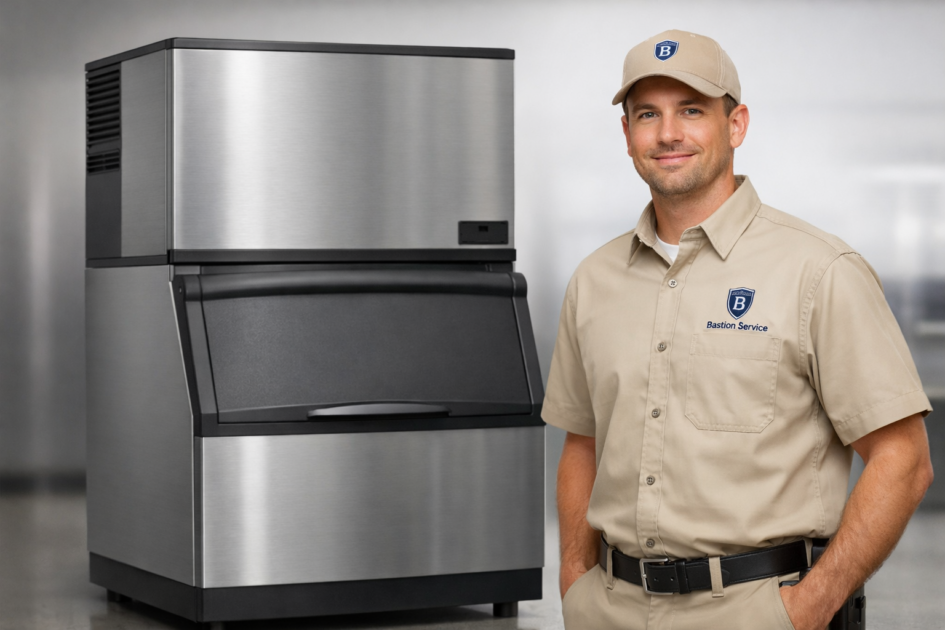
Ice machine problems can disrupt beverage service, food prep, guest experience, and back-of-house workflow long before the unit fully stops. When a Manitowoc machine begins underperforming, the best next step is service that matches the actual symptom pattern, whether the issue involves water flow, harvest timing, drainage, temperature control, or a failing component. Bastion Service works with businesses in Culver City to identify the cause of ice machine trouble, explain what needs attention, and schedule repair based on how urgently the machine is affecting daily operations.
Related commercial service paths in Culver City include Manitowoc Commercial Repair in Culver City, Commercial Ice Machine Repair in Culver City, and Hoshizaki Ice Machine Repair in Culver City.
Common Manitowoc Ice Machine Problems That Need Repair
Low ice production or slow recovery
If the bin is not filling as expected, the machine may be dealing with restricted incoming water, mineral buildup, poor condenser airflow, sensor misreads, refrigeration performance loss, or cycle problems that are slowing freeze time. In many cases, the machine still appears to run, but output drops enough to create shortages during busy periods. That is usually a sign to schedule repair before the problem becomes a full shutdown.
No ice or repeated stop-and-start operation
A Manitowoc unit that powers on but does not complete a normal freeze and harvest sequence may have a control fault, water-level problem, pump issue, temperature-related shutdown, or electrical failure. Repeated restarting often means the machine is trying to protect itself from operating outside normal conditions. If the unit keeps stopping, a service visit should focus on what is interrupting the cycle rather than simply resetting the machine.
Leaking, overflow, or water around the unit
Water on the floor can come from blocked drains, fill valve issues, float problems, hose or connection leaks, or ice formation that is causing water to move where it should not. Even a small leak can create sanitation concerns and increase the risk of damage around the installation area. If the machine is overflowing or draining poorly, it is usually best to stop waiting for the issue to clear on its own and have the water path inspected.
Clumped ice, thin cubes, or poor ice quality
When ice changes shape, melts together, looks cloudy, or comes out incomplete, the machine may be dealing with uneven water distribution, scale, temperature inconsistency, or a control issue affecting freeze time and harvest release. Ice quality problems are not only an appearance issue. They can also point to conditions that reduce production and increase wear inside the machine.
Noise, alarms, or abnormal cycle behavior
Buzzing, grinding, harsh fan noise, long harvests, short cycling, or fault indicators often signal a problem with airflow, fan motors, pumps, controls, or internal mechanical components. These symptoms are important because they usually provide clues before a more expensive failure happens. A machine that sounds different or behaves differently should be evaluated based on those changes, not just whether it is still making some ice.
Why Is My Manitowoc Ice Machine Not Making Enough Ice?
Low production is one of the most common service calls because several different faults can produce the same visible symptom. The machine may be receiving too little water, rejecting heat poorly because of condenser buildup, sensing temperatures incorrectly, or struggling to complete freeze cycles efficiently. It can also be producing ice, but at a slower rate than the business actually needs, which often becomes obvious only during peak demand.
The important part is distinguishing between a machine that needs corrective cleaning, a machine with a failing part, and a machine with deeper refrigeration or control trouble. That is why production complaints should be tied to cycle times, water fill behavior, ice thickness, bin levels, and any recent changes in noise or shutdown patterns.
Symptoms That Often Point to Specific Repair Needs
- Machine runs but bin stays low: often linked to slow freeze cycles, reduced water flow, or condenser-related performance issues.
- Ice is small, hollow, or incomplete: can indicate fill problems, scale buildup, or timing issues during the freeze cycle.
- Sheet of ice will not release cleanly: may suggest harvest problems, sensor faults, or issues affecting water curtain and release timing.
- Unit shuts off after making a small amount of ice: can point to safety shutdowns, control errors, overheating, or drainage-related faults.
- Water keeps spilling into or around the machine: often involves drains, floats, inlet valves, or internal ice formation affecting normal flow.
Why Exact Diagnosis Matters on Manitowoc Equipment
Ice machines can show the same outward symptom for very different reasons. A leak may be a drain issue, a fill issue, or an ice formation issue. Low output might be caused by airflow restrictions, water supply limitations, scale, sensors, or refrigeration trouble. Replacing parts too early can add unnecessary cost, while missing the real cause can leave the business dealing with the same outage again soon after service.
Accurate diagnosis should look at water delivery, freeze and harvest performance, drain behavior, condenser condition, electrical response, and any stored fault pattern if the model supports it. For businesses in Culver City, that process helps turn a vague complaint like “it’s not keeping up” into a repair plan that makes sense for the machine’s condition and the operation’s daily needs.
When to Schedule Service Instead of Waiting
It is time to schedule repair when the machine is making less ice than normal, taking longer to recover, producing inconsistent batches, leaking, making unusual noise, or stopping unexpectedly. Waiting can be costly because partial operation often hides a machine that is steadily losing capacity. By the time the unit fully stops, the underlying issue may be larger than it was when the first symptoms showed up.
Early service is especially important for businesses that depend on a stable ice supply throughout the day. A machine that is barely keeping pace can create the same operational strain as a total breakdown once demand increases.
Repair or Replace a Manitowoc Ice Machine?
Repair is often the right move when the issue is limited to a specific component, a water-path problem, a drainage fault, airflow restriction, or a control-related failure and the rest of the machine is still in solid condition. Replacement becomes a more serious consideration when the unit has a long pattern of breakdowns, major refrigeration-system trouble, severe internal deterioration, or repair history that suggests unreliable uptime ahead.
The decision usually comes down to current repair scope, expected reliability after service, and how much disruption future downtime would cause. A symptom-based evaluation gives a better answer than making the decision on age alone.
How to Prepare for a Service Visit
Before repair is scheduled, it helps to note exactly what the machine is doing. Useful details include whether production dropped suddenly or gradually, whether the machine is leaking, whether it is shutting off with ice still in process, and whether the ice changed in size, shape, or clarity. If the problem appears at certain times of day or after heavy use, that pattern can also help narrow the cause faster.
Businesses should also be ready to describe recent cleaning, filter changes, prior repairs, and whether the issue is affecting only output or also drainage, noise, or machine temperature. The more complete the symptom history, the easier it is to move from complaint to repair decision.
Service-Focused Repair Support for Businesses in Culver City
When a Manitowoc ice machine starts affecting service, workflow, or product consistency, the most useful next step is to book repair around the actual operating problem instead of waiting for a complete outage. A focused service visit should clarify what failed, what needs to be repaired now, and whether any related conditions could shorten the life of the fix. For businesses in Culver City, timely repair scheduling can help reduce downtime, protect ice production, and restore more predictable operation before the disruption spreads into the rest of the workday.


