
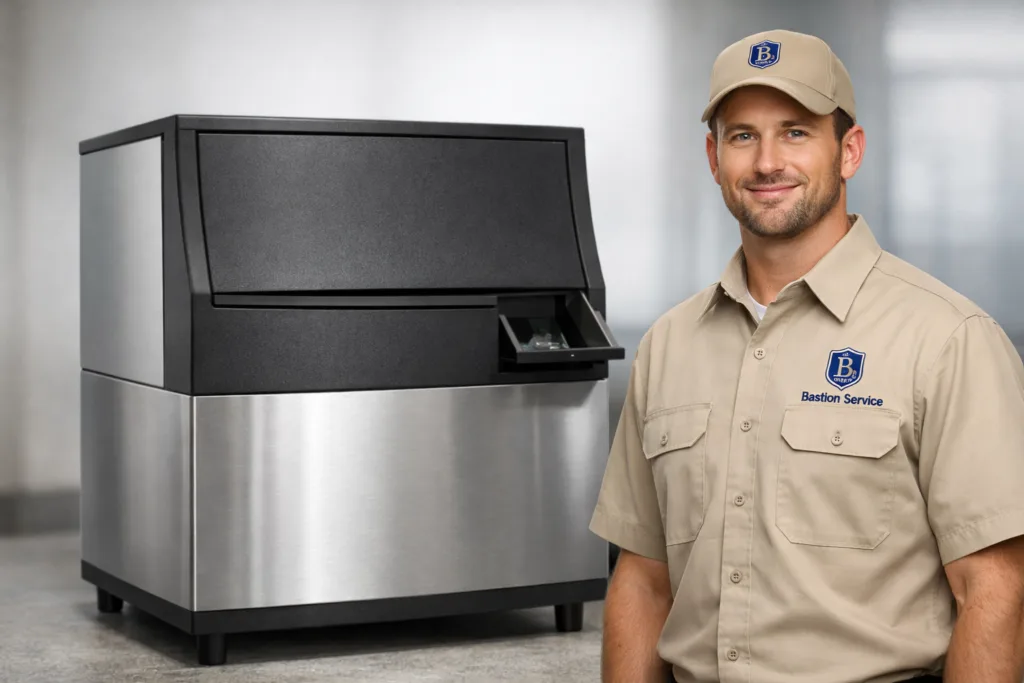




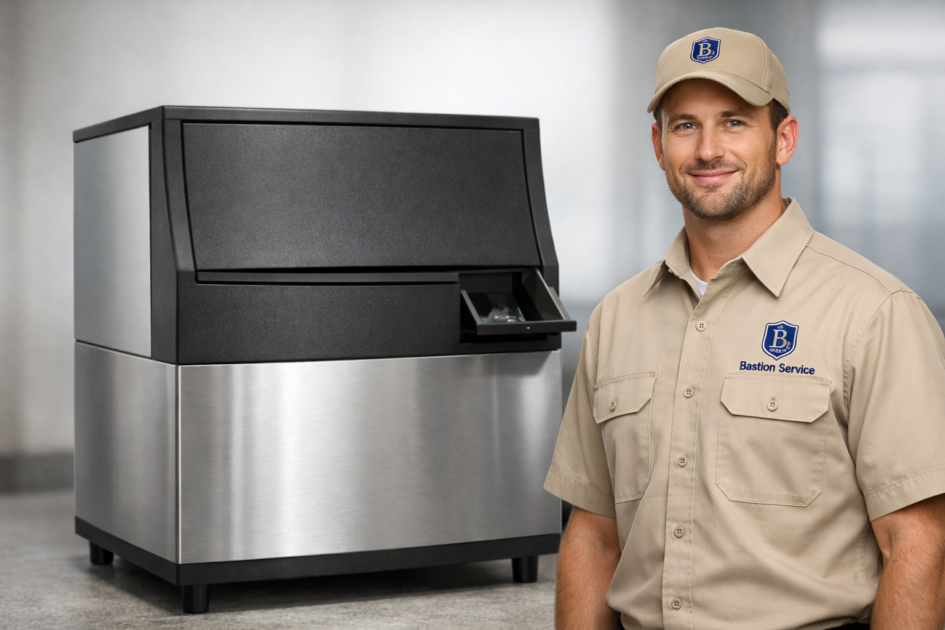
When a Manitowoc ice machine starts losing output, leaking, or stopping mid-cycle, the repair decision should be based on how the machine is actually behaving under load. For businesses in Brentwood, that means looking at production rate, water movement, freeze and harvest timing, error behavior, and signs of wear before deciding whether the problem is isolated or part of a larger equipment decline. Bastion Service handles Manitowoc ice machine repair for business equipment with service centered on symptom-based diagnosis, repair scheduling, and the steps needed to reduce avoidable downtime.
Related commercial service paths in Brentwood include Manitowoc Commercial Repair in Brentwood, Commercial Ice Machine Repair in Brentwood, and Hoshizaki Ice Machine Repair in Brentwood.
What a service visit should determine first
Many ice machine problems look similar from the outside. Low ice volume, clumped cubes, long freeze cycles, and unexpected shutdowns can come from different causes, including scale buildup, restricted airflow, drain problems, water inlet issues, control faults, or refrigeration-related performance loss. A useful visit should identify whether the machine is safe to keep using, what is interrupting normal operation, and whether repair is likely to return the unit to stable daily production.
For Brentwood businesses, those answers matter because partial operation can be misleading. A machine may still make some ice while already falling behind demand, stressing components, or creating sanitation and water management problems that become more expensive if left unresolved.
Common Manitowoc ice machine symptoms and what they may indicate
Low ice production or slow recovery
If the bin is not filling as expected, the problem may involve poor condenser airflow, mineral buildup in the water system, weak water fill, sensor issues, or refrigeration performance that is no longer supporting normal freeze times. Low production often starts as an output problem before it becomes a full shutdown, which is why early repair can help prevent a more disruptive failure.
Thin, hollow, or incomplete cubes
Changes in cube shape usually point to a system condition that should not be ignored. Incomplete or uneven ice can indicate water distribution problems, scale on components that affect flow, timing issues during freeze or harvest, or control problems that keep the machine from finishing each cycle correctly. When cube quality changes, the machine is often telling you more than just “less ice.” It may be signaling a repair need that will continue to affect capacity and consistency.
Leaks or water around the machine
Water on the floor may come from blocked drains, loose fittings, overflow conditions, internal ice buildup, or damaged water-handling parts. In a busy kitchen, hotel, bar, or food-service area, leaks create more than a cleanup issue. They can affect safety, sanitation, and surrounding equipment while also pointing to a deeper problem inside the machine.
Machine shuts down, locks out, or keeps resetting
If the unit stops during normal operation, restarts repeatedly, or requires staff to reset it to keep it running, the cause may involve sensors, controls, electrical faults, airflow problems, or conditions that trigger protective shutdown. Repeated resetting is usually a sign that the machine is not completing normal cycles on its own and needs repair rather than continued workarounds.
Ice clumping together in the bin
Clumped ice may be related to harvest problems, partial melting, poor cycle control, or production inconsistency that causes ice to form unevenly. In some cases, businesses first notice bin issues before realizing the machine itself is struggling to complete a normal pattern of freeze and release.
Why a Manitowoc ice machine may not be making enough ice
Insufficient ice production is one of the most common service calls because several different conditions can reduce output without stopping the machine completely. Common causes include:
- Restricted condenser airflow that raises operating temperatures
- Scale buildup affecting water flow or heat transfer
- Water inlet or fill problems that limit each cycle
- Sensors or controls that are misreading conditions
- Drain issues that interfere with normal operation
- Refrigeration-related performance loss that extends freeze times
When output drops, the most helpful next step is to compare what the machine is producing now against what it should be producing during normal business use. That helps determine whether the issue is a targeted repair, a cleaning-related correction with component follow-up, or a sign that the machine is no longer operating efficiently enough for daily demand.
When continued use can make the problem worse
Some symptom patterns suggest the machine should not simply be left running until it fails completely. Ongoing leaks, repeated shutdowns, loud fan or mechanical noise, poor harvest release, and clear production decline can all lead to larger repair needs if ignored. The same is true when staff are changing settings, cycling power, or emptying water repeatedly just to keep the unit working through a shift.
In those situations, continued use may increase wear, worsen internal buildup, or create a sanitation concern that complicates the eventual repair. Service is usually the better move once the machine begins affecting workflow instead of supporting it.
Repair or replacement: how businesses usually make the call
Not every problem means the unit should be replaced, and not every older machine is a good candidate for deeper repair. The decision usually comes down to the condition of major components, the history of repeat failures, the scope of the current issue, and whether the machine can realistically return to reliable daily production after service.
Repair is often the sensible choice when the fault is isolated and the rest of the system remains in good working condition. Replacement becomes easier to justify when multiple systems are declining at once, the machine has a pattern of repeat interruptions, or the cost of restoring stable operation no longer makes sense for the business.
Preparing for a repair visit
Before service is scheduled, it helps to note exactly what staff are seeing. Useful details include whether the machine is making no ice or just less ice, whether cubes look different than usual, when leaks appear, whether the unit stops at the same point in the cycle, and whether recent cleaning or resets changed anything. That information can speed up fault isolation and help narrow down whether the issue is tied to water flow, cycle control, airflow, or a larger system problem.
It is also helpful to keep the area around the machine accessible and to avoid repeated resets unless needed for immediate operation. Intermittent symptoms often tell an important part of the story, and preserving that pattern can make diagnosis more accurate.
Service-focused repair support for businesses in Brentwood
Businesses in Brentwood depend on ice machines for steady production, food handling, guest service, and daily workflow. When a Manitowoc unit starts underperforming, the goal is not just to identify a bad part but to understand what interrupted normal operation, what needs to be corrected now, and whether the machine can be trusted once repaired. If your unit is producing less ice, leaking, locking out, or showing signs of cycle trouble, scheduling service promptly is usually the fastest way to limit disruption and make an informed repair decision.


