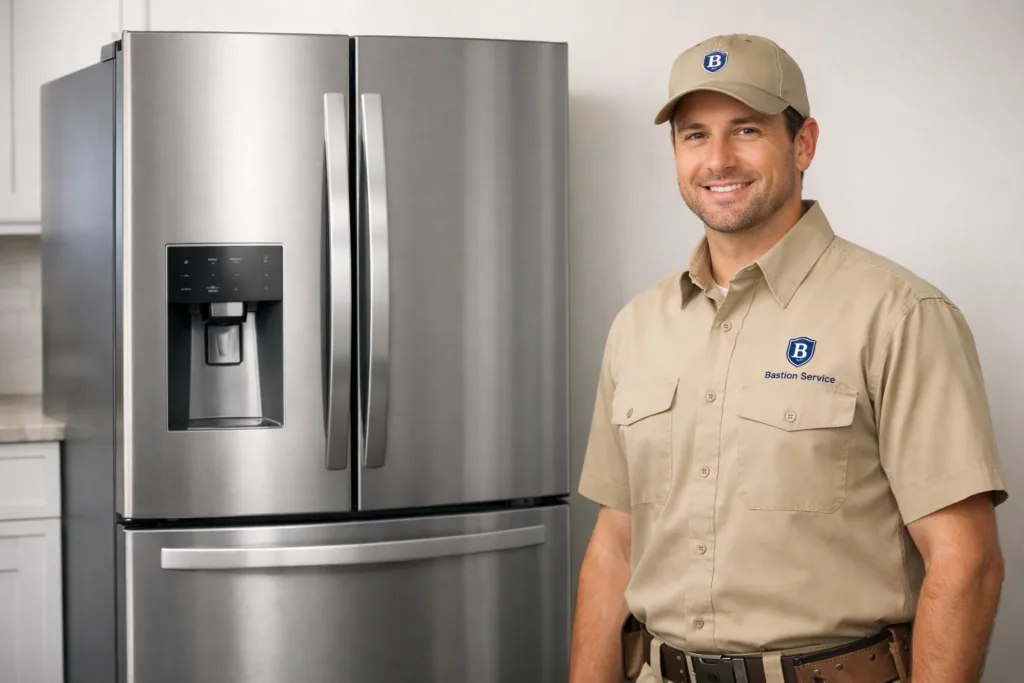
Food loss usually starts before a refrigerator fully stops working. A fresh food section that feels slightly warm, freezer items that are no longer staying hard, or moisture showing up around drawers are all signs that an LG refrigerator should be checked before the problem spreads to other components.
Common LG refrigerator symptoms and what they can mean
Fresh food section is warm but the freezer still seems cold
This pattern often points to an airflow problem rather than a complete shutdown. Cold air may not be moving correctly from the freezer side into the refrigerator compartment because of frost buildup, a fan issue, blocked vents, a sensor problem, or a defrost-related fault. Homeowners sometimes lower the temperature setting to compensate, but that usually does not fix the root cause.
If produce spoils faster than usual, drinks never get fully cold, or temperatures vary from shelf to shelf, the refrigerator may be cooling unevenly even when it still appears to be running normally.
Freezer is softening food or thawing intermittently
When frozen food starts to soften, the problem is more urgent. Causes can include poor condenser performance, evaporator frost buildup, fan failure, control issues, or a deeper cooling-system problem. Intermittent thawing is especially important to address because the refrigerator may appear to recover for a short time and then fail again.
A unit that cools well overnight and struggles later in the day is not necessarily “fine for now.” That kind of cycling often means a part or system is weakening.
Water leaking onto the floor or collecting inside
Leaks can come from more than one source. A clogged defrost drain, excess frost melting in the wrong area, a damaged door gasket, or a problem tied to the water supply for an ice maker or dispenser can all lead to water where it does not belong. Inside the refrigerator, you may notice droplets on shelves, standing water under crispers, or damp packaging.
Outside the unit, recurring puddles should be handled quickly to reduce the chance of floor damage and to prevent hidden moisture from creating odor issues.
Frost buildup keeps returning
Heavy frost on the back panel, around vents, or near the freezer interior is usually a sign that the refrigerator is not completing a normal defrost cycle or that warm air is entering where it should not. In some cases, frost also interferes with fan movement, which can create extra noise and weaker cooling at the same time.
Scraping away ice may give short-term relief, but repeated frost buildup usually means the underlying issue is still active.
Ice maker or dispenser stops working
Ice problems are often connected to cooling performance. If the freezer temperature is not staying where it should, the ice maker may slow down, stop completely, or produce small or hollow cubes. Water valves, fill issues, sensors, and control faults can also play a role. The key is to evaluate the ice system together with overall refrigerator operation rather than treating it as a separate complaint.
Noisy operation or longer run times
LG refrigerators normally make some operating sounds, but a noticeable change matters. Clicking, buzzing, rattling, fan scraping, or a refrigerator that seems to run nearly all the time can indicate frost interference, fan problems, vibration, compressor strain, or control issues. When louder operation is paired with weaker cooling, that is a stronger sign that service should not be delayed.
Why symptom-based diagnosis matters
Two refrigerators can show the same symptom and need completely different repairs. A warm refrigerator compartment might be caused by a blocked air path, a failed fan, a defrost problem, a sensor issue, or a sealed-system fault. Replacing parts based on guesswork can add cost without solving the actual failure.
For homeowners in Manhattan Beach, the most useful service visit starts with the symptom pattern: which section is warming, whether frost is visible, whether the unit runs constantly, whether the leak is internal or external, and whether the problem is steady or intermittent. That information helps narrow down whether the issue is mechanical, electrical, airflow-related, or tied to the refrigeration system itself.
Signs the refrigerator should be serviced soon
- Milk, leftovers, or produce are warming before the temperature setting has changed
- Frozen items are soft at the edges or show signs of partial thawing
- Water keeps reappearing under the refrigerator or inside drawers
- Ice production drops suddenly or becomes inconsistent
- Frost returns shortly after being cleared
- The refrigerator runs longer than usual or sounds different than before
- The display resets, error behavior appears, or unplugging the unit only helps briefly
These issues often worsen gradually, which is why people sometimes wait. The risk is that a minor airflow or defrost problem can turn into food spoilage, heavier frost blockage, or additional strain on cooling components.
What homeowners can check before scheduling repair
A few simple observations can help make the service process more efficient:
- Check whether only one section is warming or whether both sections are affected
- Look for frost on the back wall of the freezer or around vents
- Listen for fan noise, clicking, or repeated starting attempts
- Inspect door gaskets for gaps, tears, or areas that are not sealing well
- Note whether the leak is coming from the front, rear, or inside the cabinet
- Pay attention to whether the issue is constant or comes and goes
These checks are useful for describing the problem, but they do not replace a full diagnosis when temperatures are no longer holding safely.
Repair or replacement for an LG refrigerator
Most households decide based on age, overall condition, and the specific failure involved. If the cabinet, shelves, drawers, and door seals are still in good shape and the problem is limited to a targeted component or system, repair is often worthwhile. If the refrigerator is older and the diagnosis points to a major cooling-system issue along with other recent problems, replacement may make more sense.
The important part is not to judge by appearance alone. A refrigerator that looks completely down may have a repairable fault, while one that still cools “a little” can have a more serious underlying issue.
What residential service should help you answer
For most homes in Manhattan Beach, the priorities are straightforward: protect food, stop leaks, reduce noise, and understand whether the unit is worth fixing. A proper evaluation should help clarify:
- Whether the problem is isolated or part of a larger cooling issue
- Whether continued use risks more spoilage or added damage
- Whether the repair path is relatively direct or more extensive
- Whether the appliance condition supports repair as the practical choice
When an LG refrigerator shows temperature swings, airflow issues, frost buildup, leaks, or unusual sounds, early service usually creates more options than waiting for a complete failure.