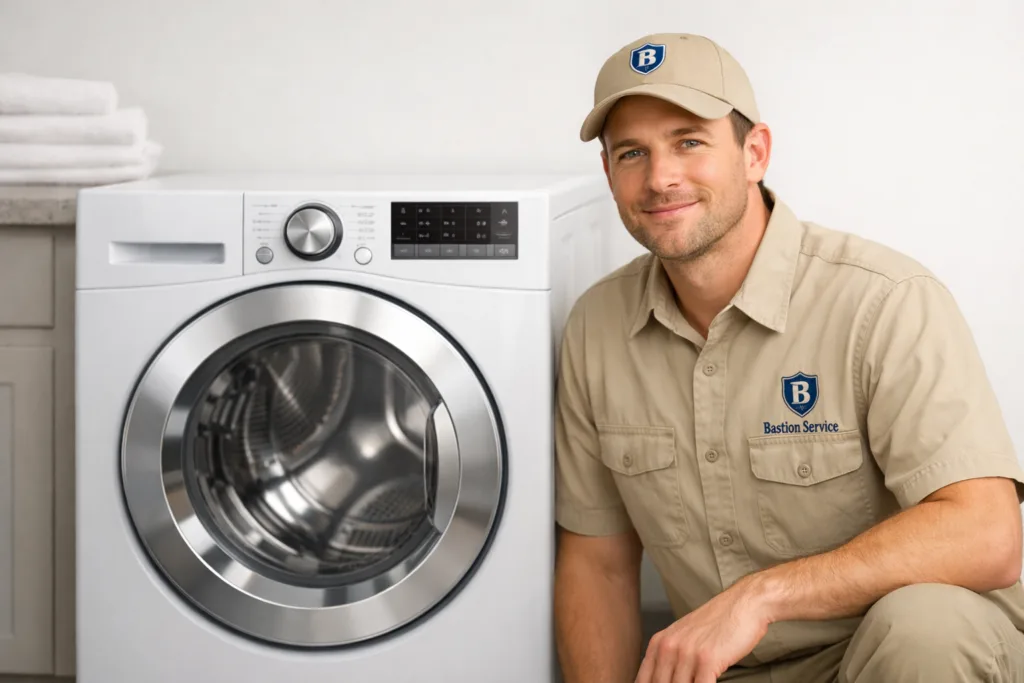
Small changes in dryer performance usually show up before a full breakdown. Clothes may come out warm but still damp, cycles may start taking much longer than usual, or the machine may sound rougher than normal. With LG dryers, those symptoms can point to very different causes, so the right next step depends on what the machine is actually doing during the cycle.
Common LG dryer problems in Redondo Beach homes
Most dryer calls begin with a symptom the household can see or hear. The useful part is matching that symptom to the most likely system involved, whether that is heat, airflow, drum movement, sensing, or electronic control.
Dryer runs but does not heat
If the drum turns and the cycle appears normal but clothing stays wet, the problem may involve the heating element on electric models, thermostats, a thermal fuse, wiring, or gas ignition components on gas units. Restricted exhaust airflow can create similar results, which is why poor drying performance should not automatically be blamed on one failed part.
In some cases, the dryer still produces a little heat, but not enough to finish a load in one cycle. That can happen with partial heater failure, sensor issues, or overheating conditions that interrupt normal operation.
Drying times keep getting longer
When a load that used to dry in one cycle suddenly needs two or three, airflow is often part of the story. Lint buildup, a crushed vent, or weak exhaust flow can keep moisture from leaving the drum efficiently. An LG dryer may also extend run time if the moisture sensing system is not reading correctly or if the machine is heating inconsistently.
Long dry times matter because repeated extra cycles add wear to support parts, increase utility use, and can hide a developing heating or venting issue that becomes more expensive later.
Dryer will not start
A no-start complaint can come from several directions. Sometimes the unit has no response at all. In other cases, the display lights up, selections work, but pressing start does nothing. Possible causes include a door switch fault, blown thermal fuse, failed start switch, control issue, or power supply problem.
Because modern dryers can appear to have power while still failing a key safety or control check, this symptom usually needs part-by-part testing rather than guesswork.
Loud noises, thumping, or squealing
Dryers are not supposed to grow steadily louder over time. Thumping can suggest worn rollers or a drum support issue. Squealing often points to an idler pulley or belt-related problem. Grinding or scraping may indicate more serious internal wear.
If the noise is new, using the dryer less until it is inspected is usually the smarter move. A worn support component can sometimes damage adjacent parts if the machine keeps running.
Drum will not turn properly
Sometimes the dryer powers on and may even hum, but the drum does not rotate. That can happen when the belt breaks, the motor struggles, or support parts seize. A drum that starts only with a push or turns unevenly can signal developing mechanical failure rather than a simple one-part issue.
Dryer stops mid-cycle or shows error codes
Mid-cycle shutdowns often involve overheating, thermistor faults, motor problems, airflow restrictions, or control board issues. Error codes on LG dryers can be helpful, but they are a starting point rather than a final answer. A code may identify the system under stress without confirming which component caused it.
What homeowners can notice before scheduling service
You do not need to disassemble anything to gather useful clues. A few simple observations can make the problem easier to narrow down:
- Whether the drum turns normally from the beginning of the cycle
- Whether the load feels cold, mildly warm, or very hot at the end
- Whether the exhaust airflow outside seems weaker than usual
- Whether the machine shuts off at a predictable point in the cycle
- Whether the noise happens immediately, only with heavy loads, or throughout the cycle
- Whether the issue affects every setting or only certain cycles
These details help separate a heat problem from a sensing problem, or an airflow issue from a mechanical one.
Why airflow problems deserve attention
Airflow is one of the most overlooked reasons a dryer performs badly. Even when the dryer itself is functional, restricted venting can cause slow drying, excess heat inside the cabinet, repeated cycling, or safety shutoffs. Over time, poor airflow can also shorten the life of heating and support components.
If clothing feels unusually hot, the laundry room becomes warmer than normal, or drying time has gradually increased, vent restriction should be considered alongside internal part failure. That is especially true when the symptom developed slowly rather than all at once.
When continued use can make the repair worse
Some dryer problems are inconvenient but stable for a short time. Others tend to spread damage. A squeal from a worn pulley can become a broken belt. Weak airflow can stress heating parts. Repeated overheating can affect fuses, thermostats, or wiring. A drum support problem can put extra load on the motor.
You should stop using the dryer sooner if you notice any of the following:
- A burning smell
- Scorching on clothing
- Repeated shutdowns during normal loads
- Severe overheating on the cabinet or inside the drum
- Grinding or scraping sounds
- Tripped breakers or signs of electrical stress
Repair versus replacement for an LG dryer
Most homeowners decide based on a few practical factors: age of the dryer, overall condition, history of previous issues, and the scope of the current repair. If the machine has been reliable and the problem is limited to a common serviceable part, repair is often worthwhile. If the dryer has multiple failures, heavy wear, or a costly electronic issue on an older unit, replacement may make more sense.
This is where a clear diagnosis matters most. “Not heating” sounds simple, but the repair path can range from a relatively contained part replacement to a broader problem involving airflow, controls, or multiple heat-related failures.
What useful LG dryer service should include
Good service is more than replacing the first part associated with the symptom. It should include symptom verification, model-specific testing, inspection of likely wear components, and a realistic explanation of what failed and why. That gives homeowners in Redondo Beach a better basis for deciding whether to move forward with repair.
For a household dryer, the goal is not just to make it run once. The goal is to restore normal drying performance, reduce the chance of repeat failure, and identify any condition that could lead to more damage if ignored.
Signs it is time to schedule service
It usually makes sense to book service when your LG dryer:
- Runs but leaves clothes damp
- Takes much longer than normal to finish a load
- Will not start or starts inconsistently
- Makes squealing, thumping, scraping, or grinding sounds
- Stops before the cycle should be finished
- Shows recurring error codes
- Produces unusual heat or a burning smell
When those symptoms appear, early attention often keeps the repair more contained and helps avoid bigger disruption to the household laundry routine.