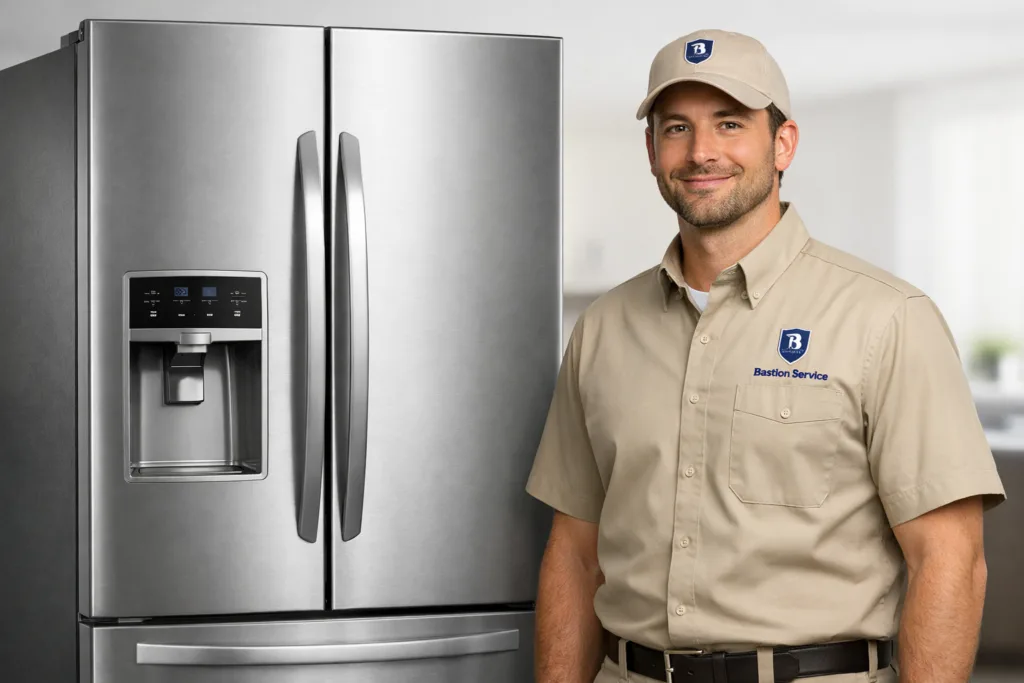
When a Kenmore refrigerator starts acting unpredictably, the most useful first move is to match the repair approach to the symptom instead of assuming every cooling problem has the same cause. A refrigerator that is completely warm, one that leaks, and one that freezes food in the fresh food section can each point to very different failures.
Start with what the refrigerator is doing now
Small changes often reveal where the problem is developing. If the freezer is still cold but the refrigerator side is warming up, airflow is usually a more likely concern than a complete loss of cooling. If both sections are warming at once, the issue may involve the compressor start system, controls, fans, or a more serious cooling-system fault. If frost is forming where it should not, defrost components or door sealing may be part of the picture.
In West Hollywood homes, that symptom-based approach matters because it helps narrow the problem quickly and avoids replacing parts based on guesswork alone.
Refrigerator not cooling or not cold enough
If food is spoiling early, drinks are no longer staying cold, or freezer items are softening, several issues may be involved. Common possibilities include failed evaporator or condenser fans, heavy frost buildup blocking airflow, faulty temperature sensing, start relay problems, or sealed system performance issues.
Helpful details to notice before service include:
- Whether the lights are on but the unit is not cooling
- Whether the compressor tries to start and clicks off
- Whether the freezer and fresh food sections are both affected
- Whether cooling became weaker gradually or stopped suddenly
- Whether the refrigerator is running almost constantly
Those differences can change the repair path considerably.
Freezer cold but refrigerator section warm
This is one of the more common complaint patterns with refrigerators. In many cases, the appliance is still producing cold air, but that air is not moving correctly into the fresh food section. Ice buildup around the evaporator, a failed evaporator fan, blocked vents, or a defrost problem can all create this symptom.
Homeowners often notice milk warming up first, produce spoiling faster, or the top shelves becoming much warmer than the lower shelves. That uneven pattern is usually an important clue and often points away from a total cooling loss.
Water leaking inside or onto the floor
Leaks can come from more than one place. A blocked defrost drain can send water under drawers or onto the floor. An ice maker supply issue can create slow dripping or visible pooling. Damaged door gaskets may allow excess moisture into the cabinet, leading to condensation that looks like a leak.
When water is collecting repeatedly, it is worth addressing soon. Ongoing leakage can affect flooring, baseboards, and nearby cabinets, and it can also make the original source harder to identify once moisture spreads.
Frost buildup where it should not be
Heavy frost on the back interior panel, around the freezer compartment, or near stored food usually means the refrigerator is not managing moisture and defrost cycles the way it should. In some cases, the cause is a defrost heater, thermostat, sensor, or control issue. In others, warm air may be entering through a door that is not sealing tightly.
Frost buildup is more than a cosmetic problem. It can restrict airflow, reduce cooling consistency, and cause the refrigerator section to warm up even while the freezer still seems cold.
Noisy operation, clicking, or buzzing
Kenmore refrigerators do make normal operating sounds, but a new or noticeably louder noise deserves attention when it comes with poor cooling, long run times, or temperature swings. Clicking can point to a start problem. Buzzing may be related to the compressor or a struggling fan. Rattling can come from loose panels, tubing vibration, or an out-of-position drain pan.
The key is whether the sound is new, repeating, or tied to a loss of performance. Noise by itself is not always serious, but noise plus weak cooling usually means the appliance needs inspection.
Signs service should not wait
Some refrigerator issues can become more expensive if the unit keeps running under strain. Scheduling service promptly is usually the better choice when:
- Food temperatures are no longer staying safe
- The refrigerator runs almost nonstop
- The unit starts and stops repeatedly without cooling well
- Water keeps appearing under the appliance or inside drawers
- Frost buildup returns quickly after being cleared
- The ice maker stops working along with cooling changes
If the refrigerator is not holding temperature at all, protecting food first is more important than trying repeated resets or lower thermostat settings.
What often makes the problem worse
It is common to try to buy time by turning the control colder, rearranging food, or unplugging and restarting the unit. While that may change the symptoms briefly, it usually does not solve the underlying failure. In some cases, continued operation can place more stress on fan motors, increase frost blockage, or cause a struggling compressor to work even harder.
Overpacking shelves can also make diagnosis harder. When vents are blocked by containers or food storage bins, airflow problems may look worse than they really are. If possible, keeping interior vents clear can help preserve what cooling remains until the appliance is checked.
Repair or replace: how the decision usually gets made
Repair is often reasonable when the refrigerator has a defined failure and the overall appliance is still in good condition. Problems involving drains, door seals, fan motors, some controls, defrost parts, and certain start components are often practical to address if the cabinet and main cooling system remain sound.
Replacement becomes a more serious consideration when there is major sealed system trouble, a long pattern of recurring breakdowns, significant interior or door damage, or repair cost that no longer makes sense for the age and condition of the unit.
For many West Hollywood homeowners, the decision comes down to three things:
- The exact cause of the current symptom
- The overall condition of the refrigerator
- Whether the repair is likely to restore stable, reliable performance
What to check before scheduling service
A few quick observations can make the service visit more productive. Before moving food out or unplugging the appliance, it helps to note:
- The temperatures in the freezer and refrigerator sections, if known
- Whether lights, fans, and the dispenser are still working
- Whether the issue appeared suddenly or gradually
- Any visible frost, condensation, or water pooling
- Any unusual sounds and when they occur
You do not need to diagnose the part yourself. Simple symptom details are often more useful than a guess about what failed.
Service expectations for a household refrigerator problem
Most homeowners want the same thing from a repair visit: a direct explanation of what is wrong, what is worth fixing, and what comes next. With Kenmore refrigerator problems, that usually means identifying whether the issue involves airflow, defrost, controls, water delivery, door sealing, or the cooling system itself, then determining whether repair is practical.
That kind of diagnosis is especially important in a daily-use appliance. When a refrigerator is unreliable, it affects groceries, meal planning, cleanup, and in some cases surrounding kitchen surfaces if leaking is involved. A good repair plan should answer not just why the unit stopped working properly, but whether the fix makes sense for the appliance you have now.