




Kenmore appliance problems often show up as everyday frustration before the cause is obvious
A Kenmore appliance rarely announces the exact part that has failed. What most homeowners notice first is a change in behavior: the refrigerator starts warming up, the washer leaves clothes heavy with water, the dryer needs two cycles, or the oven no longer bakes evenly. Those symptoms can come from several different issues, which is why the most useful next step is to look at the pattern of failure instead of guessing at parts.
That matters in West Hollywood homes where refrigeration, laundry, and cooking equipment are used constantly. A small performance change can turn into food spoilage, water on the floor, overheated loads, or unreliable meal prep. Looking at the symptom early often helps separate normal wear from a problem that is likely to grow.
How to read common Kenmore appliance symptoms
Refrigerator and freezer issues
If a Kenmore refrigerator is running but not cooling correctly, the problem is not always the same from one unit to another. Warm temperatures in the fresh food section may point to airflow trouble, a failing fan, sensor problems, dirty coils, or a defrost issue. Heavy frost buildup in the freezer can suggest a defrost system fault or a door seal problem. Water under the crisper drawers or near the front of the unit may come from a blocked drain path rather than a major cooling failure.
Some warning signs call for faster attention than others. Food softening in the freezer, milk spoiling early, a compressor that seems to run nonstop, or clicking and buzzing followed by weak cooling usually mean the unit should not be watched for too long. A freezer that is overfreezing one day and warming the next is also a sign that the problem may be progressing.
Washer problems that affect draining, spinning, or stability
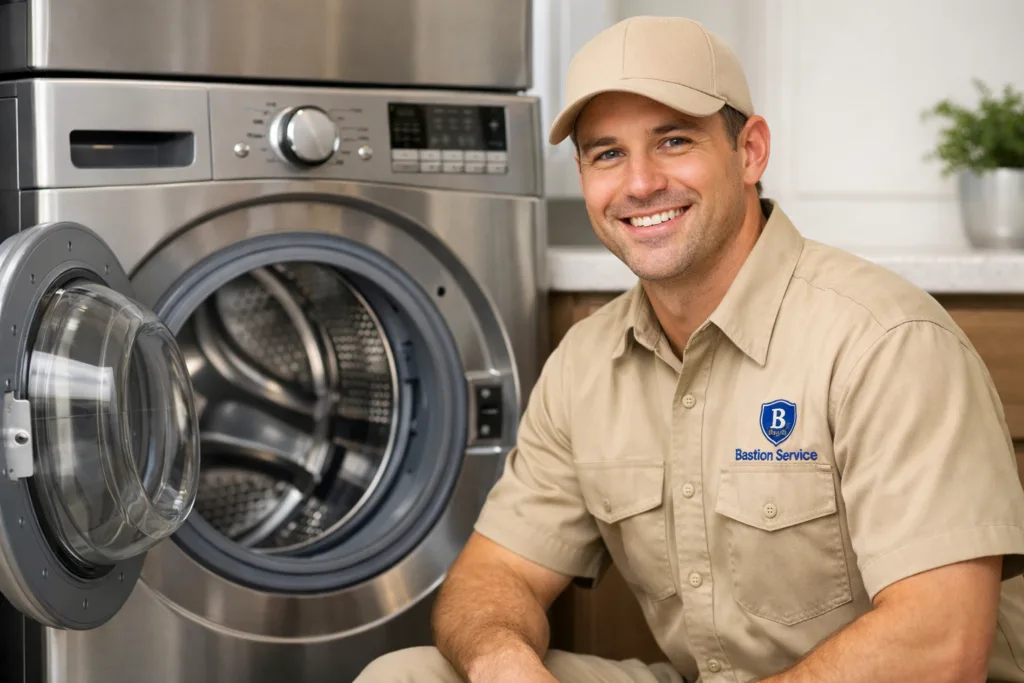
A Kenmore washer that fills normally but will not drain often points to a blockage, pump issue, or a problem in the drain system. If it drains but does not spin properly, the fault may involve the lid or door lock, drive components, or an imbalance condition that keeps the cycle from finishing as intended. Clothes that come out soaked usually mean the machine is failing at the end of the cycle rather than washing incorrectly at the beginning.
Excessive shaking is another symptom that should not be ignored. Sometimes the cause is simple load distribution, but persistent banging, walking, or harsh vibration can also come from worn suspension parts, leveling issues, or deeper mechanical wear. If a washer is leaking, stopping mid-cycle, or giving repeated error behavior, continued use can create extra strain and raise the chance of water damage.
Dryer heating, airflow, and noise concerns
Kenmore dryers often show problems through time and temperature. If clothes are still damp after a normal cycle, the cause could involve restricted airflow, a weak heating system, moisture sensing problems, or power supply issues on electric models. A dryer that gets too hot, smells scorched, or shuts off unexpectedly deserves quicker evaluation because heat-related faults can worsen with regular use.
Noises are just as useful as heat symptoms. Thumping, scraping, squealing, or rumbling can point to worn rollers, an idler problem, belt wear, or motor strain. If the drum turns inconsistently or the dryer starts but stops shortly afterward, the issue may be moving beyond routine wear. When a dryer is both noisy and drying poorly, it often means more than one system is being affected.
Dishwasher symptoms that start gradually
Dishwasher problems often begin subtly. Dishes come out less clean, glasses look cloudy, or cycles take longer than expected. Later, the same machine may stop draining, leave standing water, or fail to start at all. On a Kenmore dishwasher, those symptoms can come from spray arm blockage, filter and drainage restrictions, pump trouble, latch faults, or control-related issues.
Leaks deserve special attention, especially if water appears at the door edge or underneath the unit. A dishwasher that hums without washing, fills weakly, or stops midway through the cycle is also giving useful diagnostic clues. Catching those changes early may keep the repair smaller than waiting until the dishwasher becomes a complete no-start.
Cooktop, oven, and range performance changes
Cooking appliances tend to make their problems obvious during daily use. A Kenmore cooktop burner that clicks repeatedly, heats unevenly, or does not respond correctly may have an ignition, switch, element, or control issue. On a range, one burner failing while the others work normally often helps narrow the problem to a more localized fault.
Oven issues are sometimes harder to spot because the appliance still appears to be working. If food suddenly needs extra time, browns unevenly, or burns on one side, temperature regulation may be off. A weak bake element, sensor drift, ignition trouble on gas models, or door seal problems can all affect results. If there is delayed ignition, a gas smell, visible sparking, or unstable temperature behavior, the appliance should not be treated as safe to keep using without inspection.
Signs a Kenmore appliance should be checked soon
Some issues can be scheduled around the household routine, but others move to the front of the list quickly. A refrigerator or freezer losing safe temperature, a washer leaking onto the floor, a dryer producing excessive heat, or an oven failing to regulate temperature properly should not be delayed for long. Repeated breaker trips, burning smells, smoke, sparking, or active water escape are clear stop-using signs.
Intermittent failures also matter. An appliance that works only sometimes is often in an early stage of a larger problem. A dishwasher that drains on some cycles but not others, a range burner that lights only after several attempts, or a washer that occasionally refuses to spin may still be repairable without major work, but waiting can allow the fault to spread to related components.
Repair versus replacement depends on the type of failure, not just the symptom
Not every breakdown leads to the same decision. Repair is usually the better path when the problem is isolated, the appliance is in otherwise solid condition, and the expected repair is proportionate to the value of keeping it in service. Replacement becomes more realistic when the appliance has multiple active problems, a history of repeat failures, or a major system issue that changes the economics of repair.
For example, a washer with one drain-related failure is a different situation from a washer with leaking, spinning, and control problems at the same time. A refrigerator with a replaceable fan issue is not the same as one facing a larger sealed-system concern. A dryer with worn support parts may still be a sensible repair, while a dryer with motor, heat, and control symptoms together may call for a more cautious cost comparison. The useful question is not simply whether the appliance still turns on, but whether the repair is likely to restore stable performance.
What homeowners can note before scheduling service
A few observations can make diagnosis more efficient. It helps to note whether the symptom happens on every cycle or only occasionally, whether the issue appeared suddenly or worsened over time, and whether any error code is showing. New noises, changes in cycle length, weak draining, uneven cooling, or one burner behaving differently from the others are all worth mentioning.
For refrigerators and freezers, note which section is warm and whether frost is building up. For washers, mention whether the tub fills, agitates, drains, or spins before stopping. For dryers, track whether the drum turns, whether heat is present, and whether clothes are still damp after a full cycle. For dishwashers, it helps to know if the machine fills, sprays, drains, or simply hums. For ovens and cooktops, pay attention to delayed ignition, inaccurate temperatures, or inconsistent burner response.
These details do not replace hands-on testing, but they do help turn a vague complaint into a clearer symptom path.
Support across the Kenmore appliances commonly found in West Hollywood homes
Kenmore products cover a wide range of household equipment, and the repair approach is not identical across categories. Refrigerators and freezers involve temperature control, airflow, and defrost systems. Washers and dryers rely on drainage, drive, support, heating, and sensing components. Dishwashers have their own wash, fill, and drain patterns. Ovens, ranges, and cooktops add another layer of ignition, element, and temperature regulation concerns.
For households in West Hollywood, the goal is to identify which symptom points to a limited repair, which one suggests a more advanced failure, and when it makes sense to stop using the appliance until it has been evaluated. That kind of symptom-based review helps homeowners make a better decision before a minor issue becomes a full disruption.


