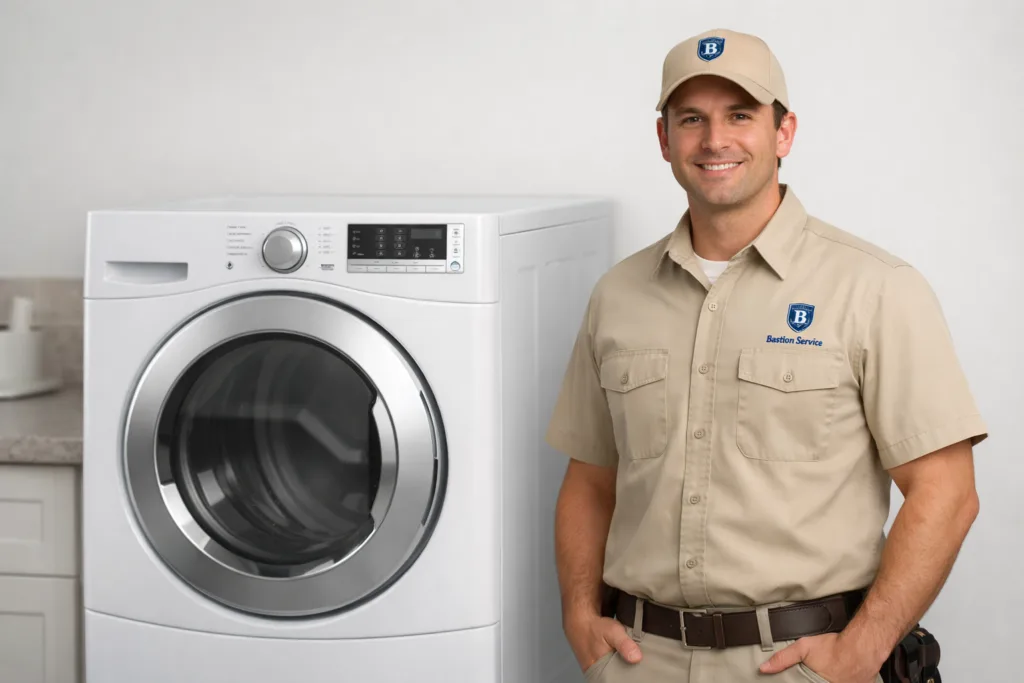
A Kenmore dryer that suddenly leaves clothes damp, stops mid-cycle, or starts making new noises can throw off the entire laundry routine. The fastest way to avoid wasted time and unnecessary part replacement is to look at the exact symptom pattern and narrow the problem to the right system first.
Start with the symptom, not the part
Many dryer complaints sound similar on the surface but come from different causes. A machine that tumbles without heat may have a heating circuit problem, a failed thermal component, restricted airflow, or a power supply issue. A dryer that does heat but needs two or three cycles to finish a load can point to vent restriction, weak heating performance, moisture sensor trouble, or wear that is reducing efficiency.
That is why homeowners in Mid-Wilshire usually get better results by describing what the dryer is doing from start to finish. Whether the drum turns, whether heat appears at all, whether the timer advances normally, and whether the problem happens on every load can all help separate one failure path from another.
Common Kenmore dryer problems and what they often mean
Dryer runs but does not heat
This is one of the most common complaints on a household dryer. On electric models, the drum may still turn even when the dryer is not receiving the full power needed for heating. On gas models, the problem may involve the igniter, gas valve components, flame sensing, or safety devices that interrupt heat. On both types, airflow restrictions can create overheating conditions that lead to shutdown of the heating system.
Other possible causes include a blown thermal fuse, bad thermostat, failed heating element, wiring trouble, or control failure. Because several of these issues can produce the same no-heat symptom, guessing can get expensive quickly.
Dryer heats but takes too long to dry
Long dry times often point to poor airflow before they point to major internal failure. A clogged vent path, crushed vent line, lint buildup, or weak air movement can keep moisture from leaving the drum efficiently. The dryer may seem to be working, but clothes stay damp because heated air is not circulating and exhausting the way it should.
If airflow checks out, attention usually shifts to heater performance, sensor operation, cycling thermostats, or load sensing behavior. When dry times increase gradually, it often signals a problem that has been building rather than a sudden one-time failure.
Dryer will not start
If the dryer does nothing when the start button is pressed, the issue may be as simple as a door switch that is not engaging correctly, or as involved as a failed control, blown fuse, broken start circuit, or power problem. In some cases, the machine may appear completely dead. In others, lights come on but the motor never starts.
A no-start condition should be looked at as an electrical or safety interruption until proven otherwise. Repeatedly pressing the start button rarely helps and can make it harder to notice the original symptom sequence.
Dryer starts and then shuts off
A Kenmore dryer that runs for a few minutes and quits may be overheating, losing motor continuity as it warms up, or tripping a protective component. This pattern is especially important because continued use can put added stress on the motor, controls, and heating system.
If shutdown happens only on certain cycles or only with heavier loads, that detail can help narrow the cause. Mid-cycle stopping is often more informative than it first appears.
Squealing, thumping, scraping, or rumbling
Noise is usually a sign of mechanical wear. Support rollers, idler pulleys, belts, drum glides, and blower parts all wear over time. A thump may indicate a flat-spotted roller or something caught in the drum area. A squeal can point to friction from a worn moving part. A scrape may mean the drum is no longer being supported correctly.
These sounds typically do not resolve on their own. Early attention can prevent a smaller wear issue from turning into a larger drum or motor problem.
Burning smell or overheating
A hot or burning odor should never be ignored. Lint buildup, restricted venting, overheated components, slipping belts, or failing support parts can all create excess heat and smell. If the odor is strong, new, or accompanied by very hot cabinet surfaces, it is best to stop using the dryer until the cause is identified.
Why airflow matters more than many homeowners expect
Airflow problems can mimic several different dryer failures. A restricted vent can cause poor drying, overheating, repeated thermal fuse failure, shortened cycle performance, and automatic shutoff behavior. In some cases, the dryer itself is still capable of heating correctly, but the moisture cannot leave the system fast enough for normal drying.
That makes airflow one of the first things worth evaluating when a Kenmore dryer in Mid-Wilshire starts taking too long, getting unusually hot, or producing inconsistent results between loads. A dryer cannot perform normally when the exhaust path is compromised.
Signs the problem is getting worse
Some dryer issues stay stable for a while, but many get progressively more expensive if ignored. Watch for:
- Loads that need more cycles than they did a week ago
- Heat that comes and goes
- Intermittent shutoffs during normal loads
- New rattling, squealing, or scraping sounds
- A cabinet that feels hotter than usual
- A breaker that trips while the dryer is running
- Odors that appear only after the machine warms up
Intermittent symptoms are especially important. They often suggest a component that is beginning to fail rather than one that has failed completely. That can make the timing of the symptom just as helpful as the symptom itself.
When repair usually makes sense
Many Kenmore dryer problems are still worthwhile to repair, especially when the issue is limited to one system and the rest of the machine is in decent condition. Common repairs may involve rollers, belts, pulleys, thermal fuses, thermostats, igniters, heating elements, switches, or airflow-related corrections.
Repair is often the better choice when the dryer has been otherwise reliable, the drum and cabinet are in good shape, and the problem can be traced to a defined failure rather than general deterioration.
When replacement may be the better option
Replacement becomes more reasonable when the dryer shows multiple signs of wear at once, has a failing motor along with other aging parts, has recurring control issues, or has already had repeated breakdowns within a short period. If one repair is unlikely to solve the larger condition of the machine, it may not be the best long-term investment.
The key question is not simply whether the dryer can be repaired, but whether the repair restores dependable everyday use without leading into a cycle of additional breakdowns.
What to note before scheduling service
A few observations can make diagnosis more efficient. Try to note:
- Whether the drum turns
- Whether any heat is produced
- How long a typical load is taking
- Whether the problem happens on every cycle or only sometimes
- What kind of noise is present, if any
- Whether there is a hot, dusty, or burning smell
- Whether the dryer shuts off on its own
This kind of detail helps narrow the likely cause before repair decisions are made. It also helps distinguish between a heat issue, an airflow problem, a mechanical fault, or an electrical interruption.
How to avoid added damage while waiting for service
If the dryer is grinding, scraping, overheating, tripping power, or producing a strong odor, limiting use is the safest choice. Repeated operation under those conditions can damage additional parts and turn a manageable repair into a larger one.
Cleaning the lint screen is always worth doing, but it should not be treated as the complete answer when performance changes suddenly. If clothes are still coming out damp, cycles are stretching longer, or the dryer is shutting down unexpectedly, the issue usually goes beyond routine lint removal.
Residential Kenmore dryer help in Mid-Wilshire
For households in Mid-Wilshire, the most useful service approach is one that identifies the failed system, checks whether continued use risks more damage, and weighs repair against the overall condition of the appliance. That helps cut through guesswork and focus on what is actually preventing the Kenmore dryer from heating, drying, starting, or running normally.