
DD24Manufacturer product
Independent Hoshizaki repair

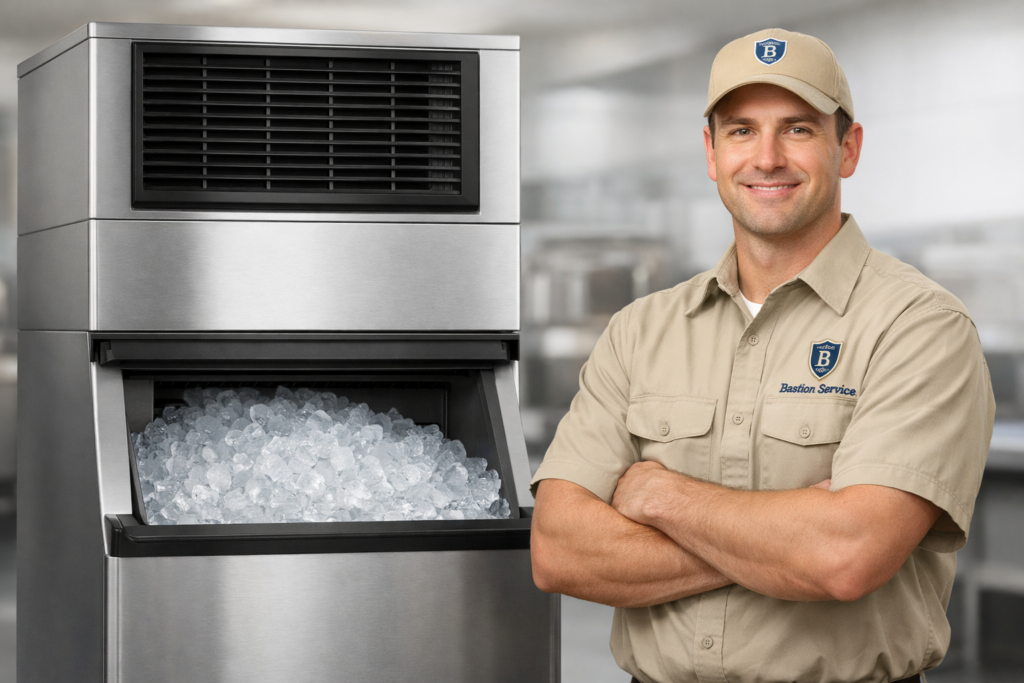
Hoshizaki Repair in Los Angeles
Diagnosis and repair for supported Hoshizaki appliances and equipment in Los Angeles. Same-day service is available.
- Same-day service available
- 90-day repair warranty
- Estimate before repair
$85 / $120 service callHome appliance / business equipment
Applied to repairIf you approve the estimate
Open 7 days8 AM-6 PM
Serving Los AngelesOn-site diagnosis and repair
Supported equipment
Hoshizaki equipment we repair
Choose the equipment type for problem details and service information. Bastion Service is an independent repair company and is not affiliated with Hoshizaki.
Diagnosis first
What a service technician checks
Good diagnosis starts with the exact symptom, model, operating conditions, and service history. The technician tests the systems connected to the failure instead of replacing parts by guesswork.
- Power, supply, and controls to confirm the machine can start and complete its normal sequence.
- Airflow, water, heat, and movement as applicable to the exact equipment type.
- Error history and model data before matching parts, manuals, or service information.
Model reference
Hoshizaki models and manuals
Use the model search to confirm that your equipment is listed. The model and serial label is still the final reference for service information.
Model reference
496 models
Hoshizaki equipment model references
Bastion Service repairs Hoshizaki equipment. These model and manual references help identify your equipment; symptoms alone do not confirm a diagnosis.
Manual candidates require the complete model, serial/build and installed controller to be checked. A specification sheet is not an operating manual. These references do not authorize installation or DIY repair.
Repair service only. New equipment installation is not offered.
Equipment repairRefrigerators: back bar / direct draw refrigerators10
Refrigerators: back bar / refrigerators16
BB59-G-SManufacturer product
BB95-G-SManufacturer product
BB95-GManufacturer product
BB80-G-SManufacturer product
BB80-GManufacturer product
BB69-G-SManufacturer product
BB69-GManufacturer product
BB59-GManufacturer product
BB95-SManufacturer product
BB95Manufacturer product
BB59Manufacturer product
BB80-SManufacturer product
BB80Manufacturer product
BB69-SManufacturer product
BB69Manufacturer product
BB59-SManufacturer product
Refrigerators: back bar / slide top bottle coolers8
Refrigerators: chef bases / refrigerators14
CR36BManufacturer product
CR36B-LManufacturer product
CR49BManufacturer product
CR49B-LManufacturer product
CR60BManufacturer product
CR60B-LManufacturer product
CR72BManufacturer product
CR72B-LManufacturer product
CR85BManufacturer product
CR85B-LManufacturer product
CR98BManufacturer product
CR98B-LManufacturer product
CR110BManufacturer product
CR110B-LManufacturer product
Refrigerators: compact undercounters4
Refrigerators: merchandisers display cases / glass door merchandiser refrigerators18
RM-65-HC-WHTManufacturer product
RM-65-HC-BLKManufacturer product
RM-49-HC-WHTManufacturer product
RM-49-HC-BLKManufacturer product
RM-10-HC-WHTManufacturer product
RM-45-SD-HC-WHTManufacturer product
RM-45-SD-HC-BLKManufacturer product
RM-26-HC-WHTManufacturer product
RM-26-HC-BLKManufacturer product
RM-10-HC-BLKManufacturer product
RM-7-HC-WHTManufacturer product
RM-7-HC-BLKManufacturer product
RM-10-HCManufacturer product
RM-49-HCManufacturer product
RM-65-HCManufacturer product
RM-45-SD-HCManufacturer product
RM-26-HCManufacturer product
RM-7-HCManufacturer product
Refrigerators: prep tables / mega tops20
SR60B-24MD2RManufacturer product
SR36B-15MD2Manufacturer product
SR60B-24MD2Manufacturer product
SR72B-30MD6Manufacturer product
SR72B-30MD4Manufacturer product
SR72B-30MD2Manufacturer product
SR72B-30MManufacturer product
SR72B-24MManufacturer product
SR72B-18MManufacturer product
SR60B-24MD4Manufacturer product
SR60B-24MManufacturer product
SR60B-18MManufacturer product
SR60B-12MManufacturer product
SR48B-18MD4Manufacturer product
SR48B-18MD2Manufacturer product
SR48B-18MManufacturer product
SR48B-12MManufacturer product
SR27B-12MManufacturer product
SR27B-12MD2Manufacturer product
SR36B-15MManufacturer product
Refrigerators: prep tables / pizza preps13
PR67B-ZManufacturer product
PR60B-D2Manufacturer product
PR67B-D2Manufacturer product
PR67B-D4Manufacturer product
PR93BManufacturer product
PR93B-D2Manufacturer product
PR93B-D4Manufacturer product
PR93B-D6Manufacturer product
PR67BManufacturer product
PR46BManufacturer product
PR46B-D2Manufacturer product
PR60BManufacturer product
PR60B-D4Manufacturer product
Refrigerators: prep tables / sandwich preps14
SR36B-10D2Manufacturer product
SR60B-12Manufacturer product
SR60B-16Manufacturer product
SR72B-12Manufacturer product
SR72B-16Manufacturer product
SR72B-18Manufacturer product
SR60B-8Manufacturer product
SR48B-8Manufacturer product
SR48B-12Manufacturer product
SR48B-12D2Manufacturer product
SR48B-12D4Manufacturer product
SR27B-8Manufacturer product
SR27B-8D2Manufacturer product
SR36B-10Manufacturer product
Refrigerators: reach ins / pass thrus8
Refrigerators: reach ins / refrigerators23
R2A-FSPManufacturer product
R2A-FGENManufacturer product
R1A-FGEManufacturer product
R1A-HGEManufacturer product
R2A-FGEManufacturer product
R2A-HGEManufacturer product
R3A-FGEManufacturer product
R3A-HGEManufacturer product
R2A-FSNManufacturer product
R3A-HSManufacturer product
R3A-HGManufacturer product
R3A-FGManufacturer product
R3A-FSManufacturer product
R2A-HGManufacturer product
R2A-FGManufacturer product
R2A-HSManufacturer product
R2A-FSManufacturer product
R1A-HGManufacturer product
R1A-FSManufacturer product
R1A-FGManufacturer product
R1A-HSLManufacturer product
R1A-HSManufacturer product
R1A-FSLManufacturer product
Refrigerators: reach ins / roll ins roll thrus4
Refrigerators: undercounters worktops / undercounters45
ULR46B-LManufacturer product
UR36B-D2Manufacturer product
UR36B-LPD2Manufacturer product
UR27B-LPD3Manufacturer product
UR60B-LPD4Manufacturer product
UR60B-LPD2Manufacturer product
UR72B-LPManufacturer product
UR72B-LPD6Manufacturer product
UR48B-LPManufacturer product
ULR93B-D4Manufacturer product
ULR93B-D6Manufacturer product
UR27B-LPD2Manufacturer product
UR36B-LPManufacturer product
UR48B-LPD2Manufacturer product
UR48B-LPD4Manufacturer product
UR60B-LPManufacturer product
ULR60B-D2Manufacturer product
ULR93B-D2Manufacturer product
ULR93BManufacturer product
ULR67B-D4Manufacturer product
ULR67B-D2Manufacturer product
ULR67BManufacturer product
ULR60B-D4Manufacturer product
ULR60BManufacturer product
ULR46B-D2Manufacturer product
ULR46BManufacturer product
UR60B-D2Manufacturer product
UR60BManufacturer product
UR60B-01Manufacturer product
UR60B-D4Manufacturer product
UR72BManufacturer product
UR72B-01Manufacturer product
UR72B-D6Manufacturer product
UR48B-01Manufacturer product
UR48BManufacturer product
UR48B-D2Manufacturer product
UR48B-D4Manufacturer product
UR48B-GLP01Manufacturer product
UR27BManufacturer product
UR36B-01Manufacturer product
UR36BManufacturer product
UR27B-GLP01Manufacturer product
UR27B-D2Manufacturer product
UR27B-01Manufacturer product
UR27B-LPManufacturer product
Refrigerators: undercounters worktops / worktops30
WR27B-LManufacturer product
WR36B-D2Manufacturer product
WLR93BManufacturer product
WLR46BManufacturer product
WLR46B-D2Manufacturer product
WLR60BManufacturer product
WLR60B-D2Manufacturer product
WLR60B-D4Manufacturer product
WLR67BManufacturer product
WLR67B-D2Manufacturer product
WLR67B-D4Manufacturer product
WLR93B-D2Manufacturer product
WLR93B-D4Manufacturer product
WLR93B-D6Manufacturer product
WR72BManufacturer product
WR72B-D6Manufacturer product
WR72B-01Manufacturer product
WR60B-D4Manufacturer product
WR60B-D2Manufacturer product
WR60B-01Manufacturer product
WR60BManufacturer product
WR48B-D4Manufacturer product
WR48BManufacturer product
WR27B-01Manufacturer product
WR27B-D2Manufacturer product
WR36B-01Manufacturer product
WR48B-01Manufacturer product
WR48B-D2Manufacturer product
WR27BManufacturer product
WR36BManufacturer product
Refrigerators: valiance series / prep tables2
Refrigerators: valiance series / reach ins2
Refrigerators: valiance series / undercounters3
Refrigerators: valiance series / worktops3
Refrigerators: historical HUR40A / HUR68A / HWR40A / HWR68A4
Refrigerators: historical RH1 AAC / RH2 AAC2
Refrigerators: historical RH1 SSB / RH2 SSB / RH3 SSB3
Freezers: historical FH2 AAC / FH2 AAC HD2
Freezers: historical FH2 SSB / FH2 SSB HD2
Freezers: historical HUF68A / HWF68A2
Freezers: historical FH1 AAC1
Freezers: historical FH1 SSB1
Freezers: additional manufacturer listed models71
PTF1A-HGE-HGEManufacturer product
PTF1A-HS-FSManufacturer product
UF48B-D2Manufacturer product
UF27B-LPD2Manufacturer product
UF48B-LPManufacturer product
UF48B-LPD4Manufacturer product
UF60B-LPManufacturer product
ULF46BManufacturer product
ULF60BManufacturer product
ULF67BManufacturer product
UF48B-LPD2Manufacturer product
UF60BManufacturer product
UF60B-01Manufacturer product
UF48BManufacturer product
UF48B-01Manufacturer product
UF48B-D4Manufacturer product
UF27B-LPManufacturer product
UF27B-GLP01Manufacturer product
UF27B-D2Manufacturer product
UF27B-01Manufacturer product
UF27BManufacturer product
WF48B-D2Manufacturer product
WLF67BManufacturer product
WLF60BManufacturer product
WLF46BManufacturer product
WF60B-01Manufacturer product
WF60BManufacturer product
WF27B-D2Manufacturer product
WF48BManufacturer product
WF48B-01Manufacturer product
WF48B-D4Manufacturer product
WF27B-01Manufacturer product
WF27BManufacturer product
VF1A-FSManufacturer product
VF2A-FSManufacturer product
VUF60AManufacturer product
VUF27AManufacturer product
VUF48AManufacturer product
VWF27AManufacturer product
VWF48AManufacturer product
VWF60AManufacturer product
F2A-FGENManufacturer product
F1A-FGEManufacturer product
F1A-HGEManufacturer product
F2A-FGEManufacturer product
F2A-HGEManufacturer product
F2A-FSNManufacturer product
F2A-HGManufacturer product
F3A-HSManufacturer product
F3A-FSManufacturer product
F1A-FSManufacturer product
F2A-FGManufacturer product
F2A-HSManufacturer product
F2A-FSManufacturer product
F1A-HGManufacturer product
F1A-FGManufacturer product
F1A-HSLManufacturer product
F1A-HSManufacturer product
F1A-FSLManufacturer product
CF36BManufacturer product
CF36B-LManufacturer product
CF49BManufacturer product
CF49B-LManufacturer product
CF60BManufacturer product
CF60B-LManufacturer product
CF72BManufacturer product
CF72B-LManufacturer product
FM-49-HCManufacturer product
FM-23-HC-BLKManufacturer product
FM-23-HC-WHTManufacturer product
FM-23-HCManufacturer product
Ice machines: KM 1340 H modular crescent cubers4
KM-1340MAHManufacturer model reference
KM-1340MWHManufacturer model reference
KM-1340MRHManufacturer model reference
KM-1340MRH3Manufacturer model reference
Ice machines: KM 900 H modular crescent cubers4
Ice machines: KM 650 H modular crescent cubers3
Ice machines: KM 600MAH air cooled crescent cuber1
Ice machines: KM 500 H modular crescent cubers3
Ice machines: KM 1800 S H modular crescent cubers6
Ice machines: KM 1601MRH and MRH3: E control edition2
KM-1601MRHManufacturer model reference
KM-1601MRH3Manufacturer model reference
Ice machines: KM 350, 420, 520 and 660 J/Z cubers13
KM-350MAJManufacturer model reference
KM-350MWJManufacturer model reference
KM-420MAJManufacturer model reference
KM-420MWJManufacturer model reference
KM-420MRJZManufacturer model reference
KM-520MAJManufacturer model reference
KM-520MWJManufacturer model reference
KM-520MRJManufacturer model reference
KM-520MRJZManufacturer model reference
KM-660MAJManufacturer model reference
KM-660MWJManufacturer model reference
KM-660MRJManufacturer model reference
KM-660MRJZManufacturer model reference
Ice machines: KMS 822MLJ remote ice making system1
Ice machines: KM 901, 1100, 1340 and 1601 J cubers13
KM-901MAJManufacturer model reference
KM-901MWJManufacturer model reference
KM-901MRJManufacturer model reference
KM-901MRJ3Manufacturer model reference
KM-1100MAJManufacturer model reference
KM-1100MWJManufacturer model reference
KM-1100MRJManufacturer model reference
KM-1340MAJManufacturer model reference
KM-1340MWJManufacturer model reference
KM-1340MRJManufacturer model reference
KM-1340MRJ3Manufacturer model reference
KM-1601MRJManufacturer model reference
KM-1601MRJ3Manufacturer model reference
Ice machines: crescent cuber series / built in bin6
Ice machines: crescent cuber series / for dispensers8
Ice machines: crescent cuber series / modular21
KM-330MAKManufacturer product
KM-1130MAK2Manufacturer product
KM-730MAKManufacturer product
KM-830MAK2Manufacturer product
KM-322MAKManufacturer product
KM-530MAKManufacturer product
KM-522MAKManufacturer product
KM-622MAKManufacturer product
KM-1100MRJZManufacturer product
KM-901MRJZ3Manufacturer product
KM-901MRJZManufacturer product
KM-1340MRJZManufacturer product
KM-1601MRJZ3Manufacturer product
KM-1601MRJZManufacturer product
KM-1340MRJZ3Manufacturer product
KMS-2000MLJManufacturer product
KM-1100MAJ50Manufacturer product
KM-660MAJ-EManufacturer product
KM-520MAJ-EManufacturer product
KMS-1402MLJManufacturer product
KMS-1122MLJManufacturer product
Ice machines: crescent cuber series / stackable23
KM-2600SRJZ3Manufacturer product
KM-2200SRJZ3Manufacturer product
KM-1900SRJZ3Manufacturer product
KM-1900SRJZManufacturer product
KM-1601SRJZ3Manufacturer product
KM-1601SRJZManufacturer product
KM-1301SRJZ3Manufacturer product
KM-1301SRJZManufacturer product
KM-1900SAJManufacturer product
KM-1900SWJ3Manufacturer product
KM-1900SAJ3Manufacturer product
KM-1900SWJManufacturer product
KM-1601SWJ3Manufacturer product
KM-1601SAJ3Manufacturer product
KM-1601SWJManufacturer product
KM-1601SAJManufacturer product
KM-1301SAJ-EManufacturer product
KM-1301SWJ3Manufacturer product
KM-1301SAJ3Manufacturer product
KM-2600SWJ3Manufacturer product
KM-1301SWJManufacturer product
KM-1301SAJManufacturer product
KM-2200SWJ3Manufacturer product
Ice machines: cubelet series / built in bin5
Ice machines: cubelet series / for dispensers4
Ice machines: cubelet series / modular19
F-1530MRKZ2-SCManufacturer product
F-1530MWK2-SCManufacturer product
F-1530MAK2-SCManufacturer product
F-1530MRKZ2-CManufacturer product
F-1530MWK2-CManufacturer product
F-1530MAK2-CManufacturer product
F-1022MAK-CBManufacturer product
F-1022MAK-CManufacturer product
F-822MAK-CManufacturer product
F-422MAK-CManufacturer product
F-622MAK-CManufacturer product
F-2001MRJZ-CManufacturer product
F-1002MRJZ-SCManufacturer product
F-1002MRJZ-CManufacturer product
FS-1501MLJ-CManufacturer product
FS-1022MLJ-CManufacturer product
FS-1001MLJ-CManufacturer product
F-801MWJ-CManufacturer product
F-1002MWJ-CManufacturer product
Ice machines: flaker series / built in bin1
Ice machines: flaker series / modular14
F-1530MRKZ2Manufacturer product
F-1530MWK2Manufacturer product
F-1530MAK2Manufacturer product
F-1022MAKManufacturer product
F-822MAKManufacturer product
F-422MAKManufacturer product
F-2001MRJZManufacturer product
F-2001MRJZ3Manufacturer product
F-1002MRJZManufacturer product
F-2001MWJManufacturer product
F-2001MLJManufacturer product
F-1002MLJManufacturer product
F-801MWJManufacturer product
F-1002MWJManufacturer product
Ice machines: specialty gourmet ice / 1by12
Ice machines: specialty gourmet ice / 2by21
Ice machines: specialty gourmet ice / sphere1
Ice machines: specialty gourmet ice / top hat4
Ice machines: dispensers / ice water dispensers12
DCM-500BWKManufacturer product
DCM-500BWK-OSManufacturer product
DCM-271BAKManufacturer product
DCM-271BAK-OSManufacturer product
DCM-300BAKManufacturer product
DCM-300BAK-OSManufacturer product
DCM-500BAKManufacturer product
DCM-500BAK-OSManufacturer product
DCM-700BAKManufacturer product
DCM-700BAK-OSManufacturer product
DCM-751BWHManufacturer product
DCM-751BWH-OSManufacturer product
Symptoms and maintenance
Equipment symptoms and care by family
Match the complete model, serial/build and installed controller before using a document.
Bastion Service repairs existing equipment. We do not install new equipment.
No matching reference. This does not determine service availability.
Bar refrigerators, bottle coolers and direct-draw equipment4 topics
Back to models and manualsInstruction Manual | Issued: 2019-04 | Revised: 2019-10
Not reaching temperature
Restricted ventilation, crowded storage or a door that does not seal can affect cooling. Fan operation also needs checking. These possibilities do not identify a failed part; diagnosis must separate an operating issue from a repair.
Water beneath the cabinet
Water can be related to drainage, the position of the drain over its pan, or cabinet level. Tell the technician where water appears and whether the equipment was recently moved. Leave internal drain access to service personnel.
Condenser and gasket care
This bar-equipment instruction recommends condenser cleaning every 30-60 days, depending on dust and grease. Gaskets also need regular cleaning. Have the applicable instruction and service edition reconciled before adopting a maintenance schedule for your unit.
Safe maintenance
Maintenance requires disconnecting power. Do not pressure-wash the equipment or remove service panels to follow a general website guide.
HR15A-G refrigerator4 topics
Back to models and manualsService Manual | Document: MAN-351-R | Issued: 2020-01-30 | Revised: 2023-05-22
Warm cabinet or excessive cooling
A warm cabinet may involve power, airflow, controls or the refrigeration system. Excessive cooling has a separate temperature-sensor diagnostic path. Similar symptoms can require different repairs; testing comes before choosing a replacement part.
Condensation and frost
Poor door closure, sensor placement or humid conditions may contribute to condensation. Frost calls for separate fan, control and refrigeration checks. Report whether the moisture is inside or outside and whether the door closes fully.
Condenser inspection
This service edition calls for an annual condenser check and cleaning as needed. That does not mean dirt should remain until the next annual visit. Disconnect power before maintenance; internal service belongs to a qualified technician.
Bring the complete model number
Use the complete HR15A-G model designation when requesting help. An instruction for another HR15A version is not enough to identify the installed controller or interpret its display.
HR24C refrigerator4 topics
Back to models and manualsInstruction Manual | Document: MAN-328-R | Issued: 2019-03-14 | Revised: 2019-03-22
A temperature warning is not a diagnosis
A high- or low-temperature warning reports a condition, not which part needs replacement. A defrost message can describe normal operation. Record the exact display and identify the installed controller before interpreting it.
Interior and door care
Wipe up spills promptly. Clean the interior, door gasket and shelves regularly using the methods in the HR24C instruction. This keeps routine cleaning separate from troubleshooting an equipment fault.
Condenser inspection
The instruction calls for checking the condenser annually and cleaning as required. A technician can assess access and the condition of the coil; the annual inspection wording is not a guarantee that cleaning is unnecessary between checks.
Electrical and cleaning precautions
Disconnect power before maintenance. Do not spray water directly onto the appliance. A damaged cord or plug needs prompt professional attention, not a do-it-yourself electrical repair.
RM merchandiser refrigerators: 2020 instruction edition4 topics
Back to models and manualsInstruction Manual | Document: MAN-226-R | Issued: 2017-02-22 | Revised: 2020-08-14
A pause after a power interruption
The controller described here delays compressor startup after a power interruption. A brief pause alone does not establish a failed compressor. Tell the technician about the outage and whether cooling resumed.
Control position and model differences
The dial has an off position, and this edition distinguishes RM-45-SD-HC settings from the other listed models. Do not copy settings from a different RM model or assume a dial illustration provides an error-code table.
Monthly condenser cleaning
This instruction specifies monthly condenser cleaning. Arrange appropriate access and cleaning with qualified service personnel. Disconnect power and move stored products to another cooler before maintenance; do not treat this as a universal Hoshizaki schedule.
Returning products after cleaning
Use the manual-approved mild cleaning method for cabinet surfaces and shelves. After maintenance, let the refrigerator cool to its setpoint before returning products.
Steelheart B undercounter, worktop and prep: 2025 instructions4 topics
Back to models and manualsInstruction Manual | Issued: 2025-03-25
Keep the complete cabinet identity
The nameplate is on the inside right cabinet wall. Include its full model and serial information when requesting repair, especially for drawer and low-profile configurations. A grouped specification label does not identify the installed controller.
An indicator is not a failed-part diagnosis
The documented lights include operating states as well as alarms. Report the visible color and behavior without opening service panels. Different control editions use different indications; a light alone does not identify a component to replace.
Condenser attention and safe isolation
Dusty or greasy locations can require more frequent condenser attention. Have qualified personnel establish the appropriate inspection schedule and access. Switching the cabinet off does not disconnect every electrical load; maintenance requires proper power isolation.
Spills, interior surfaces and door seals
Remove spills promptly and clean the interior and gaskets regularly. Choose the surface-compatible method in the instruction and follow cleaner-label directions. Do not spray water into the appliance.
RM merchandiser refrigerators: 2019 instruction edition4 topics
Back to models and manualsInstruction Manual | Document: MAN-226-R | Issued: 2017-02-22 | Revised: 2019-05-23
Cooling does not restart immediately
After a power interruption, the controller described in this edition waits about three minutes before restarting the compressor. That pause by itself is not evidence of compressor failure. Report whether cooling resumes afterward.
Dial position and defrost behavior
An off-position dial stops the compressor and fans even when the cabinet is warm. Automatic defrost also changes normal operation. Match the instruction edition before interpreting a pause or changing controls; later RM instructions describe different defrost timing.
Condenser cleaning for this edition
The 2019 instruction calls for monthly condenser cleaning. Arrange qualified access rather than removing service panels to follow a web guide. Disconnect power and move products to another cooler before maintenance.
Reloading after cabinet cleaning
Use a mild soap solution for cabinet surfaces and shelves, avoid strong detergents, and dry the interior. Let the refrigerator return to its setpoint before loading products again.
RM merchandisers: 2024 service control context3 topics
Back to models and manualsService Manual | Document: MAN-243-R | Issued: 2018-12-17 | Revised: 2024-05-07
Two control systems, separate interpretations
This service edition describes Sollatek CT-198-SOL and Coel CT-198-CO controls. They do not share one indicator legend. Include a photo of the accessible control face with the model information; identifying the fitted control belongs in the service assessment.
Lights can describe normal operation
Coel indications distinguish operation, standby, defrost and alarms. The separate Sollatek table includes voltage and delay conditions. Record the actual light pattern and when cooling changed; do not treat every illuminated light as a fault.
Reconcile the maintenance editions
This service edition specifies a yearly condenser check and cleaning as needed, while the RM owner instructions specify monthly cleaning. Have the applicable documents reconciled for the unit; the service inspection interval is not permission to postpone needed cleaning.
Steelheart side-mount refrigerators3 topics
Back to models and manualsInstruction Manual | Issued: 2024-01-19 | Revised: 2025-05-13
Service Manual | Document: 73255 | Issued: 2025-09-08 | Revised: 2026-06-26
A flashing indicator is not a failed part
Compressor and fan indicators can flash during operating delays. Refrigerator and freezer timing differs in this instruction. Record which indicator is flashing rather than treating any flashing light as a compressor or fan failure.
Does a warm side-mount cabinet mean the compressor has failed?
Not necessarily. Power, controls, a dirty condenser, fan operation, evaporator icing or refrigerant conditions can affect cooling. Report whether the cabinet is warm, whether ice is visible and what the display shows, without removing panels. These observations help frame the diagnosis; they do not identify a failed part. The shared manual also lists freezer-only defrost components, which must not be treated as refrigerator faults.
Match filter and condenser care to the unit
The air filter and condenser need separate attention. Dust and sanitation requirements affect care, and access differs from a refrigerated equipment stand. Confirm the maintenance schedule for the installed unit before turning the manual table into calendar reminders.
Steelheart refrigerated equipment stands3 topics
Back to models and manualsInstruction Manual | Issued: 2025-08-01
What must be ready before the refrigerated stand is serviced?
Tell the technician what cooking equipment sits on the stand so safe access can be planned. Before maintenance, move food to another clean refrigerator. The stand must be unplugged, and the cooking equipment above must be disconnected and allowed to cool. Turning the stand off alone leaves some electrical loads energized. Leave panel removal and internal work to qualified service personnel.
Filters and condenser access
This stand uses a different filter handle and front-panel arrangement from side-mount cabinets. Use the stand instructions when arranging filter and condenser care. The maintenance table needs clarification before its frequency labels become a fixed service schedule.
Use the stand model when describing a display
The indicator legend contains refrigerator and freezer wording, although this instruction covers refrigerated stands. A freezer reference in the legend does not establish the operating behavior of your stand. Provide its complete model designation with any display photo.
Steelheart PR67B-Z prep tables7 topics
Back to models and manualsService Manual | Document: 73277 | Issued: 2026-06-25
Instruction Manual | Issued: 2026-04-22 | Revised: 2026-05-18
Is the upper rail warm, the cabinet warm, or both?
Describe the upper ingredient rail and lower storage cabinet separately. This PR67B-Z service edition distinguishes the rail/refrigeration control from the cabinet fan control. Note which display has changed, what it shows, and whether its icon is steady or flashing. The rail display includes compressor, defrost and alarm indications; an alarm identifies a condition, not a failed part. Do not use a rail indication to diagnose the cabinet fan or change control wiring to investigate. Give the technician the compartment, display and full model information.
Does a flashing fan icon mean the fan has failed?
Not by itself. The PR67B-Z instruction describes a flashing fan icon while a delay is active and a steady icon when the fan is energized. The paired service table lists the steady state but omits that flashing description. An omitted state is not proof of a fault. Record the icon, whether it changes, and any cooling complaint. Have the installed control and manual edition matched before interpreting the display or replacing a component.
When does the condensate drain need service?
This instruction calls for drain-hose cleaning when needed to maintain flow, not a universal monthly visit. Report new pooling or changes in drainage, including where and when they appear; those observations do not prove a blocked hose. The manual procedure requires panel and hose removal. Leave that access to service personnel rather than opening the appliance to clear it. A drainage check is separate from confirming the cause of a cooling problem.
Why is one compartment not cooling?
A warm ingredient rail may involve airflow, pan or divider placement, controls, sensors or the refrigeration system. Lower-cabinet cooling also depends on door seals, the cabinet fan and its controls. Report which compartment is affected. These possibilities call for different checks; they do not establish that the compressor needs replacement.
What can cause icing or a defrost problem?
Icing may involve airflow, door sealing, controls, defrost components or refrigeration conditions. A defrost cycle that does not start has a different diagnostic path from one that does not end. Leave internal inspection, electrical testing and refrigerant work to a qualified technician.
What should I report about Hi, Lo or an E code?
Hi and Lo indicate high or low temperature in the relevant control context, not a confirmed failed part. Photograph the display and identify the compartment. Keep any minus sign in an E code. The rail sensor descriptions conflict in these manuals, so a sensor assignment needs clarification. An alarm threshold is not a food-safety limit.
What can kitchen staff check without opening the unit?
Check whether doors close and stored items obstruct airflow. Use pre-chilled ingredients and the specified pan arrangement. Before cleaning, relocate food and disconnect power as instructed. Leave service panels closed; electrical and refrigeration work requires qualified service. Bastion Service repairs existing equipment; we do not install new equipment.
Steelheart B-Series raised-rail prep tables3 topics
Back to models and manualsService Manual | Document: 73246 | Issued: 2023-02-14 | Revised: 2026-06-16
Why can the ingredient rail stay warm with its lids open?
Report lid position and whether the lower cabinet is also warm. The rail light-sensor system can remain in night mode with the lids open. Settings, airflow, pan or divider gaps, sensors and refrigeration conditions are other possible causes. Do not bypass the light sensor or assume a cooling complaint proves compressor failure.
What does the cabinet cooling icon tell us?
For the controls listed in this edition, the icon concerns cabinet fan operation; fan energizing depends on compressor operation. The applicable control description depends on model and serial. It is not proof that food is at a safe temperature. Send a display photo and the complete model, serial and auxiliary codes. Aux Code Q-7 identifies an equipment change, not a fault code.
Which maintenance items need separate attention?
Filters, the condenser and power connections have separate inspection needs. Conditions can require more frequent care. A damaged cord or plug needs prompt qualified repair. Maintenance requires disconnecting power; leave internal service to qualified personnel. Confirm the applicable instruction and schedule before setting reminders, rather than borrowing the PR67B-Z schedule.
Steelheart upright refrigerators3 topics
Back to models and manualsInstruction Manual | Issued: 2025-03-19 | Revised: 2026-06-09
Instruction Manual | Issued: 2025-03-19
Service Manual | Document: 73237 | Issued: 2019-02-25 | Revised: 2026-07-14
Why can the cabinet be warm even with power on?
Door-switch operation, airflow, a dirty condenser, controls or refrigeration conditions may affect cooling. Report whether the whole cabinet or one compartment seems affected, and photograph any warning. A protection trip has several possible causes; it does not identify a failed pressure switch or compressor. Leave electrical and refrigerant checks to a technician.
Does a stopped fan while loading mean a motor failure?
This instruction describes the evaporator fan switching off with an open door, with an explicit DT1A exception. A stopped fan during loading does not by itself establish a motor fault. Report the complete model, door position, display and any cooling complaint. The DT1A exception must be checked before applying the general door-response explanation.
Do the filter, condenser and condensate wick need the same care?
No. The service edition separates these tasks, and a condenser may need cleaning between planned inspections. Its wick procedure excludes DT1A-HS and the freezer compartment of DT2A-FS. Confirm the applicable instruction and unit-specific schedule before setting reminders. Relocate food and disconnect power before maintenance; internal access belongs to qualified service personnel.
Valiance reach-in refrigerators3 topics
Back to models and manualsInstruction Manual | Issued: 2025-05-02
Service Manual | Document: MAN-403-R-01 | Issued: 2025-03-19
Is the reach-in too warm, too cold, wet or frosted?
Describe these separately, along with any lighting concern and the affected compartment. Excessive cooling points to a temperature-sensor check; condensation can involve door closure, sensor placement or humidity. A warm cabinet and evaporator icing have different diagnostic branches involving airflow, controls or refrigeration. None confirms a failed part. Refrigerator and freezer sequences differ; leave internal inspection and live electrical measurements to a technician.
Not every display message is an error
Startup, keyboard, door, defrost and operating-mode messages are listed separately from faults. Some defrost messages depend on controller settings. Describe when the message appears and whether cooling is affected instead of treating every unfamiliar display as a broken component.
Inspection is not a once-a-year cleaning limit
This service edition specifies annual condenser inspection and cleaning as needed. Operating conditions can require cleaning between inspections. Power isolation and protection of stored food come before maintenance.
Valiance VSR prep tables3 topics
Back to models and manualsInstruction Manual | Issued: 2025-03-14 | Revised: 2026-07-10
Do not reset defrost from a generic guide
The reviewed defrost instructions contain a detail that needs manufacturer clarification. Do not change termination settings or apply a generic code chart from a dial illustration. Have the exact instruction and installed control checked first.
Resolve the cleaning schedule before setting reminders
Cleaning prose and inspection-table labels use different maintenance wording in this instruction. They should not be collapsed into one assumed interval. The operating environment also matters; arrange an equipment-specific schedule after the wording is reconciled.
What should you report when the prep table is not cooling?
Give the full VSR model and describe the cooling problem, any visible frost, moisture or loss of lighting. A warm cabinet may involve power, the door switch, fans, the condenser, controls or refrigeration. Condensation has separate door, sensor and humidity checks; excessive cooling has a temperature-sensor check. These are possible causes, not failure-frequency rankings. Leave internal testing to a technician before choosing parts.
Valiance undercounter and worktop refrigerators3 topics
Back to models and manualsInstruction Manual | Issued: 2025-09-30 | Revised: 2026-05-14
Refrigerator and freezer defrost timing is different
The operating section separates refrigerator sizes and freezers, while a later troubleshooting entry uses a more general timing label. Do not transfer one timing value to every unit. The model, control and applicable instructions need to be reconciled.
Cleaning and inspection wording needs reconciliation
This instruction gives condenser-cleaning guidance separately from its inspection table. Frequency wording differs between them, and environmental conditions can require more attention. Keep those contexts separate when a technician prepares the maintenance plan.
Does moisture around the cabinet mean a refrigeration leak?
Moisture alone does not establish a refrigerant leak. Condensation checks include door closure, sensor placement and humidity; cooling and frost complaints need separate airflow, control and refrigeration checks. Report where moisture appears, whether the cabinet is too warm or too cold, any lighting problem and the full model. The shared refrigerator/freezer table does not establish the cause in your unit. Leave internal access to service personnel.
FH2-AAC / FH2-AAC-HD: operating and care guidance3 topics
Back to models and manualsDefrost messages are not automatically faults
On the SafeTemp controller described in the matched manual, dEF indicates defrost and rEC indicates recovery. If cooling does not recover, tell the technician what the display shows and when the change started. Do not change service-menu settings to force the message away.
A warm cabinet needs diagnosis
Possible causes include door-sealing problems, restricted airflow, dirty cooling components, a fan problem, or a defrost fault. Refrigerant and sensor problems are other possibilities. Persistent ice buildup does not, by itself, identify a failed heater. Internal testing belongs with a technician.
Filter care and condenser care are different
This SafeTemp edition calls for checking the air filter at least monthly and the condenser annually, with cleaning according to condition. These are different components. Match the maintenance plan to the actual unit and operating environment; have a technician handle work requiring internal access.
FH2-SSB / FH2-SSB-HD: operating and care guidance2 topics
Back to models and manualsRead the signal without guessing the failed part
In this TempGuard guide, E1/E2 concern high/low temperature; E3 defrost; E4 high pressure; E6/E7 high/low voltage; E8/E9 cabinet/defrost sensor circuits. CF is a condenser-filter alert and door is a door-open indication. Record persistent signals for a technician. These are not parts diagnoses. Do not bypass switches or clear internal alarms to keep running. The E1 trigger depends on board revision, not just the FH2 model.
Maintenance and equipment identification
The matched SSB guide calls for annual condenser inspection and cleaning as needed. Provide the complete model and available data-plate information when requesting service. An older cabinet may have a replacement controller.
HUR40A / HUR68A / HWR40A / HWR68A / HUF68A / HWF68A: operating and care guidance6 topics
Back to models and manualsA temperature warning
E1 means unusually warm cabinet conditions; E2 means unusually cold conditions. Record the code and temperature. A persistent warning needs diagnosis, not an assumed refrigerant recharge.
dF versus E3
dF identifies defrost. E3 reports an overlong defrost and may alternate with dF. Report E3 for service; do not treat it as an ordinary defrost display.
Cooling or filter trouble
Check for blocked interior airflow and packages preventing closure. E4 or E7 warrants attention to heat rejection, but neither proves that cleaning alone will repair the unit.
Plan routine care
Arrange regular gasket and filter care, plus annual condenser inspection. Filter-frequency wording conflicts between sections; confirm the schedule with the technician. Power must be isolated before cleaning.
Keep the auxiliary code
Provide the complete model, serial number and auxiliary code. Some earlier names map to these models only with auxiliary code N-6 and a serial ending H. Replacement-board compatibility also needs verification.
Sensor or controller messages
E8/E9 point to sensor monitoring; EA/ED point to controller memory. Record the exact message for a technician. The displayed highest-priority alarm does not rule out other concurrent faults.
RH1-AAC / RH2-AAC: operating and care guidance1 topic
Back to models and manualsRefrigerator defrost is different
These AAC refrigerators use automatic off-cycle defrost. The freezer's heated-defrost and recovery descriptions are not refrigerator instructions. Do not copy freezer settings to a refrigerator.
RH1-AAC / RH2-AAC / FH1-AAC: operating and care guidance2 topics
Back to models and manualsHI and LO in the menu
HI and LO identify setpoint limits in this AAC service menu, not standalone fault diagnoses. Photograph the display and controls rather than changing hidden settings.
Keep filter checks on the schedule
Plan at least monthly AAC filter inspection and annual condenser inspection, with cleaning when needed. Dirty airflow components may need attention sooner; these are separate checks.
RH1-SSB / RH2-SSB / RH3-SSB / FH1-SSB: operating and care guidance2 topics
Back to models and manualsE7 is not CF
For these SSB controls, E7 concerns low supply voltage; CF concerns the condenser filter. Record the exact message. Filter cleaning is not a repair for an electrical-supply warning.
Report a persistent E1
E1 warns of prolonged high cabinet temperature. Refrigerator and freezer rules differ, and freezer behavior depends on board revision. Report the model and fitted controller instead of relying on a generic code list.
FH1-AAC / FH1-SSB: operating and care guidance1 topic
Back to models and manualsEarlier FH1 units and replacement controls
An earlier FH1 may have been converted during service. Its serial number alone cannot settle replacement-controller settings. Give the technician any repair history; internal inspection and programming are technician work.
KM-1340 H modular crescent cubers7 topics
Back to models and manualsNo ice even though the bin is empty
An empty bin does not rule out a bin-control problem on these KM-1340 models. The manual describes thermostatic control that can stop the machine in unusually cold surroundings. Water-supply restrictions, a clogged external filter or a protection alarm can also interrupt production. Tell the technician whether the stoppage followed cold weather, a water interruption or control work. Do not bypass the bin control or open the electrical compartment; the control switch alone does not isolate every electrical load.
A single sound or a repeating alarm?
Record the number of beeps in each repeating group and when they occur. In this manual, the G board makes a single sound when switched to ICE, while the E-board description notes a sound at power-off. Those events differ from repeating protection alarms. Repeating one-beep groups point to high evaporator temperature, which can have several causes. Give the technician the full model number and any prior board-repair record; do not identify the installed board from sound alone or repeatedly reset an alarm.
Two beeps and ice that is slow to release
A repeating two-beep group means harvest ran beyond the manual's limit on two consecutive cycles. Ice that is slow to release can involve scale, restricted water delivery, temperature sensing, valve operation or refrigeration performance. On the water-cooled MWH variant, the technician also has a different condenser-water system to consider. Describe whether ice releases late or remains attached. The sound alone does not identify a replacement part; leave internal testing and ice removal to qualified service.
Three beeps or increasingly slow ice production
Repeating three-beep groups indicate that two freeze cycles reached the configured time limit. This edition lists different default limits for KM-1340MWH and the other KM-1340 H variants, so another model's timing is not a reliable comparison. Scale, water-level sensing, leaking valves, weak circulation or refrigeration trouble may extend the cycle. Report changes in output and recent cleaning or filter work. Do not lengthen a timer to mask the problem; the technician must match the installed controls to the exact model.
Six or seven beeps need electrical diagnosis
In the reviewed E and G control descriptions, repeating six- or seven-beep groups indicate low or high control voltage. They do not prove that the control board itself has failed. Tell the technician whether the problem began after a power interruption or electrical work. Leave voltage checks, panel access and corrective work to qualified personnel. Do not repeatedly cycle power or replace protective devices to force the machine to run.
Ice buildup that returns after cleaning
Persistent ice buildup can involve scale, uneven water distribution, restricted flow, sensing trouble or a refrigeration fault. Cleaning history helps narrow the investigation, but a clean-looking surface does not rule out an internal problem. The reviewed KM-1340 H rows also use a different harvest-pump arrangement from some other KM machines. Describe where the ice remains and when production changed. Leave thawing, internal inspection and control adjustments to qualified service; do not copy another model's switch settings.
Keep routine care separate from internal service
The reviewed schedule calls for daily scoop cleaning with a neutral cleaner and a thorough rinse, plus monthly exterior care. Include any external water filters in monthly maintenance checks. Arrange the specified yearly cleaning and sanitation of the machine and bin liner using the exact instruction manual or maintenance label; water quality and operating conditions may require more frequent attention. Have condenser care matched to the model and its location. Do not assume every variant has the same air filters or approach a remote condenser that is not safely accessible.
Early KM-1340 H: after cleaning1 topic
Back to models and manualsIce making did not resume after cleaning
If production stopped immediately after cleaning, tell the technician before assuming the compressor has failed. This early design prevents compressor operation when the cleaning valve is not fully closed. Have the cleaning setup checked by qualified service; do not open panels or bypass the interlock.
Early KM-1340MAH: air-filter care1 topic
Back to models and manualsInclude the air filter in early KM-1340MAH maintenance
A loaded mesh filter can reduce output on this air-cooled model. Its early maintenance guidance calls for checking the filters at least twice a month. Include filter condition in scheduled care, and have persistent low production investigated. This filter guidance does not apply to the water-cooled MWH system.
Early KM-1340 H: operating conditions and downtime2 topics
Back to models and manualsLower output when the kitchen or incoming water gets hotter
Lower output during hotter conditions is useful diagnostic information, not proof of a failed component. This edition specifies air at 45-100 F and incoming water at 45-90 F. Report persistent changes to your technician; do not adjust controls to compensate.
Plan for extended downtime and freezing conditions
Before extended downtime or freezing exposure, ask qualified service to prepare the machine. Switching it off alone does not remove trapped water. The MWH also needs attention to its separate condenser-water circuit. Leave internal draining and restart preparation to the technician.
KM-900 H modular crescent cubers5 topics
Back to models and manualsRecord the repeating beep pattern
Record the beep count and pauses for your technician. One brief startup sound differs from a recurring alarm. The reviewed E controller distinguishes temperature, cycle-time and voltage protection. Avoid repeated resets or opening electrical panels.
A full bin and delayed stopping
Stopping behavior depends on the installed bin control and cycle stage. Four- or five-beep alarms belong to the mechanical-bin circuit in this edition. Report persistent overfilling; do not bypass the control or copy another model's settings.
Slow output or ice that will not release
Scale, restricted water flow, sensing faults or refrigeration trouble can slow production. Note whether ice stays attached or cycles take longer. A three-beep alarm needs model-specific timer review, not an automatic diagnosis or a universal minute limit.
Small cubes or water collecting in the bin
Small cubes can involve water delivery or drainage; unusual melting can involve a blocked bin drain. Tell the technician which changed first. Leave internal valve, pump and drain inspection to qualified service.
Routine care matched to your machine
Keep the scoop and bin clean, rinse thoroughly, and reserve the bin for ice. Follow the machine's own labels. Arrange condenser care for the actual cooling type; the air-condenser schedule does not apply to MWH.
KM-650 H modular crescent cubers6 topics
Back to models and manualsRepeated beeps and controller indicators
Count the beeps in each repeating group before calling for service. In this manual's E/G alarm tables, one beep points to excessive evaporator temperature, two to repeated harvest timeouts, and three to repeated freeze timeouts. Six and seven identify low- and high-voltage protection. These signals narrow the technician's checks; they do not identify a failed part by themselves. E boards also use H TIMER and F TIMER lights for the corresponding timeouts. Those are internal board indicators, not a front-panel error display. A single G-board startup beep is different from a repeating shutdown alarm. Report the pattern and whether ice production stopped; leave panel removal, electrical checks and alarm resets to a qualified technician.
An empty bin but no restart, or ice piling too high
KM-650 specifications allow thermostatic or mechanical bin control, so a full-bin shutdown does not have one universal restart test. A thermostatic control can stop production in unusually cold surroundings even when the bin is empty. With a mechanical control, mineral buildup can restrict the sensing paddle, and shutdown timing depends on the operating cycle. On a G board, BC OPEN and BC CLOSED describe the bin-control input, not a diagnosis of the refrigeration system. Tell the technician whether the machine stopped with a full bin, stayed off after ice was removed, or kept making ice above its normal level. Do not reposition the sensor, defeat the bin control or adjust it to force production.
Longer cycles and less ice between busy periods
When a KM-650 still makes ice but cannot keep up, note whether the delay occurs while ice forms or while it releases. Restricted water flow, mineral deposits and uneven water distribution can prolong production. A dirty condenser, a water valve that leaks during freezing, poor pump circulation or a refrigeration fault are other possibilities in the service chart. Remote KM-650MRH equipment also has condenser-pressure controls that need the correct remote-system checks. Record recent filter service, cleaning and changes in output for the visit. Extending a freeze timer or changing harvest pump timing can conceal a problem or damage the machine; the technician should match the installed controller and factory configuration first.
Ice remains on the evaporator or builds into a thick layer
Repeated ice buildup after harvest needs more than a longer cleaning cycle. The KM-650 troubleshooting context includes scale on the evaporator, blocked or misaligned water distribution parts, insufficient incoming water, a sticking float and faults in the harvest or refrigeration circuit. On configurations using a G-board harvest pump timer, incorrect settings are another service consideration; earlier configurations do not share that same timer arrangement. Tell the technician whether buildup started after cleaning or control work and whether a repeating alarm followed. Leave internal ice removal, water-system disassembly and controller adjustments to service personnel so the underlying release or water-flow problem can be found.
Scoop hygiene, filter records and scheduled cleaning
Wash the ice scoop daily with a neutral cleaner and rinse it thoroughly. Keep the exterior clean with a soft cloth, and include the bin door in routine care. The maintenance table calls for monthly attention to external water filters and annual cleaning and sanitizing of the machine and bin, with more frequent work when water quality or the operating environment requires it. Inspect air filters where fitted; do not assume a water-cooled KM-650MWH has the same air-filter arrangement as a KM-650MAH. Keep a record of filter changes and sanitation visits. Internal cleaning, inlet-screen work, hose checks and condenser service belong with a qualified technician following the matching instructions or maintenance label, not an improvised chemical recipe.
Planning a long shutdown or exposure to freezing conditions
An extended closure or a location that may freeze calls for proper water-system preparation, not just leaving the ice machine idle. Tell the service technician how long the KM-650 will be out of use and whether freezing temperatures are possible. The manual's KM-650 tank-draining arrangement differs from the overflow-pipe method shown for larger KM-1340 units, so those instructions should not be interchanged. Have the matching shutdown procedure completed for the machine's water and condenser configuration. Do not run WASH with an empty tank; the manual warns that this can damage the water pump.
KM-600MAH air-cooled crescent cuber6 topics
Back to models and manualsEarly E-control unit: repeating beeps
On the early E-control edition, repeating groups of one, two, or three beeps indicate high evaporator temperature, a harvest timeout, or a freeze timeout. Six and seven indicate low and high supply voltage. H TIMER and F TIMER are internal board indicators, not front-panel display messages. Record the pattern for service; do not open the control box or repeatedly reset a shutdown.
Small or irregular cubes
Small cubes can accompany restricted water flow or water loss through the pump-out check valve. Scale and dirty water-distribution parts can also distort the ice. Tell the technician whether cube size changed gradually or suddenly, and provide the water-filter service history. Appearance alone does not identify a failed component.
Bin full, bin empty, or unexpected stopping
KM-600MAH documentation covers both thermostatic and mechanical bin controls. They do not use the same sensing method or stopping sequence. A thermostatic unit can stop with an empty bin when ambient temperature falls below 45 F; a mechanical unit may need its paddle and shutdown sequence checked. Report the ice level and room conditions when stopping occurs. Have a technician identify the fitted control before testing it; never bypass the bin shutoff.
Brief drain flow between ice-making cycles
A short pump-out is part of normal operation, so drain flow at a cycle transition is not automatically a leak. The combined manual lists a ten-cycle factory pump-out interval for KM-600MAH, but the first pump-out differs between E and G controls. This is not a setting to copy onto an unidentified board. Report continuous water loss, unusually small cubes, or a new change in drain behavior; leave timer and switch adjustments to service.
No ice after cleaning
If ice production stops immediately after cleaning, tell the service technician what work was performed. In this instruction edition, an incompletely closed cleaning valve prevents compressor operation. The technician should verify the valve and operating configuration before diagnosing refrigeration failure. Do not run WASH with an empty tank or attempt an internal adjustment yourself.
Airflow, sanitation, and planned downtime
Arrange qualified maintenance with air-filter checks at least twice monthly, a yearly condenser inspection, and cleaning and sanitizing at least annually; site conditions can require more frequent attention. Keep the bin reserved for ice and use the scoop with clean hands. For extended closure or freezing conditions, arrange proper draining: switching the machine off alone does not remove trapped water.
KM-500 H modular crescent cubers6 topics
Back to models and manualsInclude the entire model and serial number
For a KM-500MAH, KM-500MWH or KM-500MRH service request, copy the full model and serial number from an accessible label or existing records. The water-cooled KM-500MWH has separate serial-specific reference sheets, so the family name alone is not enough. A technician also needs to identify the fitted controller and bin control before selecting a procedure. Do not shorten the model to KM-500, substitute a KML name or remove a cover to gather this information.
Four or five recurring beeps need the correct bin-control context
For the E controller described in this manual, four recurring beeps indicate a short circuit in the bin-control connection, while five indicate an open circuit. These entries apply only to the mechanical-bin configuration. They identify a circuit condition, not proof that replacing the sensor will fix it. Record the repeating count for qualified service. Do not open the electrical compartment, bridge connections or reset the board to suppress the warning.
Long-cycle alarms on this older controller
With the covered E controller, a recurring two-beep pattern identifies a defrost cycle exceeding 20 minutes; three beeps identify a freeze cycle exceeding 60 minutes. Later-controller rules should not be used to reinterpret these limits. Report the count, whether production stopped and any recent water or power interruption. Sensing, valve operation and refrigeration performance are possible investigation areas, not confirmed failed parts. A brief startup beep is different from a repeating alarm. Leave safety resets and timer adjustments to the technician.
A full bin does not always stop this configuration immediately
On the mechanical-bin arrangement documented here, stopping depends on when the full-bin signal occurs. A signal received after the first five minutes of freezing allows that freeze and its following harvest to finish before the machine stops. This is not a rule for every Hoshizaki bin control. Describe continued production or overfilling to the technician; do not force the lever, bypass the control or assume persistent overfilling is normal.
Small, cloudy or irregular ice needs more than a visual diagnosis
Note whether the change affects cube size, clarity, release or the amount of ice made. Include the cleaning history and any known change in water supply or filtration. Water distribution, deposits, water quality and cycle performance can produce overlapping symptoms, so appearance alone does not identify a failed component or show that ice is safe to use. Do not chip ice from internal surfaces or adjust the controls to compensate for a change in production.
Use the maintenance instructions for this machine
Wash your hands before handling ice and use the provided scoop. Keep other stored items out of the ice bin. Clean the scoop and bin liner with a neutral cleaner and rinse thoroughly; wipe the exterior with a soft cloth. Follow the machine's own instructions and labels for scheduled sanitation. This manual calls for a yearly condenser check on non-water-cooled versions, with more frequent care where conditions require it. Arrange qualified access for that work rather than opening panels or reaching an inaccessible condenser.
KM-1800 S H modular crescent cubers6 topics
Back to models and manualsKeep the electrical suffix with the model number
The final 3 in KM-1800SAH3, KM-1800SWH3 or KM-1800SRH3 identifies a separately documented three-phase version. Include it, the serial number and a description of the problem when requesting service. If more than one machine is present, identify which unit stopped or changed its output. The manual distinguishes factory and service controller versions; a family name or a similar-looking board is not enough to select the correct procedure. Use accessible labels or existing records without opening an electrical compartment.
Water filling without a normal ice cycle
This family checks water level before allowing normal production. Continued filling can be a protective response when the water-level signal is not satisfied, but restricted supply, float sensing and control faults can create similar symptoms. Report whether a water interruption or filter change preceded the problem and whether filling continues. Do not reach into the tank, force the float or bypass the water-level protection to make the machine run.
Record the repeating alarm before service
For the controls documented here, two recurring beeps indicate two successive harvests exceeding 20 minutes. Three indicate two successive freezes exceeding the configured limit, not a universal 60-minute limit. One beep points to high evaporator temperature; six and seven identify low- and high-control-voltage protection. A short beep at switch-off is a different event. Give the technician the repeating count and any existing service notes about H TIMER or F TIMER. Do not open a live panel, reset a safety or change timer settings to clear the symptom.
Stopped with an empty bin or continuing with a full one
The thermostatic bin control described for this family can stop production in a room below 45 F even when the bin is empty. Continued production with a full bin needs a different investigation into the bin-control condition. Report the room temperature and what the bin was doing when the symptom appeared. Do not heat or reposition the sensing bulb, adjust the thermostat or borrow a mechanical-bin test from another KM model.
A water-cooled unit stopped after a water interruption
On KM-1800SWH and KM-1800SWH3, loss of condenser-water supply can stop operation through pressure protection. Include any known building-water interruption and the timing of the shutdown in the service request. This is a possible cause, not proof of a defective pressure switch or compressor. Do not apply remote-condenser or air-cooled fan advice to this version, adjust the water-regulating valve or repeatedly restart the unit to overcome a protective stop.
Use the care schedule for the cooling configuration
For the air-cooled version, the manual calls for checking its mesh air filters at least twice a month and cleaning them when clogged. Have a technician handle access that requires panel removal or reaching moving parts. Air-cooled and remote air-cooled condensers need a yearly check, with more frequent attention where conditions require it. Keep the bin for ice only, use the provided scoop and thoroughly rinse the scoop and liner after cleaning with a neutral cleaner. Follow the exact machine instructions for sanitation; these checks do not replace it.
KM-1601MRH and MRH3: E-control edition6 topics
Back to models and manualsMatch the complete model before service
Keep the complete ice-machine model and serial number with your service request, including the final 3 on KM-1601MRH3. This manual distinguishes single-phase and three-phase machines and shows configurations with URC-21F or URC-22F remote condensers. Give the technician any available condenser identification and prior repair records. Similar cabinet names do not establish matching controls or replacement compatibility; the installed controller still needs to be identified.
Record a repeating beep pattern
For the E-controller documented in this edition, count the beeps in each repeating group. One indicates high evaporator temperature; two indicate repeated overlong harvest cycles; three indicate repeated freeze cycles exceeding the configured limit. Six or seven indicate a control-voltage problem. A brief beep when the switch is turned off is a different event. Tell the technician the count and what the machine was doing. Do not repeatedly reset the alarm, adjust timer switches or open the electrical compartment to investigate.
An empty bin does not rule out bin-control shutdown
If production stops with room left in the bin, note whether the surrounding area has become unusually cold. This manual identifies ambient temperatures below 45 degrees F as a condition that can hold the thermostatic bin control open. Power, pressure-protection and other control problems can also stop production. An unlit POWER OK lamp, if already observed by a technician, is not enough to condemn the board. Leave the sensing bulb and wiring in place; do not warm, reposition or bypass the control.
Slow output or ice that will not release
Tell the technician whether water fills normally, whether ice forms, and whether it releases into the bin. That sequence helps separate a water-flow problem from a long freeze or harvest cycle. Scale, restricted water flow, poor distribution and cold conditions are possible contributors; sensing, valve and refrigeration faults may need testing as well. Do not chip ice from the evaporator or change timer settings to force a release. A recurring alarm or continuing drop in output needs a model-specific assessment.
Changes in cube shape or excess water in the bin
Small, cloudy or irregular cubes can have more than one cause, including water quality, deposits, uneven water distribution or abnormal cycle conditions. Melting ice and excess water in the bin may involve drainage or water escaping its intended path. Describe when the change began and whether it follows a water-supply change or recent service. Appearance alone cannot establish that ice is safe to use. Have persistent problems assessed without modifying drain plumbing or adding treatment equipment based only on the symptom.
Keep ice-contact areas clean and remote equipment serviceable
Wash your hands before handling ice, use the supplied plastic scoop and keep the bin for ice only. Clean the scoop and bin liner with a neutral cleaner and rinse as directed by the manufacturer; follow the exact machine instructions and chemical labels for sanitation. Wipe the exterior occasionally with a soft cloth and neutral cleaner. The manual calls for a yearly condenser check, with cleaning when needed and more frequent attention in demanding locations. Arrange qualified service for rooftop or inaccessible remote equipment. Do not remove electrical panels or climb to a condenser for a routine owner check.
KM-1601MRH and MRH3: later G-control context4 topics
Back to models and manualsA startup beep is different from a repeating alarm
On the G-controller described in this edition, a single beep when the control is moved to ICE is a normal startup event. Repeating groups of beeps need a different response: record the count and whether the machine stops or continues making ice. Do not use an older E-controller description to identify this sound. Recurring groups of one, two, three, six or seven beeps relate to temperature, cycle-time or control-voltage protection. Arrange service rather than repeatedly resetting the machine or opening its electrical compartment.
No restart after control work
If your KM-1601MRH or KM-1601MRH3 stopped restarting after control work, provide the technician with the model, serial number and repair record. The E and G boards do not use every connection or switch in the same way. On a thermostatic-bin machine, a BC OPEN indication already observed by a technician does not necessarily mean the bin is physically full. Have the installed board and model-specific control arrangement checked. Do not move connectors, add a jumper or bypass the bin control yourself.
Ice buildup needs more than a longer timer
Ice that stays on the evaporator or output that keeps falling can involve scale, restricted water flow, poor water distribution or sensing and refrigeration problems. A different timer setting will not establish which cause is present. This model's documented G-board setup also differs from other machines that run a pump near the end of harvest. Tell the technician whether the problem follows cleaning, a water-filter change or a board repair. Do not chip away the ice, change internal switches or assume another KM model's settings apply.
Use the schedule for the applicable manual edition
The later combined manual calls for daily scoop cleaning with a neutral cleaner and a thorough rinse, plus monthly exterior care. If external water filters are installed, include them in the monthly service checks. Arrange at least the manual's yearly cleaning and sanitation of the machine and bin liner, and a yearly condenser inspection with cleaning when needed. Water quality and operating conditions may require more frequent attention. Use the machine's exact instructions and maintenance label; leave internal, electrical and inaccessible remote-condenser work to qualified service personnel.
KM-350, 420, 520 and 660 J/Z cubers6 topics
Back to models and manualsInclude the complete model and unit information
Send the complete model designation, including the final J or JZ, plus the serial and auxiliary-code information already available on the unit's label or service records. Include the condenser model if it is recorded for a remote system. These KM machines span different controls and bin sensors. A matching family name alone does not identify the right service procedure; leave control-board identification to the technician and do not remove covers to obtain it.
A recurring one-beep alarm
A brief sound at startup is different from a recurring alarm. On the control boards covered by this manual, a recurring one-beep alarm indicates excessive evaporator temperature. Harvest controls, temperature sensing or unusually hot incoming water are possible causes, not confirmed failed parts. Record when the sound begins and whether ice production has stopped. Arrange qualified service; do not open the control box or reset the safety to keep the machine running.
Two or three beeps with interrupted ice production
For the listed controls, two beeps identify repeated overlong harvest cycles; three identify repeated overlong freeze cycles. Water circulation, sensing, valves and refrigeration performance can produce different versions of these symptoms. Tell the technician the beep count, whether ice was releasing normally before the interruption, and when production changed. The count narrows the investigation but does not establish that a pump, sensor or compressor needs replacement. Do not change timers or bypass a protection.
Six or seven beeps
On the covered boards, six beeps indicate low-voltage protection and seven indicate high-voltage protection. Report the pattern and any recent power interruption. These alarms call for qualified checks of the electrical supply and equipment; they are not a reason to replace a control board without diagnosis. Do not probe live wiring, change electrical connections or repeatedly restart the machine.
A reported blinking control-board light
If a service record already notes a blinking POWER light, include that observation when requesting repair. The 2A9678-01 and 2A9678-02 boards use a blink-only indication for a freeze-up detection cycle. The older board table is different, so this meaning must not be assigned to every KM unit. This is a board indicator, not a universal screen error code. Do not remove a cover to look for it or reset the board to clear it.
Keep routine care specific to the fitted equipment
Clean and thoroughly rinse the scoop daily. Keep a record of filter inspections, exterior cleaning and scheduled ice-machine and bin sanitation. A monthly water-filter check does not automatically mean a new cartridge every month. Lens cleaning applies only to units with the appropriate bin sensor; mechanical controls require their own applicable guidance. Have qualified personnel handle internal service, and use the exact instruction manual or machine label for sanitation. Water quality and operating conditions may require more frequent care than the schedule's general guideline.
KMS-822MLJ remote ice-making system6 topics
Back to models and manualsInclude the ice machine and remote-unit information
For a KMS-822MLJ, include the full model and serial information and the SRK-10J details already available in your equipment records. Report whether the problem started after a power interruption or service visit. This system includes a separate condensing unit, so a stopped ice machine does not identify which section needs repair. Do not remove panels or access an elevated remote unit to collect information. The ice-machine OFF switch does not make all internal electrical parts safe to touch.
Stopping as the storage bin fills
The KMS-822MLJ uses a lever-actuated bin control. A full bin can stop ice production normally, and the stopping point depends on the cycle already in progress. A short delay is not by itself proof of a failed control board. Tell the technician whether the bin was full, whether production stayed off after normal ice use, or whether ice continued accumulating unexpectedly. Do not hold, bend or bypass the sensor to force the machine to run.
No new ice with space still in the bin
Record when production stopped, whether any alarm can be heard, and any known interruption to the building's water or power. Have the last water-filter service date available. Supply problems, restricted filtration, bin-control trouble and faults in the remote condensing system can all interrupt production. The symptom alone does not prove a compressor or board failure. Leave fuse, wiring, sensor and refrigeration checks to qualified service personnel; do not repeatedly reset a breaker or protection.
Less ice or ice that is not releasing normally
Describe whether batches arrive less often, ice release has changed, or visible ice buildup has appeared. Scale, restricted water flow, dirty water-distribution components and condenser fouling are possible causes; sensing, valve or refrigeration faults can look similar. Share the filter and cleaning history so the technician can distinguish an overlong freeze from a harvest problem. Do not chip ice from internal parts, alter cycle settings or assume that adding refrigerant is the solution.
Record the repeating beep pattern
A brief startup beep is different from a repeating alarm. For the documented J control board, one beep points to high evaporator temperature, two to repeated long harvest cycles and three to repeated long freeze cycles. Six and seven identify low- and high-voltage protection. Record the count and when production changed. These are safety indications, not a diagnosis of a specific failed part. Do not open the control box, perform an output test or reset the safety to keep making ice.
Keep care records for both parts of the system
Clean and thoroughly rinse the scoop daily, and record filter checks, surface cleaning and professional maintenance of the remote condensing unit. A monthly water-filter inspection does not necessarily require a new cartridge. This model's mechanical bin control should not be treated as an ultrasonic lens sensor. Use the exact instruction manual or maintenance label for sanitation, with frequency adjusted for water quality and operating conditions. Arrange proper preparation before extended non-use or freezing conditions; do not improvise internal cleaning or draining procedures.
KM-901, 1100, 1340 and 1601 J cubers6 topics
Back to models and manualsKeep the full suffix in the service request
Record the complete model and serial information from an accessible label or existing service record. Keep the final 3 when the model ends in MRJ3; it distinguishes a separately documented electrical version. For a remote setup, include the condenser model already listed in your records. These machines use more than one control-board version, so the family name alone is not enough to select a procedure. Do not remove covers or visit an inaccessible condenser to collect identification.
Stopped production with an empty bin in a cold room
The thermostatic bin control described for these machines can stop production when the surrounding temperature falls below 45 F, even if the bin is empty. Report the room conditions and whether the problem appeared after a temperature change. That observation helps distinguish an operating-condition issue from a failed component; it does not rule out other faults. Do not warm, move or adjust the sensing bulb, and do not bypass the control to force ice production.
An unusually long cycle with a recorded blinking indicator
If an existing service observation notes blinking POWER OK or EXT HARVEST lights, include it with the service request. The manual describes a 90-minute freeze-time correction function for the 2A7664-02 board when enabled. Repeated corrections can add a second blinking indication, and the lights can remain blinking after ordinary operation resumes. This behavior must not be assigned to every J board. Have a technician identify the fitted control; do not open the panel, change switch settings or reset the board to erase the indication.
Beep counts are clues, not parts diagnoses
For the covered controls, recurring one-, two- and three-beep alarms point to high evaporator temperature, repeated long harvests and repeated long freezes, respectively. Six and seven indicate low- and high-voltage protection. A brief beep at startup is a separate event. Record the repeating pattern and whether ice production has stopped. Water circulation, sensing, valves and refrigeration performance are possible investigation areas, not proof that a particular part has failed. Leave electrical checks and safety resets to qualified service.
Describe the change in ice release or production
Tell the technician whether the machine stopped completely, batches became less frequent, or ice no longer releases normally. Provide the filter and cleaning history and any known water or power interruption. Scale, restricted water distribution, condenser fouling and control or refrigeration problems can produce similar symptoms. The relevant checks also depend on whether the unit is air-cooled, water-cooled or remote. Do not chip internal ice, alter timers or assume that a refrigerant charge will solve low output.
Match routine care to the installed configuration
Clean and thoroughly rinse the scoop daily, and keep records of filter checks, exterior care and scheduled sanitation. A monthly water-filter check does not automatically mean replacing the cartridge every month. Arrange qualified condenser and internal-system maintenance for the actual cooling configuration. The thermostatic bin sensor should not be cleaned or manipulated as though it were an ultrasonic lens or a mechanical paddle. Follow the exact instruction manual or machine label for sanitation; water quality and operating conditions may call for more frequent care than the general schedule.
Valiance VF1A-FS / VF2A-FS freezer guidance4 topics
Back to models and manualsCompanion instruction manual | Issued: 2025-05-02
A warm cabinet, frost and condensation need different checks
Weak cooling, heavy frost and moisture around the cabinet are different symptoms. The VF service chart considers airflow, door closure, sensing, controls and the refrigeration system. Record the temperature, visible frost and any display message when requesting service; an iced evaporator alone does not identify a failed heater.
Keep the minus sign in a probe error
On the e34B controller in this VF guide, E1/-E1, E2/-E2 and E3/-E3 identify probe-error conditions. epr and err instead concern controller memory. Photograph the complete message, including its minus sign, for the technician. These labels are not instructions to replace a probe or control without testing.
Defrost and operating messages are not all faults
The VF e34B table separates operating messages from probe errors. dEF and PdF describe defrost-related states only with the documented ddL=Lb display configuration. A message that persists while the freezer fails to recover deserves service; do not change configuration parameters to make the message disappear.
Clean safely and keep inspection separate from cleaning
Protect stored products and unplug the freezer before routine cleaning. Use mild soap for the cabinet and shelves. The VF service edition calls for an annual condenser inspection and cleaning when needed; dusty or greasy conditions may require attention sooner. Internal electrical and refrigeration work belongs to a qualified technician.
Valiance VUF / VWF freezer guidance4 topics
Back to models and manualsCompanion service manual | Document: MAN-416-R-01 | Issued: 2025-03-04 | Revised: 2026-07-21
Describe cooling loss and frost separately
For these VUF and VWF freezers, inadequate cooling can involve power, airflow, sensing, control or refrigeration problems. Tell the technician whether the cabinet is warm, frost is accumulating, or condensation has changed. The symptom tables provide several possible causes, not a single part to order.
A control light needs its operating context
The dial-control legend separates operating mode, standby or alarm, and compressor or defrost states. Record which light is steady or flashing and whether cooling has stopped. A flashing light alone is not a failed-component diagnosis, and digital error codes from other Valiance controls do not apply automatically.
Do not borrow a refrigerator defrost schedule
These manuals distinguish freezer defrost from refrigerator operation. The instruction booklet also contains inconsistent timer wording between its operating section and troubleshooting table. If frost or poor recovery persists, have the installed control and defrost system checked instead of changing a timer to match another model.
Set a maintenance plan for the actual location
Keep routine cabinet care separate from filter and condenser service. The VUF/VWF instructions mix monthly cleaning prose with Bi-Weekly and Bi-Yearly table labels, so those labels are not a reliable single calendar schedule. Arrange a unit-specific plan that accounts for dust and grease. R290 circuit work is qualified-service work, not a cleaning task.
Steelheart side-mount and CF chef-base freezers4 topics
Back to models and manualsWhen the freezer warms or the evaporator ices
The freezer diagnostic branches include restricted heat rejection, fan trouble, sensing or control faults, refrigerant-circuit problems, and defrost heater or safety-thermostat faults. Note the cooling loss and visible ice before calling for service. Ice buildup does not by itself prove the heater has failed.
Read E1, E2 and voltage alarms accurately
In this controller table, E1/-E1 concerns the cabinet thermistor and E2/-E2 the defrost thermistor. The minus sign matters. Hi and Lo are temperature alarms; UHi and ULo are supply-voltage alarms. Save the exact display for a technician and do not bypass protection or attempt live voltage checks.
Flashing icons can indicate a timed delay
A flashing compressor or evaporator-fan icon can mean the control is waiting through a delay; the defrost icon also distinguishes defrost from drip time. These states differ from an alarm. If cooling does not resume normally, report the icon pattern and cabinet condition instead of forcing repeated defrost cycles.
Filter care is not internal service
Air filters and the condenser need separate inspection and condition-based cleaning. The service table uses Bi-Weekly and Bi-Yearly labels without resolving a numeric schedule for your location. Turning the control off is not a substitute for unplugging before maintenance. Access to internal parts and equipment mounted above a chef base needs qualified handling.
Steelheart F1A / F2A / PTF1A: later-control freezer guidance5 topics
Back to models and manualsMatch the auxiliary code before using this guide
The later freezer service manual starts at F1A Q-7, F2A Q-8 and PTF1A R-5 auxiliary codes. A model name alone does not select this controller generation. Provide the complete data plate and a display photo when requesting service, particularly if the control has been replaced.
Warm cabinets and recurring frost have several possible causes
The later-control freezer charts separate cooling loss from evaporator icing and defrost faults. Possible causes include heat-rejection restrictions, fan problems, thermistor or control faults, defrost components and refrigeration-circuit problems. A technician must test the relevant system before selecting a replacement part.
oP and E1/-E1 are not the older dor and E01 labels
For this later control, oP is the door-switch alarm, E1/-E1 concerns the cabinet thermistor and E2/-E2 concerns the defrost thermistor. Hi and Lo indicate temperature alarms. Close an obstructed door normally; if the alarm remains or returns, record it for service. Do not translate these labels into older-control codes.
dEF and Pdf describe stages of recovery
This edition uses dEF during defrost and Pdf after the defrost sequence while the display returns toward normal temperature reporting. Compressor and fan icons may flash during delays. Continued warming or failure to recover requires diagnosis; these messages alone do not justify replacing the control or repeatedly forcing defrost.
Inspect filters, condenser and condensate parts separately
This freezer service edition calls for checking the air filter at least twice a month, with cleaning when clogged, and checking the condenser annually with cleaning as needed. The condensate wick is a separate maintenance item. Protect frozen products and unplug the cabinet before maintenance; have inaccessible or internal parts serviced professionally.
Steelheart F3A and earlier F1A / F2A / PTF1A controls4 topics
Back to models and manualsF3A and earlier upright controls use a different edition
The 73237 cover includes all F3A models, F1A through auxiliary Q-6, F2A through Q-7 and PTF1A at Q-5. Keep this edition separate from the later-control guide. Unlisted auxiliary codes and replacement controls need their own match before using a display table.
dor, E01 and E02 retain their full spelling
In this service edition, dor refers to the door-switch alarm, E01 to the cabinet thermistor and E02 to the defrost thermistor. Hi and Lo concern temperature. Do not shorten E01 to E1: that would hide a controller-generation difference. Persistent alarms need diagnosis, not a guessed sensor replacement.
A defrost display is not proof of a failed heater
The freezer sequence temporarily shows dEF instead of cabinet temperature and includes recovery delays. Persistent evaporator ice can also involve airflow, sensing, controls or refrigerant conditions. Report poor temperature recovery and repeated icing together; do not use refrigerator defrost behavior as the freezer benchmark.
A dirty filter and a blocked condenser are different items
The 73237 maintenance page calls for air-filter checks at least twice a month and a yearly condenser check, with cleaning according to condition. Wick care is separate again. Unplug and protect products before maintenance, and leave internal access or damaged electrical connections to a qualified technician.
FM-23-HC / FM-49-HC glass-door freezer guidance4 topics
Back to models and manualsCompanion instruction manual | Document: MAN-337-R | Issued: 2019-04-25 | Revised: 2025-05-23
A warm display freezer needs more than a setpoint change
Cooling loss can involve a dirty condenser, fan or control trouble, door-switch issues, electrical supply or the refrigeration system. Heavy frost and condensation have separate diagnostic branches. Record the temperature and display before requesting service; lowering the setpoint is not a diagnosis or repair.
Keep Dixell messages distinct from Steelheart codes
For the Dixell control in the FM guide, P1, P2 and P3 are probe-related errors; HA and LA are temperature alarms. H2 and L2 concern condenser temperature, EA and CA external alarms, PA the pressure-switch alarm and dA an open door. Use only the meanings that match the installed control and configured inputs; a code alone does not establish a failed part.
Flashing symbols can mark normal waiting periods
On the pictured FM control, a flashing compressor symbol indicates anti-short-cycle delay, a flashing defrost symbol indicates drip time, and a flashing fan symbol indicates a post-defrost fan delay. These are different from the alarm symbol. Note whether cooling recovers rather than treating every flashing symbol as a fault.
Protect products before cabinet cleaning
Unplug the freezer and move products to suitable cold storage before cleaning the cabinet and shelves with mild soap. Dry the interior and let the cabinet reach its required temperature before reloading. The service edition separately calls for annual condenser inspection and cleaning as needed; electrical repairs are not routine owner maintenance.
KM-81BAK / KM-116BAK / KM-161BAK: cooling and care4 topics
Back to models and manualsCompanion manufacturer manual | Issued: 2025-05-07
No ice does not automatically mean a bad compressor
An empty bin with no new ice can involve interrupted water supply, a clogged external filter, a sticking bin control or a component fault. A full bin can also stop production normally. Tell the technician whether water is available and whether the bin is empty; internal electrical, control and refrigeration checks need service access.
Record the repeating beep count
With the 2B0161-01 board in this guide, one repeating beep concerns high evaporator temperature, two concern extended harvest and three concern an extended freeze cycle. Six and seven concern low and high supply voltage. A single startup beep is different. Report the pattern without opening the control box or repeatedly resetting protection.
Water standing in the bin needs prompt attention
A blocked bin drain can allow water to collect and overflow. If the bin will not drain, turn the appliance off, close its water supply shutoff and request service. Do not keep making ice into standing water or store other products in the ice bin.
Keep air and water maintenance separate
Inspect the air filter and clean it when dirty; external water filters, hoses and the condenser are separate maintenance items. This instruction edition lists yearly cleaning and sanitizing of the appliance and bin, with more frequent attention when conditions require it. Refrigeration and internal component work belong to a qualified technician.
KM-231BAK / KM-301BAK: stoppages and freeze-up4 topics
Back to models and manualsCompanion manufacturer manual | Issued: 2025-05-08
Separate an empty-bin stoppage from a full-bin stop
The service chart includes water supply and filter restrictions, a bin-control problem, a protective alarm and electrical or refrigeration faults. A full bin is a normal reason to stop. Record the bin condition and any repeating sound before service; do not bypass the bin control to force production.
Freeze-up has several possible causes
Ice accumulating where it should release can involve scale, dirty or displaced water-distribution parts, a sticking float, low water pressure or refrigeration trouble. The service checklist treats these as alternatives to investigate. Do not chip the evaporator or change timer switches to compensate for repeated freeze-up.
Distinguish the startup sound from an alarm
In the documented K control sequence, startup produces a beep. Repeating one-, two- and three-beep alarms instead concern high evaporator temperature, harvest backup timing and freeze timing. Six and seven concern supply voltage. Give the technician the repeat count and operating symptom; the sound alone does not identify a replacement part.
A draining problem is not a cleaning reminder
If water remains in the bin instead of draining, stop the appliance, close its water supply shutoff and call for service. Routine filter inspection and scheduled sanitizing help maintain the machine but do not correct every drain fault. Keep air openings clear and use the maintenance schedule for this K edition.
KM-301BWJ: earlier water-cooled control guidance3 topics
Back to models and manualsCompanion manufacturer manual | Issued: 2019-04-11
The installed board selects the operating sequence
The KM-301BWJ service guide has separate H and H+ control-board sections. Their LED layouts and sequence details differ even where an alarm count has the same meaning. Supply the complete model and serial number for service; a later K-suffix guide is not a substitute for identifying this board.
Beep counts describe a condition, not a failed part
Both documented J-board tables associate repeating one, two and three beeps with high evaporator temperature, harvest backup timing and freeze timing. Six and seven concern supply voltage. A startup beep is not that repeating alarm. Leave internal diagnosis and reset decisions to the technician, especially if the shutdown returns.
Use the J maintenance schedule for this water-cooled model
Keep the scoop clean and arrange the listed checks of water filters, the inlet screen, hoses and condenser. The manual calls for yearly machine and bin cleaning and sanitizing, adjusted for site conditions. Its family table also lists air filters; applicability depends on the actual equipment, not every item on a shared table.
KM-1301 / 1601 / 1900 / 2200 / 2600: bin control and care3 topics
Back to models and manualsAn apparently full bin can stop an empty machine
This instruction edition uses an ultrasonic bin control. An obstruction in its sensing area or interference from a top kit can affect operation. If the machine stops while the bin is not full, report that mismatch for service. Do not raise the ice-level setting or defeat the sensor to force more ice.
Shutdown timing depends on the active cycle
The documented bin-control response differs between fill, harvest and freeze. A machine may finish the relevant cycle before stopping, so an observed delay is not by itself proof of a bad sensor. Continued overfilling or leakage needs service; do not perform the internal control test or adjust switches yourself.
Include the bin-control lens in planned maintenance
The maintenance table includes monthly lens care and cleaning of the underside, top kits and bin-contact areas, alongside water-filter checks. It separately lists yearly machine and bin sanitizing and condenser inspection. Arrange safe access and power isolation for maintenance, and adjust the schedule to actual water and site conditions.
F-1530 K2 / KZ2 flake and cubelet alarms4 topics
Back to models and manualsLow water and a drain-mode alarm are different
In this F-1530 table, one beep in each repeating group signals low-water protection; two indicate that the control has remained in DRAIN too long. Record the count and whether the water supply was interrupted. If the condition returns after normal operation is restored, arrange service instead of bypassing protection.
Repeated pressure trips require the machine to stay off
Three beeps concern the earlier high-pressure trips; four concern the third trip within an hour. The four-beep instruction is to turn power off and call for service, leaving the machine off until resolved. Five beeps concern freeze timing, while six and seven concern supply voltage. None alone proves a compressor failure.
Eight, nine and ten depend on the equipment branch
Eight beeps can concern the gear-motor fuse or protector, with an additional thermistor branch for cubelet versions. Nine concern the mechanical backup bin-control circuit on modular units. Ten concern a cubelet thermistor condition and are not a base-flaker diagnosis. Preserve the full suffix when requesting service; do not reset repeatedly or change dip switches.
Scale removal and mechanical inspection are separate jobs
This edition lists six-month cleaning and sanitizing of the machine and bin, plus drain-pan and drain checks. Bearing, seal and auger inspections are separate service tasks, not part of wiping the cabinet. Arrange maintenance for the actual water quality and workload, with qualified handling of internal parts.
DCM-300 / 500 / 700 K: dispenser alarms and care3 topics
Back to models and manualsRecord the alarm light and repeating sound
With the orange ALARM light on, one beep concerns low water, two prolonged DRAIN mode, and five freeze timing. Six and seven concern supply voltage. Tell the technician the repeating count and whether ice production or dispensing stopped; do not infer a failed part from the sound alone.
Four pressure-alarm beeps are a stop condition
Four beeps mark repeated high-pressure trips. Turn power off and leave the machine off for service. Do not keep restarting it. The table also contains non-DCM branches, so a code list copied from a modular flaker can be misleading here.
Owner cleaning is separate from internal maintenance
The user schedule covers air-filter inspection and exterior cleaning. The service schedule assigns internal sanitizing, drain checks and mechanical inspections to qualified technicians. Plan the listed six-month machine and bin sanitation around water quality and site conditions; wiping the dispenser exterior does not replace it.
C-80BAK variants: drainage and cubelet care6 topics
Back to models and manualsStanding water can indicate a blocked drain or pump trouble
If water collects in the ice bin and will not drain, turn the machine off, close its water supply shutoff and request service. A clogged drain and a malfunctioning optional pump are different possibilities. Report whether the machine has an HS-5061 pump instead of assuming every C-80 has one.
The optional pump can remain powered when ice making is off
With an HS-5061 fitted, the control switch OFF position does not remove power from the pump. Its safety checks belong in the maintenance plan. Do not open electrical parts or restrict the discharge hose as an improvised test; have a technician investigate overflow or a pump that will not stop.
Cubelet care includes more than the storage bin
The C-80 schedule separates three-month bin-drain maintenance, six-month cleaning and sanitizing, and yearly condenser inspection. It also contains bearing, seal and auger service requirements. Keep those mechanical inspections with qualified service personnel; a clean-looking bin does not establish the condition of the ice-making mechanism.
The optional drain pump can interrupt production
The C-80 no-production chart includes an open optional pump safety switch, a blocked or kinked hose and pump faults, alongside water supply, bin sensing and other causes. Report standing water and whether an HS-5061 is fitted. Do not bypass its safety circuit to restart the machine.
Refill trouble and gear-motor trouble are different
The diagnostic chart separates water refill problems from faults involving the gear motor, bearings or auger drive. Repeated stops during refill may involve a sticking float, inlet restriction or water-control components. Internal mechanical and electrical checks require a technician; noise or a stoppage alone does not identify the gear motor as the failed part.
The C-80 board lights indicate power and ice-making demand
On the pictured thermistor board, LED 1 is a steady power indication and LED 2 follows the ice-making relay condition. These are internal operating indicators, not a customer error-code display. Do not open the cabinet to inspect them or interpret normal relay behavior using a modular KM alarm list.
AM-50BAK variants: bin drainage and maintenance6 topics
Back to models and manualsStop production if the bin will not drain
Water backing up can overflow the bin. Turn the appliance off, close the water supply shutoff and request service when water will not drain. Tell the technician whether the optional HS-5061 pump is fitted; a drain obstruction and pump trouble are not the same diagnosis.
Do not treat OFF as pump isolation
The optional HS-5061 remains powered with the control switch off. Its operating section and maintenance table give different testing intervals. Have the technician resolve the schedule for the fitted pump and leave discharge-restriction tests to service personnel.
Use the AM schedule, not the C-80 schedule
This AM-50 edition lists three-month bin-drain care and yearly machine and bin cleaning and sanitizing, with more frequent maintenance as conditions require. Water filters, hoses and the condenser have separate checks. Similar cabinet styling does not make the C-80 cubelet schedule interchangeable.
A flashing main-board light can be normal
The AM-50 service guide describes a flashing main-board LED 1 as an indication of the expected control supply. Its thermistor-board LED 1 instead stays steady. The same LED number therefore does not mean the same thing on both boards. These are service observations, not a reason for an owner to open the control enclosure.
An idle AM-50 may be stopped by drainage protection
Possible causes in the no-production chart include water supply or filter trouble, optional pump protection, bin sensing and component faults. Tell the technician whether the bin contains ice or standing water and whether a drain pump is installed. Never bypass the pump safety or bin control to force ice making.
Slow production and freeze-up require different observations
Long harvest, long freeze and ice buildup have separate diagnostic branches. They can involve scale, water-distribution problems, sensors, valves, heat rejection or refrigeration faults. Record whether ice forms but fails to release, or whether very little forms. Do not adjust harvest controls to compensate for a symptom; this edition explicitly warns against that adjustment.
KM-322 / 330 / 522 / 530 / 622 / 730 / 1130 K: production and alarms5 topics
Back to models and manualsAn empty bin does not isolate the cause of a stoppage
The service chart separates a normal full-bin stop from restricted water supply, a dirty ultrasonic sensor lens, float or valve trouble, an alarm and electrical faults. Report whether the bin is empty, whether water supply changed and whether the machine had been cleaned recently. These observations help diagnosis without requiring access to live controls.
Capture the repeating alarm pattern
For the documented 2A9678-03 board, repeating one, two and three beeps refer to high evaporator temperature, harvest backup timing and freeze timing. Six and seven concern low and high voltage. A startup beep is separate. Report the pattern and leave internal testing and reset decisions to qualified service personnel.
A blinking POWER light can record freeze-up detection
This edition distinguishes a blinking POWER indicator associated with freeze-up detection from the audible alarms. The indication can remain during subsequent operation. Do not clear it simply to make the light look normal; tell the technician about the indication and any poor ice release, so the cause can be investigated.
Bin sensing and water filtration need their own care
The user-maintenance table includes air-filter inspection, monthly water-filter checks and bin-control lens care. A clean exterior does not establish that the sensing area or water supply is clear. Arrange safe access for the documented maintenance and do not reposition the sensor to compensate for repeated stops.
Schedule internal sanitation separately
The service-maintenance table lists yearly machine and bin cleaning and sanitizing, inlet-screen cleaning, hose inspection and condenser inspection. Actual conditions can require more frequent attention. Internal service requires power isolation and qualified handling; routine scoop cleaning is not a substitute for the internal sanitation program.
KM-830MAK2: alarms, fan operation and care4 topics
Back to models and manualsNo ice and a running fan can occur together
This edition states that the fan motor is energized whenever appliance power is supplied. A running fan therefore does not prove that the compressor or ice-making cycle is working. The no-production chart separately considers bin sensing, water supply, controls and electrical or refrigeration faults. Describe both fan operation and the actual ice output when requesting service.
Record sound and light indications separately
With the documented board, one repeating beep concerns high evaporator temperature, two harvest backup timing and three freeze timing; six and seven concern voltage. A blinking POWER light has a separate freeze-up detection meaning. Do not combine the light and sound into a guessed code or repeatedly reset a recurring shutdown.
A full-bin signal is not proof of a failed board
The service table associates the orange BIN CLS indication with a full bin. An empty-bin stoppage can also involve bin-control movement, water supply or other faults. Have the technician match the actual sensor and control arrangement before interpreting an internal light; do not open the control box just to inspect it.
Preserve airflow without treating cleaning as repair
Keep up with air-filter inspection and external water-filter checks. The KM-830 schedule separately lists yearly machine and bin sanitation, hose checks and condenser inspection, with frequency adjusted to conditions. Continued low production after routine care still needs diagnosis; disconnecting power for internal service is distinct from stopping the ice cycle.
KM-901 / 1100 / 1340 / 1601 MRJZ: controller generations5 topics
Back to models and manualsProvide the auxiliary code as well as the model
The 2026 service edition divides the remote J/Z models into different control generations. A serial or model label alone is not a reason to borrow a different board diagram. Supply a data-plate photo and mention any known control replacement; the technician must identify the installed board before selecting its sequence or settings.
A stopped machine can be responding to bin sensing
The diagnostic chart includes thermostatic, mechanical and ultrasonic bin-control branches. It also lists interrupted water supply, clogged external filters and component faults. Record whether the bin is actually full. Do not assume that every MRJZ unit has the same sensor or that an empty-bin stop means the compressor has failed.
Keep recurring beeps distinct from the startup sound
Across the two documented alarm tables, repeating one, two and three beeps concern high evaporator temperature, extended harvest and extended freeze. Six and seven concern supply voltage. The matching board still matters for the diagnostic path. Report the repeat count and symptoms without changing switches or clearing a recurring alarm yourself.
Two flashing-light behaviors belong to different boards
On 2A7664-02, the manual describes freeze-time correction with POWER OK blinking and a further EXT HARVEST indication after repeated corrections. On 2A9678-02, blinking POWER instead identifies the documented freeze-up detection condition. Neither description automatically applies to every board in its generation. Preserve the exact board and light labels for service.
Use the maintenance items that match the fitted equipment
The shared schedule covers water filters, bin-contact areas, sanitation, hoses and condenser inspection. Sensor-lens and air-filter entries depend on the actual configuration. Arrange appropriate access for remote equipment and power isolation before service; the presence of a shared maintenance table does not authorize climbing to or opening a remote condenser.
KMD-505MWJ / MRJZ and KMD-705MRJZ: stoppages and care5 topics
Back to models and manualsCompanion manufacturer operating and maintenance instructions | Issued: 2024-07-15
An empty bin and no new ice
Loss of water, a restricted external filter or a dirty ultrasonic bin-control lens can stop production. A full bin is a normal stop condition; an empty bin with the same stoppage needs investigation. Note the bin level, recent water interruptions and any repeating sound for service. Do not bypass the sensor or open the control box.
Ice builds up instead of releasing
Scale, displaced cube guides, restricted water distribution and a sticking float are among the possible freeze-up causes in this guide. Refrigeration faults are also possible, so cleaning alone is not a confirmed repair. Report when the buildup started and the last cleaning date; leave internal inspection and timer adjustments to a technician.
Count repeating beeps separately from startup
The documented control sounds once at startup. Repeating one-, two- and three-beep groups concern high evaporator temperature, an extended harvest and an extended freeze, respectively. Six and seven concern low and high control supply voltage. Share the repeating count with the technician; do not repeatedly reset a shutdown or select a replacement part from the count alone.
A flashing POWER light depends on the board
For board 2A9678-02, a blinking red POWER light indicates the freeze-up detection cycle. This is a light-only indication, separate from the audible alarms. The same interpretation is not assigned to the 2A9678-01 board. Have the technician identify the installed control and investigate recurring freeze-up; do not remove panels to look for the light.
Plan lens care as well as sanitizing
The maintenance schedule includes monthly bin-control lens care and external water-filter checks. Yearly machine and bin or dispenser cleaning and sanitizing are separate tasks, with more frequent attention when conditions require it. Include the underside and top-kit contact areas in the service plan, and have the technician match condenser maintenance to the water-cooled or remote version.
KMD-860MWJ: bin control, alarms and water-cooled care4 topics
Back to models and manualsCompanion manufacturer operating and maintenance instructions | Issued: 2018-01-16
A stuck bin paddle can interrupt production
This guide describes a lever-operated bin control, not the ultrasonic lens used on newer KMD families. A restricted actuator, interrupted water supply or a clogged external filter can accompany a no-ice complaint. Record whether the bin is full and whether the stoppage followed cleaning. Leave paddle, wiring and control tests to service personnel; never hold the control out of the way to force production.
Report the sound pattern before service
For the documented J control, a startup beep is normal. Repeated one-, two- or three-beep groups refer to evaporator temperature, harvest timing or freeze timing; six and seven refer to supply-voltage protection. These conditions have several possible causes. Tell the technician which pattern returns and whether ice production stopped, without attempting an internal reset.
POWER OK flashing is a different control function
On the 2A7664-02 board, a flashing red POWER OK indicator is associated with freeze-time correction. It is not the 2A9678-02 freeze-up detection indication described for KMD-505/705 models. A technician should verify the installed board and investigate the operating history; a flashing light alone does not establish that the board has failed.
The condenser has its own water circuit
The KMD-860MWJ diagrams separate condenser cooling water from ice-making water and the bin drain. A water concern should be traced to the actual circuit, not treated as an air-filter problem. The care schedule separately lists external filters, hoses, the inlet screen, condenser inspection and yearly machine and bin sanitizing. Leave water-regulating valve adjustment to a qualified technician.
KMD-860MRJZ: restart and cleaning precautions3 topics
Back to models and manualsAfter a power interruption, avoid rapid restarts
The remote-model instructions require at least four hours of power before startup and warn against restarting within three minutes of a stop. Tell the service technician whether power was disconnected and for how long. Do not repeatedly cycle the machine to overcome a fault; have the restart conditions checked without opening panels yourself.
A stoppage after cleaning needs the operating setup checked
This instruction edition states that the compressor cannot run unless the cleaning valve is fully closed. If production did not resume after cleaning, give that history to the technician. It does not prove the compressor failed. Leave valve and switch checks to service personnel; do not run the machine in WASH with an empty tank.
Include the remote equipment in scheduled care
Arrange at least yearly cleaning and sanitizing of the machine and its bin or dispenser, more often when water conditions require it. The schedule also calls for condenser inspection, water-hose checks and inlet-screen cleaning. Give the technician the MRJZ suffix and remote-unit details so the service plan follows this equipment, not a water-cooled KMD-860 configuration.
KMS-2000MLJ: production stops and remote-unit care4 topics
Back to models and manualsNo ice can originate at either part of the system
Interrupted water, a restricted filter or a remote condenser problem can stop the KMS head. A dirty condenser or failed remote fan can trigger protection at the SRK unit. Give service both nameplate identities and the timing of the stoppage; refrigerant, electrical and remote-unit access checks belong to a technician.
A full-bin stop is not the same as a failed machine
The dedicated bin-control section describes a lever-actuated proximity switch. A restricted paddle can interfere with ice-level sensing. Report whether the bin was full or empty when production stopped and whether cleaning preceded the problem. Do not bypass the control or change its position to keep making ice.
Distinguish a startup sound from a repeating alarm
A single startup beep is expected. Repeating groups of one, two or three indicate excessive evaporator temperature, harvest timeout or freeze timeout; six and seven concern low or high control supply voltage. Record the returning pattern for service. It identifies a protection condition, not a failed part, and repeated resets are not a repair.
The remote condenser belongs in the maintenance plan
The schedule separates daily scoop care, monthly external-filter checks and yearly machine and bin cleaning and sanitizing. It also includes the condenser, inlet screen and water hoses. Arrange more frequent service when water quality or the operating environment warrants it; cleaning the visible head alone does not cover the remote equipment.
KMS-1402MLJ: bin sensing, alarms and sanitation4 topics
Back to models and manualsProduction stops while space remains in the bin
The documented bin sensor uses a paddle and proximity switch. Restricted paddle movement is one possible cause of a stop, alongside interrupted water, filter restriction and remote-unit faults. Note the ice level and recent cleaning history. A technician should check the sensor and system; do not hold the paddle clear or bypass it.
A repeating alarm is different from correction lights
One-, two- and three-beep groups concern high evaporator temperature, harvest timeout and freeze timeout. Six and seven concern control voltage. On the documented 2A7664-02 board, blinking POWER OK means freeze-time correction; EXT HARVEST also blinks after the third correction within 36 hours. Leave panel access and control identification to service personnel.
An extended freeze does not prove a refrigerant leak
The freeze alarm can involve a sticking float, water entering when it should not, inadequate pumping or refrigeration faults. The diagnostic table distinguishes fill/refill and harvest water valves. Report whether the unit stopped producing entirely or only slowed down; a technician needs to trace the cycle before recommending parts or refrigerant work.
Include surfaces around the ice path
Along with daily scoop cleaning and monthly filter checks, the care schedule includes the underside, top kits, bin door and snout. Yearly cleaning and sanitizing covers the machine and storage bin or dispenser, with condenser, inlet-screen and hose attention as well. Keep a dated maintenance record and arrange extra service when local conditions require it.
KMS-1122MLJ: cold-room stops and controller boundaries4 topics
Back to models and manualsAn empty bin in a cold room can still cause a stop
This manual describes a temperature-sensing bin control. Below 45 F ambient, it can stop production even with an empty bin. Record the room temperature and ice level when the stoppage occurs. Do not adjust the control to force operation: an incorrect setting can prevent a full-bin shutdown and damage the machine.
Capture the alarm pattern before requesting service
Repeated one-, two- and three-beep groups identify high evaporator temperature, harvest timeout and freeze timeout; six and seven relate to low and high control voltage. A startup beep alone is normal. Report the sound pattern and recent water or power interruptions without opening the control box or repeatedly resetting the machine.
Do not transfer a flashing-light meaning between boards
The freeze-time correction description names 2A7664-02, while the board illustration names 2A7664-04. For the specified -02 control, POWER OK flashes during correction and EXT HARVEST joins it after repeated corrections within 36 hours. That interpretation is not assigned here to -04. Have service identify the installed board first.
Keep filter care separate from internal sanitizing
Monthly external-filter checks do not replace yearly cleaning and sanitizing of the machine and bin liner or dispenser. The schedule also calls for condenser inspection, inlet-screen cleaning and water-hose attention. Clean the scoop daily, keep service dates available and have internal maintenance performed by qualified personnel, more frequently when conditions require it.
KMH-2100SWJ3: water-cooled operation and care4 topics
Back to models and manualsA post-cleaning stoppage needs the operating setup checked
The cleaning valve must be fully closed for ice production; otherwise the compressor will not run. If the machine stopped making ice immediately after cleaning, tell the technician that history. Have service check the valve and operating setup rather than assuming the compressor failed.
Identify which water circuit has the problem
This water-cooled model has separate ice-making and condenser-water connections. Give the technician the leak location and whether it appears during ice production. Leave water-regulating valve adjustments to service personnel; a condenser-water concern is not an air-filter diagnosis.
Avoid rapid restart attempts
The instructions require at least three minutes between stopping and restarting. They also warn against prolonged WASH operation with an empty tank. Do not repeatedly cycle the machine to overcome a fault; record any recent shutdown or cleaning and arrange service if production does not resume.
Plan sanitizing and seasonal shutdown separately
Arrange machine and bin cleaning and sanitizing at least yearly, with more frequent attention when conditions require it. Monthly external-filter checks are a separate task. Before extended or freezing-weather storage, have a technician prepare both the ice-making water system and the water-cooled condenser.
F-330BAK and F-330BAK-C: alarms, water supply and care5 topics
Back to models and manualsCompanion manufacturer operating and maintenance instructions | Issued: 2025-08-19
No ice can begin with water or airflow restrictions
Restricted water filters, an interrupted supply, a dirty air filter or condenser, and gear-motor protection are among the documented causes. Note whether the machine never starts or stops after running. Leave electrical, auger and refrigeration checks to service personnel; these symptoms alone do not identify a failed component.
One or two beeps do not mean the KMS alarms
On this control, one repeating beep signals low water; two indicate that DRAIN has remained selected for over 15 minutes. Six and seven concern low or high control voltage. Report the count and any water interruption or cleaning history. Do not use KMS or KM alarm meanings for this machine.
Four beeps require a shutdown and service
Three beeps indicate an initial high-pressure protection event; four mean the third event within an hour. For four beeps, switch the machine off and leave it off for service. Repeated resets can mask the unresolved cause. A technician must determine whether airflow, the fan or another fault is responsible.
Eight and ten beeps depend on the suffix
Eight beeps can indicate gear-motor fuse or protector trouble on either model. On F-330BAK-C, eight can also concern low evaporator temperature at startup, and ten indicates repeated excessive cooling. Do not assign those temperature meanings to plain F-330BAK. Switch off and call service for these -C temperature alarms; do not replace fuses yourself.
Internal cleaning is scheduled every six months
The user schedule includes daily scoop care, air-filter inspection every two weeks and monthly exterior cleaning. The separate service schedule calls for machine and bin cleaning and sanitizing every six months, plus drain and seal-bolt checks. Monthly water-filter attention and yearly condenser and bearing inspections are additional tasks; conditions may require more frequent service.
F and FD remote models: N2/N3 control generation4 topics
Back to models and manualsAn empty bin does not prove a refrigeration failure
Low water supply, a restricted filter, a sticking float, a leaking drain valve or a bin-control problem can stop production. Record whether the machine never starts or stops during a run. A technician should distinguish water loss and bin sensing from a refrigeration fault before selecting parts.
Record the beep count before requesting service
One repeating beep concerns low water; two mean DRAIN has remained selected for more than 15 minutes. Three indicate an initial high-pressure event; four mean the third event within an hour. For four beeps, switch off and leave the machine off for service. Do not repeatedly restart it to clear the warning.
Eight, nine and ten beeps have different boundaries
Eight beeps can concern the gear-motor fuse or protector; on the cubelet suffixes it can also indicate low evaporator temperature at startup. Ten is a repeated low-temperature protection for those cubelet models only. Nine concerns the mechanical backup bin control. Leave eight- or ten-beep temperature faults off for service, and do not bypass bin protection or replace fuses yourself.
Clean the bin-sensor area as well as the ice path
Monthly service includes the bin-control sensing surface and exposed bin-entry areas. Machine and bin cleaning and sanitizing are scheduled every six months, together with drain and seal-bolt inspections. Annual mechanical inspections remain separate; apparent low production should not be addressed by changing control settings instead of maintaining the machine.
F and FD J models: round-chute service generation3 topics
Back to models and manualsWater supply and bin sensing can interrupt a run
A water restriction, a sticking float or water escaping through the drain can interrupt ice production even when the bin is empty. The service checks also include the bin sensor and backup mechanism where fitted. For MWJ water-cooled machines, condenser-water conditions are a separate diagnostic branch; do not apply that branch to MLJ low-side equipment.
Use the older control alarm meanings
For the matching control, one beep is low water and two indicate an extended DRAIN selection. Four beeps mark repeated high-pressure protection and require leaving the machine off for service. Eight concerns the gear motor. Bin-related alarm interpretation depends on the installed control arrangement; the later cubelet ten-beep protection is not established by this edition.
Six-month cleaning is not the whole maintenance schedule
Arrange cleaning and sanitizing of the machine and bin every six months, with drain and seal inspections at the same visit. Monthly attention includes the water filter and bin-control lens. Bearings, hoses and other wear items have separate annual checks; tell service about unusual mechanical noise rather than treating it as a cleaning reminder.
F-422/622/822/1022 MAK variants: water, alarms and care3 topics
Back to models and manualsA production stop may originate in the water or bin controls
The documented checks include supply restrictions, float operation, drain-valve leakage, condenser airflow and the ultrasonic primary bin control with its mechanical backup. Report whether water is present and whether the stop follows a full-bin condition. Leave sensor alignment, electrical tests and internal valve checks to a technician.
Keep temperature alarms limited to the cubelet suffix
Four beeps indicate repeated high-pressure protection: switch off and call service. Eight can concern the gear-motor fuse or protector on these models; only -C models also have the low-temperature startup meaning. Ten is the repeated low-temperature alarm for those cubelet models. Do not apply those temperature meanings to F-422MAK or attempt repeated resets.
Separate routine filter care from internal service
Inspect the air filter every two weeks and clean the exterior monthly. The technician schedule adds monthly water-filter and bin-sensor attention, six-month machine/bin sanitizing and drain inspections, and yearly condenser and bearing checks. A clean cabinet exterior does not establish that the water circuit or ice path is clean.
F-822MAK and F-1022MAK: flake-ice controls and maintenance3 topics
Back to models and manualsNo ice may be a fill or bin-sensing problem
A blocked water filter, a valve that does not admit water, a float problem or a leaking drain can prevent normal production. The ultrasonic and mechanical bin controls also need to be distinguished from a refrigeration failure. Give service the sequence of events, including whether the bin had recently filled or the water supply was interrupted.
The flake-model beep count is not a cubelet diagnosis
One beep signals low water, two an extended DRAIN selection, and eight a gear-motor fuse or protector concern. Four beeps require shutting down for service after repeated high-pressure events. These plain MAK models do not inherit the cubelet eight-beep startup-temperature or ten-beep overcooling meanings. Do not change fuses or controller settings to silence an alarm.
Keep the sensing surface and drains on the service schedule
Monthly service includes the bin-control sensing surface and external water-filter checks. Every six months, arrange ice-machine and bin cleaning and sanitizing plus drain inspections. Air-filter care every two weeks remains a separate routine task; a persistent production complaint needs diagnosis even when the filter has just been cleaned.
F-1022MAK-CB: confirmed operating care2 topics
Back to models and manualsMaintain the air filter and exterior between service visits
The owner schedule calls for an air-filter check every two weeks and monthly exterior cleaning, alongside daily scoop care. Restricted airflow deserves attention, but cleaning a filter is not proof that a stopped machine has no other fault. Report continuing production problems with the complete MAK-CB model suffix.
Schedule six-month internal cleaning and annual wear checks
Have the ice machine and bin cleaned and sanitized every six months, with the drains and seal bolts inspected by service personnel. Monthly water-filter and bin-sensor maintenance and annual condenser and bearing inspections are separate requirements. This operating schedule does not establish a service-alarm map for the -CB controller.
F-2001MRJZ variants: remote-model operating care3 topics
Back to models and manualsDo not overlook the bin-control lens
Monthly maintenance includes the bin-control lens, external water filters and exposed surfaces around the bin entrance. A dirty sensing area can complicate an apparent full-bin complaint. Keep cleaning within the manufacturer instructions and have a technician investigate a stop that continues after routine maintenance.
Include drains in the six-month cleaning visit
Machine and bin cleaning and sanitizing are scheduled every six months. The same service interval includes drain pans, drain lines and seal-bolt inspections. Water collecting beneath the equipment should be reported with its location and timing; it is not a reason to skip or shorten the cleaning cycle.
Mechanical wear has its own inspection interval
The yearly schedule includes water-system components and the upper bearing. After three years, annual attention also extends to the lower bearing, mechanical seal and auger. Give service the machine age and any change in sound or leakage; do not wait for a production shutdown or attempt internal auger work yourself.
F-2001MWJ: water-cooled round-chute service3 topics
Back to models and manualsDistinguish ice-making water from condenser water
Restricted ice-making water, a sticking float and drain-valve leakage can interrupt a cycle. On this water-cooled model, condenser-water pressure and temperature are additional service checks. Report which connection is leaking and when production stops; an air-cooled fan diagnosis is not interchangeable with these water-circuit checks.
A pressure alarm needs its cause resolved
Three beeps identify an initial high-pressure event; four mean repeated events and require leaving the machine off for service. Eight concerns the gear motor in this service edition. Bin-related alarm interpretation must follow the auxiliary-code arrangement, not an assumed universal nine-beep rule or a newer cubelet temperature table.
Water-cooled equipment still needs scheduled internal care
Arrange machine/bin cleaning and sanitizing and drain inspections every six months. Monthly water-filter and bin-lens attention and yearly bearing, hose and valve inspections remain separate. Have service use the maintenance procedure appropriate to the water-cooled condenser rather than applying an air-cooled brush-and-vacuum routine.
F-2001MLJ: square-chute low-side service3 topics
Back to models and manualsA low-side machine needs both water and system checks
A restricted water supply, float trouble, drain leakage or a bin-control stop can explain no production. The technician also needs the connected refrigeration-system details for this low-side model. Do not infer a local condenser fan or water-regulating valve failure from troubleshooting for other models printed in the same manual.
Preserve the square-chute alarm interpretation
One beep concerns low water and two an extended DRAIN selection. Four indicate repeated high-pressure protection: leave the unit off for service. Eight relates to the gear motor; nine can concern the infrared bin control or mechanical backup paddle. Record the count and avoid bypassing the bin control or importing newer ten-beep temperature meanings.
Plan cleaning and wear inspections as separate tasks
Six-month service includes sanitizing the machine and bin and checking drain components and seal bolts. Monthly filter and bin-lens checks and annual bearing, hose and valve inspections are also listed. Ask service to apply only the equipment-specific parts of the combined maintenance schedule to the MLJ low-side configuration.
FS-1501MLJ-C: remote system and bin-control alarms3 topics
Back to models and manualsA stopped ice head is not the entire system diagnosis
The ice-making unit and SRC equipment have separate power checks. Water-filter restrictions, float problems, drain leakage and a dirty infrared bin lens are also documented causes of no ice. Tell the technician whether other equipment lost power and whether the bin had just filled; leave electrical and remote-system checks to service.
Four and nine beeps point to different protections
Four beeps indicate repeated high-pressure operation and require leaving the machine off for service. Nine can identify the primary infrared bin control or the backup spout-cover magnet being disengaged. Do not wedge the cover closed or bypass its protection. Unlike the smaller FS service family, this manual does include the three/four pressure alarms.
Bin-lens care does not replace sanitizing
The maintenance schedule includes monthly bin-lens and water-filter attention. Cleaning and sanitizing the machine and bin, inspecting drains and checking seal bolts are six-month service tasks. Keep yearly bearing and condenser inspections on the schedule even when the machine continues producing ice normally.
FS-1001MLJ-C and FS-1022MLJ-C: low-water and drive alarms3 topics
Back to models and manualsRecord water interruptions and remote-unit power history
No production can involve a restricted filter, water-fill or float trouble, drain leakage, bin sensing or the SRC power supply. Note whether the problem began after a water outage or a full-bin stop. Have a technician inspect the connected system rather than assuming that an empty bin means the compressor failed.
Do not read these alarms as FS-1501 codes
In this edition, one beep concerns low water, two indicate DRAIN selected too long, five is a freeze-timer protection and eight relates to the gear motor. Three and four are marked not applicable. Record the count for service; do not use the FS-1501 pressure-alarm map or attempt controller changes to make it fit.
Keep the infrared lens on the monthly checklist
The instructions include monthly infrared bin-lens cleaning with warm water and external-filter attention. Machine/bin cleaning and sanitizing and drain inspections are scheduled every six months. Annual bearing and other mechanical checks require service personnel; lens care alone does not cover the internal ice path.
IM-544SAK: cycle timeouts, EE and annual care3 topics
Back to models and manualsCompanion manufacturer operating and maintenance instructions | Issued: 2026-01-15
E1 and E2 identify stalled cycles, not a confirmed failed part
E1 means the freeze backup timer expired; E2 means harvest exceeded its backup limit. The listed service checks include water and hot-gas valve behavior, pump operation, temperature sensing and the refrigeration circuit. Photograph the display and describe the last normal cycle. Repeated resets do not identify or repair the cause.
EE needs the stored error, not a guessed diagnosis
Faults other than E1 and E2 appear as EE at the time of occurrence. The technician must read the error history to distinguish tank movement, temperature sensing or control problems. Opening and closing timeouts are separate faults; do not force the water tank or assume EE means a replacement board is needed.
Annual sanitizing is separate from routine filter care
The user schedule includes daily scoop care, air-filter attention every two weeks and monthly exterior cleaning. Service includes monthly water-filter and bin-entry checks and at least yearly cleaning and sanitizing, hose inspection and condenser attention. Do not run a cleaning wash with an empty water tank.
IM-200BAK: display faults and maintenance3 topics
Back to models and manualsCompanion manufacturer operating and maintenance instructions | Issued: 2025-09-15
E1 and E2 require different cycle checks
E1 reports that the freeze backup limit was reached; E2 reports a harvest timeout. Water-valve leakage, pump performance, hot-gas operation, temperature sensing and refrigeration performance are possible service checks, not a parts diagnosis from the display alone. Preserve the code and describe whether ice formed before the stop.
EE does not identify which tank or control fault occurred
The normal display groups faults other than E1 and E2 under EE. The stored history can distinguish a tank-opening timeout from a closing timeout or other faults. Do not force the moving tank or clear history before the technician records it. A code list from another IM model can give the wrong timing and component interpretation.
Use the undercounter maintenance intervals
Daily scoop care and air-filter attention every two weeks sit alongside monthly exterior and water-filter checks. Arrange machine and bin cleaning and sanitizing at least yearly, with hose and condenser inspections. More frequent service may be necessary in demanding conditions; a wiped exterior does not establish a sanitized ice path.
IM-50BAA-LM: large-cube cycle and motor messages3 topics
Back to models and manualsE1 and E2 distinguish freeze from harvest trouble
This edition uses E1 for a freeze cycle reaching its 45-minute backup limit and E2 for a harvest reaching its 30-minute limit. Record the display and whether ice released before the stop. Those messages identify the interrupted stage; they do not establish a particular failed part or justify repeated resets.
EE can conceal a tank, fan or pump fault
The display presents other errors as EE, with the specific entry retained in the error log. The table distinguishes tank movement, fan lock E7, pump lock E8 and temperature-sensor faults. A pump-lock entry can precede shutdown after repeated detections. Leave moving components and error-history retrieval to service personnel.
Keep annual cleaning on the calendar
Arrange cleaning and sanitizing at least once a year, with more frequent attention when conditions warrant it. The maintenance table also calls for daily scoop care, air-filter inspection every two weeks and monthly water-filter attention. Use the LM model identification when scheduling service so the correct manual edition follows the equipment.
IM-50BAA-Q: 2020-edition display and care guidance3 topics
Back to models and manualsA freeze timeout is different from a release timeout
E1 marks the 45-minute freeze backup limit; E2 marks the 30-minute harvest limit in this Q service edition. Tell service whether the fault occurs before cubes form or while the machine is trying to release them. Do not treat either timer message as proof that the control board itself has failed.
Have service identify the error behind EE
EE groups the other faults on the normal display. The recorded detail may concern water-tank travel, a locked fan or pump, high temperature, stored control data or the evaporator thermistor. Preserve the displayed message and operating history. Do not push the tank, reach into moving parts or replace a component based only on EE.
Routine cleaning and annual sanitizing serve different purposes
Daily scoop care and biweekly air-filter inspection help keep routine use orderly, while the water filter needs monthly attention. The machine and bin require cleaning and sanitizing at least yearly. Ask for the complete service schedule when arranging that visit, particularly if filter care has been the only maintenance performed.
DCM-271BAK and -OS: dispensing versus ice production3 topics
Back to models and manualsIce in the bin but none at the outlet is a dispensing complaint
Tell service whether ice is already present and whether water still dispenses. Ice-delivery checks include the dispensing control, shutter and drive; water delivery has its own supply and valve checks. The -OS optical activation sensor and standard push-button controls are different, so include the suffix when reporting the fault.
Beep alarms concern production protections
One beep signals low water and two indicate DRAIN selected too long. Four beeps mean repeated high-pressure events: turn the machine off and call service. Eight concerns the gear-motor fuse or protector. An -OS dispensing-sensor complaint is not a nine-beep bin-sensor diagnosis; do not bypass protection or replace fuses yourself.
Sanitize the bin and check the drains every six months
The schedule separates air-filter attention every two weeks and monthly exterior/water-filter care from six-month machine and bin sanitizing. Drain components and seal bolts need service inspection, with yearly condenser and bearing checks. A clean dispensing face does not establish that the storage bin and internal ice path have been sanitized.
DCM-751BWH and -OS: water-cooled dispensing and alarms3 topics
Back to models and manualsCompanion manufacturer operating and maintenance instructions | Issued: 2011-03-23
Separate a dispensing failure from an empty-bin problem
When ice is available but does not dispense, the service checks include the activation control, shutter, dispensing motor and agitator. The -OS version has optical activation instead of the standard push-button arrangement. Report whether water delivery also stopped; its supply and valve checks are a separate branch.
Do not confuse optical activation with an alarm code
The service alarm table uses one beep for low water, two for an extended DRAIN selection and eight for the gear motor. Four beeps require leaving the machine off after repeated high-pressure events. The infrared nine-beep row is explicitly unused on this model, even when the dispenser has an -OS activation sensor.
Match maintenance to the water-cooled configuration
Arrange machine/bin sanitizing and drain-pan, line and drip-tray attention every six months, alongside monthly water-filter checks. Annual bearing and other service inspections still apply. Have the technician follow the water-cooled condenser requirements; do not borrow the air-cooled BAH filter or condenser-cleaning procedure merely because it shares the instruction cover.
Maintenance
Prevent avoidable breakdowns
Maintenance intervals come from the instructions for the exact model and its operating conditions. Heavy use, heat, dust, grease, hard water, and poor ventilation can shorten the interval.
Keep airflow clear
Clean accessible filters and keep vents, coils, and surrounding space free of dust, grease, boxes, and fabric.
Watch for early changes
Longer cycles, unstable temperature, new sounds, leaks, and repeated error messages are reasons to schedule service before a shutdown.
Use the exact instructions
Cleaning products, procedures, filters, and intervals vary by model. Follow the manufacturer instructions for the exact equipment.
Customer reviews
Real Google feedback

Анастасия КозловаGoogle review
★★★★★
I fixed the refrigerator, quickly on the same day. fairly priced. thank you very much✨

JasonGoogle review
★★★★★
Andy repaired my refrigerator recently Was very professional and worth every dollar. Jason

Pablo ArreolaGoogle review
★★★★★
Great service! Used couple of times already!
Questions
Service details
Clear answers before you schedule.
Can you come today?
Same-day service is available based on the schedule. Call (323) 433-6360 for the quickest confirmation.
How much is the service call?
The diagnostic service call is $85 for home appliances and $120 for business equipment. If you approve the repair, this fee is applied toward the total cost.
Do you repair Hoshizaki equipment in Los Angeles?
Yes. Bastion Service schedules on-site diagnosis and repair in Los Angeles for supported equipment and brands.
Should I have the model number ready?
It helps, especially when a part or manual must be matched. A clear photo of the model and serial label is enough.
Will I get a price before the repair?
Yes. The technician diagnoses the problem and provides an estimate before approved repair work begins.
Is the repair covered by a warranty?
Completed repairs include a 90-day repair warranty.
Ready to schedule?
Tell us what the equipment is doing.
Call for the quickest confirmation or book a service visit online.