
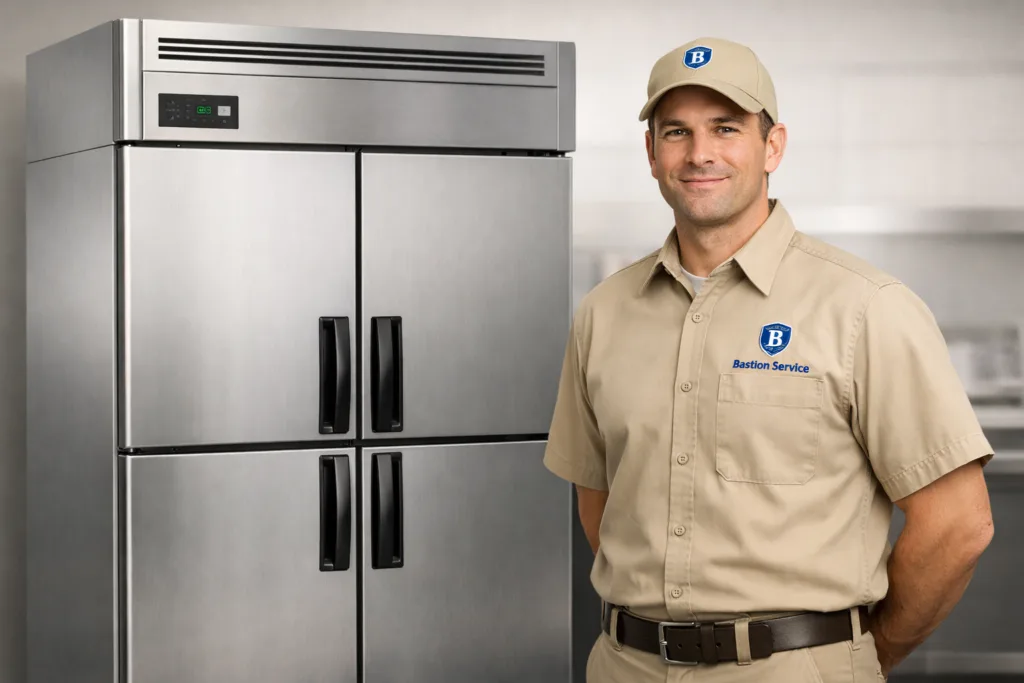




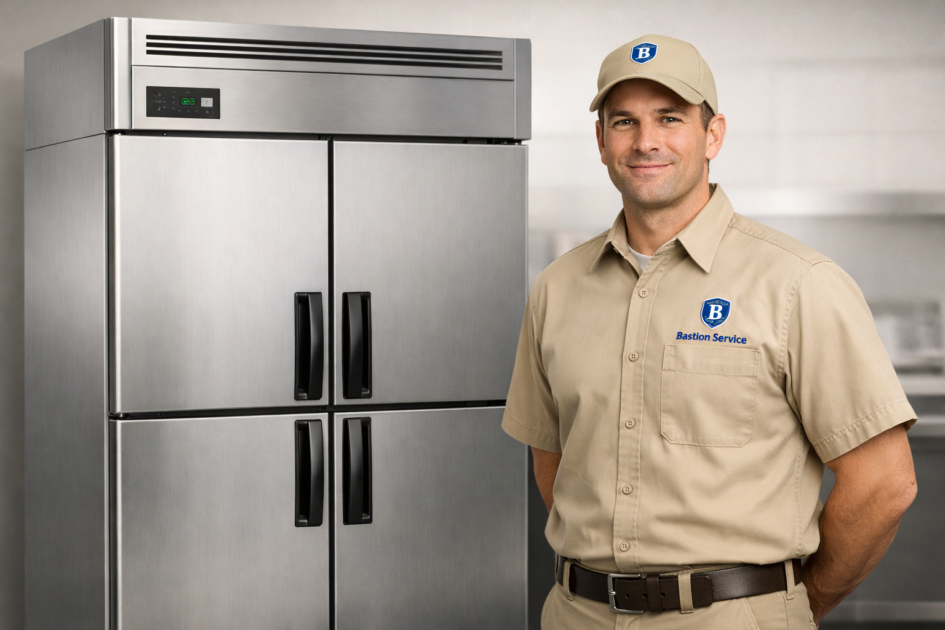
When a Hoshizaki refrigerator starts running warm, icing over, leaking, or cycling abnormally, service should focus on the exact failure pattern instead of guessing at parts. For businesses in Rancho Palos Verdes, that means checking how the unit is cooling, how air is moving through the cabinet, whether controls are reading correctly, and whether the refrigeration system is operating under strain. The goal is to restore stable holding temperature with the least disruption to daily operations.
Related commercial service paths in Rancho Palos Verdes include Hoshizaki Repair in Rancho Palos Verdes, Commercial Fridge Repair in Rancho Palos Verdes, and Hoshizaki Freezer Repair in Rancho Palos Verdes.
Bastion Service provides Hoshizaki refrigerator repair for Rancho Palos Verdes businesses that need a symptom-based diagnosis, realistic repair recommendations, and scheduling that takes downtime seriously. Whether the issue shows up as inconsistent temperature, frost buildup, water around the unit, or unusual noise, the most useful next step is identifying what is actually failing and how urgent the condition is.
Common Hoshizaki refrigerator problems businesses notice first
Cabinet not holding temperature
A refrigerator that cannot maintain safe storage temperature may have more than one possible cause. Dirty condenser coils, weak evaporator airflow, failed fan motors, sensor problems, control board issues, worn door gaskets, or refrigerant-side faults can all produce similar warm-cabinet symptoms. In some cases, the unit still cools but takes too long to recover after normal door openings, which is often an early sign that performance is slipping.
If product temperatures are drifting upward, service should not be delayed. Continued operation under load can increase compressor stress, create inconsistent storage conditions, and turn a manageable repair into a larger failure.
Frost or ice buildup inside the unit
Excess frost usually points to airflow or moisture-entry problems. A door that is not sealing well, a defrost issue, frequent warm-air intrusion, or an evaporator fan problem can all lead to ice accumulation. Once frost starts covering key airflow paths, cooling performance often drops quickly.
Businesses may first notice ice near the evaporator cover, along interior panels, or around door openings. Even if the refrigerator still appears to be running, frost buildup can hide a more serious circulation issue that needs repair before the cabinet warms further.
Water leaks under or inside the refrigerator
Water on the floor or pooling inside the cabinet can come from blocked drains, condensate problems, melting frost that is not draining correctly, or door seal issues that allow excess moisture into the compartment. Leaks are not only a refrigeration concern; they can also affect sanitation, flooring, and nearby work areas.
If leaking is repeated rather than occasional, the underlying cause should be checked instead of simply drying the area and putting the unit back into service.
Unit runs constantly or short cycles
A Hoshizaki refrigerator that rarely shuts off may be compensating for high heat load, restricted airflow, dirty coils, control faults, or weakened refrigeration performance. Short cycling can point to a different set of issues, including electrical or control-related problems that interrupt normal operation.
Either pattern matters because both suggest the refrigerator is working harder than it should. A unit that is always running but still struggling to cool is often warning of a larger breakdown ahead.
Noisy operation or changing sounds
New buzzing, rattling, clicking, fan noise, or louder-than-normal compressor sound can help narrow down the fault. Not every unusual sound means major failure, but changes in sound often appear before a complete cooling loss. Fan blade obstruction, motor wear, vibration, relay problems, or compressor stress may all show up as noise before temperature problems become obvious.
Why is my Hoshizaki refrigerator not holding temperature?
This is one of the most common service calls because temperature loss can come from several different systems. The problem may involve blocked condenser airflow, an evaporator fan that is not moving air through the cabinet, a sensor giving inaccurate readings, a control issue affecting compressor run time, poor door sealing, or a sealed-system problem that reduces cooling capacity.
That is why diagnosis matters before parts replacement. Two refrigerators can show the same warm-cabinet symptom while having completely different causes. Testing the operating conditions, airflow, frost pattern, and electrical response helps determine whether the repair is likely to be straightforward or whether the problem has moved into a more advanced refrigeration failure.
Symptoms that usually mean service should be scheduled soon
- Temperature rises during normal business hours
- Products feel warmer even though the unit is running
- Frost keeps returning after being cleared
- Water is collecting under the refrigerator
- The cabinet recovers slowly after door openings
- Fans are not running normally or airflow feels weak
- The compressor is unusually hot or seems to run nonstop
- The unit starts making new clicking, buzzing, or rattling sounds
- Alarms appear without an obvious explanation
These signs do not all carry the same urgency, but they do indicate that the refrigerator is no longer operating normally. For businesses in Rancho Palos Verdes, early repair scheduling often helps protect inventory and avoid unnecessary interruption during busy periods.
What technicians look at during Hoshizaki refrigerator diagnosis
A proper service visit usually starts with symptom review and operating checks rather than immediate part replacement. That can include verifying cabinet temperature, checking condenser condition, inspecting evaporator airflow, looking at frost patterns, testing fan operation, evaluating door sealing, and reviewing controls and sensors.
If the symptoms suggest deeper refrigeration trouble, diagnosis may also need to determine whether the cooling system is losing capacity or whether another component problem is creating the appearance of sealed-system failure. This step matters because a fan, drain, gasket, sensor, or control repair is very different from a major refrigeration-system repair in both cost and downtime.
Repair or replacement depends on the actual failure
Not every Hoshizaki refrigerator with a major symptom needs to be replaced. Many issues are tied to specific components that can be repaired without replacing the entire unit. Fan motors, door gaskets, sensors, controls, drainage components, and airflow-related faults are often very different from a cabinet with extensive wear and a major refrigeration problem.
The better decision usually depends on the age of the unit, condition of the cabinet and doors, history of repeat failures, severity of the current problem, and how critical the refrigerator is to the business workflow. If the equipment is structurally sound and the fault is isolated, repair is often the more practical path. If failures are recurring and temperature stability remains poor after previous work, replacement may deserve serious consideration.
How businesses can prepare before the service visit
A few details can make the repair process faster and more accurate. It helps to note the current temperature inside the cabinet, whether the issue is constant or intermittent, when the problem started, whether any alarm codes appeared, and where leaks or frost are showing up. If the refrigerator performs worse during peak traffic or after frequent door openings, that is also useful information.
Staff should avoid repeatedly adjusting controls in an attempt to force cooling, since that can hide the original symptom pattern. Leaving the condition as consistent as possible often makes diagnosis easier.
Focused refrigerator repair for Rancho Palos Verdes businesses
Hoshizaki refrigerator problems are easier to solve when service is based on the way the equipment is actually failing, not just on the first visible symptom. If your unit is warming, icing, leaking, or struggling to recover temperature in Rancho Palos Verdes, scheduling repair promptly can help limit product risk, reduce downtime, and clarify whether the fix is minor or more involved. A service call should leave you with a clear understanding of the fault, the repair options, and the most practical next step for keeping the refrigerator in reliable operation.


