
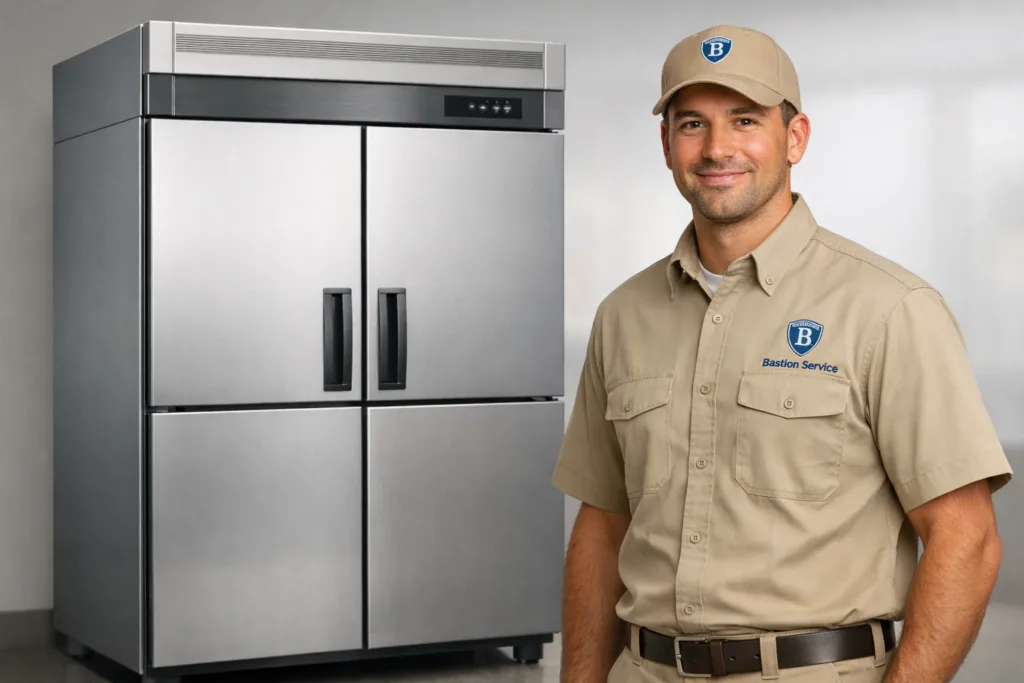




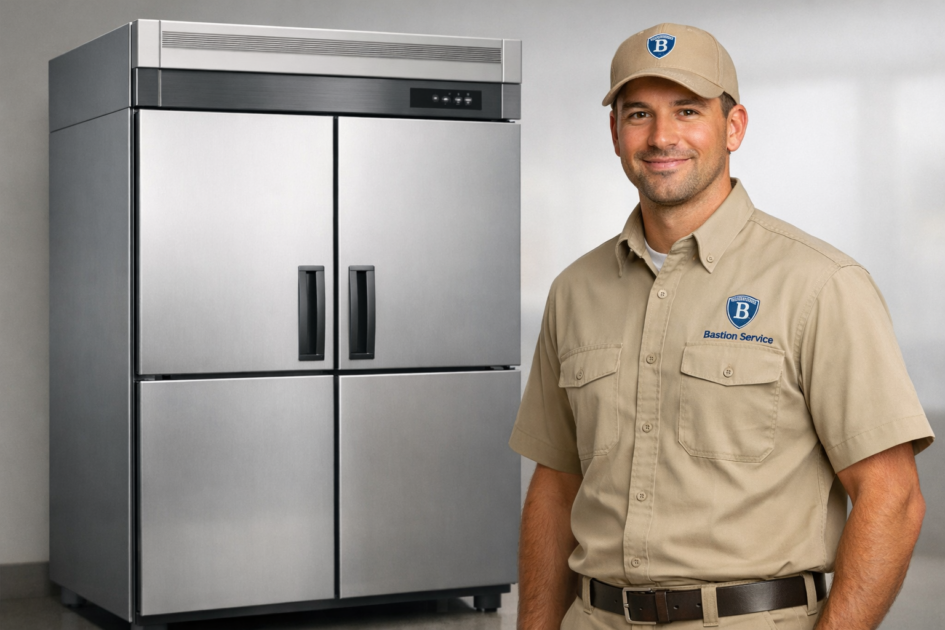
When a Hoshizaki refrigerator starts drifting out of range, icing over, leaking, or short cycling, the business impact is immediate. Product can be put at risk, prep flow slows down, and staff are left deciding whether the unit can stay in use through the day. In Palms, the best repair outcome usually starts with identifying the exact failure pattern before parts are approved, because the same warm-cabinet complaint can come from airflow restrictions, control faults, defrost problems, fan failures, door sealing issues, or sealed system trouble.
Related commercial service paths in Palms include Hoshizaki Commercial Repair in Palms, Commercial Refrigerator Repair in Palms, and Hoshizaki Freezer Repair in Palms.
Bastion Service helps businesses in Palms evaluate Hoshizaki refrigerator problems based on symptoms, operating conditions, and downtime pressure. The goal is to restore stable cooling while also identifying what caused the issue, whether the unit should remain in service, and what repair path makes the most sense for daily operations.
Common Hoshizaki refrigerator problems and what they may indicate
Not holding temperature
If the refrigerator is powered on and appears to be running but product temperature is rising, the cause is not always the same. Poor condenser airflow, evaporator frost, weak fan performance, sensor drift, control board issues, or loss of refrigeration performance can all produce similar results. That is why temperature complaints need more than a quick visual check. A unit that is slightly warm during recovery behaves differently from one that runs continuously and never reaches target temperature.
This symptom becomes more urgent when temperatures swing during the day, recover very slowly after door openings, or vary from one shelf area to another. Those patterns often help narrow the fault before repair decisions are made.
Frost buildup or blocked airflow
Heavy frost inside the evaporator section or across interior panels usually points to a problem with defrost operation, door sealing, air movement, or repeated warm-air intrusion. Once frost begins to block airflow, the refrigerator may still seem cold in one area while other sections warm up. Staff may notice longer run times, uneven holding temperatures, or product near the air path freezing while the rest of the cabinet struggles.
Ignoring frost buildup can turn a manageable repair into a longer outage, especially if fans are forced to work against restricted air movement or ice begins affecting other components.
Water leaking inside or around the cabinet
A Hoshizaki refrigerator leak may come from a blocked drain, condensation from gasket failure, frost melt in the wrong area, or a defrost-related problem. Even a small leak matters in a business setting because it can signal a larger cooling issue and create sanitation or slip concerns around the equipment.
If leaking appears alongside frost, warm temperatures, or excess run time, those symptoms should be evaluated together rather than treated as separate issues.
Noisy operation or short cycling
A refrigerator that has become louder than usual, starts and stops too frequently, or struggles through repeated start attempts may be showing signs of fan motor wear, electrical component stress, control faults, condenser airflow problems, or compressor strain. Noise by itself does not always mean a major failure, but a change in sound combined with poor cooling is a strong reason to schedule service quickly.
Short cycling is especially important because it can prevent stable temperature control and may increase wear on already stressed components.
Door not sealing correctly
Door and gasket issues are easy to overlook, but they often sit behind repeat cooling complaints. If a door does not close squarely, a gasket is torn, or the cabinet frame is not sealing evenly, warm air enters more often than expected. That raises internal moisture, increases frost risk, and keeps the refrigeration system running longer to recover.
In busy kitchens, service counters, storage rooms, and other high-use environments, a sealing problem can quietly develop into a larger performance issue over time.
Why is my Hoshizaki refrigerator not holding temperature?
This is one of the most common service calls because several different failures can lead to the same result. In many cases, the refrigerator is not holding temperature because air is not moving correctly through the cabinet, heat is not being removed efficiently at the condenser, frost is choking the evaporator, or the controls are no longer reading and responding accurately. In other cases, the issue is more serious and involves compressor performance or the refrigeration circuit.
The useful distinction is whether the temperature problem is caused by an accessible component issue or by a larger system failure. That difference affects repair scope, parts planning, and how long the unit may be out of service. For businesses in Palms, that means diagnosis should focus on actual operation, not just the fact that the cabinet feels warm.
Why diagnosis matters before approving repairs
Refrigeration symptoms overlap. A warm cabinet does not automatically mean compressor failure. Frost does not automatically mean a refrigerant problem. Water on the floor does not always start with a drain clog. Good diagnostic work helps separate isolated faults from progressive ones and prevents unnecessary part replacement based on guesswork.
That matters when a business needs to decide whether to keep the refrigerator in limited use, transfer product, schedule immediate repair, or begin weighing replacement. A symptom-based inspection gives a clearer picture of urgency, likely parts involved, and the expected impact on uptime.
When to schedule service
It is time to schedule Hoshizaki refrigerator repair in Palms when the unit shows any of the following:
- Cabinet temperature is rising or fluctuating
- Cooling recovery is unusually slow after door openings
- Frost or ice is building inside the unit
- Water is leaking from the cabinet or pooling nearby
- Fans are not running normally or airflow feels weak
- The refrigerator runs constantly without reaching set temperature
- The unit is making new loud noises or short cycling
- Doors are not sealing properly or cabinet surfaces are sweating
These are operating issues, not minor inconveniences. When left unresolved, they can affect food safety, inventory quality, labor efficiency, and equipment life.
Repair or replace?
Many Hoshizaki refrigerator problems can be repaired without replacing the unit. Fan motors, controls, sensors, drains, gaskets, defrost components, and condenser-related issues are often repairable if the cabinet is otherwise in sound condition. Replacement becomes a stronger consideration when the refrigerator has repeat major failures, advanced age-related wear, poor repair value, or a larger sealed system problem that does not make sense for the business operationally.
The decision usually comes down to four practical factors:
- How severe the current failure is
- What parts and labor the repair will require
- How much downtime the business can absorb
- Whether the unit is likely to return to stable service after repair
That is why accurate diagnosis is so important. It gives the business a realistic basis for deciding what to do next instead of reacting only to the visible symptom.
What a service visit should evaluate
A thorough Hoshizaki refrigerator service call should not stop at confirming that the unit is warm. It should look at temperature behavior, airflow, fan operation, condenser condition, door sealing, control response, sensor performance, defrost function, and signs of deeper refrigeration system trouble where indicated. That process helps determine whether the problem is isolated, worsening over time, or tied to multiple causes.
For businesses in Palms, the practical value of service is knowing what failed, how urgent it is, whether continued operation is increasing risk, and what repair path best supports day-to-day use. If a Hoshizaki refrigerator is no longer cooling reliably, building frost, leaking, or showing signs of electrical or mechanical stress, scheduling repair promptly is the most direct step toward limiting downtime and restoring stable operation.


