
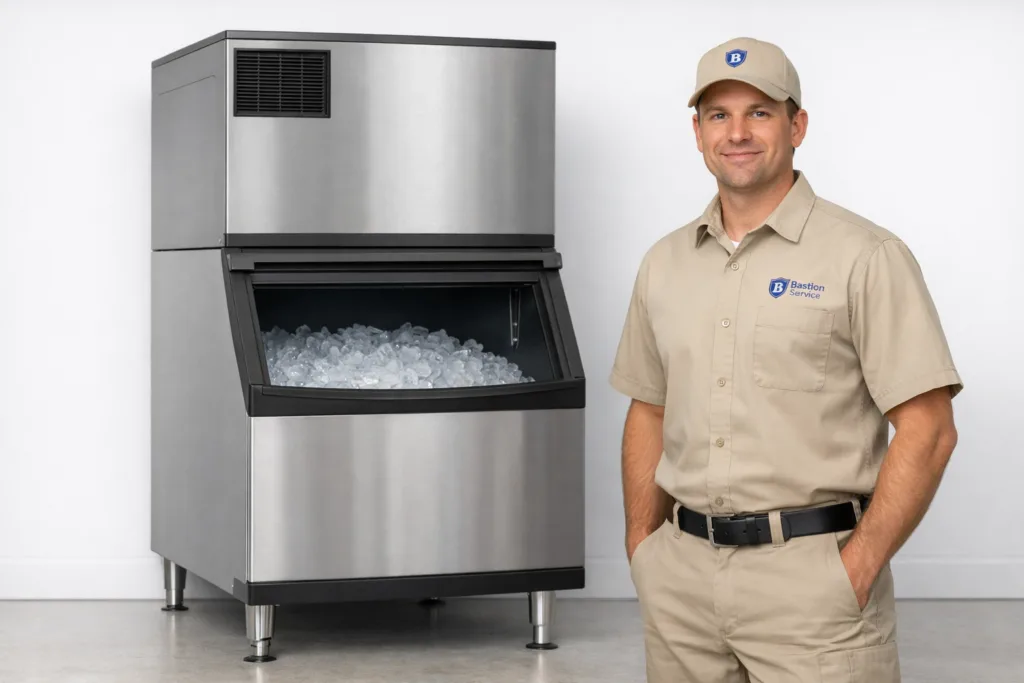




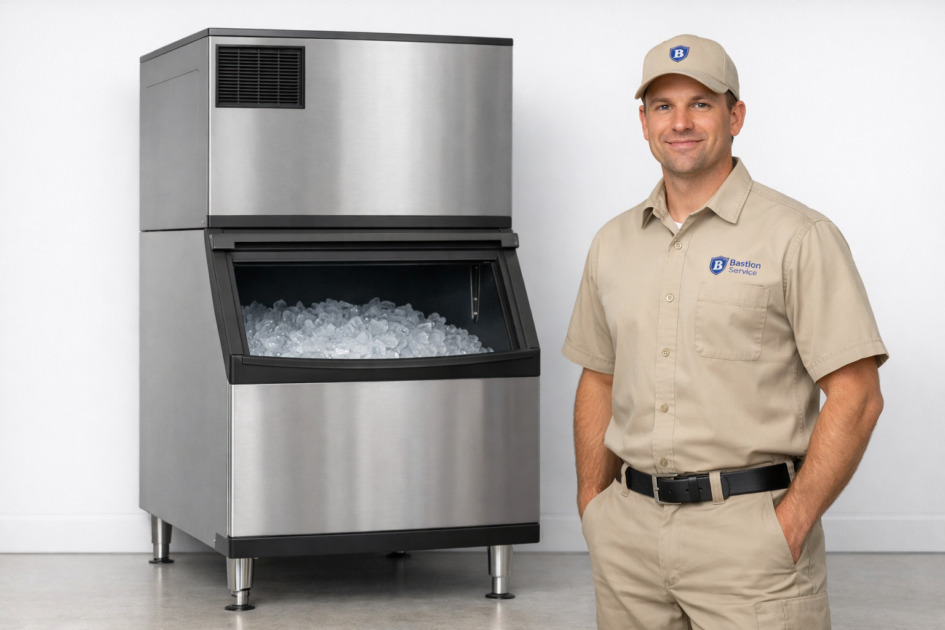
Ice machine problems rarely stay minor for long. When a Hoshizaki unit starts falling behind on production, leaking water, stopping mid-cycle, or producing inconsistent ice, the right next step is to schedule service based on the symptom pattern and how the equipment is affecting daily operations. For businesses in Playa Vista, early repair attention can reduce downtime, protect sanitation standards, and prevent a partial performance issue from turning into a full outage.
For specific equipment paths in Playa Vista, review Hoshizaki Refrigerator Repair in Playa Vista, Hoshizaki Freezer Repair in Playa Vista, and Hoshizaki Ice Machine Repair in Playa Vista.
Bastion Service helps businesses in Playa Vista evaluate Hoshizaki ice machine issues in a service-oriented way: what the symptom likely points to, whether the machine should stay in use, and what kind of repair path makes sense for the equipment’s current condition.
Common Hoshizaki Ice Machine Symptoms That Point to Repair Needs
Many ice machine failures begin with gradual changes rather than an immediate shutdown. Output may drop, cubes may change shape, harvest may become inconsistent, or water may start appearing around the unit. These signs usually indicate that one or more internal systems are no longer operating correctly and should be inspected before the machine becomes unreliable during busy periods.
Low ice production or slow recovery
If the machine is making ice more slowly than usual or the bin is no longer keeping up, the issue may involve restricted water flow, scale buildup, condenser performance, a circulation problem, or a control-related fault. Low production often seems manageable until demand increases, which is why businesses usually benefit from service before output drops further.
This symptom can also show up as longer freeze cycles, incomplete batches, or a machine that runs continuously without recovering normal volume. Repair helps determine whether the fix is tied to cleaning-related buildup, a failing component, or a more involved cooling-system issue.
Harvest problems and incomplete cycles
Hoshizaki equipment that struggles to release ice properly may produce stuck slabs, delayed harvest cycles, or repeated attempts to complete the same batch. Harvest issues can be tied to scale on internal components, sensor problems, water distribution trouble, or parts that are no longer operating within normal range.
When harvest becomes inconsistent, the machine may still appear to be running, but actual production drops and stress on the system increases. That is often the point where repair is more cost-effective than continuing to reset the unit and hoping it clears itself.
Water leaks, overflow, or drainage trouble
Water around the base of the machine should not be ignored. Leaks can come from drain restrictions, loose or damaged connections, overflow conditions, cracked lines, or internal ice formation that redirects water where it does not belong. Even a small leak can create slip risk, affect surrounding equipment, and signal a larger operating problem inside the machine.
If water is actively pooling, if overflow is recurring, or if the machine is leaking during certain parts of the cycle, service should be scheduled promptly. In some cases, continued use can increase damage to the machine or the area around it.
Shutdowns, restarts, or unstable operation
A machine that shuts down unexpectedly, restarts on its own, or powers on without completing a normal cycle is usually dealing with more than a simple inconvenience. Faults involving controls, sensors, pumps, motors, or refrigeration components can interrupt normal operation and make the unit unreliable even if it comes back on temporarily.
Repeated resets may restore operation for a short time, but they rarely solve the root issue. Diagnosis is important here because it helps determine whether the unit is entering a protective shutdown or whether a failing part is causing unstable performance.
Ice quality concerns
Soft cubes, cloudy ice, irregular shape, thin batches, or inconsistent clarity can all point to underlying machine problems. Water quality may be part of the story, but these symptoms can also reflect scale buildup, poor water delivery, timing issues in the freeze cycle, or component wear affecting production consistency.
Ice quality problems matter because they affect both presentation and machine health. If the ice coming out of the unit no longer matches normal quality, it is usually worth addressing before that same condition contributes to lower output or repeated service interruptions.
Why water flow problems matter so much
Water flow issues are one of the most common reasons an ice machine stops performing the way it should. If water is not entering the system correctly, circulating properly, or draining fully, the machine can struggle with production, cube formation, harvest, and shutdown behavior.
Symptoms linked to water flow may include:
- Reduced batch size
- Ice that forms unevenly
- Overflow during part of the cycle
- Longer freeze times
- Repeated interruptions in production
- Water left standing where it should drain away
Because water-related symptoms can overlap with scale, valve, pump, and control problems, inspection is the best way to narrow down the real cause and avoid replacing the wrong part.
Scale buildup and its effect on performance
Scale buildup can quietly reduce efficiency and interfere with normal operation long before a machine stops completely. Mineral deposits may restrict water movement, affect sensors, interfere with harvest, and change the way ice forms. In a Hoshizaki machine, that can lead to a mix of symptoms that seem unrelated at first glance.
Businesses often notice scale-related issues as declining output, poor ice appearance, noisy operation, or erratic cycle timing. If buildup is left in place, the machine may continue to run while becoming less dependable and more expensive to keep operational. Service helps determine whether the problem is primarily maintenance-related or whether scale has already contributed to component failure.
When the machine should not keep running
Some ice machine issues allow limited operation until a scheduled visit, but others should be treated more urgently. Continued use is riskier when the machine is leaking, shutting down repeatedly, making unusual sounds, freezing in the wrong areas, or producing ice that is clearly inconsistent with normal operation.
It is usually smart to stop and reassess if:
- The machine cannot complete a full cycle reliably
- Water is escaping the unit
- Production has fallen below what the business needs
- Ice quality has changed sharply
- The unit requires repeated resets to operate
- Operation appears to worsen over the course of the day
The key question is not only whether the unit still makes some ice, but whether keeping it in service increases the chance of a larger repair or a more disruptive outage.
What a repair visit helps clarify
A service call is not just about replacing a failed part. It helps identify which symptom is primary, what condition the machine is in overall, and whether related systems have also been affected. For managers and facility teams, that information is important for scheduling, staffing, and planning around downtime.
A repair visit can help clarify:
- Whether the problem is tied to water supply, drainage, scale, controls, or cooling performance
- Whether the machine can stay in limited use while repair is arranged
- Whether the issue appears isolated or part of a repeat pattern
- How quickly action is needed based on current operation
- Whether repair is likely to restore dependable output
Repair versus replacement considerations
Not every problematic Hoshizaki machine needs to be replaced. If the unit has a defined fault and the rest of the equipment remains in solid condition, repair is often the practical choice. On the other hand, if the machine has recurring shutdowns, chronic production problems, or multiple failing systems, it may make sense to compare repair scope against future reliability.
That decision usually depends on the age and condition of the equipment, the severity of the current issue, the history of repeat problems, and how much disruption the business can tolerate. For many Playa Vista businesses, the goal is not simply getting the unit running again, but restoring stable operation that supports day-to-day demand.
Service planning for businesses in Playa Vista
Ice machine problems affect more than the equipment itself. They affect product availability, staff workflow, cleanup demands, and customer-facing service. Scheduling repair when symptoms first appear gives businesses in Playa Vista a better chance to manage the issue before it becomes a longer interruption.
If your Hoshizaki ice machine is producing less ice, showing water flow trouble, leaking, shutting down, struggling through harvest, or making poor-quality ice, the most useful next step is to arrange service and determine the repair path based on the actual fault. That helps protect uptime, supports safer operation, and gives your team a clearer plan for what needs to happen next.


