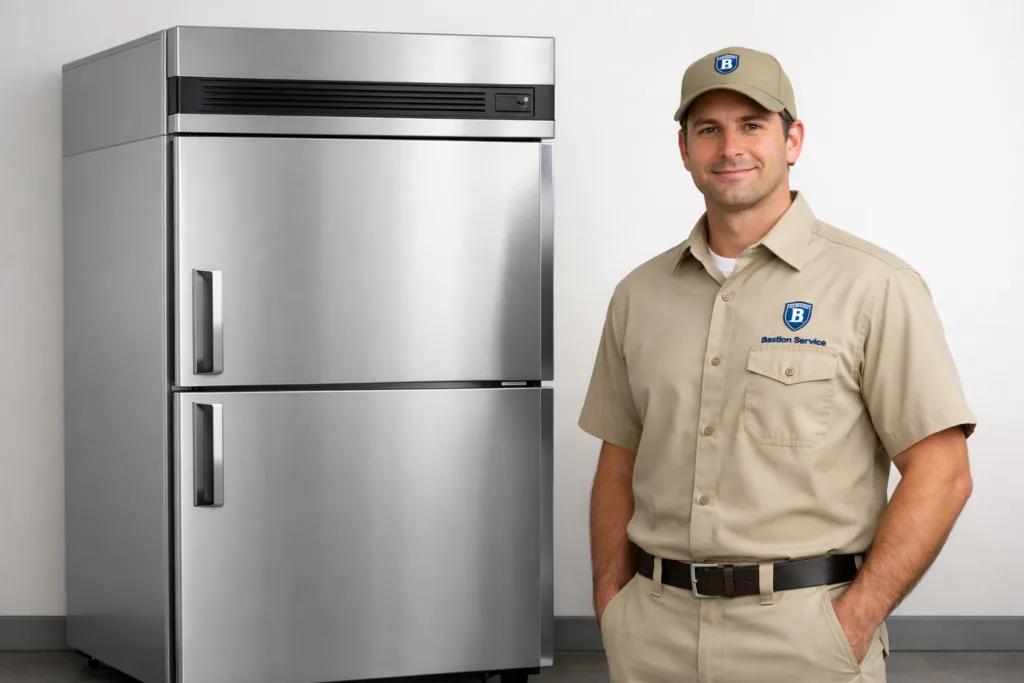




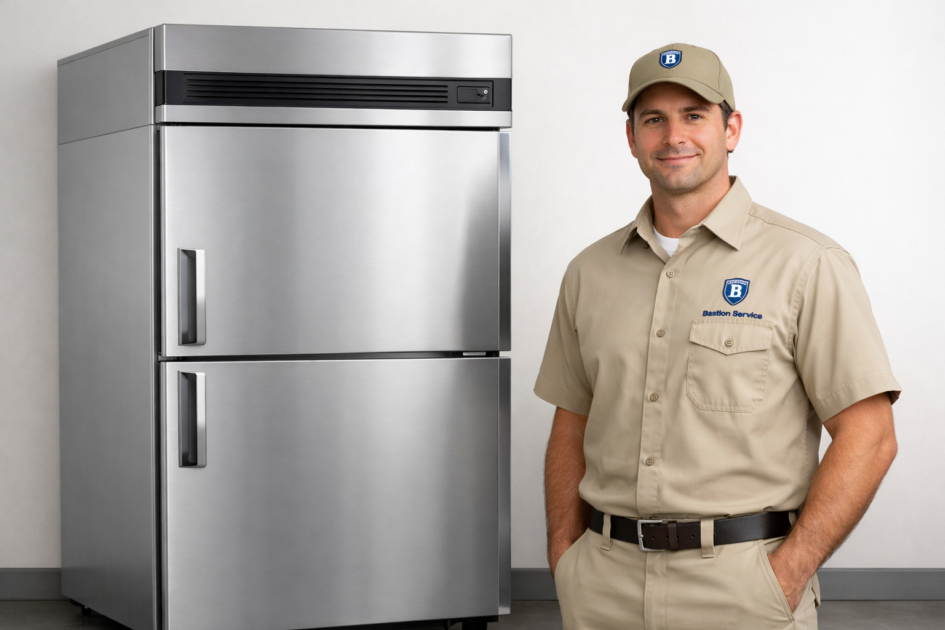
Freezer trouble can disrupt prep schedules, inventory protection, and day-to-day workflow fast, especially when the unit appears to be running but product temperature is no longer stable. For businesses in Mid-Wilshire, Hoshizaki freezer repair should begin with symptom-based testing that confirms whether the problem is tied to airflow, controls, door sealing, defrost operation, fan performance, or a deeper cooling-system fault. Bastion Service handles Hoshizaki freezer issues with a service-first approach focused on what is failing now, what continued operation may put at risk, and how quickly the unit should be repaired.
Related commercial service paths in Mid-Wilshire include Hoshizaki Commercial Repair in Mid-Wilshire, Commercial Freezer Repair in Mid-Wilshire, and Hoshizaki Refrigerator Repair in Mid-Wilshire.
Common Hoshizaki freezer problems that affect daily operations
Hoshizaki freezers often give warning signs before a full breakdown. Some units start drifting above set temperature during busy periods. Others build frost, make new noises, leak water, or recover too slowly after the door has been opened. Because these symptoms can overlap, the most useful next step is to evaluate the freezer by operating condition rather than guessing at a single part.
Not freezing hard enough
If product is softening, cabinet temperature is rising, or the freezer struggles to pull back down after routine use, several causes may be in play. Dirty condenser coils, weak airflow, evaporator fan failure, poor door sealing, inaccurate sensors, or low refrigeration performance can all produce a warm-box complaint. A freezer in this condition may still run for hours at a time, but longer runtimes usually mean rising strain on major components.
Frost buildup inside the cabinet
Heavy frost on shelves, around the evaporator area, or along the door opening usually points to moisture entering the cabinet or a defrost issue that is not clearing ice properly. Worn gaskets, a door that does not close squarely, blocked drains, failed heaters, or control problems can all contribute. Excess frost reduces airflow, crowds storage space, and can create uneven temperatures from one section of the freezer to another.
Fan noise or poor air movement
A Hoshizaki freezer that suddenly sounds louder, rattles during operation, or has hot and cold spots inside the cabinet may have an airflow problem. Fan motor wear, blade obstruction, ice around the evaporator, or airflow restriction from buildup can prevent cold air from circulating correctly. In many cases, the freezer is technically producing cooling but not distributing it where it needs to go.
Water leaks or ice near the unit
Water on the floor, pooled moisture, or sheet ice around the base should not be treated as a minor nuisance. These symptoms can be tied to clogged drains, defrost-related issues, excess condensation from a sealing problem, or ice accumulation affecting normal water flow. Along with the safety concern, moisture problems often show that the freezer is no longer controlling temperature and humidity the way it should.
Constant running or short cycling
If the freezer seems to run nonstop, it may be compensating for heat intrusion, low cooling capacity, dirty coils, or control inaccuracy. If it starts and stops too often, the issue may involve sensors, relays, overload conditions, or compressor-related electrical problems. Either pattern is worth addressing early because cycling problems tend to increase wear and can turn a manageable repair into a more disruptive outage.
Why symptom-based diagnosis matters on Hoshizaki equipment
Two Hoshizaki freezers can show the same complaint and still need very different repairs. A temperature problem may come from something straightforward such as a gasket or fan motor, or it may trace back to a control issue, icing condition, or refrigeration-system loss. That is why effective service is built around actual operating checks instead of replacing parts based on a general complaint alone.
A proper diagnostic process may include temperature verification, inspection of door condition, airflow testing, evaporator and condenser review, fan operation checks, control response testing, and evaluation of defrost function. This helps separate a repairable component failure from a larger system problem and gives the business a clearer picture of urgency, downtime exposure, and likely next steps.
Signs the freezer should be serviced soon
Businesses in Mid-Wilshire should schedule service promptly when a Hoshizaki freezer shows any of the following:
- Product no longer freezes evenly
- Temperature swings from one cycle to the next
- Frost keeps returning after manual clearing
- Doors are not sealing tightly
- Fan noise has become louder or irregular
- Water or ice is appearing around the cabinet
- Recovery after door openings is much slower than usual
- Alarms or temperature warnings return after reset
These symptoms often mean the unit is still operating, but not within normal conditions. That is usually the point where early repair can prevent inventory loss and reduce the chance of a complete no-cool failure.
Why a freezer may be cold in one area and warm in another
Uneven temperature inside a freezer is a common and costly problem because it can go unnoticed until stored product quality changes. On Hoshizaki equipment, this often happens when airflow is blocked, evaporator icing has started, the fan is not moving enough air, or the cabinet is being affected by a door seal issue. The freezer may appear functional at a glance while certain shelves or corners drift out of range.
This kind of symptom is important because it usually points to a developing problem rather than a stable one. If left alone, the condition can spread from inconsistent storage to wider cooling failure as the unit works harder to compensate.
Repair decisions depend on the actual source of the failure
Not every freezer problem calls for the same repair strategy. Issues involving gaskets, fan motors, sensors, controls, drains, and defrost components are often practical to correct when caught before secondary damage develops. On the other hand, repeated cooling loss, major compressor stress, or broader refrigeration-system concerns may change the repair outlook.
The value of diagnosis is that it helps a business understand whether the current issue is isolated and repairable or part of a larger decline in equipment reliability. That matters when scheduling downtime, protecting stored product, and deciding whether the freezer can return to normal use confidently after service.
What to do before the technician arrives
Simple preparation can make the visit more efficient and help narrow down the problem faster. Before service, it helps to note when the issue started, whether it is constant or intermittent, and what symptoms appear most often. Useful observations include frost location, alarm activity, unusual sounds, visible leaks, and whether the freezer struggles more during certain parts of the day.
- Keep the model information available if possible
- Note recent temperature changes or product softening
- Clear access around the freezer for inspection
- Avoid repeated manual adjustments that can mask the pattern
- Limit unnecessary door openings if temperature is unstable
If your Hoshizaki freezer is running warm, building frost, leaking, making fan noise, or taking too long to recover, scheduling repair in Mid-Wilshire is the practical next move. A service visit should do more than temporarily restart the unit; it should identify the fault, explain the likely cause of the symptom pattern, and clarify whether immediate repair is the best path to protect uptime and stored inventory.