
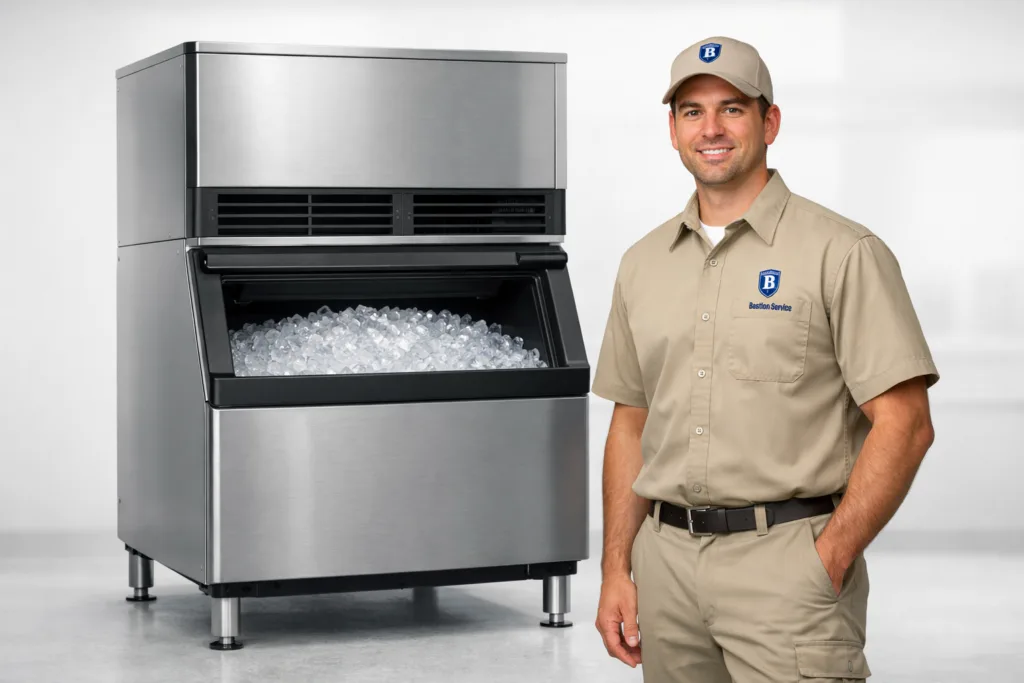




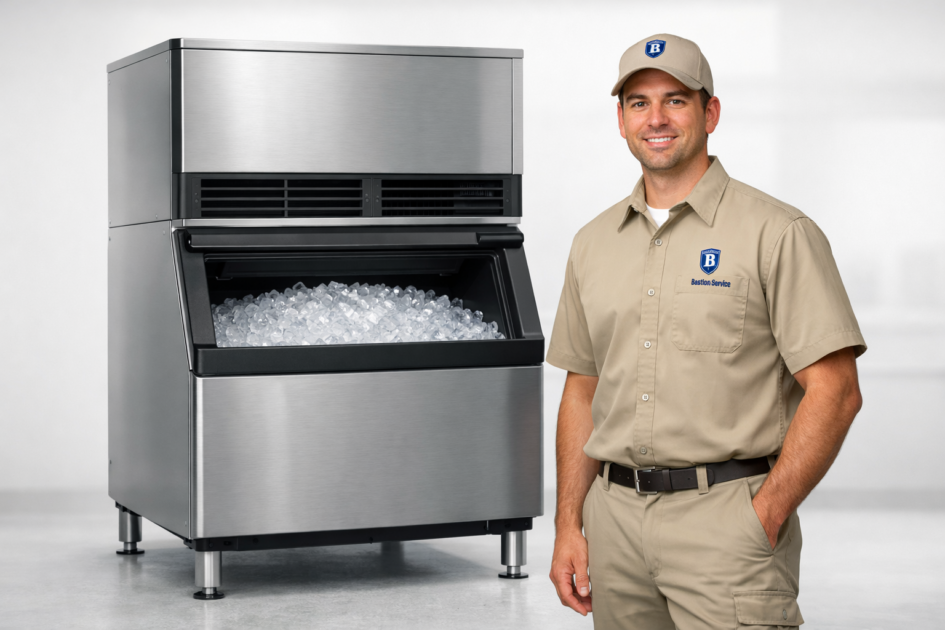
When a Hoshizaki ice machine starts falling behind, the right response is a service visit that identifies the actual fault, checks whether the unit can stay in operation, and maps out the repair path around your schedule. For businesses in Mid-Wilshire, delayed ice production can affect beverage service, food handling, prep flow, and daily staffing decisions, so symptom-based repair planning matters as much as the repair itself.
For specific equipment paths in Mid-Wilshire, review Hoshizaki Refrigerator Repair in Mid-Wilshire, Hoshizaki Freezer Repair in Mid-Wilshire, and Hoshizaki Ice Machine Repair in Mid-Wilshire.
Bastion Service provides Hoshizaki ice machine repair for businesses that need fast fault isolation for low output, leaks, harvest failures, water flow issues, scale buildup, shutdowns, and ice quality concerns. The goal is to move from symptom to repair decision without wasting time on guesswork or temporary resets that do not hold.
Common Hoshizaki Ice Machine Symptoms That Point to Repair Needs
Many machine problems start with one visible symptom but have several possible causes behind it. A unit that is making less ice may have a water supply restriction, scale on internal components, a weak inlet valve, sensor trouble, or refrigeration-related performance loss. A machine that starts and stops unpredictably may be reacting to drainage issues, control faults, or protective shutdown conditions.
That is why service should focus on testing and inspection rather than assumptions. For businesses in Mid-Wilshire, the important question is not only what symptom is showing up today, but whether continued operation is likely to create a full outage, poor ice quality, or additional component damage.
Low Ice Production, Small Cubes, or No Ice at All
What reduced output can mean
If production drops gradually, the machine may still appear to be running normally while storage falls below demand. Common causes include restricted water flow, mineral buildup, worn valves, freeze-cycle problems, clogged distribution areas, or faults that shorten the cycle before proper ice formation. Small or thin cubes can also point to inconsistent fill or a machine that is not completing its normal sequence.
Why this should be addressed early
Low output is often treated as manageable until the machine stops completely, but early service usually gives a better chance of limiting downtime. If your Hoshizaki unit is producing less ice than usual, running longer than normal, or failing to refill bin levels during predictable business hours, that is a strong sign to schedule repair before the machine reaches a no-ice condition.
Harvest Problems and Ice Release Failures
When ice forms but does not drop correctly, or the machine seems stuck between freeze and release, the issue may involve scale, sensors, control timing, or water distribution problems that interfere with a clean harvest. In some cases, the unit keeps trying to cycle but never reaches consistent release, which leads to low output without an obvious hard shutdown.
Harvest-related faults are especially disruptive because they can create partial operation that hides the seriousness of the problem. A machine that appears active but is not releasing ice correctly can steadily reduce available supply while putting unnecessary strain on internal parts.
Water Flow Problems, Leaks, and Drainage Issues
Water where it should not be is never a minor issue around ice equipment. Puddles, dripping, overflow, or slow draining can be tied to blocked lines, pump problems, loose fittings, cracked water components, or ice buildup that redirects flow inside the machine. Water flow restrictions can also reduce production long before a visible leak appears.
Businesses should arrange service promptly if they notice standing water, repeated overflow, inconsistent fill behavior, or signs that the machine is not moving water normally through the cycle. Beyond the repair itself, these conditions can affect surrounding flooring, sanitation, and safe working conditions around the equipment.
Scale Buildup and Ice Quality Concerns
Cloudy ice, irregular cube shape, mineral residue, unusual taste complaints, and slower cycle performance often point to scale buildup somewhere in the water path or freeze system. In some cases, the machine needs cleaning and component inspection together because mineral accumulation has already started affecting valves, sensors, pumps, or distribution parts.
Ice quality problems are worth taking seriously even if the machine is still producing. If the ice looks inconsistent, breaks apart too easily, or carries visible residue, the next step should be a service assessment that determines whether the issue is isolated to buildup or has already started affecting machine operation more broadly.
Intermittent Shutdowns and Unpredictable Operation
A Hoshizaki ice machine that powers on, runs for a while, then stops without warning usually needs direct testing. Intermittent shutdowns may come from sensors, electrical supply issues, board-related faults, motor problems, or protective controls responding to another hidden issue in the machine. Repeatedly restarting the unit may get it going again temporarily, but it rarely solves the underlying cause.
These faults are difficult for businesses because the machine can seem normal during one shift and fail during the next. If your unit is stopping mid-cycle, restarting on its own, or becoming unreliable without a clear pattern, repair should be scheduled before the machine becomes unusable during a high-demand period.
How to Decide Whether the Machine Should Stay in Use
Some symptoms allow limited short-term operation while waiting for an appointment, but others should push the machine out of service. Heavy leaking, severe ice quality problems, repeated shutdowns, restricted water movement, or obvious overflow concerns usually justify stopping use until the machine is inspected. Continued operation under those conditions can increase damage and create avoidable cleanup or sanitation issues.
If the machine is still producing ice but output is lower than normal and the unit is otherwise stable, scheduled repair may be workable. The decision depends on whether the machine is operating consistently, whether the symptom is worsening, and whether using it is likely to turn a manageable repair into a larger failure.
When Repair Makes Sense and When Replacement Enters the Conversation
Many Hoshizaki ice machine problems are repairable when the issue is identified early and limited to water flow components, scale-related wear, harvest controls, sensors, pumps, or similar serviceable parts. Replacement becomes a more serious consideration when the machine has repeated breakdowns, multiple system issues, or a repair scope that no longer fits the condition of the unit.
The most useful approach is to evaluate the present failure in context: what caused the current outage, what else shows wear, and how likely the machine is to return to stable production after repair. That gives businesses a better basis for decision-making than reacting to one symptom alone.
What Businesses in Mid-Wilshire Can Expect From a Service Visit
A productive repair appointment should answer a few practical questions quickly: what failed, whether the machine can remain in service, what parts or corrective work are needed, and how scheduling should be handled to reduce disruption. For businesses in Mid-Wilshire, that means focusing on uptime, production reliability, and the fastest realistic path back to normal operation.
If your Hoshizaki ice machine is leaking, underproducing, shutting down, cycling improperly, or making poor-quality ice, the next step is to schedule diagnosis before the problem spreads into a longer interruption. Prompt repair is usually the best way to protect output, avoid unnecessary wear, and restore dependable operation with a defined service plan.


