
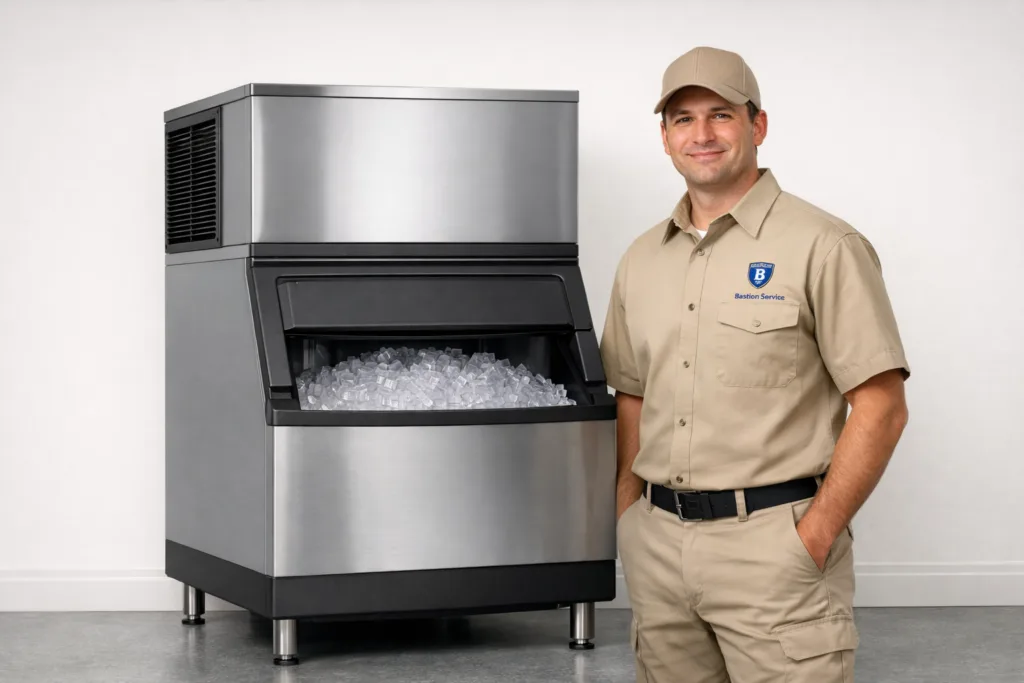




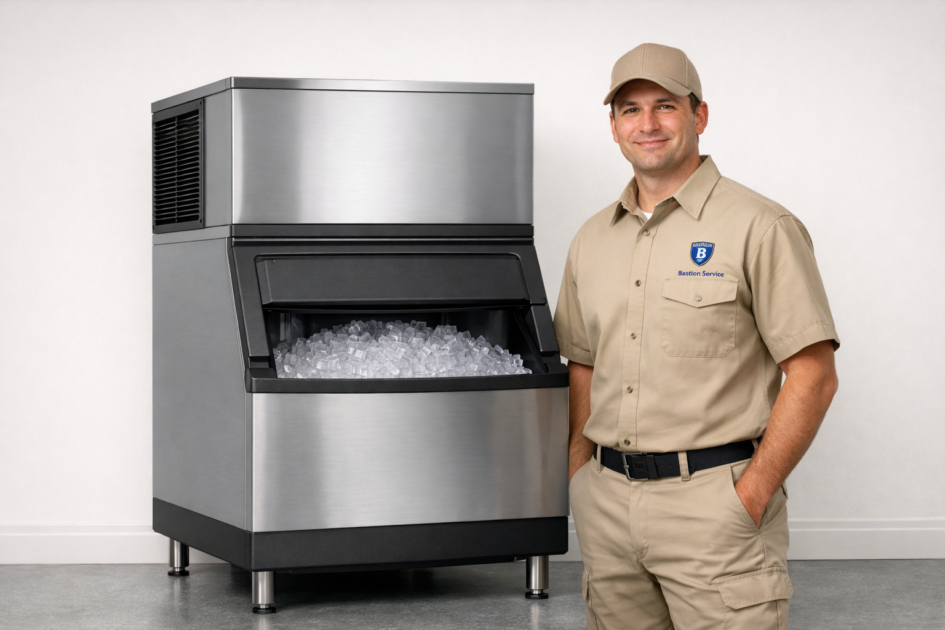
Ice machine problems tend to show up as service disruptions first and equipment failures second. If a Hoshizaki unit is falling behind, leaking, stopping mid-cycle, or producing ice that staff no longer trust, the best next step is to have the symptom pattern evaluated before the problem spreads into a longer outage. For businesses in West Los Angeles, timely repair scheduling can help protect production, sanitation, and daily workflow.
For specific equipment paths in West Los Angeles, review Hoshizaki Fridge Repair in West Los Angeles, Hoshizaki Freezer Repair in West Los Angeles, and Hoshizaki Ice Machine Repair in West Los Angeles.
Bastion Service works with West Los Angeles businesses that need Hoshizaki ice machine repair based on what the machine is actually doing on site. That includes sorting out whether the issue points to water supply restrictions, drainage trouble, scale buildup, refrigeration loss, sensor faults, control problems, or a combination of failures that affect output and reliability.
Common Hoshizaki ice machine problems that need repair
Low ice production is one of the most frequent reasons businesses call for service. The machine may still be running, but batch size drops, cycle times stretch out, or the bin never fills the way it should. In many cases, that points to restricted water flow, mineral buildup, condenser issues, inaccurate sensing, or declining refrigeration performance. Even when the machine has not stopped completely, reduced output usually means repair should be scheduled before demand outpaces supply.
Leaks are another issue that should not be ignored. Water around the unit, moisture in the bin area, or signs of overflow can indicate drainage blockage, fill problems, internal freezing in the wrong place, or worn components that are no longer controlling water correctly. Beyond the machine itself, leaks can create floor hazards and affect nearby equipment.
Unexpected shutdowns often signal a protective response rather than a random interruption. When a Hoshizaki machine repeatedly stops, restarts, or locks out, it may be detecting abnormal temperatures, harvest timing issues, water-related faults, or control problems. If staff are resetting the unit and the same failure keeps returning, the machine needs diagnosis instead of repeated restarts.
What specific symptoms usually mean
Not making enough ice
When a machine is producing less ice than normal, the cause is not always obvious from the outside. Water filters, inlet flow, scale on internal surfaces, sensor feedback, and heat rejection problems can all reduce production. A unit that still makes some ice may seem usable, but partial output can quickly become a serious issue during busy hours. Service is usually warranted when output drops noticeably, cycle times become inconsistent, or the machine cannot recover after peak demand.
Ice is cloudy, soft, misshapen, or tastes off
Ice quality problems often reflect more than one condition. Poor water quality, heavy mineral deposits, uneven freeze patterns, or harvest problems can all affect how the cubes look and perform. For a business, this is not just a cosmetic issue. Ice that melts too fast, clumps, or looks abnormal can affect beverage service and customer confidence. Repair may involve cleaning-related correction, replacement of worn parts, or resolving a deeper operating fault that is preventing proper freezing and release.
Ice will not drop during harvest
Harvest issues are a common reason a Hoshizaki machine appears to run without producing normal usable ice. If cubes stick, release unevenly, or fall as sheets or fragments, the machine may be struggling with scale, timing, water distribution, sensor response, or temperature control. Waiting too long can lead to repeated failed cycles and extra wear on other components.
Water flow seems weak or inconsistent
Water flow problems can show up as thin ice, incomplete freeze patterns, delayed cycles, or machines that stop with little warning. A restricted supply line, valve issue, buildup inside the system, or drainage problem may be limiting proper operation. Because water flow affects both production and ice quality, these symptoms usually deserve attention early rather than after the machine goes offline.
The machine is louder than usual
Buzzing, clicking, grinding, rattling, or unusual fan and compressor sounds can be early warning signs. Noise changes do not identify the exact failed part on their own, but they often appear before a bigger interruption. If sound changes are happening alongside slower production, warm conditions, leaks, or shutdowns, repair should move higher on the priority list.
Why scale buildup creates bigger problems over time
Scale buildup is one of the most common contributors to poor ice performance. Mineral deposits can interfere with water movement, freeze consistency, sensing, and harvest release. In early stages, scale may look like a maintenance issue. As buildup increases, it can start causing operating faults that no longer resolve with basic cleaning alone.
Businesses often notice scale-related issues as slower output, cloudy ice, irregular cube formation, or repeated harvest trouble. If buildup has already affected valves, sensors, or other internal components, repair may be necessary in addition to cleaning. That is why a symptom-based service visit is useful: it helps determine whether the machine needs restoration work, part replacement, or a broader repair plan.
When continued use can make the problem worse
Some machines continue running even when they are no longer operating correctly. That can tempt staff to keep using the unit until it fully fails, but partial operation is not the same as safe or stable operation. A leaking machine, a unit with repeated shutdowns, or one making poor-quality ice may be putting additional stress on internal systems every cycle.
Continuing to run a machine with water management problems or repeated failed harvests can increase wear and complicate the eventual repair. It can also create avoidable disruption if the unit finally stops during a busy period. For many West Los Angeles businesses, earlier service is the lower-risk choice compared with waiting for a complete outage.
How repair decisions are usually evaluated
Not every service call leads to the same recommendation. The right repair path depends on the machine’s age, maintenance history, severity of scale exposure, frequency of recurring issues, and how critical that ice production is to the business day. A useful diagnosis helps determine whether the problem is isolated, whether several related failures are developing at once, and whether repair is likely to restore stable operation in a practical timeframe.
This is especially important when the machine has a history of low production, repeated lockouts, or ongoing water flow issues. In those cases, service is not just about replacing a single part. It is about understanding whether the unit is likely to return to dependable operation or continue creating interruptions. That kind of repair planning helps businesses make better decisions about urgency, scheduling, and expected downtime.
Support for Hoshizaki cold-side equipment at the same location
Many businesses using Hoshizaki ice machines also rely on Hoshizaki refrigerators or freezers nearby. If more than one piece of cold-side equipment is showing performance problems, it helps to evaluate each symptom separately while planning service in a way that reduces interruption at the location. Ice production issues, temperature concerns, and equipment reliability problems often need different priorities depending on what is affecting operations first.
Scheduling Hoshizaki ice machine repair in West Los Angeles
If your Hoshizaki ice machine is underproducing, leaking, failing to harvest, shutting down, or making ice with noticeable quality issues, scheduling service is usually the most practical next step. For businesses in West Los Angeles, a focused repair visit helps identify the fault, determine whether the machine should remain in use, and set a plan to restore consistent ice production with as little downtime as possible.


