
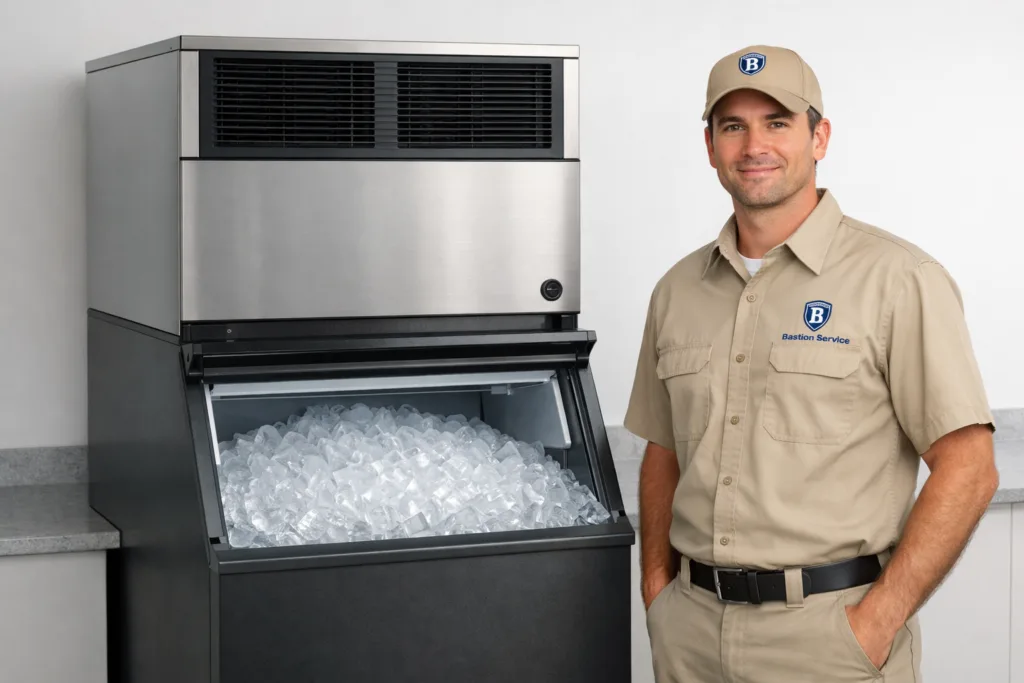




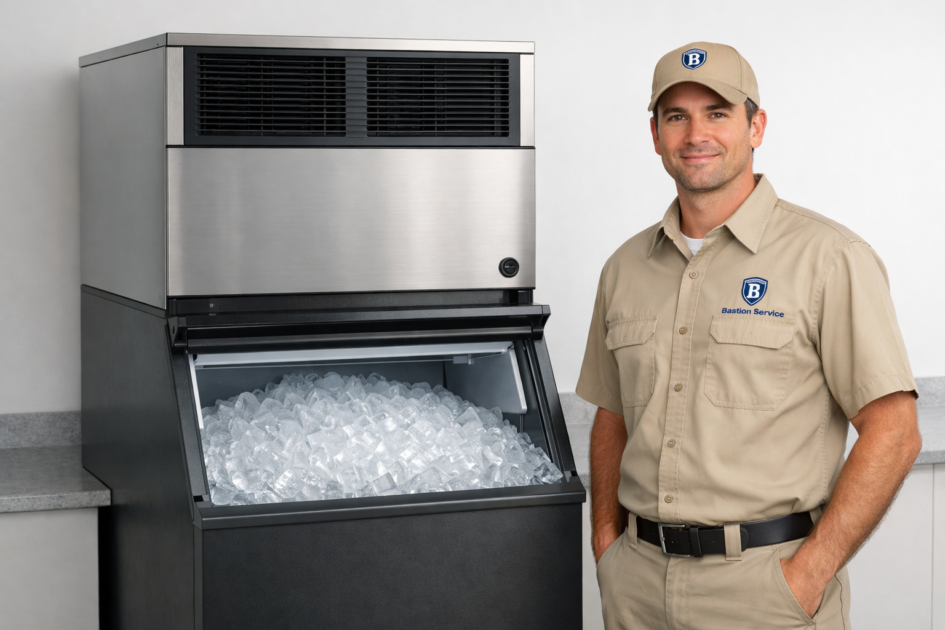
When a Hoshizaki ice machine starts falling behind, leaking, or shutting down during the workday, the issue usually affects more than ice volume alone. It can disrupt beverage service, prep routines, storage planning, cleaning procedures, and staff timing. For businesses in Sawtelle, the right response is to get the unit evaluated based on the symptom pattern, how often the problem is happening, and whether continued use could create a larger failure or water-related damage.
For specific equipment paths in Sawtelle, review Hoshizaki Refrigerator Repair in Sawtelle, Hoshizaki Freezer Repair in Sawtelle, and Hoshizaki Ice Machine Repair in Sawtelle.
Bastion Service provides repair support for Hoshizaki ice machine equipment in Sawtelle with an emphasis on symptom-based diagnosis, repair scheduling, and realistic next steps. That means looking at whether the machine is still safe to run, whether production loss points to a maintenance issue or part failure, and how to plan service around daily operations instead of waiting for a complete no-ice condition.
Common Hoshizaki Ice Machine Symptoms That Need Attention
Ice machines often show warning signs before they stop completely. A machine may still be running while producing fewer cubes, taking too long to recover, dropping uneven batches, or creating wet or misshapen ice. In other cases, the first sign is water on the floor, a sudden shutdown, or a bin that never seems to fill the way it used to.
Symptoms that usually justify service include:
- Low ice production or slow recovery
- Harvest problems or incomplete cube release
- Water flow issues during fill or drain cycles
- Active leaks, overflows, or recurring moisture around the unit
- Scale buildup affecting performance
- Cloudy, soft, hollow, or poor-tasting ice
- Repeated shutdowns or inconsistent operation
- Unusual sounds during freeze or harvest cycles
These symptoms do not all point to the same fault. Some come from restricted water flow or mineral buildup, while others suggest control, sensor, drain, condenser, or refrigeration problems. Sorting that out early helps avoid wasted time and helps businesses decide whether the machine can stay in service until repair is completed.
Low Ice Production and Slow Recovery
If the machine is making ice but not enough of it, the problem may be developing quietly in the background. Staff may notice the bin empties sooner, refills more slowly, or never catches up during busy periods. This type of performance drop can be caused by scale in the water system, a weak inlet valve, poor water distribution, dirty heat exchange surfaces, airflow issues, or declining refrigeration efficiency.
Low output matters because many machines continue running while underperforming, which can delay service until the shortage becomes urgent. A unit that is technically operating may still be failing its freeze cycle, extending harvest time, or struggling to maintain consistent production. The longer that continues, the greater the chance of added wear and unstable ice quality.
Service is especially important when low production appears along with other signs such as:
- Longer-than-usual cycle times
- Thin or partial cubes
- Intermittent shutdowns
- Warm ambient conditions making performance drop faster than expected
- Noticeable changes after cleaning did not restore output
Harvest Problems and Incomplete Ice Release
A Hoshizaki machine that freezes normally but struggles during harvest can lose a great deal of usable production time. Ice may stick to the evaporator, release in clumps, come off unevenly, or fall as partial sheets instead of consistent cubes. In some situations, the machine cycles repeatedly without producing a normal batch, leaving the bin low even though the equipment sounds active.
Harvest trouble often points to one or more of the following:
- Scale buildup interfering with proper release
- Water distribution problems affecting cube formation
- Sensor or control issues disrupting cycle timing
- Component wear that changes the freeze-to-harvest sequence
- Temperature or refrigeration conditions preventing normal release
This is a symptom businesses should not ignore. Repeated failed harvest attempts can strain the machine, increase downtime, and create inconsistent ice levels that are difficult to plan around. If the machine is making ice but not dropping it correctly, service should usually be scheduled before the unit reaches a full stop.
Leaks, Drain Issues, and Water Flow Problems
Water-related faults can become urgent quickly because they affect both equipment operation and the surrounding workspace. A leak may come from a loose or damaged connection, restricted drain path, overflow condition, valve issue, cracked component, or internal ice formation that redirects water where it should not go. Poor draining can also lead to standing water, cleanup concerns, and recurring service interruptions.
Some water flow issues are obvious, while others appear indirectly. A machine may underfill, overfill, hesitate during the cycle, or produce inconsistent ice because the water system is no longer moving correctly through the unit. That can affect freeze thickness, harvest timing, and overall production even before a leak becomes visible.
Signs the machine should be checked promptly include:
- Water pooling near or under the unit
- Irregular fill behavior
- Drain backups or slow draining
- Overflowing during operation
- Ice forming where it should not inside the machine
For businesses in Sawtelle, active leaks usually justify faster scheduling because continued operation can increase floor hazards, sanitation concerns, and damage to nearby equipment or storage areas.
Scale Buildup and Ice Quality Changes
When a machine starts producing cloudy ice, soft ice, hollow cubes, or ice with an unusual taste or appearance, scale and water-path contamination are common concerns. Mineral buildup can coat internal surfaces, affect sensors, interfere with water distribution, and alter the machine’s ability to freeze and release ice consistently. Over time, what begins as an ice quality complaint can turn into recurring performance issues and part failure.
Scale-related problems are not only cosmetic. They can reduce efficiency, create uneven batches, and contribute to harvest faults or low production. If the machine seems to run longer, sound different, or deliver less usable ice than before, scale may be affecting more than one part of the system.
A repair visit can help determine whether the issue is primarily corrective cleaning, a water-system restriction, or damage that has already moved beyond maintenance alone. That distinction matters because repeated quality complaints after basic cleaning often point to a deeper operating problem.
Shutdowns, Fault Conditions, and Intermittent Operation
Some of the most disruptive calls involve machines that work part of the time, then stop without warning. Intermittent shutdowns can be hard for staff to track because the unit may restart later, appear normal for a period, and fail again when demand rises. This pattern often creates uncertainty about whether the machine can be relied on through the rest of the day.
Unexpected shutdowns may be tied to:
- Sensor faults
- Control board issues
- Overheating conditions
- Water-system abnormalities
- Refrigeration-related protection events
- Cycle timing failures that trigger a stop
If a machine is locking out, restarting on its own, or stopping between normal-looking cycles, early service is useful because intermittent problems are easier to trace when the symptoms are current. Waiting too long can turn a recoverable issue into a complete outage that is harder to diagnose under pressure.
When Ice Quality and Production Problems Happen Together
One of the clearest signs that service is needed is when the machine has more than one symptom at the same time. For example, lower production combined with wet ice can indicate a different fault pattern than low production with no water issues. Harvest trouble plus cloudy cubes may suggest buildup or water distribution trouble, while leaks plus shutdowns may point to a larger system problem affecting multiple stages of operation.
Looking at symptoms together helps narrow the repair path. It also helps answer practical questions that matter to operators, such as whether the machine can stay online temporarily, whether shutdown is the safer choice, and whether the likely repair is limited or potentially more involved.
Repair Decisions: What Businesses Should Consider
Not every Hoshizaki issue calls for the same response. Some machines need targeted correction and cleaning, while others need part replacement or a broader evaluation because the same problem has been returning. The best repair decision usually depends on:
- How long the symptom has been present
- Whether output loss is mild, severe, or worsening
- Whether the machine is still operating consistently
- If leaks or water problems create immediate site concerns
- The condition of key internal components
- The recent history of repeat breakdowns
For a business relying on daily ice production, timing matters as much as diagnosis. A unit that can still run with caution may allow scheduling flexibility, while a machine with active leaks, repeated shutdowns, or severe harvest failure often needs faster repair planning to reduce disruption.
What to Have Ready When Scheduling Service
Before a repair visit, it helps to note what the machine is doing and when the issue occurs. Even basic observations can speed up diagnosis and help determine urgency. Useful details include:
- Whether the machine is making no ice or simply less ice than normal
- If the issue is constant or intermittent
- Whether water is visible around the unit
- If the problem appears during freeze, harvest, fill, or drain stages
- Any recent change in ice appearance or consistency
- Whether the machine has already been cleaned and the problem remained
This kind of information helps connect the symptom to the likely system involved and supports better scheduling decisions for businesses trying to protect uptime.
Scheduling Hoshizaki Ice Machine Repair in Sawtelle
When production drops, leaks start, shutdowns repeat, or ice quality changes enough to affect day-to-day service, the next step is to schedule repair before the machine becomes less predictable. For businesses in Sawtelle, prompt evaluation helps determine whether the unit can remain in operation, what type of repair is likely needed, and how to plan around downtime with fewer surprises. If your Hoshizaki ice machine is showing performance or water-flow problems, arranging service early is usually the most practical way to protect output and restore reliable operation.


