
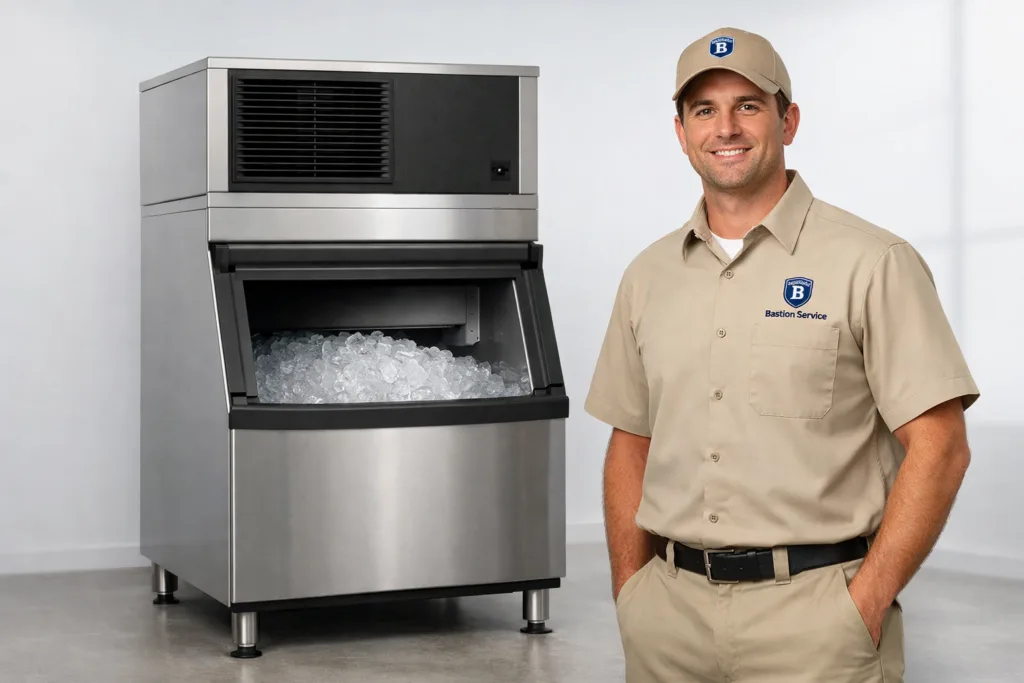




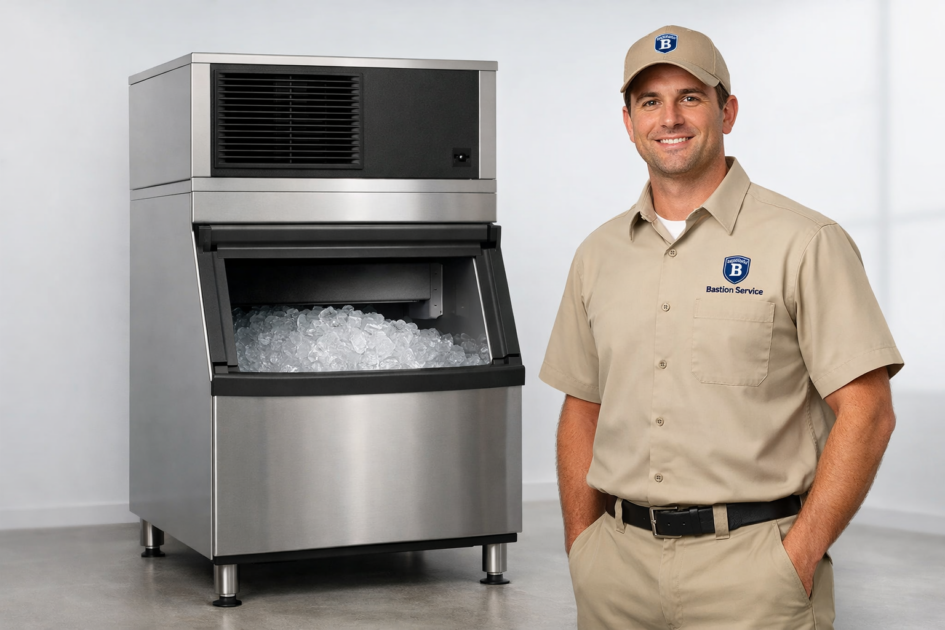
When a Hoshizaki ice machine starts falling behind, the problem usually reaches beyond the machine itself. Ice shortages can slow beverage service, affect prep routines, and force staff to work around equipment that no longer matches daily demand. For businesses in Pico-Robertson, repair decisions are most useful when they are based on the actual symptom pattern, the likely source of failure, and how urgently the machine needs to be stabilized. Bastion Service helps identify what is causing the disruption, whether continued operation is reasonable, and what repair scheduling makes the most sense for the business.
For specific equipment paths in Pico-Robertson, review Hoshizaki Refrigerator Repair in Pico-Robertson, Hoshizaki Freezer Repair in Pico-Robertson, and Hoshizaki Ice Machine Repair in Pico-Robertson.
Common Hoshizaki Ice Machine Problems That Call for Repair
Hoshizaki ice machine issues often start with a simple complaint, but the underlying cause may be very different from what the first symptom suggests. Low output, poor ice shape, random shutdowns, water leaks, and harvest failures can all point to separate problems in the water system, control system, refrigeration process, or machine condition.
Low ice production or no ice at all
If the machine is making less ice than usual, taking too long to recover, or stopping production entirely, the cause may involve restricted water flow, heavy mineral accumulation, sensor problems, control faults, or cooling-related issues that prevent a normal freeze cycle. In a busy setting, even partial production loss can create workflow problems before the machine fully stops, so it helps to confirm whether the issue is isolated or part of a larger operating decline.
Harvest issues and stuck ice
When ice forms but does not release correctly, the machine may hold the slab too long, drop unevenly, or fail to move into the next cycle. That often points to scale buildup, temperature irregularities, control issues, or components that are no longer performing within normal range. Harvest problems are important to address early because repeated failed cycles can keep the unit running harder while still producing less usable ice.
Leaks, overflow, and drainage problems
Water on the floor or around the unit should not be treated as a minor inconvenience. The source could be a blocked drain path, overflow condition, loose connection, cracked line, or an internal fault affecting water movement through the machine. Beyond the repair itself, leaks can create safety concerns and disrupt the surrounding work area, so timely diagnosis helps limit both equipment damage and operational mess.
Scale buildup and declining ice quality
Cloudy ice, odor concerns, unusual taste, irregular shape, or visible mineral deposits usually indicate that buildup is interfering with normal machine operation. Scale does not just affect appearance. It can reduce water flow, interfere with freeze and harvest performance, and contribute to repeat shutdowns or premature wear on key parts. If quality changes have been developing over time, a repair visit can help determine whether the problem is primarily buildup or whether component damage is already part of the picture.
Unexpected shutdowns and erratic cycling
A machine that powers down, resets, or behaves inconsistently often needs more than surface-level troubleshooting. Safety controls, sensors, electrical faults, overheating conditions, or cycle problems may all be involved. If the unit starts and stops unpredictably, it is important to determine whether it can remain in service temporarily or whether continued use risks a longer outage.
What Different Symptoms Often Mean
Looking at the symptom closely can help narrow the repair path and set expectations for urgency.
- Ice output is low but the machine still runs: this can point to restricted water supply, scaling, reduced cooling performance, or a cycle that is taking too long.
- The machine makes ice but quality is poor: this often suggests water path contamination, mineral buildup, or operating conditions that are no longer stable.
- The unit leaks only during certain parts of the cycle: that may indicate overflow, drainage issues, or a fault that appears only when water demand changes.
- The machine shuts down after trying to run: this can signal control-related problems, protective shutdown behavior, or a system issue the machine is detecting during operation.
- Production drops after periods of normal use: this pattern often deserves attention before a complete stop occurs, especially if scale, wear, or repeat cycle problems are building in the background.
When Continued Use Can Make the Problem Worse
Some machines can stay online briefly while service is being arranged, but others should be evaluated quickly to avoid a more expensive repair. If the unit is leaking, producing inconsistent batches, running much longer than normal, making unusual noises, or shutting down during active cycles, continued use may add stress to already failing components.
For businesses in Pico-Robertson, the important question is not only whether the machine still turns on. It is whether the machine is operating in a way that risks a full stop at the wrong time. Early service can help prevent a partial production problem from becoming a total loss of ice availability.
How a Repair Visit Helps With Decision-Making
A useful service appointment should do more than confirm that the machine has a problem. It should clarify what failed, what related systems need inspection, how the current condition affects reliability, and whether repair is straightforward or part of a broader pattern of wear. With Hoshizaki ice machine equipment, that often means evaluating water flow, freeze and harvest behavior, scale impact, controls, and the overall condition of the machine before recommending next steps.
This is especially important when a business is deciding between prompt repair, a staged repair approach, or replacement planning. If the fault is limited and the rest of the machine remains in good condition, repair may be the most efficient path. If the unit has repeated shutdowns, heavy buildup, or multiple worn systems at once, diagnosis helps the business avoid putting time and budget into the wrong solution.
Why Local Operations Benefit From Faster Ice Machine Evaluation
Businesses in Pico-Robertson often rely on steady ice production for service consistency, food handling routines, and daily staff planning. A machine that is underperforming can create problems gradually, but the effect on operations is usually immediate once demand rises. Addressing the issue early helps reduce surprise downtime, gives clearer repair options, and makes it easier to plan service around the workday rather than reacting after a complete shutdown.
Scheduling Hoshizaki Ice Machine Repair in Pico-Robertson
If your Hoshizaki ice machine is making less ice, leaking, shutting down, struggling to harvest, or producing poor-quality ice, the next step is to schedule service before the issue expands into a longer interruption. A focused repair visit can identify the cause, explain what needs attention, and help you decide whether the machine should remain in use, be repaired promptly, or be taken offline until the problem is corrected.


