
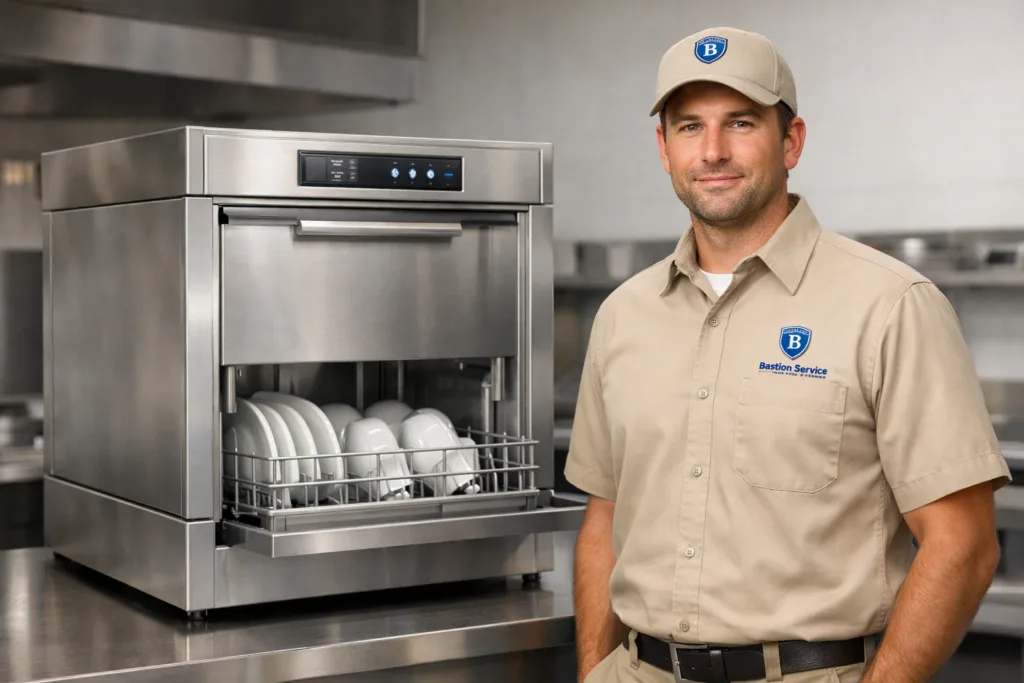




Dishwasher problems can disrupt rack turnover, sanitation routines, and kitchen timing long before the unit fully stops. For businesses in Westwood, the most useful service visit starts with symptom review, operating checks, and fault isolation so the repair plan matches the actual failure instead of guessing at parts. Bastion Service handles Hobart dishwasher issues with that service-first approach, helping operators understand what is failing, how urgent the condition is, and what steps make the most sense to reduce downtime.
Related commercial service paths in Westwood include Hobart Commercial Repair in Westwood and Commercial Dishwasher Repair in Westwood.
Common Hobart Dishwasher Symptoms and What They Can Mean
Poor wash results
If dishes come out with food residue, film, spotting, or inconsistent cleaning, the problem may involve restricted wash arms, low incoming water pressure, pump weakness, clogged strainers, scale buildup, or a temperature problem that affects wash and rinse performance. In some cases, the machine is technically running through a cycle but not delivering enough pressure or heat to finish the job properly. That is why poor cleaning should be treated as a repair issue, not just a loading or chemical issue.
Drain problems and standing water
Water left in the machine after a cycle often points to a blocked drain path, pump trouble, float or sensor issues, or a control problem that prevents the dishwasher from completing the drain stage correctly. Slow drainage can also create repeat interruptions during busy periods, especially when staff are waiting on the next rack. If standing water keeps returning, service should be scheduled before the condition leads to overflow, foul odor, or added strain on other components.
Low rinse temperature or no heat
When a Hobart dishwasher is not reaching temperature, operators may notice longer cycle times, poor drying, sanitation concerns, or inconsistent final results. Possible causes include failed heating components, limit or sensing faults, wiring issues, control board problems, or scale reducing heat transfer. Because heat-related faults can affect both performance and operating standards, they should be diagnosed promptly rather than managed with repeated reruns.
Leaks during operation
Water leaks may show up around the door, under the unit, near hose connections, or around pump and seal areas. A small leak can become a larger problem if repeated cycles continue under pressure. In addition to water damage concerns, leaking often signals wear in parts that may soon fail more completely. Service is usually the better next step when the source is not obvious or keeps returning after basic cleaning and inspection.
Cycle failures, shutdowns, or unusual noise
If the dishwasher stops mid-cycle, will not start consistently, trips power, hums loudly, grinds, or vibrates more than normal, the fault may involve the motor, pump assembly, door switch, controls, relays, wiring, or an obstruction inside the system. Intermittent shutdowns are especially important to address early because they are often harder on workflow than a total no-start condition. They also tend to worsen over time.
Why a Hobart Dishwasher May Stop Washing, Draining, or Reaching Temperature
These symptoms often appear together because one failing system can affect several stages of the cycle. A heating problem may reduce cleaning quality. A drain restriction may interrupt cycle completion. A weak pump can lower wash performance and create odd sounds at the same time. On Hobart equipment, similar complaints can come from very different causes, which is why diagnosis matters before repair decisions are made.
For example, a no-heat complaint is not always a failed heater. It can also be caused by a limit device, sensor input problem, wiring fault, scale interference, or a control issue that prevents the machine from energizing heat at the right time. In the same way, a drain complaint may come from a blockage, a worn pump, or an electronic control fault rather than one obvious bad part. The service goal is to identify the failed system, confirm whether related parts have been affected, and determine whether continued operation risks more damage.
When Service Should Be Scheduled
Service is worth scheduling when the machine begins showing repeat symptoms even if it still runs. Businesses in Westwood often notice the problem first through rewash volume, slower rack turnaround, inconsistent sanitation results, or staff workarounds that keep service moving for the moment but reduce efficiency. Those early signs usually mean the dishwasher is already affecting operations.
- Wash quality drops from one cycle to the next
- The unit leaves standing water or drains slowly
- Rinse temperature is low or inconsistent
- The dishwasher leaks during fill, wash, or drain
- Cycles stop early or do not complete properly
- Staff hear grinding, humming, or abnormal vibration
- The machine trips power or restarts unexpectedly
If the unit is leaking heavily, overheating, failing to drain, or showing electrical interruption, it is usually wise to stop running additional cycles until the condition is evaluated. Continuing to operate through those symptoms can turn a contained repair into a more expensive one.
What Happens During a Symptom-Based Repair Visit
A productive dishwasher service call focuses on how the machine is failing in actual use, not just whether it powers on. That usually includes reviewing the complaint pattern, checking fill, wash, drain, and heating behavior, inspecting visible wear points, and testing the systems connected to the reported symptom. For a business, this matters because the right repair decision depends on whether the issue is isolated or part of a broader wear pattern.
When operators can describe whether the problem happens every cycle, only during peak use, only when heating is called for, or only during drain, it helps narrow the fault more quickly. Helpful details include when the issue started, whether error conditions are recurring, whether wash quality changed gradually or suddenly, and whether any leak or noise has become worse over time.
Repair Versus Replacement Considerations
Many Hobart dishwasher problems are repairable when the machine remains structurally sound and the failure is limited to serviceable parts such as pumps, valves, seals, switches, controls, sensors, heating components, or related electrical items. Repair is often the right choice when the fault is well defined and the machine still fits the production needs of the operation.
Replacement becomes a more serious consideration when breakdowns are frequent, multiple major systems are deteriorating at once, internal condition is poor, or the cost of restoring reliable performance no longer makes sense for the equipment’s age and usage level. The decision should be based on condition, failure history, and whether the proposed repair is likely to restore stable daily operation rather than only short-term function.
How Westwood Businesses Can Prepare for Dishwasher Service
Before service is scheduled, it helps to note the main symptom, when it occurs, and whether the unit can still complete any part of the cycle. If possible, staff should identify whether the complaint is primarily poor cleaning, no heat, drain failure, leaking, or intermittent shutdown. That information can make the visit more efficient and help set realistic expectations about urgency and next steps.
For businesses in Westwood that rely on steady dishroom output, the priority is getting from symptom to repair decision without unnecessary delay. When a Hobart dishwasher starts affecting wash quality, drainage, temperature, or cycle completion, timely service helps protect workflow and reduce the risk of a larger failure developing from a smaller one.


