
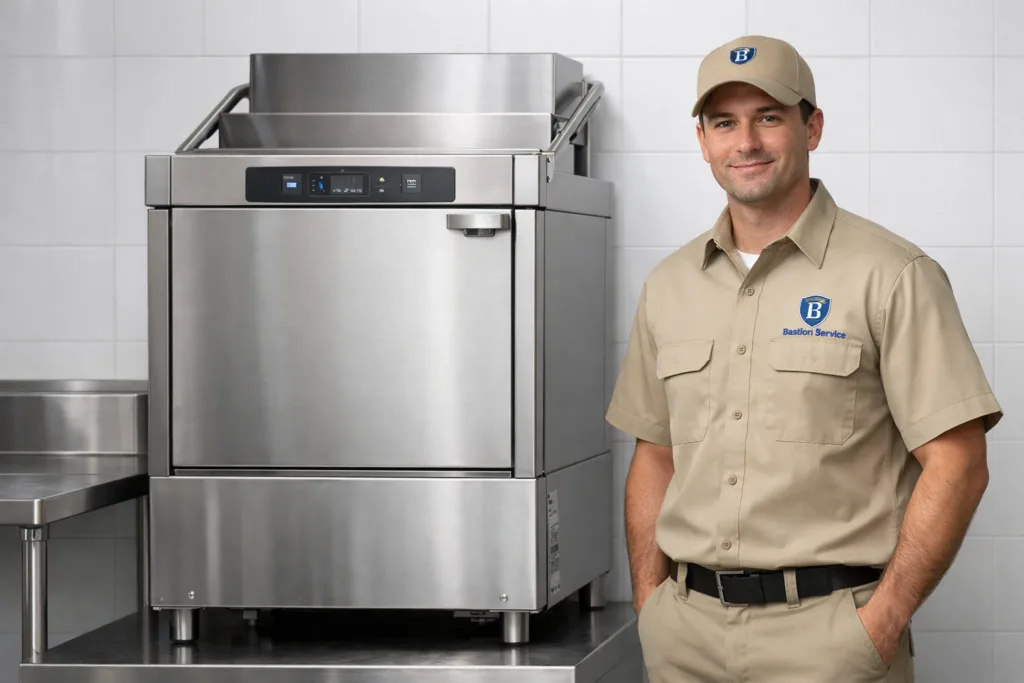




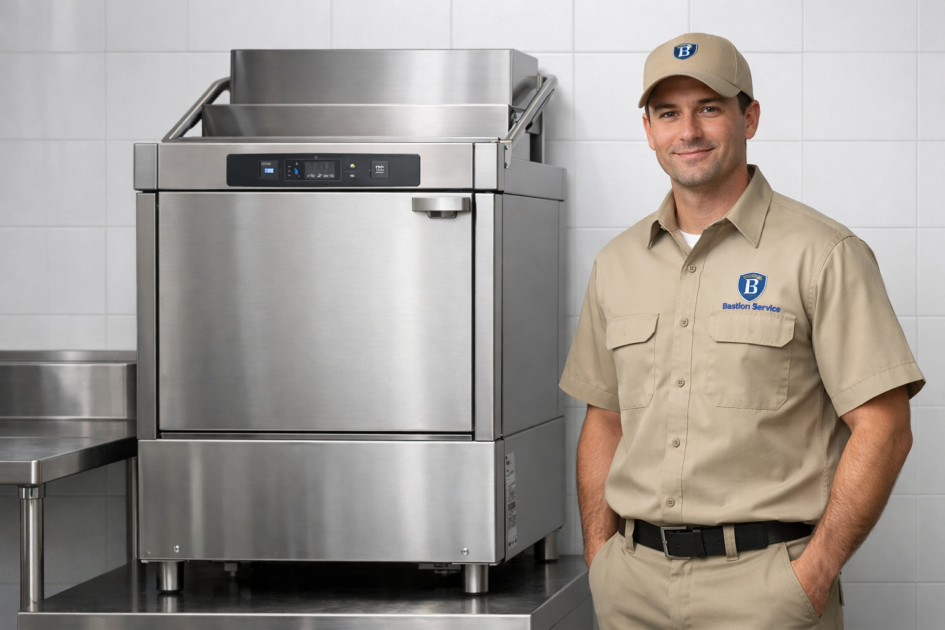
When Hobart warewashing equipment starts interrupting dish flow, the priority is usually simple: restore safe, consistent output without guessing at the cause. For businesses in Westwood, service is most useful when it connects the visible symptom to the system actually failing, whether that involves wash circulation, fill and drain components, rinse heating, sensors, or controls. Bastion Service provides repair support built around diagnosis, scheduling, and the practical question every operator has to answer: can this unit stay in use, or does it need repair now to prevent a larger shutdown?
For specific equipment paths in Westwood, review Hobart Dishwasher Repair in Westwood and Commercial Appliance Repair in Westwood.
Warewashing Symptoms That Usually Point to Repair Needs
Many Hobart dishwasher problems begin as performance complaints before they become total no-start failures. That makes early service important. A unit that still powers on but is washing poorly, stopping mid-cycle, or struggling to reach proper rinse conditions is already affecting labor, sanitation routines, and daily throughput.
Poor Wash Results, Spotting, or Repeat Racks
If dishes are coming out with food residue, film, spots, or inconsistent results from one load to the next, the problem may involve spray arm blockage, weak circulation, pump wear, water pressure issues, chemical feed problems, or temperature-related faults. These symptoms often get blamed on loading or chemicals first, but recurring poor results usually mean the machine itself needs attention.
In a busy kitchen, repeat washing creates hidden downtime fast. Staff spends more time reworking racks, clean dish availability drops, and service slows during peak periods. Repair is often the better next step once wash quality becomes a pattern rather than an isolated load issue.
Fill Problems or Slow Filling
A Hobart unit that does not fill correctly may pause, underperform, or refuse to start a proper cycle. Low fill, delayed fill, or inconsistent water levels can be tied to valves, screens, water supply restrictions, floats, level sensing, or control faults. Because fill issues can affect both wash action and heating performance, they should not be treated as minor annoyances.
When the water level is wrong, the machine may appear to be operating normally while still delivering weak cleaning results or unstable cycle behavior. That is why fill problems usually need more than a quick reset.
Drain Failures and Standing Water
If water remains in the tank, drains slowly, or backs up between cycles, there may be a blockage, pump problem, drain component failure, or a control issue preventing the proper sequence. Standing water is more than an inconvenience. It can interfere with sanitation, leave wash water too dirty for effective results, and lead to overflow or foul odor concerns.
A drain complaint also matters because operators sometimes keep running the unit in partial-use mode. That can increase wear on pumps and related components while making cleanup harder for the staff working around the machine.
Leaks, Drips, and Overflow Conditions
Water around the unit can come from door gaskets, hose connections, valves, drains, fittings, overfill conditions, or internal component wear. A visible leak is one of the clearer signs that service should be scheduled promptly. Even a small recurring drip can turn into floor hazards, moisture damage, and unexpected downtime if the source worsens during a busy shift.
Overflow problems deserve especially quick attention because the root cause may involve fill regulation, sensing components, or control behavior rather than a simple seal issue.
Rinse Temperature Problems and Sanitation Concerns
If the machine is not reaching expected rinse temperature, final results and sanitation procedures can both be affected. Common causes include heating element failure, thermostat or sensor issues, relays, wiring faults, booster-related problems, or control board errors. Temperature complaints may show up as dishes not drying as expected, repeated low-temp alerts, or inconsistent results between cycles.
When a Hobart dishwasher is running without proper rinse heat, businesses in Westwood may face slower dish turnover and uncertainty about whether the machine should remain in service. That makes temperature-related repair a schedule-now issue for many operations.
Control Faults, Error Behavior, and Mid-Cycle Shutdowns
Some service calls begin with a simple description such as buttons not responding, the display acting irregularly, the machine stopping without warning, or the cycle failing to complete. These symptoms can involve user interface components, door switches, relays, sensors, wiring, boards, or protective shutdown conditions triggered elsewhere in the unit.
Intermittent faults are especially important because they often become harder shutdowns over time. A machine that starts again after a reset may still be moving toward a complete failure during the next high-volume period.
Why Symptom-Based Diagnosis Matters
The same complaint can come from very different failures. A no-heat condition might be caused by a heater problem, but it could also trace back to a relay, sensor, board issue, or incoming electrical fault. Poor cleaning may point to circulation trouble, but it can also be tied to fill level, temperature, or drain performance. Looking only at the surface symptom can lead to the wrong repair decision.
For that reason, a service visit should focus on how the complaint appears in actual operation: when it starts, whether it happens every cycle, whether it affects wash or rinse more than one another, and whether the issue changes under heavier use. That kind of diagnosis helps determine whether the problem is isolated, whether nearby components should be evaluated at the same time, and what downtime to expect once repair is approved.
Signs the Unit Should Not Stay in Service
Some warewashing issues allow limited operation for a short period, while others create enough risk that continued use is hard to justify. Immediate attention is usually warranted when the dishwasher:
- Leaks onto the floor or shows signs of overflow
- Fails to drain and leaves water standing in the tank
- Does not reach proper rinse temperature
- Stops mid-cycle repeatedly
- Produces unusual grinding, humming, or vibration
- Trips protection or loses power during operation
- Shows persistent control faults or error behavior
In these situations, continued use can increase part damage, create sanitation concerns, or turn a repairable problem into a more expensive interruption. If the machine is still running but needs repeated resets or operator workarounds, that is usually a sign to schedule service before a full shutdown forces the timeline.
Repair Decisions That Affect Daily Operations
Repair planning is not only about what part failed. It also involves the role the machine plays in daily output, how often the issue is occurring, and whether the current symptom suggests isolated failure or broader wear. A single repair may be straightforward when the unit has been dependable overall. The decision becomes more complex when there is a pattern of declining wash performance, heating issues, leaks, and intermittent control problems across a shorter period.
For restaurants, hospitality settings, institutional kitchens, and other businesses in Westwood, the cost of delay is often felt in labor and workflow before it appears on an invoice. Rewashing, slower rack turnover, manual dish handling, and interrupted sanitation routines all add pressure to the operation. That is why the repair decision should be tied to uptime, not only to whether the machine can still be made to run.
What a Service Visit Should Clarify
A useful warewashing repair appointment should do more than confirm that the dishwasher has a problem. It should identify the system involved, explain how that failure connects to the symptom the staff is seeing, and outline the next step in terms that help management make a decision. Depending on the complaint, that may include evaluation of fill behavior, drain function, circulation, rinse heat, sensors, wiring, seals, valves, and controls.
It should also help answer practical questions such as:
- Is the issue likely to worsen quickly if the unit stays in use?
- Does the symptom suggest one failed component or multiple wear-related concerns?
- Is there a sanitation or safety reason to take the machine offline?
- Will the repair likely restore stable operation, or is the unit showing broader reliability decline?
Those answers matter because scheduling around downtime is part of the repair process, especially when the dishwasher supports critical dish flow during operating hours.
When to Schedule Hobart Warewashing Equipment Repair in Westwood
If your Hobart warewashing equipment is cleaning poorly, filling incorrectly, failing to drain, leaking, missing rinse temperature, or showing control faults, the best next step is to schedule service before the problem expands into a larger disruption. Early repair often protects both uptime and sanitation workflow, while delayed service tends to create more labor loss and less flexibility in scheduling. For businesses in Westwood, symptom-based diagnosis gives a clearer path to repair approval, temporary operating decisions, and getting the dishwasher back to reliable use as quickly as possible.


