





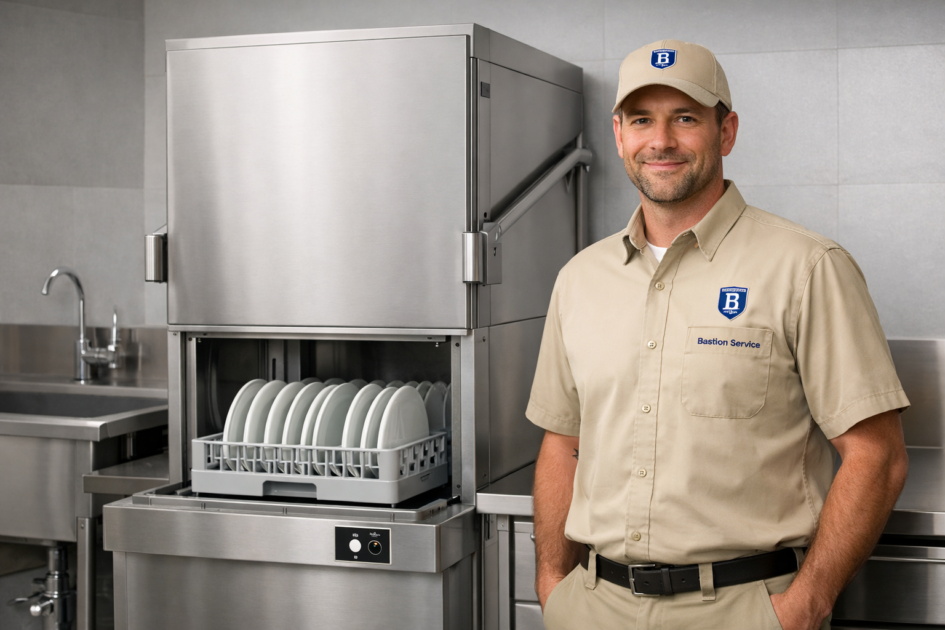
When a Hobart dishwasher starts leaving dishes dirty, holding water, leaking, or stopping mid-cycle, the issue usually affects more than one station in the kitchen. Delays at the dish area can slow prep, service, and sanitation routines, so repair service should focus on what the machine is doing now, what system is failing, and how quickly the unit can be returned to reliable operation. Bastion Service works with businesses in Venice to diagnose Hobart dishwasher faults, explain the repair path, and schedule service based on the severity of the problem and the impact on daily workflow.
Related commercial service paths in Venice include Hobart Commercial Repair in Venice and Commercial Dishwasher Repair in Venice.
Common Hobart Dishwasher Problems That Need Service
Most Hobart dishwasher failures show up as a symptom pattern rather than one isolated complaint. Looking at the full pattern helps narrow the fault and avoid replacing parts that are not actually causing the downtime.
Poor wash results
If racks come out with food residue, film, or inconsistent cleaning, the problem may involve spray arms, wash pump performance, clogged passages, low incoming temperature, heater issues, or control problems affecting the cycle sequence. Poor wash quality often leads to rewashing, higher labor time, and disruption across the dish area.
Drain problems or water left in the machine
Standing water at the end of the cycle can point to a blocked drain path, pump trouble, a drain valve issue, or a control fault that interrupts the drain step. A dishwasher that does not empty correctly can also start showing odor, residue, and repeat cycle problems.
Low rinse temperature or heating failure
When the dishwasher is not reaching proper temperature, staff may notice weak final results, longer cycles, or inconsistent performance from load to load. Common causes include heater failure, sensor issues, limit switches, relays, wiring faults, or board problems. Temperature-related issues are important to address quickly because they affect both performance and dependable day-to-day operation.
Cycle failure, startup issues, or shutdowns mid-program
If the machine will not start, stalls during operation, or needs repeated resets, the fault may be tied to door switches, controls, timers, relays, wiring, sensors, or the user interface. Intermittent cycle failure can be especially disruptive because the machine may appear usable until it stops again under normal workload.
Leaks, unusual noise, or vibration
Water on the floor, grinding sounds, rattling, or abnormal vibration can indicate problems with seals, hoses, pumps, bearings, mounts, or internal wear. These symptoms should not be ignored, because continued use can turn a repairable issue into broader damage inside the dishwasher.
Why a Hobart Dishwasher May Not Be Washing, Draining, or Reaching Temperature
These three complaints often overlap. A dishwasher that is not washing well may actually have a heating problem. A machine that seems to have a drain issue may also have a control fault preventing the cycle from advancing. Low temperature can reduce wash results even when the pump is still running, and weak pump performance can make it seem like the chemical or heating system is at fault.
That is why repair decisions should be based on testing, not assumption. On Hobart dishwashers, similar symptoms can come from very different causes, including:
- Wash pump or drain pump failure
- Blocked spray arms or restricted water flow
- Heating element or booster problems
- Temperature sensor or limit faults
- Drain valve or drain path obstruction
- Door switch, relay, or wiring issues
- Control board or cycle sequence failure
A proper diagnosis helps determine whether the repair is limited to one failed component or whether several systems are showing wear at the same time.
Signs the Dishwasher Should Be Scheduled for Repair Soon
Many businesses wait until the machine stops completely, but earlier service is often the better choice. If performance has changed in a repeatable way, the dishwasher is already telling you that a part, system, or control function is no longer operating as it should.
It makes sense to schedule service when you notice any of the following:
- Dishes need to be run through more than once
- Cycle times are becoming inconsistent
- The dishwasher is leaving water behind after use
- Rinse temperature seems lower than normal
- The unit leaks during fill, wash, or drain
- Staff must restart or reset the machine to finish a cycle
- New humming, grinding, or vibration appears
If the dishwasher is leaking onto the floor, tripping electrical protection, failing to drain, or shutting down during use, it is usually best to stop using it until the problem is inspected.
What Happens During Diagnosis
Service on a Hobart dishwasher should do more than confirm the obvious symptom. The goal is to identify which system has failed and whether the visible problem has caused secondary wear elsewhere in the machine. For example, a drain complaint may involve the pump, but it can also involve controls, obstructions, or a related electrical fault. A poor cleaning complaint may come from weak wash pressure, but temperature and cycle timing must also be considered.
A useful service visit typically focuses on:
- How the machine fills, washes, drains, and rinses
- Whether heating is reaching expected range
- Pump operation and water movement
- Leaks, seal wear, and hose condition
- Door, latch, and safety-switch response
- Control behavior and cycle completion
This approach helps businesses in Venice understand whether the dishwasher has a straightforward repair, an intermittent fault that needs closer testing, or a larger reliability problem that affects planning.
Repair or Replace?
Many Hobart dishwasher issues are worth repairing when the machine is otherwise in solid condition and the failure is isolated to a specific part or system. That is often the case with pump components, heating parts, valves, sensors, switches, and certain control-related problems.
Replacement becomes a more serious consideration when the unit has multiple major issues at once, repeated downtime over a short period, heavy internal wear, or a repair history that keeps interrupting operations. If the dishwasher has persistent wash problems, drain faults, leak-related deterioration, and heating trouble together, the total cost and disruption may outweigh another repair cycle.
The right decision depends on machine condition, parts involved, recent service history, and how critical that dishwasher is to the business each day.
How to Prepare for a Service Visit
Before service is scheduled, it helps to note exactly what the dishwasher is doing and when the problem happens. Details from staff can make diagnosis faster, especially with intermittent failures.
Useful information includes:
- Whether the machine fails at startup, mid-cycle, or near the end
- If the issue happens every load or only during busy periods
- Whether water remains in the unit after draining
- If poor cleaning affects every rack or only some loads
- Any recent leaks, noises, or electrical interruptions
- Any error behavior, resets, or unusual control response
Having this symptom history available can help narrow down whether the problem is mechanical, hydraulic, electrical, or control-related before the repair plan is finalized.
Hobart Dishwasher Repair Service in Venice
For businesses in Venice, the most useful next step is to schedule service when a Hobart dishwasher starts showing repeat problems with washing, draining, heating, leaking, or cycle completion. Timely diagnosis can reduce wasted labor, prevent added component damage, and make it easier to decide whether the unit should be repaired now or evaluated for replacement. When dishwasher performance begins affecting uptime and workflow, a service call focused on the actual symptom pattern is the fastest way to move from disruption to a workable repair plan.


