
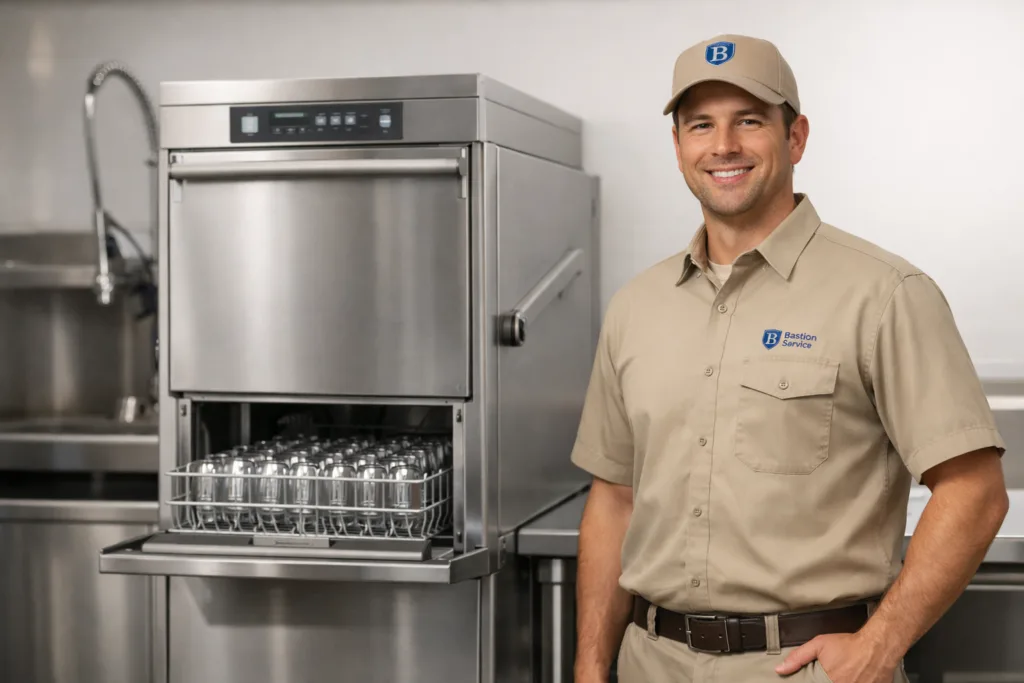




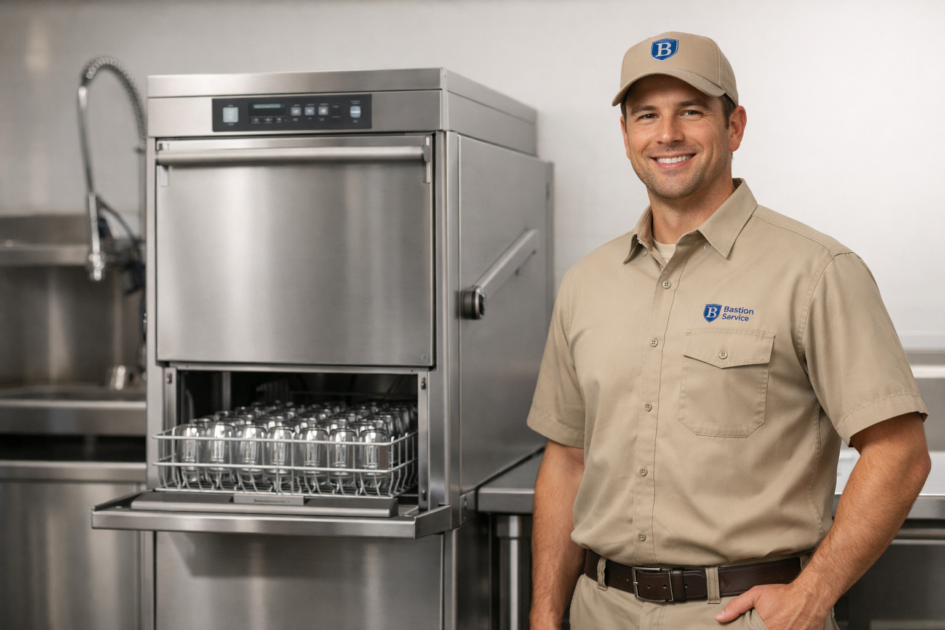
When a Hobart dishwasher begins leaving racks dirty, stopping mid-cycle, leaking, or failing to reach rinse temperature, service should be scheduled around the exact symptom pattern and the impact on daily operations. For businesses in Torrance, warewashing problems can quickly affect kitchen flow, sanitation routines, labor time, and closing procedures. Bastion Service helps identify whether the issue is tied to wash action, heating, draining, filling, controls, or wear in key components so the repair decision is based on how the machine is actually performing.
Related commercial service paths in Torrance include Hobart Commercial Repair in Torrance and Commercial Dishwasher Repair in Torrance.
Why Hobart dishwasher problems should be diagnosed by symptom
Dishwasher failures are not always straightforward. A machine that appears to have a drain problem may actually be stopping because of a fill fault or control issue. Poor wash results may come from weak pump performance, blocked spray components, low temperature, or incorrect water levels. Looking at the full cycle matters because one visible symptom can be the result of a different failure upstream.
That is especially important for restaurants, cafes, facility kitchens, hospitality settings, and other Torrance businesses that depend on steady dish turnover. The goal is not simply to get the machine running for one more shift, but to determine what is causing the interruption and whether repair will return the dishwasher to stable daily use.
Common Hobart dishwasher symptoms and what they may indicate
Poor wash results or residue left on wares
If dishes come out with food soil, film, or inconsistent cleaning, the dishwasher may be operating without proper wash pressure, water temperature, or spray distribution. This can also point to pump wear, clogged wash arms, low fill conditions, or problems affecting rinse performance. When wash quality drops, the machine may still appear to run normally while failing to clean at the level the operation needs.
Water not draining or standing in the machine
Slow draining or water left behind after the cycle can indicate a blocked drain path, drain pump trouble, hose restriction, sensor issue, or a control problem that interrupts the drain sequence. In a busy kitchen, poor drainage often leads to messy recovery work, odors, and repeated cycle restarts. It can also hide a larger fault if the machine is not progressing through the cycle as designed.
Low rinse temperature or heating problems
If the dishwasher is not reaching expected temperature, the problem may involve heating elements, thermostats, limit devices, relays, wiring, or board response. Temperature-related failures should be addressed promptly because they affect final results, cycle consistency, and confidence in the machine during service hours. A dishwasher that runs cool may not show obvious mechanical failure, but it can still create major operating problems.
Cycle failure, no start, or stopping mid-cycle
A Hobart dishwasher that will not start or shuts down before completing the cycle may have issues with door switches, fill controls, timers, sensors, power supply, or electronic controls. Intermittent stoppages can be especially disruptive because they often appear without warning and may not repeat the same way every time. That usually makes direct testing more useful than guessing based on one failed cycle.
Leaks, noise, or vibration
Leaks can come from door seals, pumps, hoses, fittings, tank-related components, or overflow conditions. Unusual humming, grinding, rattling, or strong vibration may suggest pump strain, motor problems, loose parts, or internal wear. If the dishwasher is used in this condition, the original issue can spread to additional components and increase downtime.
When a Hobart dishwasher needs prompt repair
Service should be prioritized when the dishwasher is affecting output, forcing rewash cycles, delaying kitchen staff, or creating inconsistent results between loads. Even if the machine still turns on, warning signs such as weak cleaning, slow filling, inconsistent heat, long cycle times, or occasional shutdowns usually mean performance is already deteriorating.
Use should be limited or stopped when the machine is leaking significantly, failing to drain, tripping electrical protection, producing burning odors, or making severe mechanical noise. In those situations, continued operation can increase damage and create a less manageable repair.
Repair decisions for Torrance businesses
Many Hobart dishwasher problems are repairable when the fault is isolated to a serviceable part or system. A repair often makes sense when the machine is otherwise in solid condition and the issue is limited to heating, draining, filling, wash action, or controls. Diagnosis helps determine whether the problem is contained or whether multiple systems are showing wear at the same time.
Replacement becomes more relevant when there is extensive corrosion, repeated major failures, or several unresolved performance problems that continue to affect reliability. For businesses in Torrance, the best decision usually comes down to condition, downtime risk, and whether the machine can return to dependable operation after repair rather than age alone.
What a useful dishwasher service visit should evaluate
A thorough inspection should look at how the machine fills, washes, drains, heats, and completes the cycle under normal operating conditions. It should also account for leaks, visible wear, electrical response, temperature behavior, and whether the reported symptom is the root problem or the result of another failure. This approach reduces the chance of replacing a part that is not actually causing the breakdown.
For operations that cannot afford repeat interruptions, that evaluation matters. A dishwasher that works briefly after a partial fix may still have the original fault path unresolved. Taking the time to verify cycle behavior supports better repair planning and fewer surprises after service is scheduled.
Preparing for Hobart dishwasher repair
Before service, it helps to note the exact problem: whether the machine is not draining, not heating, not starting, leaking, stopping at a specific point, or producing poor cleaning results. If the issue is intermittent, tracking when it happens can also help narrow down the cause. Details such as unusual sounds, water left in the tank, visible leaks, or a cycle that hangs in one stage can make diagnosis more efficient.
If the dishwasher is still operating, staff should avoid repeated resets or continued heavy use when symptoms are getting worse. In many cases, that can turn a limited repair into a broader one. The most practical next step is to schedule service based on the current symptom, confirm the affected system, and move forward with repairs that support reliable day-to-day use in Torrance.


