
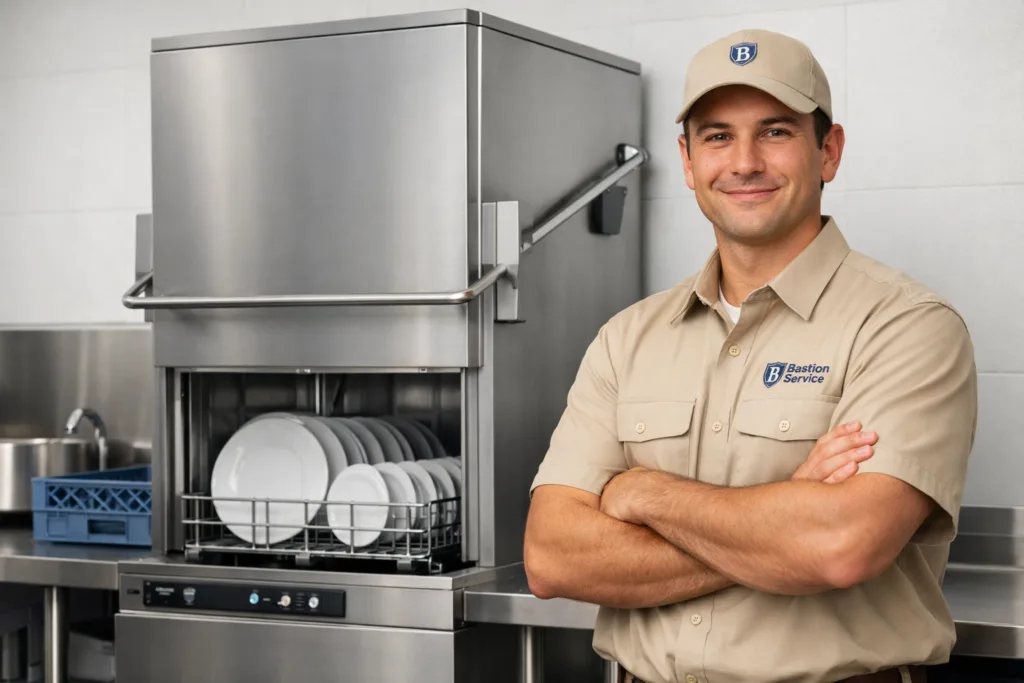





When a Hobart dishwasher starts leaving racks dirty, extending cycle times, or stopping during the shift, the next step should be service built around the exact symptom pattern. In busy kitchens and food-service operations in Sawtelle, wash equipment problems affect labor flow, sanitation routines, and reopening speed between loads. Bastion Service provides Hobart dishwasher repair with diagnosis focused on the failure itself, whether the problem involves wash pressure, fill, heating, drainage, controls, or wear inside the pump system.
Related commercial service paths in Sawtelle include Hobart Commercial Repair in Sawtelle and Commercial Dishwasher Repair in Sawtelle.
Service that matches the way Hobart dishwasher problems show up
Dishwasher failures are not always complete shutdowns. Many units still run while producing weak wash results, inconsistent rinse performance, standing water, or cycle interruptions. Those partial failures often create just as much disruption because staff may not realize the machine is underperforming until rewash volume increases or racks begin backing up.
A symptom-based inspection helps separate loading or supply issues from actual machine faults. It also helps determine whether the problem is isolated to one component or connected to a larger operating condition that needs attention before the dishwasher returns to regular use.
Why a Hobart dishwasher may not be washing, draining, or reaching temperature
These complaints often overlap. A machine that is not washing well may also have low rinse temperature. A unit with a drain problem may also lose cycle consistency. Looking at all symptoms together usually leads to a more accurate repair decision than replacing parts based on one visible issue.
- Poor washing performance can point to low pump pressure, blocked spray components, scale buildup, clogged wash paths, or a heating problem affecting soil removal.
- Drain failure or standing water may involve an obstruction, drain valve trouble, pump wear, or a restriction that prevents normal water removal between cycles.
- Low temperature or weak final rinse can be related to heating elements, boosters, thermostats, sensors, controls, or supply conditions that keep the machine from reaching proper operating range.
- Cycle stoppage or failure to start may be tied to door switches, fill controls, level sensing, electrical faults, or board-related issues.
Because these systems affect one another, the most useful repair path is to confirm which function failed first and which symptoms are secondary.
Common Hobart dishwasher symptoms and what they often mean
Dishes come out dirty, spotted, or still greasy
If ware is leaving the machine with residue, film, or poor rinsing, the issue may not be limited to one cause. Low wash pressure, worn pump components, blocked spray arms, temperature loss, scale, and rinse-related faults can all reduce cleaning performance. In business settings, this usually shows up as repeated rewashing, slower turnover, and inconsistent results across multiple racks.
When the same wash quality problem appears load after load, service is usually warranted instead of relying on staff adjustments alone.
The dishwasher fills slowly, will not start, or stops mid-cycle
A Hobart dishwasher that hesitates at startup or cuts out during operation may have trouble with fill valves, float systems, door interlocks, timing controls, or internal electrical components. Intermittent cycle failure matters because it often gets worse before it becomes obvious. A unit that restarts occasionally can still fail completely during a busy period.
Water stays in the machine or drains too slowly
Standing water in the tank is more than an inconvenience. It can lead to odors, poor wash results, repeat draining attempts, and extra stress on the drain side of the machine. Slow drainage may come from buildup, a blocked path, a drain mechanism fault, or a pump issue. If water remains after normal operation, the dishwasher should be checked before continued use causes additional wear.
The machine is not reaching proper rinse or wash heat
Low heat can affect both cleaning performance and sanitizing outcomes. Staff may notice longer dry times, cloudy results, or loads that seem clean one cycle and not the next. Heating faults can involve boosters, elements, thermostats, sensors, wiring, or control response. Temperature issues are worth addressing quickly because they often lead to repeated cycles and lost throughput.
There is leaking, grinding, rattling, or vibration
Leaks and unusual noise usually mean a mechanical issue should be addressed sooner rather than later. Failing seals, pump wear, loose internal parts, motor strain, or vibration from worn components can all worsen under regular use. Water around the machine also increases the risk of surrounding area damage and can complicate operation during the shift.
When a repair call should be scheduled promptly
Some symptoms should not be put off just because the dishwasher still turns on. Schedule service promptly when the unit:
- is leaving repeated soil or film on ware
- is not draining fully between cycles
- fails to maintain expected rinse heat
- stops during operation or will not complete cycles
- is leaking onto the floor or around the base
- makes new grinding, humming, or rattling noises
- shows the same fault across multiple loads in one day
Repeated symptoms usually indicate an equipment problem rather than a one-time loading issue, and early service can prevent a smaller repair from turning into a larger outage.
How continued use can increase downtime
Running a dishwasher through obvious faults can expand the repair scope. A pump struggling with restriction may wear faster. A leak can affect nearby components or surfaces. A heating problem can drive repeated rewash cycles and unnecessary strain on the machine. A drain issue can lead to sanitation concerns and disrupt normal kitchen flow.
For businesses in Sawtelle, the real cost is often not just the part that failed, but the labor disruption that follows when dish flow slows down or staff need workarounds to keep service moving.
Repair versus replacement: what actually matters
Not every Hobart dishwasher issue points toward replacement. Many problems are still repairable when the machine is structurally sound and the failure is limited to serviceable components. The better question is whether the repair restores stable operation or only delays another interruption.
Factors that usually shape that decision include:
- overall condition of the dishwasher
- whether one system or several systems are failing
- how often the same issue has returned
- the effect of downtime on daily output
- whether the machine can return to regular use without ongoing instability
A diagnosis based on the machine’s actual condition makes that decision more useful than treating every problem as either minor or beyond repair.
How to prepare for a Hobart dishwasher service visit
Before service, it helps to note exactly what the machine is doing and when the issue appears. Useful details include whether the dishwasher fills normally, whether it drains at the end of the cycle, whether heat seems low, whether the problem affects every load, and whether any leak or noise started suddenly or developed over time.
It is also helpful to know if the issue began after cleaning, plumbing work, a power interruption, or a noticeable drop in performance during regular use. These details can shorten diagnosis time and help identify whether the fault is tied to one subsystem or a combination of conditions.
Hobart dishwasher repair support for Sawtelle businesses
For restaurants and other food-service businesses in Sawtelle, dishwasher repair needs to do more than get the machine running for one cycle. The goal is to restore stable wash performance, drainage, temperature, and cycle completion so daily operations can move without repeated interruptions. If your Hobart dishwasher is showing poor wash results, drain problems, leaks, low heat, pump issues, or cycle failure, scheduling service based on the specific symptoms is the most practical next step toward reducing downtime and returning the unit to reliable operation.




