
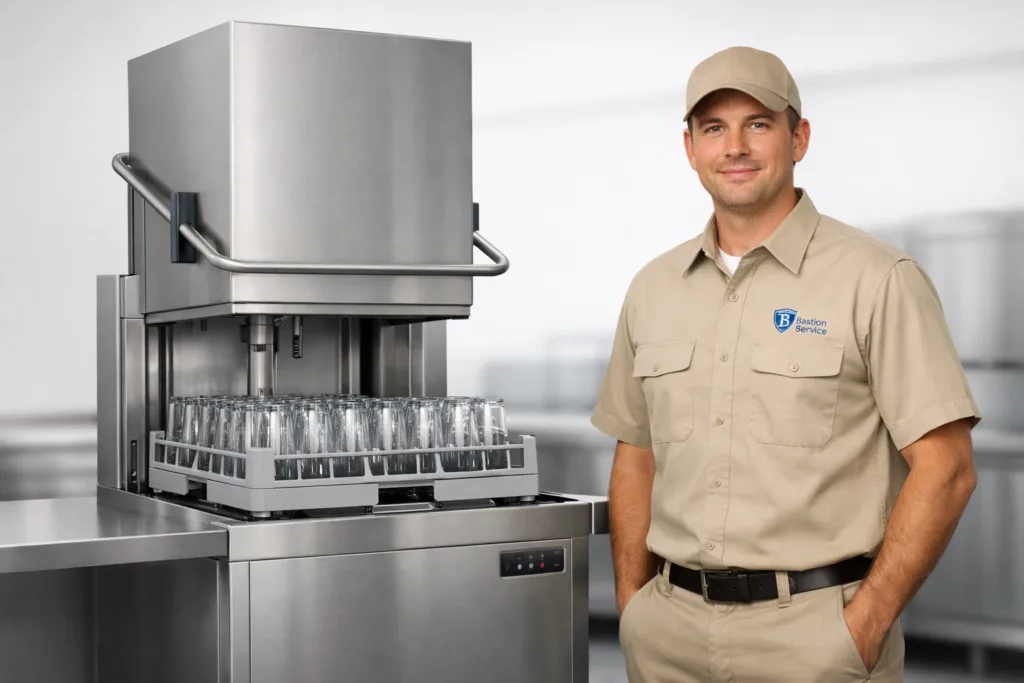




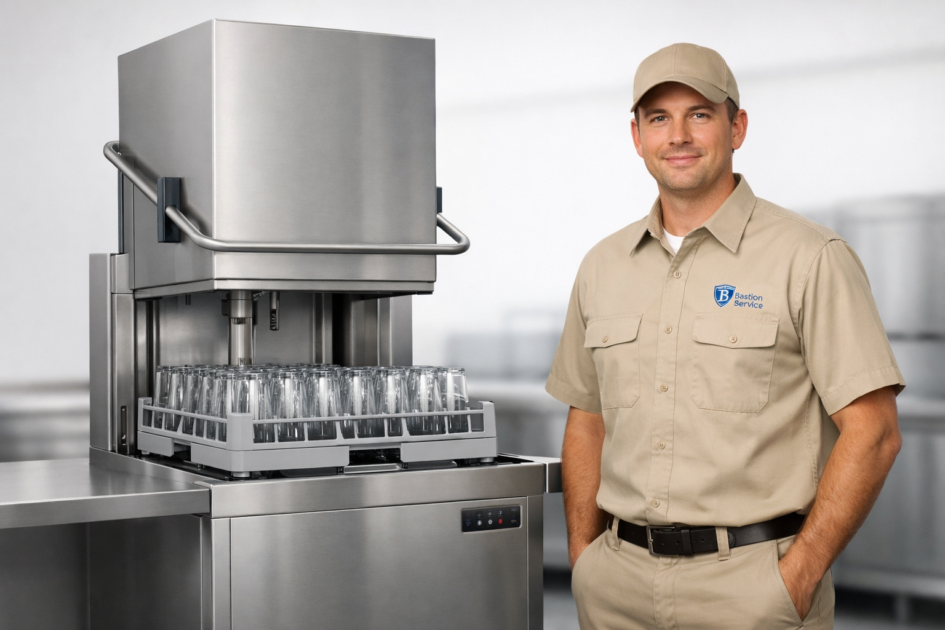
When Hobart warewashing equipment starts disrupting dish flow, rack turnaround, or sanitation routines, the priority is getting the machine evaluated before a manageable issue turns into a longer outage. For businesses in Sawtelle, that usually means looking at the specific symptom pattern, deciding whether the unit should stay in use, and scheduling repair based on how the problem is affecting daily operations. Bastion Service provides on-site support for Hobart warewashing equipment when performance changes, shutdowns, or recurring faults are making kitchen work harder than it should be.
For specific equipment paths in Sawtelle, review Hobart Dishwasher Repair in Sawtelle and Commercial Appliance Repair in Sawtelle.
What Hobart warewashing problems usually mean in day-to-day operation
Warewashing equipment rarely goes from normal operation to complete failure without warning. More often, the machine begins showing smaller signs first: longer cycles, weaker cleaning results, inconsistent filling, standing water, unusual noise, or rinse concerns. Those changes matter because they often affect labor, rewash volume, service speed, and confidence in sanitation standards well before the equipment fully stops.
A repair visit helps determine whether the issue is tied to a worn part, restricted water flow, drain trouble, heating failure, sensor feedback, or a control-related fault. That distinction matters when a business is trying to decide whether the machine can be used carefully until service or needs to be taken offline right away.
Wash performance problems
Dishes are coming out dirty, spotted, or needing a second pass
If racks are finishing with residue, film, or uneven results, the cause may involve clogged wash arms, blocked filters, pump weakness, water pressure issues, chemical feed problems, or incorrect wash and rinse conditions. In a busy kitchen, even a moderate drop in cleaning quality can create rewash delays and pull staff into extra handling that slows the line.
Inconsistent wash performance is also one of the more misleading symptoms because the machine may still seem to be running normally. A unit that fills, cycles, and drains can still have a serious circulation or heating issue that keeps it from cleaning effectively.
Cycles seem longer or results vary from rack to rack
When one load looks acceptable and the next does not, the problem may be intermittent rather than constant. That can point to a sensor issue, unstable temperature control, partial blockage, or a component that is weakening under load. Intermittent problems are worth addressing early because they often become full stoppages during peak use.
Fill and drain issues
The machine is not filling correctly
A Hobart dishwasher that fills too slowly, overfills, or fails to fill at all may be dealing with a supply issue, inlet valve fault, float problem, or control-related error. Fill problems often show up as cycle interruption, poor wash action, or an apparent no-start condition when the machine is actually waiting on a water-level response it never receives.
For businesses in Sawtelle, this kind of issue can quickly affect the entire wash area because staff may assume the unit is simply running behind when it is actually failing to reach normal operating conditions.
Water stays in the machine after the cycle
Standing water usually points to a drain obstruction, drain pump problem, kinked line, or control fault that is preventing the drain sequence from completing correctly. Continued operation in that condition can lead to backups, foul odors, repeated interrupted cycles, and extra strain on components that are trying to move water through a restricted path.
If the unit drains slowly rather than not at all, that still deserves attention. Slow draining is often an early sign that a larger failure is developing.
Leaks and water around the unit
Visible leaking during or after operation
Water on the floor can come from door gaskets, hoses, fittings, pump seals, internal plumbing, or overflow conditions caused by fill problems. The source is not always obvious from where the water appears, which is why leak diagnosis is more useful than guessing based on the puddle location alone.
Even a small leak matters in a business setting. It can create slip risk, affect nearby equipment, damage flooring, and point to wear that will worsen with repeated use.
Drips are minor, but happening more often
Small recurring drips are easy to postpone, especially if the machine still completes cycles. But recurring leakage often means a seal, connection, or internal component is degrading under pressure and heat. Catching that earlier can help avoid a larger shutdown or secondary damage around the machine.
Rinse temperature and sanitation concerns
The machine is not reaching proper rinse conditions
When final rinse temperature is too low or inconsistent, the issue may involve the booster, heating element, thermostat, sensor, relay, wiring, or a control board problem. These faults matter because they affect both cleaning confidence and the machine’s ability to run as expected through normal service periods.
Temperature-related complaints may also show up indirectly. Staff may notice wetter dishes, slower drying, inconsistent results, or cycle behavior that seems normal except for the final outcome. Those are useful clues during diagnosis.
Sanitation confidence has dropped even if the machine still runs
A running dishwasher is not necessarily a properly operating dishwasher. If temperature readings seem inconsistent, sanitation results are being questioned, or the machine appears to be completing cycles without normal rinse performance, it is worth having the equipment evaluated before relying on it through a full shift.
Control faults, shutdowns, and erratic behavior
Error codes, cycle interruption, or failure to start
Control-system issues can appear as fault codes, mid-cycle stopping, incomplete sequences, repeated resets, or a machine that simply will not begin operation. The underlying cause may involve door switches, sensors, boards, relays, wiring, or safety circuits responding to another hidden failure.
These issues often feel sudden, but many develop after a period of smaller symptoms such as occasional restarting, unexplained pauses, or only some functions working consistently. A symptom-based inspection helps separate a true control problem from a mechanical or water-related issue that is triggering the fault response.
Buttons, displays, or cycle selections are not responding normally
If settings are not registering, the display is inconsistent, or the machine behaves differently from one cycle to the next, the problem may be more than a simple interface issue. Response problems can reflect moisture exposure, electronic failure, unstable power to the controls, or communication faults between components.
Signs the equipment should be checked before more use
Some problems can be monitored briefly while service is being arranged, but others justify stopping use until the machine is inspected. That is especially true when you notice any of the following:
- Active leaking that spreads during cycles
- Repeated tripping, shutdowns, or failure to restart
- Burning smells, overheating, or unusual electrical behavior
- Failure to drain with standing water left in the tank
- Major drop in wash quality or rinse performance
- Loud new noises from the pump, motor, or internal components
- Error conditions that return after resetting the unit
Continuing to run warewashing equipment in those conditions can turn a targeted repair into a broader service event. Pumps can be stressed by restrictions, heating parts can fail under unstable conditions, and repeated interrupted cycles can make the original fault harder to isolate.
How businesses in Sawtelle can prepare for a service visit
A few details can make diagnosis faster and more accurate. Before scheduling, it helps to have the model information available and make note of what the machine is doing at each stage of operation. Useful observations include:
- Whether the problem happens during fill, wash, drain, or rinse
- If the issue is constant or intermittent
- Any error display or unusual indicator behavior
- Changes in water temperature, cycle length, or cleaning results
- Visible leaking, standing water, or overflow conditions
- New noises such as grinding, humming, or repeated clicking
If the unit is still operating in a limited way, note what triggers the problem. For example, the fault may only appear on the first cycle of the day, during back-to-back loads, or when the machine reaches the final rinse. That kind of pattern helps narrow the likely cause and supports better repair planning.
Repair decisions that support uptime
Not every warewashing issue calls for the same response. In many cases, repair is the sensible option when the machine is otherwise in solid condition and the failure is isolated to serviceable parts. In other cases, repeated breakdowns, recurring temperature problems, or unresolved control faults may justify a closer look at the overall condition of the equipment before more money is put into it.
The key is not just whether the dishwasher can be made to run again, but whether it can return to stable, predictable operation that supports the kitchen without constant attention. A symptom-focused service visit helps clarify that decision with less guesswork.
Scheduling Hobart warewashing equipment repair in Sawtelle
If your Hobart warewashing equipment is not cleaning properly, is failing to fill or drain, is leaking, is showing rinse temperature concerns, or is stopping with control faults, the next step is to schedule service based on the urgency of the symptom rather than wait for a complete shutdown. For Sawtelle businesses, timely repair planning helps protect workflow, reduce rewash and labor disruption, and get the equipment back to dependable use as quickly as possible.


