





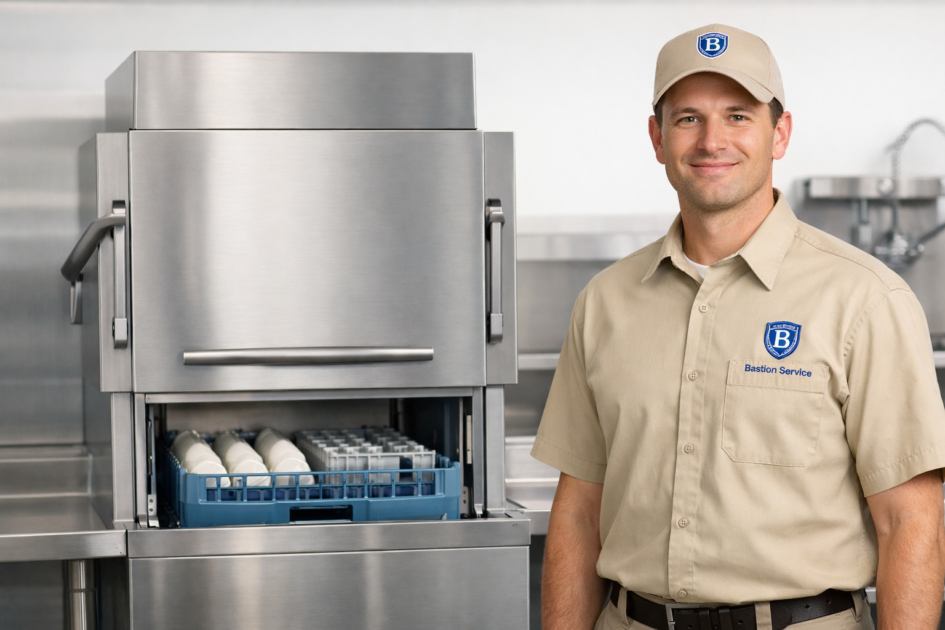
When a Hobart dishwasher starts leaving racks dirty, stopping mid-cycle, leaking, or failing to heat, the next step should be service based on the actual fault rather than guesswork. In Rancho Palos Verdes, dishwashing equipment supports daily kitchen workflow, sanitation standards, and staff efficiency, so delays in repair can quickly affect operations. Bastion Service helps businesses identify whether the problem is tied to fill issues, wash pressure, drainage, heating, controls, or worn components so repair scheduling can match the urgency of the symptom.
Related commercial service paths in Rancho Palos Verdes include Hobart Commercial Repair in Rancho Palos Verdes and Commercial Dishwasher Repair in Rancho Palos Verdes.
What Hobart dishwasher problems usually point to
Dishwasher symptoms often overlap, which is why the same complaint can have more than one cause. Poor cleaning may come from blocked spray arms, weak pump output, low wash temperature, restricted water flow, or chemistry imbalance. A drain complaint may involve a clogged path, a failing pump, a drain valve problem, or a control issue that prevents the machine from completing the cycle correctly.
For businesses in Rancho Palos Verdes, the goal is not only to get the unit running again, but to restore stable wash results without repeat downtime. A service visit should separate mechanical faults from electrical issues, operating conditions, and maintenance-related buildup so the repair decision is based on what is actually happening inside the machine.
Common symptoms and their likely causes
Dishware comes out dirty, spotted, or covered with residue
If racks are not coming out clean, the problem may involve clogged wash arms, blocked nozzles, reduced pump performance, scale inside the wash system, or low water temperature. In some cases, the dishwasher itself is functioning but detergent or rinse conditions are off, which can leave film, streaking, or redeposit on dishes and utensils.
This symptom matters because repeated poor wash results can slow service, increase rewashing, and create uncertainty about sanitation. Testing should focus on spray action, pump operation, water delivery, and heat performance before parts are approved.
Water does not drain fully
Standing water in the tank at the end of a cycle usually points to a blocked drain path, pump obstruction, drain valve issue, or a control problem that interrupts the drain sequence. Slow drainage can also put extra stress on the pump and leave the machine unable to start the next cycle properly.
If a Hobart dishwasher is holding water regularly, it is best to schedule repair before the issue leads to odor, repeat cycle failure, or water exposure near electrical components.
Rinse or wash temperature stays too low
Low temperature complaints can affect both cleaning quality and final sanitizing performance. Possible causes include failed heating elements, sensor or thermostat issues, contactor failure, wiring problems, or a control fault that prevents the heater from operating at the right point in the cycle.
Operators may notice longer cycle times, inconsistent results, or a machine that appears to run normally but never reaches proper operating temperature. When that happens, the unit should be checked promptly instead of pushed through repeated ineffective loads.
Leaks appear during fill, wash, or drain
Leaks can come from door gaskets, cracked hoses, loose fittings, pump seals, overflow conditions, or drain-related parts. Even a small leak should be treated seriously because water on the floor creates slip hazards and can damage surrounding surfaces or nearby equipment.
The important question is whether the leak is coming from an accessible external connection or from an internal failure that could worsen with continued use. Pinpointing when the leak happens during the cycle often helps narrow the cause more quickly.
Cycle will not start or stops before completion
If the machine will not start, shuts off unexpectedly, or behaves inconsistently from one load to the next, the issue may involve a door switch, timer, relay, control board, wiring fault, or safety interlock. Sometimes the control system is not the root cause at all; another failed component may be preventing the dishwasher from advancing through the cycle as intended.
When cycle failure becomes frequent, service should focus on confirming power path, safety inputs, and component response under operation instead of replacing controls too early.
Why symptom-based diagnosis matters
Approving a repair too quickly can lead to repeat service calls if the visible failure is only part of the problem. A weak wash pattern may start with blockage rather than pump failure. A heating complaint may trace back to controls or wiring. A drain issue may begin outside the machine and still look like an internal dishwasher fault.
For Rancho Palos Verdes businesses, careful diagnosis helps reduce unnecessary parts cost and shortens the path back to normal operation. It also helps determine urgency. Leaks, tripped breakers, burning odor, standing water, or persistent low-temperature operation usually justify taking the machine out of service until the fault is confirmed.
Signs the unit should not stay in use
Some dishwasher problems can wait for scheduled service, but others can grow more expensive or create safety concerns if the machine keeps running. Continued use is risky when the unit is leaking onto the floor, failing to drain, overheating, producing unusual noise, tripping power, or repeatedly stopping mid-cycle.
- Water remaining in the machine after cycles
- Visible leaking around the base, door, or connections
- Repeated failure to reach wash or rinse temperature
- Loud pump noise, grinding, or abnormal vibration
- Burning smell or electrical irregularities
- Frequent incomplete or interrupted cycles
When these symptoms appear, delaying repair can turn a manageable fix into broader pump, heating, or control damage.
Repair or replace?
Many Hobart dishwasher issues are repairable when the main structure of the machine is still sound and the failure is limited to parts such as pumps, heating components, switches, valves, seals, sensors, or control-related items. Repair often makes sense when the machine still matches the business’s daily volume and the problem is isolated.
Replacement becomes a more realistic discussion when breakdowns are stacking up, corrosion is severe, several major systems are failing at once, or the machine no longer supports the workload. The right decision depends on more than the current symptom alone. It should account for reliability, expected downtime, and whether the dishwasher can return to steady daily use after repair.
How to prepare for a service visit
Good repair decisions come faster when the symptom history is clear. Before the visit, it helps to note whether the problem happens every cycle or only during certain loads, whether the issue appears during fill, wash, rinse, or drain, and whether staff have seen leaks, error indications, unusual noise, or temperature inconsistency.
- Record when the problem started
- Note whether the machine still fills, washes, drains, and heats
- Identify any recent change in cleaning results or cycle length
- Check whether the symptom is constant or intermittent
- Keep the area around the machine accessible for inspection
These details can help narrow the fault more quickly and reduce unnecessary interruption during diagnosis.
Service decisions that protect uptime
A useful repair visit should do more than confirm that the dishwasher has a problem. It should identify what failed, explain how that failure affects operation, and clarify whether the machine should remain out of service until repair is completed. For businesses in Rancho Palos Verdes, that kind of service planning helps protect workflow and reduces the chance of approving the wrong repair first.
If your Hobart dishwasher is not washing properly, not draining, leaking, failing to heat, or stopping before the cycle finishes, prompt diagnosis is the best way to prevent more downtime and move toward a repair plan that fits the actual condition of the machine.


