
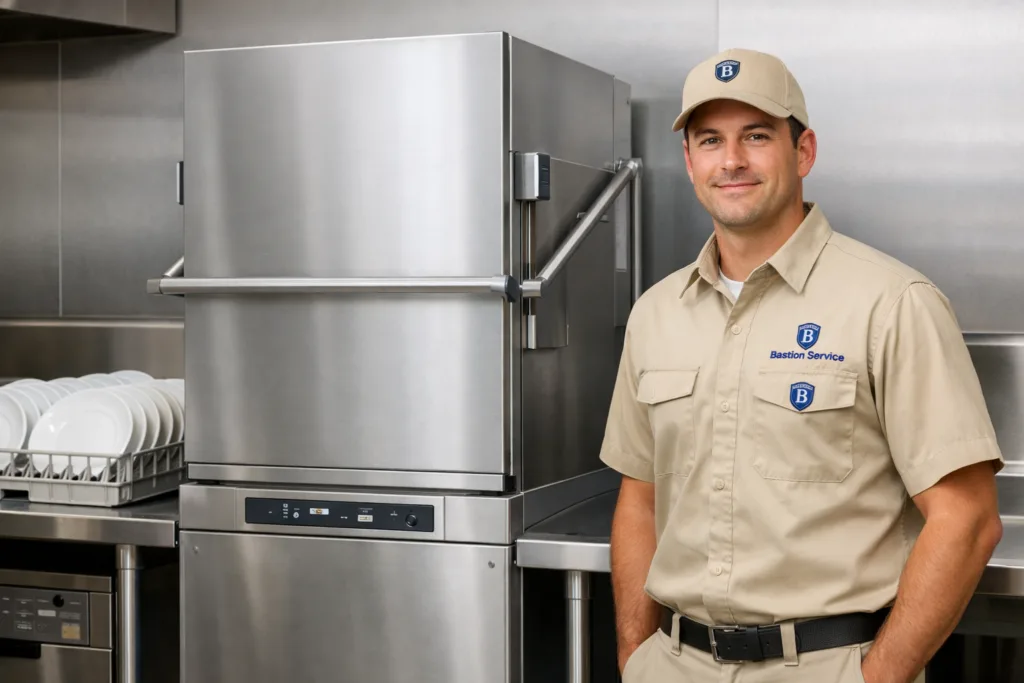








Dishwasher problems can disrupt sanitation routines, slow the line, and force staff into extra rinsing or rewash work. For businesses in Playa Vista that rely on a Hobart unit every day, service should focus on the exact symptom pattern, how the machine is behaving during operation, and whether the issue points to a single failed part or a broader wear problem. Bastion Service helps identify the cause, recommend the right repair path, and schedule work based on the urgency of the downtime.
Related commercial service paths in Playa Vista include Hobart Commercial Repair in Playa Vista and Commercial Dishwasher Repair in Playa Vista.
Common Hobart Dishwasher Problems That Need Repair
Poor wash results, residue, or inconsistent cleaning
If racks come out with food soil, film, or uneven wash coverage, the problem may involve restricted wash arms, low fill, weak circulation, detergent delivery issues, scale buildup, or a worn wash pump. These symptoms are easy to mistake for a chemical or loading problem when the machine actually has a mechanical fault. When poor wash results continue across multiple cycles, it usually makes sense to inspect circulation, spray action, fill level, and pump performance before the issue affects more of the day’s output.
Standing water or incomplete draining
Water left in the tank after the cycle can point to a blocked drain path, drain pump trouble, valve issues, or a control sequence failure. In some cases the unit appears to drain slowly rather than stop entirely, which can make the issue seem minor at first. Repeated drain problems can lead to interrupted cycles, odors, and more strain on the machine, so they are best addressed before the dishwasher becomes unreliable during busy periods.
Low rinse temperature or no heat
When a Hobart dishwasher is not reaching temperature, results often show up as weak final rinse performance, slower recovery, or inconsistent cycle completion. Heating complaints may involve elements, thermostats, high-limit devices, contactors, wiring, sensors, or the control board. Because temperature issues affect both wash quality and sanitation workflow, they should be checked promptly rather than worked around by running extra cycles.
Leaks around the machine
Leaks can come from door gaskets, hoses, pump seals, fittings, tank components, or overfill conditions. A small leak may only show up during fill or drain, while a larger one may leave water on the floor throughout operation. Besides the mess, continued leakage can damage nearby surfaces and turn a repairable issue into a larger service call if water reaches other components.
Machine will not start, stops mid-cycle, or shows fault behavior
If the dishwasher does not begin a cycle, shuts down unexpectedly, or behaves inconsistently, the cause may involve the door switch, relays, controls, sensors, wiring, or incoming power problems. Intermittent failures are especially important to diagnose correctly because they can mimic several different faults. Testing the sequence of operation is often the only reliable way to separate a control issue from a mechanical or electrical one.
Why Is My Hobart Dishwasher Not Washing, Draining, or Reaching Temperature?
These three complaints often overlap, which is why symptom-based diagnosis matters. A dishwasher that is “not washing” may actually have low fill or weak pump output. A unit that “isn’t draining” may have a drain obstruction, but it can also be failing to advance through the cycle properly. A machine that “won’t heat” may have a heater problem, yet just as often the issue starts with controls, safety limits, or a sensor input that prevents normal operation.
That is why repair decisions should be based on what the machine is doing at each stage of the cycle rather than on one visible symptom alone. Confirming fill, wash action, drain function, and heat response helps narrow the fault and reduces the chance of replacing parts that are not actually causing the problem.
What a Service Visit Should Clarify
A useful dishwasher repair visit should answer more than whether one part has failed. For businesses in Playa Vista, the bigger concern is usually how quickly the machine can be returned to steady operation and whether there are signs of additional wear that could lead to another stoppage soon after the first repair.
- Whether the issue is isolated or tied to broader machine condition
- Which components are failing and which systems still test normally
- Whether continued use risks pump, heating, or control damage
- Whether the machine is a strong repair candidate or showing signs of decline
- What should be handled now versus monitored for planned service later
This kind of review helps managers and facility teams make decisions that fit both operations and budget instead of reacting cycle by cycle as performance gets worse.
When to Schedule Hobart Dishwasher Repair
It is usually time to schedule service when staff start compensating for the machine instead of trusting it. That can include rewashing items, waiting longer for cycles to finish, watching water collect in the tank, noticing weak rinse performance, or seeing leaks around the unit. Unusual sounds, delayed starts, and intermittent shutdowns are also signs that the dishwasher should be inspected before the failure becomes complete.
Early repair is often the better operational choice because smaller faults are easier to isolate before they create secondary problems. A restricted wash system can overwork the pump. A leak can affect nearby components. A heating issue can lead to inconsistent output that disrupts the entire wash process.
Repair or Replace a Hobart Dishwasher?
Not every aging dishwasher should be replaced, and not every major symptom means repair is the right investment. The best choice depends on the failed components, the overall condition of the machine, prior service history, parts support, and how critical the dishwasher is to daily workflow in Playa Vista.
Repair is often the sensible option when the fault is specific and the rest of the unit remains structurally sound. Replacement becomes more likely when the machine has multiple major issues, heavy wear, corrosion, repeated downtime, or repair costs that no longer match the expected remaining life of the equipment. A diagnosis grounded in the actual condition of the machine helps separate a focused repair from a unit that is becoming difficult to rely on.
Preparing for Service and Next Steps
Before a repair visit, it helps to note what the dishwasher is doing at each stage of operation: whether it fills normally, whether spray action sounds weaker than usual, whether the unit drains fully, whether it reaches normal temperature, and whether the problem happens every cycle or only intermittently. That information can shorten troubleshooting time and make the service call more productive.
For Playa Vista businesses dealing with wash failures, drain issues, leaks, low rinse temperature, pump problems, or cycle interruptions, the most practical next step is to have the Hobart dishwasher evaluated around the exact symptom and operational impact. A focused service plan can help restore uptime, reduce repeat interruptions, and clarify whether the machine needs a targeted repair or a larger equipment decision.


