
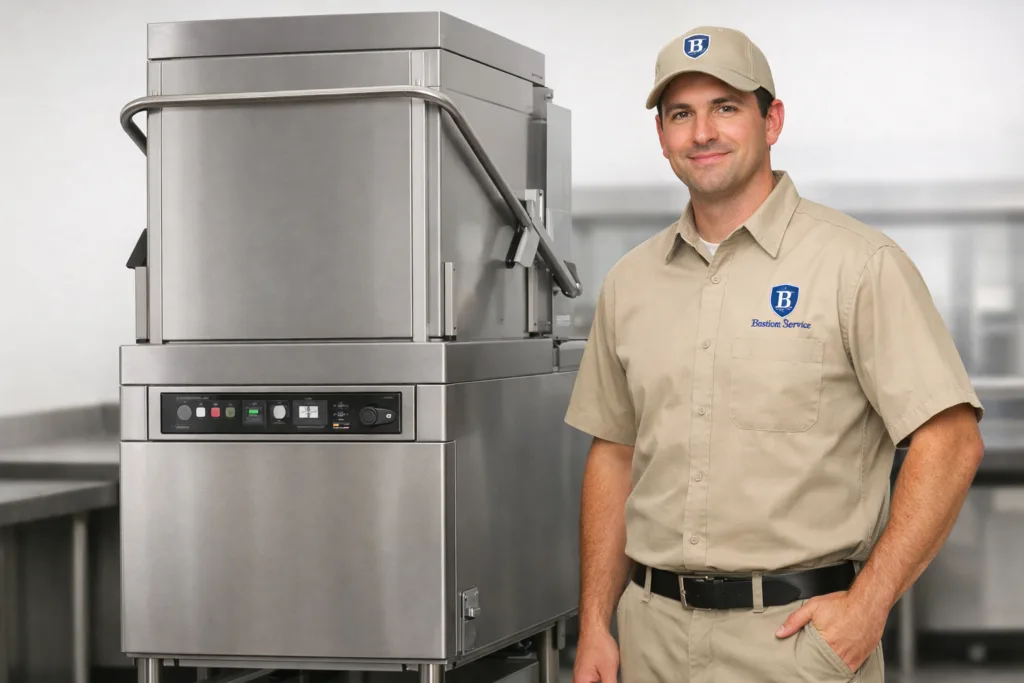




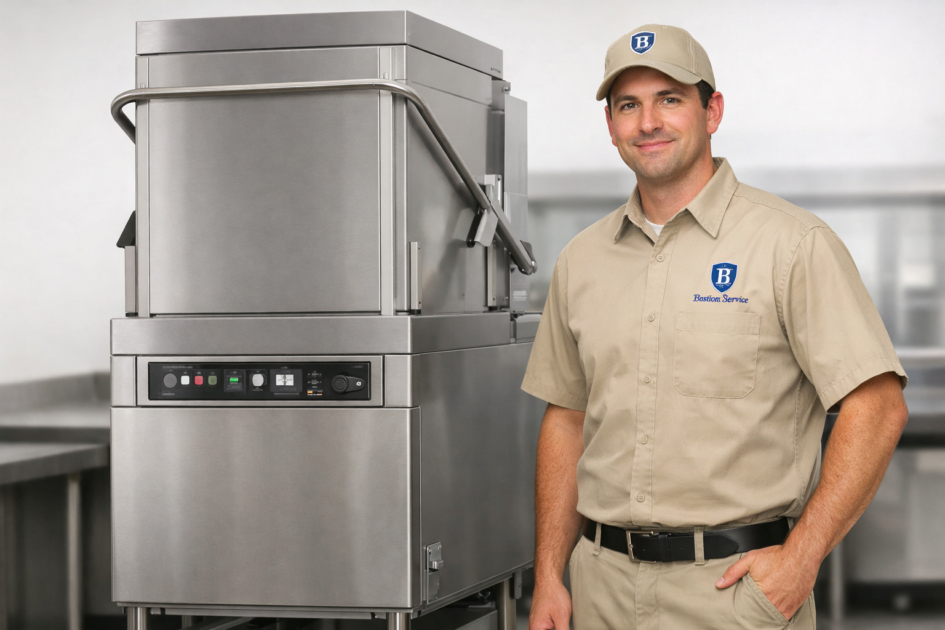
When Hobart warewashing equipment starts missing cycles, leaving residue on wares, or slowing kitchen flow, the next step should be service-oriented and practical. Businesses in Playa Vista usually need to know what failed, whether the unit can stay in limited use, and how quickly repair should be scheduled to avoid a larger shutdown. Bastion Service helps operators sort those questions out so repair decisions are based on actual equipment behavior rather than guesswork.
For specific equipment paths in Playa Vista, review Hobart Dishwasher Repair in Playa Vista and Commercial Appliance Repair in Playa Vista.
What Hobart warewashing equipment problems do you troubleshoot?
Most service calls start with a symptom that affects daily operations: poor cleaning, fill and drain problems, leaks, rinse temperature issues, sanitation concerns, control faults, or a machine that stops mid-cycle. On Hobart warewashing equipment, those symptoms can come from multiple systems working together, so the same complaint does not always point to the same failed part.
A focused inspection helps determine whether the problem is tied to water delivery, pump performance, heating, controls, chemical feed, drain function, or a combination of issues. That matters because the right repair plan depends on how the machine is actually failing under load, not just what the display or staff observation suggests.
Wash performance problems that affect throughput
If dishes, utensils, or racks come out with food soil, film, spotting, or detergent residue, the issue may involve spray action, pump pressure, clogged filters, rinse delivery, heating, or chemical-related operation. Poor results often show up before a full breakdown, but they still create immediate workflow problems because staff must rewash items, delay turnover, and question whether results are acceptable for service.
Wash quality problems are worth addressing early when they become consistent rather than occasional. Repeated underperformance can point to wear inside the wash system or a temperature-related problem that is gradually getting worse. A repair visit can confirm whether the issue is isolated or part of a broader reliability pattern.
Signs the machine is no longer washing correctly
- Food residue remains after a normal cycle
- Glassware or utensils show film, spotting, or streaking
- Racks require repeat washing to pass inspection
- Cycle results vary from load to load without a clear reason
- Staff notice weaker spray action or abnormal cycle behavior
Fill and drain issues that interrupt normal operation
A Hobart unit that does not fill properly, overfills, drains slowly, or leaves standing water at the end of a cycle can quickly disrupt service. These problems may involve valves, floats, pumps, drain components, sensors, or control-related faults. In some cases, the machine will start a cycle and then stall because the expected water condition never occurs.
Repeated resets or restart attempts can make the situation harder to evaluate and may add strain to already failing parts. If fill or drain behavior changes suddenly, it is usually a good reason to schedule repair instead of trying to push the unit through another shift.
Common fill and drain symptoms
- The machine does not take in enough water for a normal cycle
- Water remains in the tank or chamber after operation
- The unit pauses or stops during fill or drain stages
- Staff hear the pump running but see little change in water movement
- Cycle completion becomes inconsistent from one load to the next
Leaks, pooling water, and signs of internal wear
Water around warewashing equipment should not be ignored, even if the machine still runs. Leaks can come from seals, hoses, pumps, drain connections, door-related wear, or internal components that no longer hold pressure correctly. In a working kitchen, even a small leak can become a safety issue and can also signal that related parts are under strain.
New noise or vibration alongside a leak often suggests a mechanical issue rather than a simple loose connection. Service is especially important when the machine leaks during specific cycle stages, because that pattern can help narrow down what system is failing.
Rinse temperature issues and sanitation concerns
Warewashing equipment depends on consistent heat performance for proper results. If rinse temperatures are not reaching target range, if wash water takes too long to heat, or if the machine extends cycle time while trying to recover temperature, the problem may involve heating elements, booster components, sensors, relays, or the control system.
Temperature-related faults deserve prompt attention because they affect more than speed. They can also affect confidence in the finished ware and create uncertainty around sanitation performance. If staff notice inconsistent heat recovery, repeated temperature alarms, or cycles that seem unusually long, a proper inspection helps determine whether the equipment should stay in service while parts are arranged or be taken offline sooner.
Temperature complaints worth scheduling quickly
- Final rinse temperature is inconsistent
- The machine struggles to maintain heat during busy periods
- Cycle times increase while the unit waits on temperature
- Results are clean sometimes but not reliably across the day
- Temperature-related alerts or shutdowns begin appearing
Control faults, shutdowns, and intermittent operation
When warewashing equipment starts acting unpredictably, operators often describe the problem as random. In practice, intermittent stopping usually still follows a pattern tied to controls, sensors, relays, switches, or other electrical components. The machine may start normally, stop at the same point in the cycle, fail to respond to inputs, or shut down after appearing to run correctly for a short time.
These faults can be especially disruptive because they create uncertainty for the whole kitchen. Staff may not know whether the next rack will finish, whether the machine will restart, or whether the problem will become a full outage during the busiest part of the day. A diagnosis helps separate a contained control issue from a larger reliability problem affecting multiple systems.
When continued use can make the repair worse
Not every symptom requires immediate shutdown, but some do justify stopping operation until the equipment is inspected. Continued use can increase damage when pumps are straining, leaks are active, heating components are cycling abnormally, or the machine is failing repeatedly during fill or drain stages.
Scheduling service is usually the better move when:
- Cycles regularly fail or require multiple restarts
- Cleaning results are no longer reliable for normal turnover
- Water is leaking onto the floor or around the base of the unit
- The machine shows repeated fault behavior or unexplained shutdowns
- Temperature problems are affecting sanitation confidence
- Staff must work around the machine instead of depending on it
Repair decisions should be based on the full symptom pattern
Two Hobart machines can show the same complaint and still need very different repairs. One unit may have a single failed component causing a contained issue, while another may have wear across heating, pumping, and control systems that changes the repair recommendation. Age, usage level, maintenance history, and repeat breakdowns all matter when deciding how to proceed.
That is why the most useful service visit does more than confirm that a problem exists. It helps management understand what likely failed, whether nearby components show added wear, whether short-term operation is reasonable, and whether the equipment remains a strong repair candidate.
What businesses in Playa Vista should expect from a service visit
A productive repair appointment should lead to a usable next step. That means verifying the complaint, checking the systems most closely tied to the symptom, identifying whether the machine should remain in use, and outlining the repair path in plain operational terms. For businesses in Playa Vista, that matters because warewashing problems affect labor, sanitation flow, and the pace of the whole kitchen.
If your Hobart warewashing equipment is causing delays, poor results, leaks, or shutdowns, the best next move is to schedule service so the problem can be diagnosed, repair timing can be planned, and downtime can be limited before the interruption spreads further into daily operations.


